A single fiber.
No fingerprints. No CCTV. No witnesses.
But that tiny clue?
It cracked the case.
In forensics, small evidence can have a big impact.
Every particle tells a story.
You just need to notice it.
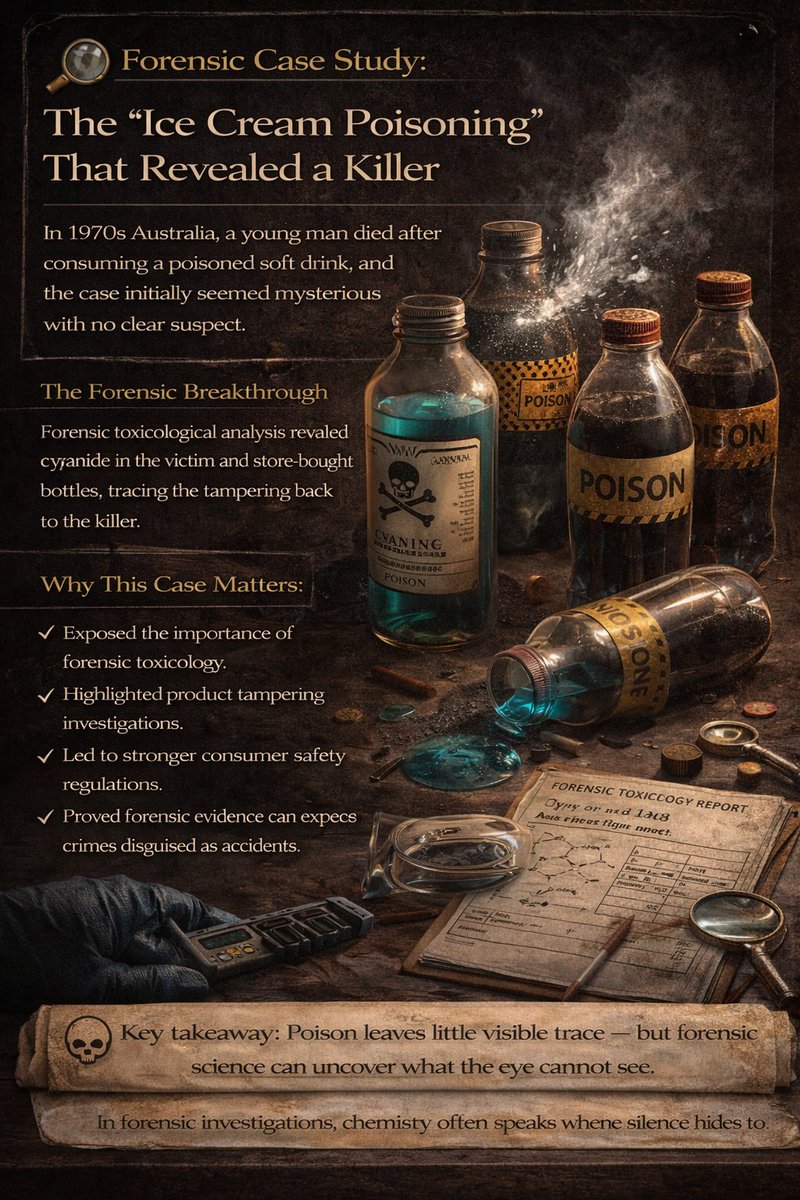
A young man died after drinking a store-bought beverage in 1970s Australia.
Forensic toxicology revealed cyanide poisoning, exposing deliberate product tampering.
The case showed how chemistry can uncover crimes hidden as accidents.
Collecting evidence is only the first step.
Preserving it correctly is what protects the truth.
Contamination, mishandling, or poor storage can destroy crucial forensic evidence.
In forensics, preservation is justice.
In forensic science, objectivity is essential.
Blinding helps reduce bias by ensuring that analysts examine evidence without knowing the suspect's details.
When expectations are removed, evidence speaks for itself.
In the 1970s, Dr. William Bass created the first “Body Farm” to study human decomposition.
This research transformed how investigators estimate time since death (PMI).
Even in death, the body continues to reveal the truth.
@rahulmishra_one You must ask money for your movie tickets and time too this is really frustrating, thanks for sharing this experience never gonna trust Cashify in future
In 1892, Argentina, a bloody fingerprint on a door solved a double murder.
Inspector Juan Vucetich matched the print to the killer, the children’s mother.
It became the first murder case solved through fingerprint analysis, changing forensic science forever.
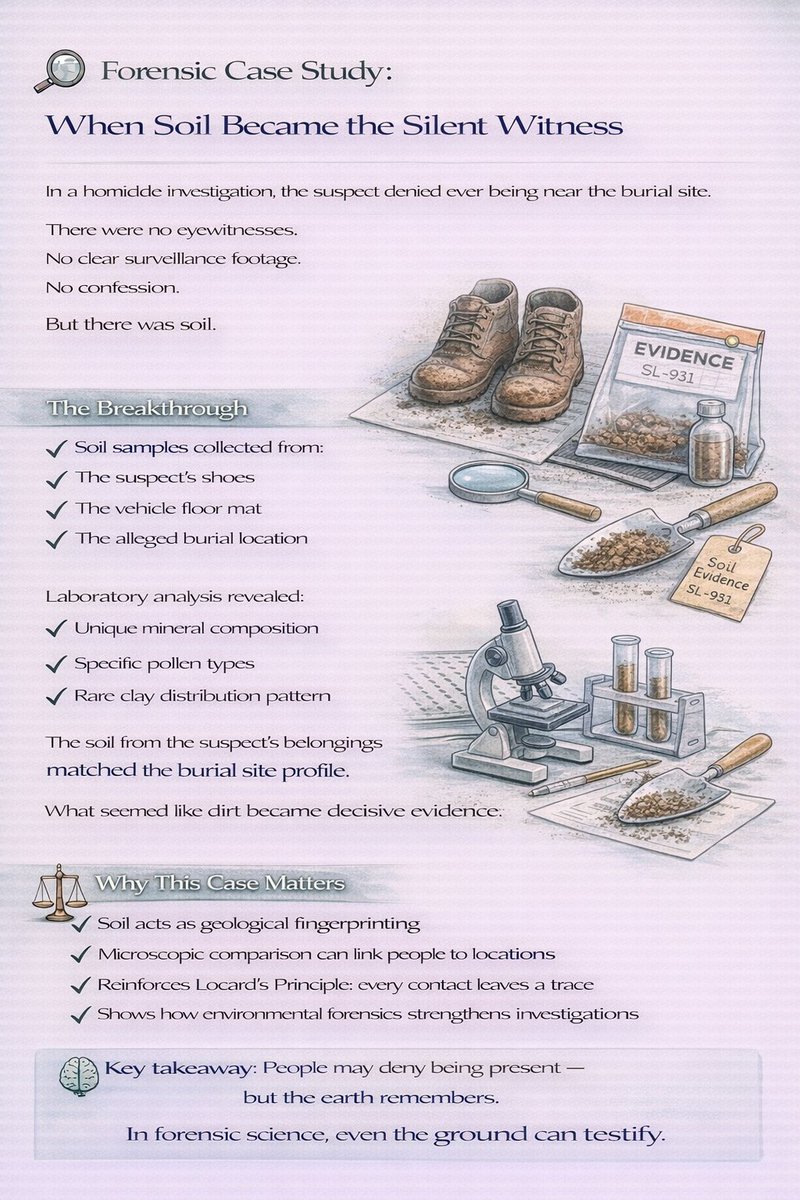
A suspect denied ever being at the burial site.
There were no witnesses.
But the soil from his shoes matched the crime scene.
People may deny being present
The earth remembers.
A kidnapping case had no witnesses or CCTV, just microscopic carpet fibers.
Those tiny traces led investigators to one vehicle and rescued the child.
Big cases aren’t always solved by big evidence.
Sometimes, justice begins with a single fiber.
In forensic labs, accuracy starts with calibration.
Properly calibrated instruments prevent errors, ensure consistency, and protect courtroom credibility.
Accurate tools lead to accurate justice.
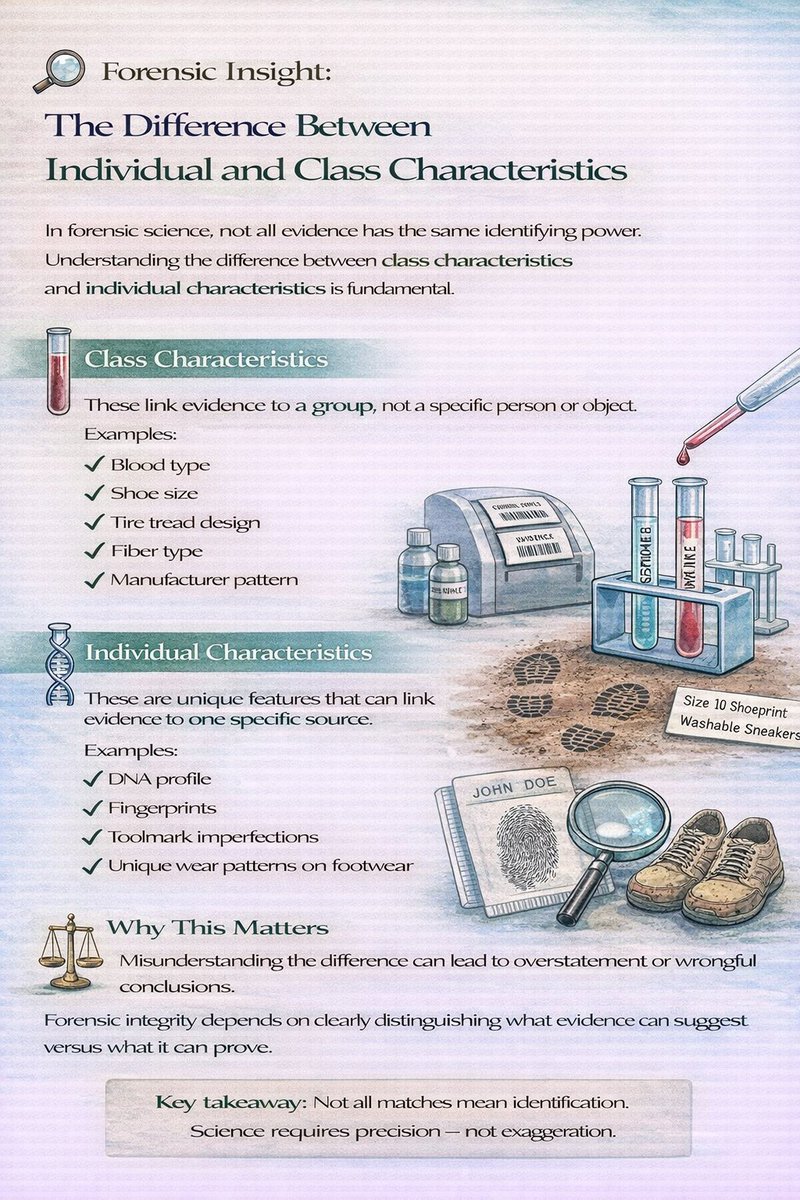
Not all evidence identifies a person.
Class characteristics link to a group.
Individual characteristics can be linked to a single source.
Knowing the difference prevents overstatement in forensics.