Adit, many others with you in this space seem to lack the patience to have a meaningful discussion on any topic. Using words like “kutwa” and other derogatory terms to satisfy your ego shows a loss of reasoning before allowing the other person to present their point of view. In my opinion, this reflects a defeat without even engaging in a fair discussion.
United Nations Security Council Resolution 47
Steps Required for the VoteStop the Fighting: Secure a strict cessation of hostilities between Indian and Pakistani forces.
Withdraw Troops: Remove military forces from the region in agreed stages to demilitarize the area
.Ensure Freedom: Release political prisoners, guarantee freedom of speech and the press, and protect minority groups
Muslims constitute approximately 5.09% of Nepal's total population, making Islam the country's second-largest minority religion. The Muslim community in Nepal developed through three major phases:
Early Trade and Settlement (15th Century):
Kashmiri Muslim traders and settlers established the first Muslim communities in Nepal.
Agricultural Expansion (19th Century):
Muslim farmers migrated to Nepal during agricultural expansion, particularly in the Terai region.
Migration After the Indian Rebellion of 1857:
Muslims fleeing the 1857 rebellion in India settled in Nepal, where the Rana regime permitted them to farm and work as craftsmen. (Copied Text)
History shows that unregulated media can fuel mass violence. Rwanda and Nazi Germany are among the clearest examples, where propaganda directly contributed to atrocities. Similar concerns have been raised about inflammatory media in Iraq, Egypt, and South Africa. Freedom of expression is essential, but speech that incites violence and hatred should not be left unchecked.
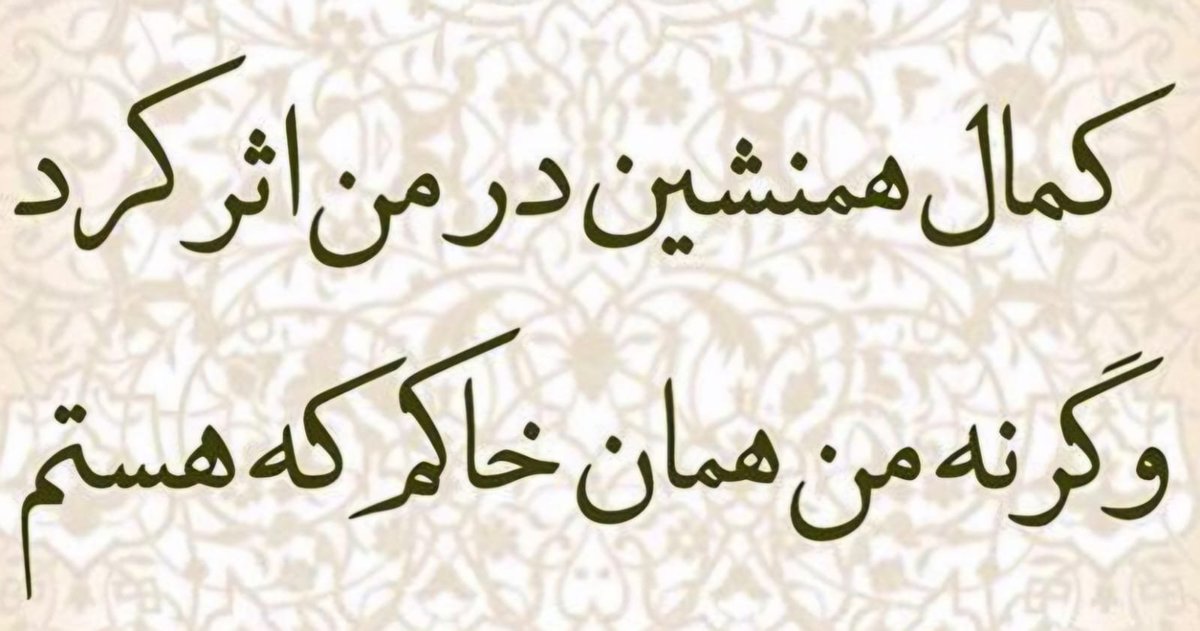
Literal translation of Persian couplet:
The perfection (or excellence) of my companion has left its mark on me;
Otherwise, I am the same dust that I have always been.
Interpretation:
Its a beautiful expression of humility. Whatever goodness, wisdom, refinement, or spiritual elevation you see in me is not my own achievement. It is the result of being in the company of someone noble, wise, or spiritually accomplished. By myself, I remain nothing more than "dust" metaphor for humility, insignificance before God, and the basic material from which humans were created.
The Sufi interpretation:
In Sufi thought, this verse carries an even deeper meaning: The همنشین ("companion") may be a saint, a spiritual master (murshid), the Prophet Muhammad ﷺ, or ultimately God. Just as iron glows when placed in a fire, a human heart becomes illuminated through the company of the spiritually enlightened.
The transformation is not because the iron becomes fire by itself, but because of its proximity. This reflects the famous idea that good company transforms a person.
Why it is so admired The verse combines: profound humility, gratitude, and the belief that human beings are shaped by those with whom they keep company. It reminds us that our character is often formed less by our own claims than by the influence of the people we choose to be close to.
@rakeshvaid@legalloops
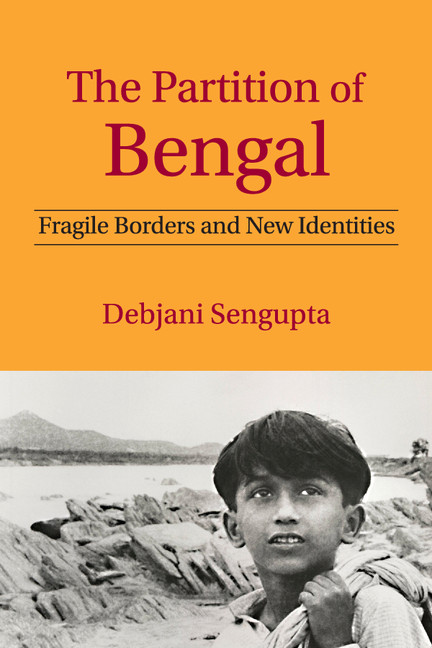
Debjani Sengupta portrays Gopal Chandra Mukherjee as a controversial leader of an armed Hindu vigilante group during the 1946 Calcutta riots. Drawing on his own testimony, she documents his advocacy of violent retaliation and examines how his legacy has remained deeply contested in the historiography and public memory of Partition-era Bengal.
CAMBRIDGE UNIVERSITY PRESS (EXTRACT)
In 1946, Gopal Pantha, a notorious mastaan (goon) of north Calcutta, was 33 years old. Everybody called him by the nickname Pantha, a goat, because he ran a meat shop in College Street (in the Boubazar area). Although he was the leader of a gang of neighbourhood thugs, Gopal did not belong to any criminal underclass of the city. His Brahmin upper caste family (his patrilineal name was Mukherjee) had links to the Congress party and had contributed their share to the militant nationalist movements of the 1930s. On the morning of 16 August 1946, he left for his shop as usual but when he heard about the trouble he came back to his locality.
He organized his ‘boys’ because he thought ‘it was a very critical time for the country; the country had to be saved. If we become a part of Pakistan we will be oppressed … so I called all my boys and said this is the time we have to retaliate, and you have to answer brutality with brutality …
They armed themselves with small knives, swords, meat-choppers, sticks and rods, while Gopal had two American pistols tucked at his waist. He had procured these as well as some grenades from the American soldiers quartered in Calcutta in 1945. ‘If you paid two hundred and fifty rupees or bought them a bottle of whiskey the soldiers would give you a .45 and a hundred cartridges.’ As soon as the news of rioting spread his group of vigilantes swelled.
The 1946 Calcutta Riots (street thug,"goonda")
Gopal Chandra Mukherjee, a meat shop owner by profession (Qasai), is widely described by historians as an underworld figure who played a central role in fueling the communal bloodshed of 1946. He reportedly rejected Mahatma Gandhi's appeal to surrender. Despite allegations linking him to the violence, he was never charged or prosecuted, a circumstance widely attributed to the protection he received from influential political patrons. In later years, he established a charitable organization for destitute people before his death in 2005.
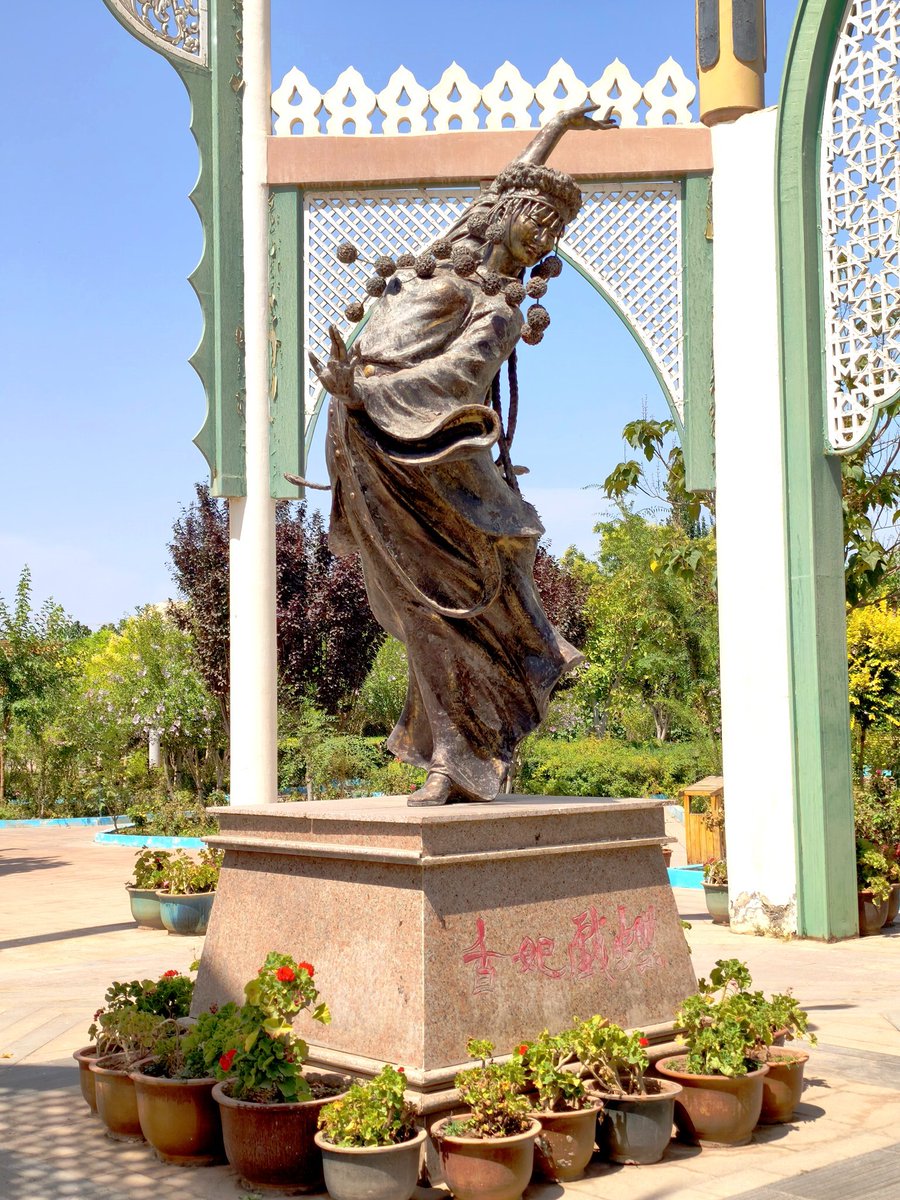
Outside the 17th-century Afaq Khoja Mausoleum in Kashgar, the burial site of the Afaq Khoja family, a prominent dynasty of Sufi religious leaders. One of the mausoleum's most celebrated figures is associated with the woman known in Chinese history as "Xiang Fei" (see her statue in the last photo), meaning "Fragrant Concubine." According to Qing-era legend, she possessed a naturally sweet fragrance that was said to attract butterflies, a story that became an enduring part of Chinese folklore.
@Mushahid Your response was timely.
The documentary is poorly made. It relies on selectively chosen clips, edited to create a particular impression while presenting a different narrative. It seems intent on maligning every facet of the subject instead of offering a balanced and honest account. It even includes references to blasphemy that, in my view, have no connection to the documentary's title or central flawed theme . Their inclusion appears intended to provoke some specific objective. The intention behind the documentary is quite clear.
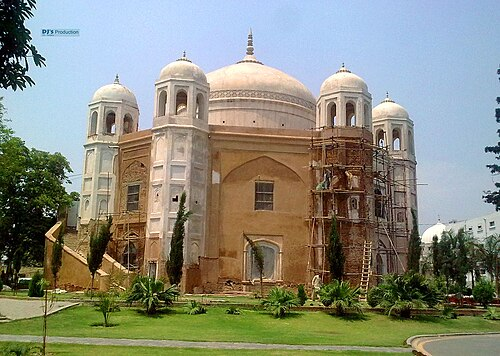
Legendary couplet traditionally inscribed on the Tomb of Anarkali in Lahore, expressing timeless, eternal devotion.
Ta qayamat shukr goyam kardgari khwish ra
Ah! gar man baz beenam ruyi yari khwish ra
Translation:
Could I behold the face of my beloved once more, I would thank God until the Day of Resurrection.
The possible Tomb of Anarkali, in the Pakistani city of Lahore.👇👇
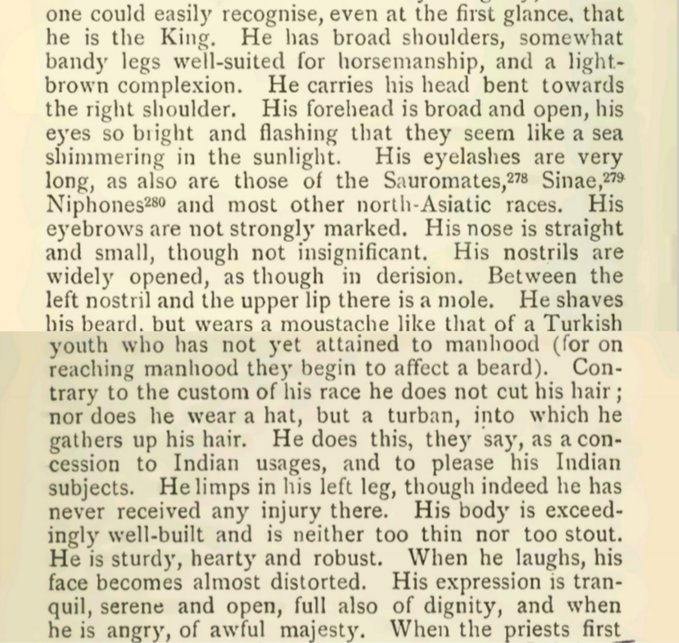
Emperor Akbar Probably the most realistic depiction of him. As described by Father Monserrate
Shabnam Majeed - Anarkali - Supreme Song https://t.co/p2G6tNy2lW via @YouTube