Why buy a bird feeder when you can plant one?
Birds don't just need seeds, they need insects too. A pair of Carolina chickadees needs between 6,000 and 9,000 caterpillars to raise one brood. Those caterpillars live on specific native plants, none of which are in a bird feeder.
The bird feeder you should be planting, in rough order of value:
Oaks. 557 caterpillar species, more than any other North American genus. Plant one and you've done more for birds than a decade of sunflower seeds.
Native cherries and plums. 456 caterpillar species. Berries for dozens of bird species.
Native willows. 455 caterpillar species. Also the #1 plant for native specialist bees.
Serviceberry. Berries ripen in early summer right when birds are feeding nestlings. Eaten by 40+ species.
Elderberry. High-fat berries that fuel migration.
Native dogwoods. Berries eaten by 100+ bird species.
Goldenrod, asters, native sunflowers are great too. The seeds feed winter birds and the foliage hosts hundreds of caterpillars.
A pair of chickadees will bring 6,000 to 9,000 caterpillars to their nest box to raise one batch of chicks. One caterpillar every three minutes, dawn to dark, for nearly three weeks.
But North America has 3 billion fewer birds than it did in 1970, and a big reason is housing. Many of these birds nest in tree cavities, and we keep cutting down the dead trees. A nest box is a replacement cavity. You're handing out housing in the middle of a shortage, and the tenants pay rent in dead bugs.
Match the box to the bird:
Chickadees: 1⅛ inch hole: they'll eat your caterpillars and aphids.
Wrens: 1¼ inch opening: they'll eat beetles, earwigs, grasshoppers, spiders.
Bluebirds: 1½ inch on an open post: they'll take down crickets, beetles, and grubs picked off your lawn.
Tree swallows: 1½ inch opening in a box near water: they dine on flies, gnats, and flying ants by the hundreds of thousands a season.
Four boxes sized for four birds and you've drafted an avian crew that works your yard from the soil to the treetops, for free, and sings while doing it.
The Nashville Zoo has launched a public campaign to block construction of a proposed 69,000-square-foot AI data center that would sit directly adjacent to habitats for endangered animals, including vulnerable clouded leopards.
Zoo officials warn that the facility’s constant noise, bright artificial lighting, and electrical hum could seriously disrupt animal behavior, stress levels, and long-established breeding programs. The zoo is home to more than 3,700 animals representing over 350 species and maintains one of the most important collections of rare and endangered wildlife in the United States.
This conflict highlights a growing backlash against the rapid expansion of data centers driven by the AI boom. These facilities require massive amounts of electricity and operate 24 hours a day, prompting communities nationwide to raise concerns about energy consumption, water use, noise pollution, and environmental impacts. Wildlife conservation groups are now joining the resistance.
More than 180,000 people have already signed a petition opposing the project.
The developer behind the data center states that it will use waterless cooling systems, meet all local noise regulations, and comply with environmental standards. However, zoo leaders argue that the location itself, immediately next to sensitive animal habitats, makes the project unacceptable regardless of technical mitigations.
The dispute underscores a broader challenge of the AI era: how to build the vast digital infrastructure needed for artificial intelligence without placing undue pressure on local communities, ecosystems, and wildlife.
Stand with us to protect the future of Nashville Zoo.
A proposed 69,000-square-foot data center is planned next to the Zoo, but no environmental impact studies have been conducted. Sign our petition to help protect the animals in our care ➡️ https://t.co/q2ISQnxLBK
Building an AI data center next to a fucking ZOO of all places is demonstrably evil. Absolutely disregard for not only the visitors and workers of the zoo, but also the wildlife and animals there too. Everyone needs to oppose this. Fuck these greedy corporations
You know what’s weird? That Asians complain when you ask for diversity in K-pop, anime, manga, and manhwa, because ‘we are homogeneous societies!’ But the second something is for torture and humiliation, then it can be diverse. 😒
Piling up some leftover firewood is the easiest way to create real habitat in your yard in 3 minutes.
Set a few logs directly on the soil in a shady, out-of-the-way corner. Stack them however you want, low or high, neat or chaotic. The only rules: bark left on, in direct contact with the ground, and undisturbed.
Within a few weeks fungi move in. Beetles, woodlice, and millipedes follow. The decaying wood becomes food for woodpeckers, which start visiting. The crevices between logs become shelter for salamanders, toads, garter snakes, and chipmunks. Native cavity-nesting bees use the cracks. Fireflies lay their eggs in the rot. Wrens and chickadees forage the surface for insects.
Over a few years, that pile becomes a small, complete food web.
The whole thing runs for years on its own. You never touch it. You don't have to feed it, water it, or replace it. As the bottom layer rots into soil (which is the point), you can add new logs on top, or just leave it to keep its slow work.
A few honest rules: No pressure-treated wood, no painted wood, no railroad ties (they all leach toxins).
Native hardwoods are best, oak and maple work especially well. Keep the pile at least 10 feet from bird feeders so cats can't use it for ambush.
Place it away from the foundation of your house and from healthy trees, since some wood-decay fungi can travel.
A log pile is the laziest wildlife habitat there is. You stack it once, nature does the rest.
Don't harm opossums! They’re harmless and actually really useful. They keep pests in check (eating ticks, roaches, rats, and scorpions), clean up dead animals, and help spread seeds. Basically, they’re nature’s cleanup crew
For those asking for context here it is
Note : these Black baby toys are being used as socks, shower etc and are also abused
Do yall even understand how insane this is??????
@werepixies I think it is very annoying how people treat racism as a uniquely American issue as if anti-blackness doesn’t exist on a global scale. like we are not any more racist than other countries just because we discuss racism more
“anti-blackness is just an american thing, we don’t do that over here” there’s a popular toy in china right now of a black baby because people find it funny to abuse it…
The North American Butterfly Association calls butterfly releases "a particularly long-lasting form of environmental pollution." Harsh, but you'll see why in a minute.
Commercially farmed butterflies are raised in crowded conditions that breed a parasite called OE (Ophryocystis elektroscirrha).
When farmed monarchs are released, they can carry that parasite into wild populations that are already at record lows. Infected monarchs often can't emerge from the chrysalis properly, or emerge with crumpled wings they can't fly on.
It's not just disease. Farmed monarchs may carry genetics poorly suited to wild survival, including disrupted migration instincts.
Monarch populations have dropped roughly 80 to 90% in recent decades. The last thing they need is boxes of farmed butterflies introducing disease at weddings and funerals.
If you want butterflies, plant native milkweed and nectar flowers at your new home together instead. You'll get wild butterflies in droves, the kind that belong there, for years.
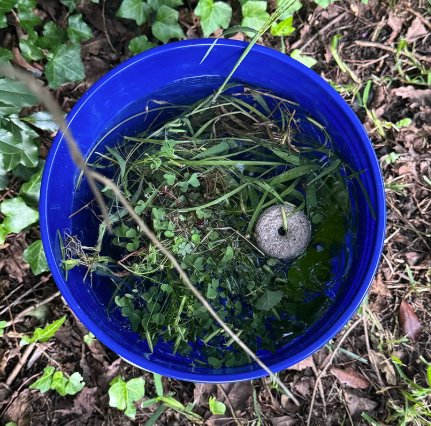
You can crash your yard's mosquito population without spraying a single chemical with a Mosquito Bucket of Doom.
Fill a 5-gallon bucket about two-thirds with water. Drop in a handful of grass clippings, leaves, or hay. Let it sit for a day, then drop in a Bti dunk (also called Bacillus thuringiensis israelensis, sold at any hardware store as "mosquito dunks," about $10 for six).
Mosquitoes are powerfully attracted to fermenting water and will lay their eggs in your bucket. Bti is a naturally occurring soil bacterium that produces a toxin that kills mosquito, blackfly, and fungus gnat larvae only.
This method doesn't harm bees, butterflies, fireflies, fish, frogs, birds, pets, or people. BTI dunks are EPA-approved for organic use and safe in animal water troughs and birdbaths.
One dunk lasts about 30 days. Top off the water as it evaporates. Cover with 1/2-in Mesh Hardware Cloth to prevent animals from getting trapped and put the bucket somewhere shady where pets and kids won't get into it.
The bucket becomes a mosquito magnet and a dead end. Compare that to fogging the entire yard with pyrethroids, which kills every insect in it, including the predators that eat mosquitoes.
Doug Tallamy's Homegrown National Park has been running the "Mosquito Bucket Challenge" since 2021. The more buckets in a neighborhood, the bigger the dent. One bucket per yard is a great start.
i would appreciate if you guys would retweet this and spread awareness. pornhub has videos of child abuse, rape, sex trafficking. many missing women were later identified in videos posted on pornhub. We need pornhub to take action.