FIRST EVER FOREX DEX ON THE BLOCKCHAINS - domestic fiat currencies as a chain tokens bringing FOREX trade on a blockchains for Swapping, Staking, Arbitrage...
Stablecoins are the plumbing of DeFi—yet most of today's supply is tethered to TradFi approaches.
When a stablecoin is custodial, you inherit the issuer's worldview, legal pressures, and blacklisting risks. If it's backed by real-world assets like U.S. Treasury bills, holders don't get direct, onchain redemption rights.
This is why trust-minimized stablecoins matter, and why three new projects are worth watching.👇
~~ Analysis by @punk0439 ~~
Trust-minimized stablecoin protocols run on immutable code, use crypto-native collateral, and offer redemptions via onchain mechanisms. We've seen various projects over the years, including @SkyEcosystem's Single Collateral DAI, @reflexerfinance's RAI and HAI, and @CurveFinance's crvUSD, but none have seen breakout success.
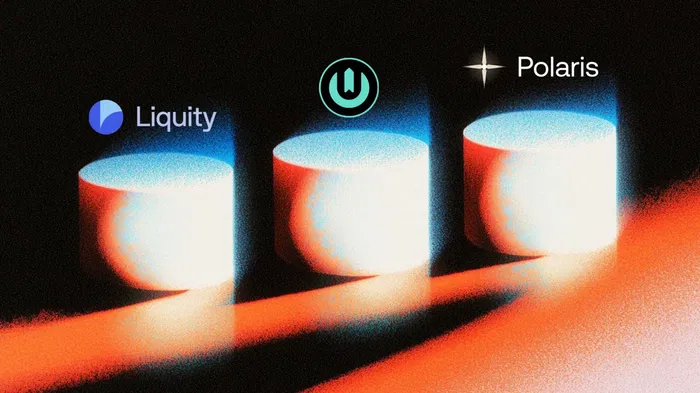
This niche is getting interesting again as newer designs pave fresh paths forward. Today, we're looking at three recent shots on goal: Liquity V2, Money League, and Polaris.
Liquity V2 @LiquityProtocol V1 earned its reputation by being stubbornly narrow. It runs on immutable contracts, only supports ETH as collateral, and largely eschews governance.
Liquity V2 kept that DNA but widened the design space when it launched in 2025. Now, the borrowing protocol lets users deposit ETH or liquid staking tokens like WETH, wstETH, and rETH to mint BOLD, a USD-pegged stablecoin.
Beyond expanded collateral support, V2 introduced user-set interest rates.
Instead of governance deciding borrow rates, V2 borrowers choose their own, and the protocol uses those market rates as a core stabilizer for BOLD. Think of this like a market-driven monetary policy system that responds to BOLD being above or below $1.
V2 routes its economic flows back to users via two avenues:
▻ Stability Pools ("Earn"): Deposit BOLD to earn yield sourced from borrowers' interest payments plus liquidation gains.
▻ Protocol-Incentivized Liquidity ("PIL"): A hard-coded slice of revenue supports BOLD liquidity, directed by LQTY stakers via gauge voting.
The result: a project that aims to turn stablecoin stability into a competitive onchain market. The model is readily extensible via Liquity's Friendly Forks program, which allows other teams to deploy their own licensed stablecoins using the V2 framework.
Money League
Want to deploy a custom stablecoin, but you don't have the technical know-how to manually fork the Liquity V2 codebase or don't want to enter a licensing agreement?
This is where @0xMoneyLeague has positioned itself. It's an EVM platform being designed so anyone can readily deploy censorship-resistant stablecoins through a factory model.
Instead of teams needing to design an entire bespoke stablecoin protocol from scratch, Money League provides standardized plug-and-go modules derived from the RAI/HAI stables lineage.
The protocol lets you handpick your stablecoin's supported collateral (e.g. ETH only), peg mechanics (e.g. floating), risk parameters, and beyond. From there, your deployment operates as its own independent stablecoin protocol.
All deployments are linked through a shared incentive layer built around the MERIT token, which can be redeemed for Money League treasury assets. Stablecoins compete for emissions by routing fees or offering incentives to gauge-style veMERIT voters.
Instead of yet another stablecoin aiming for perfection, Money League is fostering many stablecoin experiments in parallel, creating a market where the best designs win liquidity, legitimacy, and distribution.
Polaris
The newest arrival in the trustless stables category is @polarisfinance_.
In its early stages, this stablecoin protocol will be fully onchain, and instead of generating yield from external RWAs, it will do so by harvesting internal volatility around its pUSD and pETH tokens through a special bonding curve mechanism.
As adoption around Polaris grows, the system's own onchain activity increases, so the central yield source scales upon expansion rather than being compressed away as is often seen with RWA-centric stablecoins when their deposits grow.
The second central idea: Polaris is also openly positioning itself as forkable stablecoin infrastructure, where many stable assets (like pGOLD) can share the same pETH collateral base and grow together as a mutualistic constellation.
For now, we'll have to wait and see how Polaris fares—how its bonding curve operates, how its system behaves under stress. But the builders are posing an ambitious new crypto-native vision for stablecoins in DeFi.
Different Approaches
Looking at these projects side-by-side, it's clear they're not clones. They're different technical attacks on making better DeFi-native stablecoins:
▻ Liquity V2 wants to make a better trustless dollar stablecoin by letting the market set rates and routing revenues toward stability.
▻ Money League wants to make stablecoin experimentation cheap and permissionless and to surface the best performers.
▻ Polaris wants to escape the yield scaling trap by harvesting its own onchain volatility instead of relying on offchain RWAs.
There's no guarantee any one of these models wins outright, but that's besides the point. What matters is that the trustless stablecoins frontier is moving again, and these are the projects setting the tone today and inspiring the stables of tomorrow.
Today, I stepped down as CEO of Binance. Admittedly, it was not easy to let go emotionally. But I know it is the right thing to do. I made mistakes, and I must take responsibility. This is best for our community, for Binance, and for myself.
Binance is no longer a baby. It is time for me to let it walk and run. I know Binance will continue to grow and excel with the deep bench it has.
I’m pleased to announce that @_RichardTeng, our now former Global Head of Regional Markets, has been named the new CEO of Binance today.
Richard is a highly qualified leader and, with over three decades of financial services and regulatory experience, he will navigate the company through its next period of growth. He will ensure Binance delivers on our next phase of security, transparency, compliance, and growth.
Prior to joining Binance, Richard was CEO of the Financial Services Regulatory Authority at Abu Dhabi Global Market (ADGM); Chief Regulatory Officer of the Singapore Exchange (SGX); and Director of Corporate Finance in the Monetary Authority of Singapore.
With Richard and the entire team, I’m confident that the best days for @Binance and the crypto industry lay ahead.
As a shareholder and former CEO with historical knowledge of our company, I will remain available to the team to consult as needed, consistent with the framework set out in our U.S. agency resolutions.
What’s next for me?
I will take a break first. I have not had a single day of real (phone off) break for the last 6 and half years.
After that, my current thinking is I will probably do some passive investing, being a minority token/shareholder in startups in areas of blockchain/Web3/DeFi, AI and biotech. I am happy that I will finally have more time to spend looking at DeFi.
I can’t see myself being a CEO driving a startup again. I am content being an one-shot (lucky) entrepreneur. Should there be listeners, I may be open to being a coach/mentor to a small number of upcoming entrepreneurs, privately. If for nothing else, I can at least tell them what not to do.
On that note, I am proud to point out that in our resolutions with the U.S. agencies they:
- do not allege that Binance misappropriated any user funds, and
- do not allege that Binance engaged in any market manipulation.
Funds are SAFU!
With that, I look forward to seeing the new leadership take the reins. Please join me in congratulating Richard on his well-deserved promotion.
Onwards!
CZ
🎯At zkLink, we're on a mission: revolutionize #DeFi. Reduce #liquidity fragmentation. Minimize navigation complexity. Crush security risks.
Sounds ambitious? Let's dive into our multi-chain project, guarded by zk-SNARKS...🧵
Distinct design. Validators ⚖️ & provers 📝playing separate roles. A major leap towards #decentralization and censorship resistance.
Result? All supported digital assets get the #zkLink rollup network advantage.
🧐Intrigued? Learn more 👉 https://t.co/Sjj4zSntmy
Imagine #zkLink as unbreakable 'super glue' for different #blockchains. Trading and asset management, including #NFTs, in one spot.
For developers? A plug-and-play #API that eases deployment into our ecosystem. Witness the magic on ZKEX testnet 👉 https://t.co/5jTShBsxdn
✅High customizability
✅High performance (1000+ TPS)
✅Seamless user experience
With these, expect high-frequency trading services and new use cases. No more dealing with the challenges of low-throughput blockchains.