It's been a pleasure working with the Intropic team on SpaceX. What @t1alpha is to option mechanics and systematic flows, @weareintropic is to index inclusion. Make sure to check out their work.
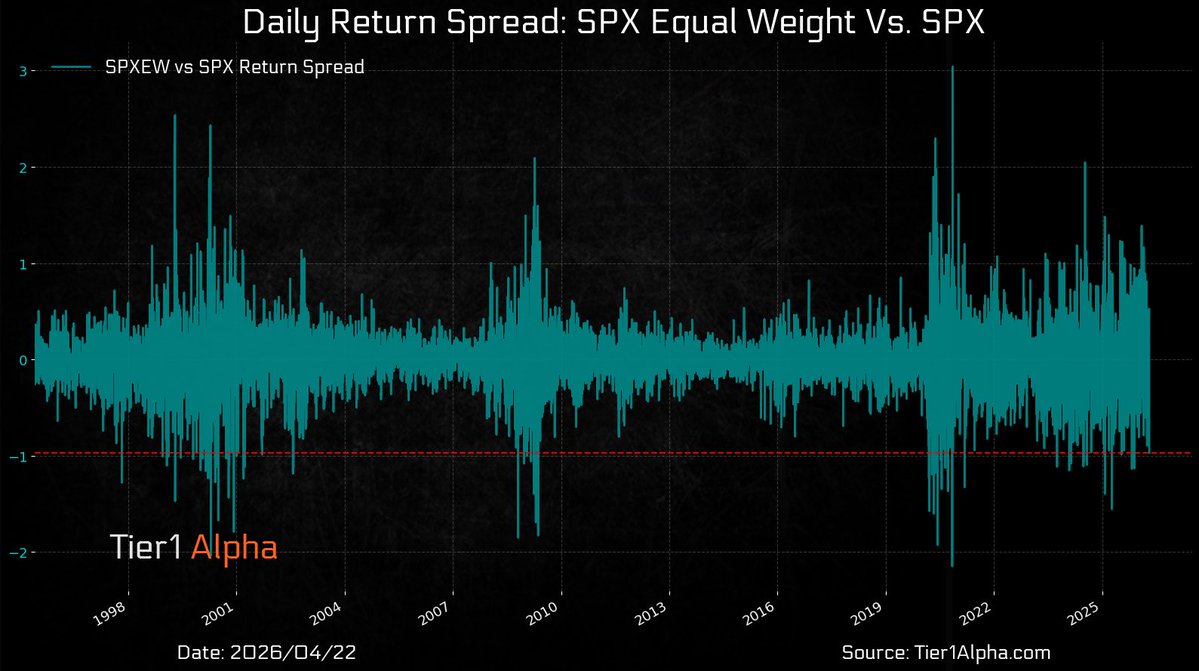
Basically, this is the inverse of last Friday's breadth profile for $SPX. There's a lot more going on beneath the surface than meets the eye.
When index concentration gets extreme, lower correlation doesn't always translate into lower volatility.
To be clear, last Friday was a concentration unwind exacerbated by forced selling from leveraged funds into the close.
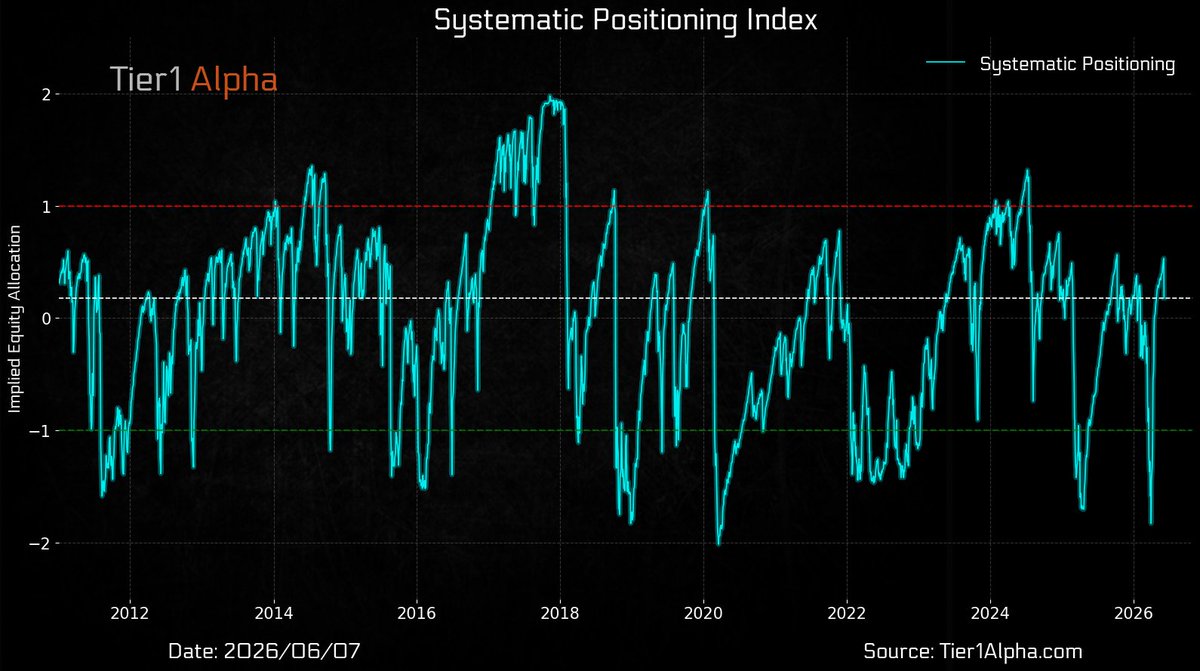
Looking ahead, there is still a significant amount of systematic convexity built up in other areas of the market should downside momentum/ vol start to trend.
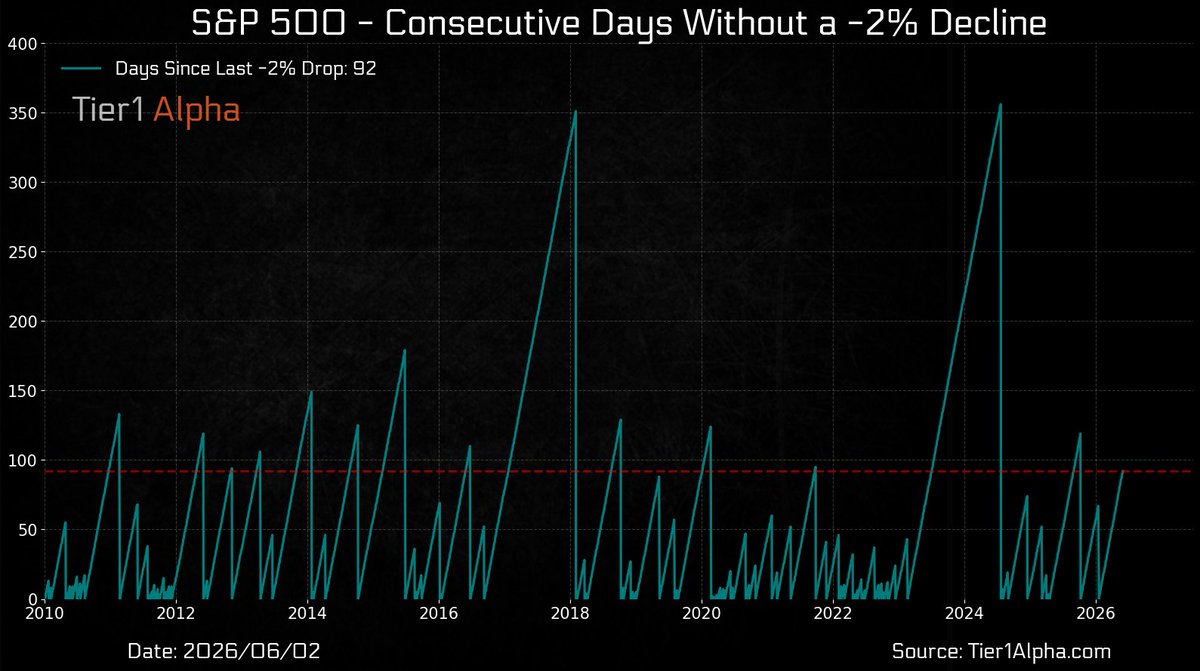
It’s been 92 trading days since $SPX has seen a 2% decline or worse.
For context, that stretch includes a partial government shutdown, the Iran conflict, an oil shock, inflation pressure, AI-linked layoffs, and even a new Fed chair.
Positioning > narratives.
Keith and Ryan discuss the advantages of the Tier1Alpha data in this video snippet.
@KeithMcCullough@HedgeyeAI@Hedgeye
To provide proper credit, video clip taken from the Macro Show airing on 5/21/2026 hosted by Keith McCullough and Ryan Ricci.
The collapse in skew over the past 6 weeks has created conditions for a less reactive $VIX relative to changes in $SPX, pushing spot/vol beta to a 12-month low.
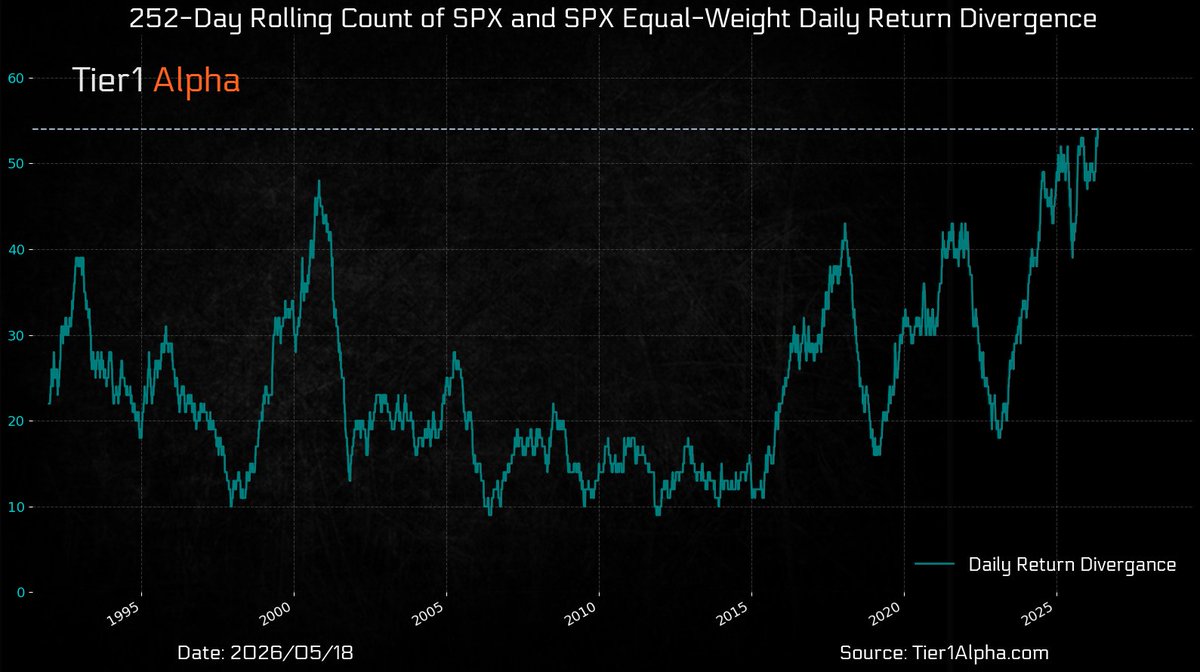
For added context, these internal divergences are becoming increasingly common, now far exceed the levels seen at the peak of the tech bubble.
When these conditions eventually unwind, they tend to do so in spectacular fashion.
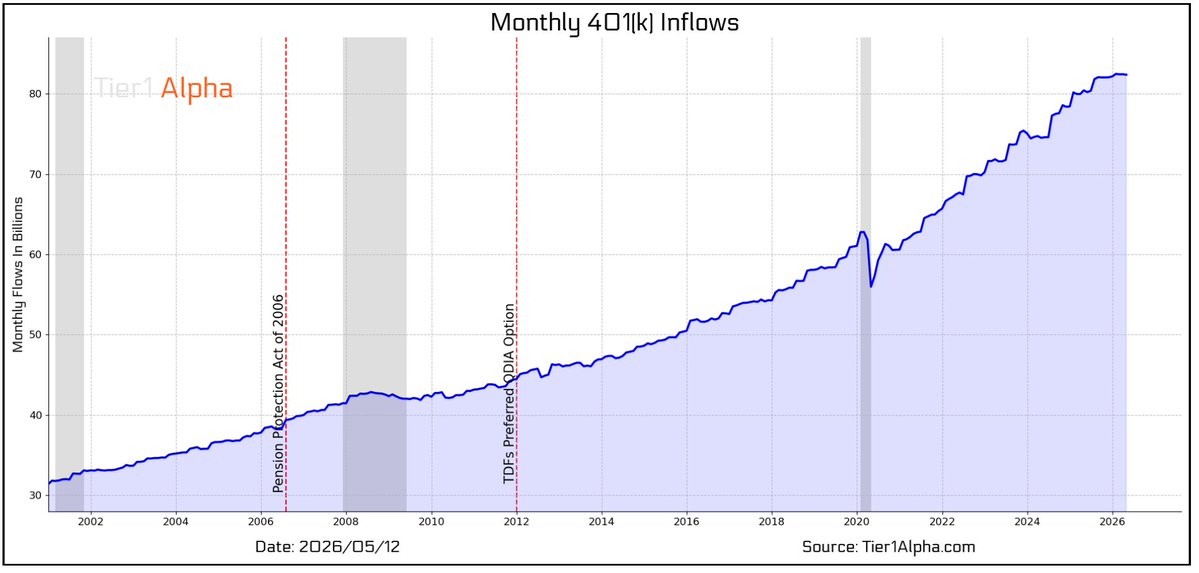
401(k) flows are slowing:
Every two weeks, paychecks pour billions into 401(k)s, IRAs, and managed accounts.
That cash buys index funds, index funds buy the stocks, the index rises, and rising prices attract more cash.
A positive feedback loop on the way up.
In reverse, redemptions force selling, the index drops, more redemptions follow.
The down phase is faster and more violent than the up phase, and monthly inflows just stalled at $82B.
11,200 Americans hit 65 every single day, and the class of 2026 is the third weak grad cohort in a row.
With low productivity young-adults on the sidelines and low productivity Boomers retiring, less inflows makes sense.
Cleaner numbers are set to print on June 2.
Watch the 401(k) flows.
35% of today’s positive impact inside $SPX is coming from just 3 companies, each of which reported earnings within the last 48 hours.
Nice boost in the short-term, but what’s left to drive momentum once the earnings impulse fades?
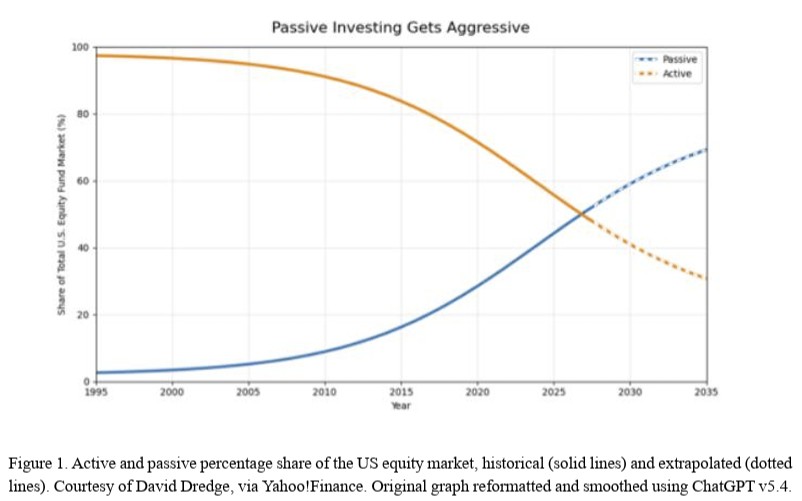
“A Model for Passive That Breaks the Market”: “Passive funds do not base their investment decisions on any notion of fundamental value… Once the passive share reaches around 65%, index volatility may increase sharply. At 90% share, an increase in volatility at cubic speed is nearly inevitable, leading to exaggerated boom and bust cycles.” https://t.co/8qAJtTWkqU