Following the money, questioning the consensus. Writing about markets, macro, Bitcoin and energy. Cited by Congress, DoJ, New York Fed, Bloomberg, Reuters, BIS.
For decades, China exported deflation by flooding the world with cheap manufactured goods.
Now it may be exporting something else: oil stability.
China spent years building a 1-billion-barrel strategic petroleum reserve while energy markets were calm. As the rest of Asia scrambles for crude, Beijing can afford to buy less.
That's one reason oil hasn't exploded higher.
Council on Foreign Relations fellow Brad Setser recently called China "the new central bank of oil," arguing its stockpiles may have helped spare the U.S. and Europe from a much larger energy shock.
The irony is that China's biggest contribution to global oil markets right now may be the oil it isn't buying.
Airlines are flashing recession-style warning signs.
Since the Iran war began:
• Jet fuel prices have nearly doubled
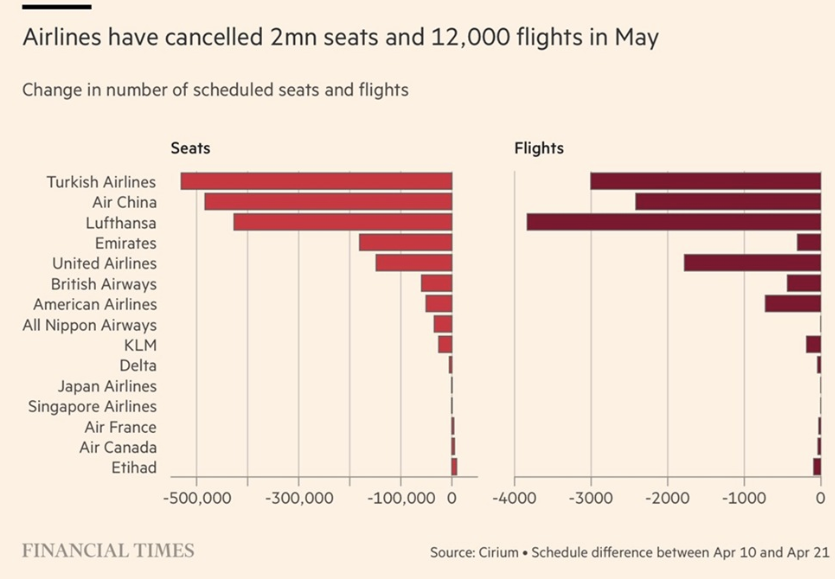
• Airlines cut ~2 million seats globally
• 12,000+ flights canceled
• Lufthansa, Turkish Airlines, Air China all slashing capacity
Spirit collapsed. JetBlue & Frontier are warning of mounting pressure.
The bigger issue: airlines can’t fully pass costs to consumers because travelers are already price sensitive. So instead, we’re seeing fewer flights, more fees, and shrinking service.
Fuel shocks don’t just raise ticket prices — they force the entire industry to shrink.
Every $10 increase in a barrel of oil adds roughly 0.2 percentage points to headline inflation. If crude keeps climbing, CPI will drift higher, making it harder for the Fed to justify rate cuts and pushing Trump further from his goal of near-zero rates.
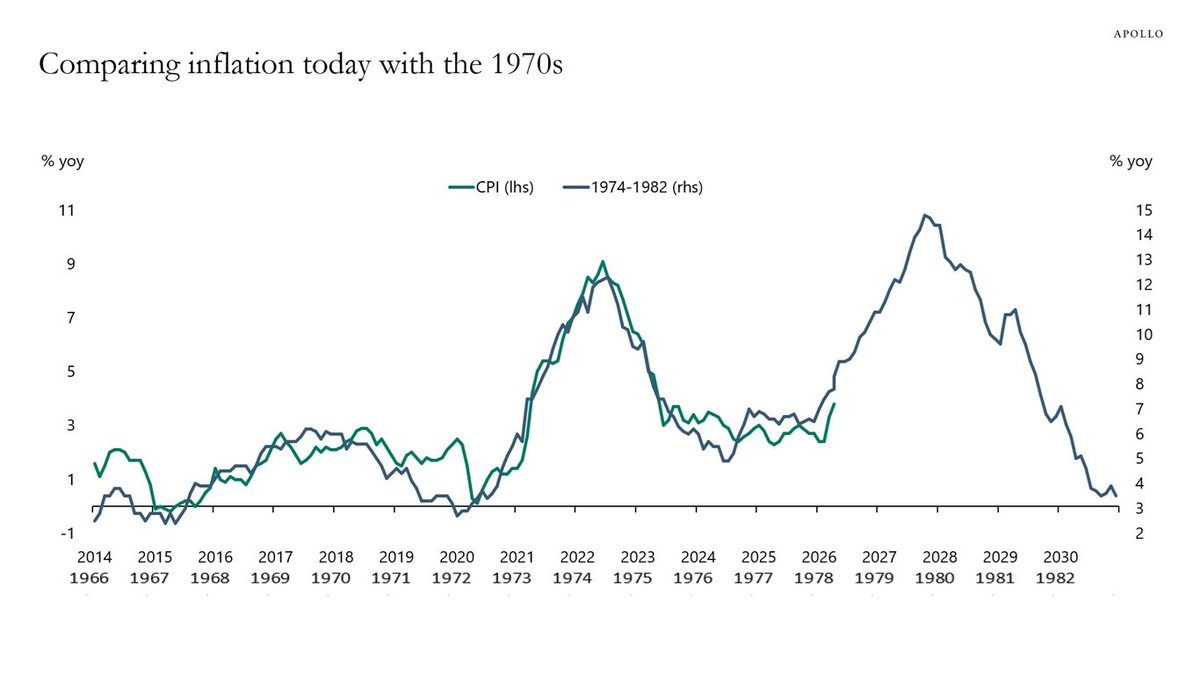
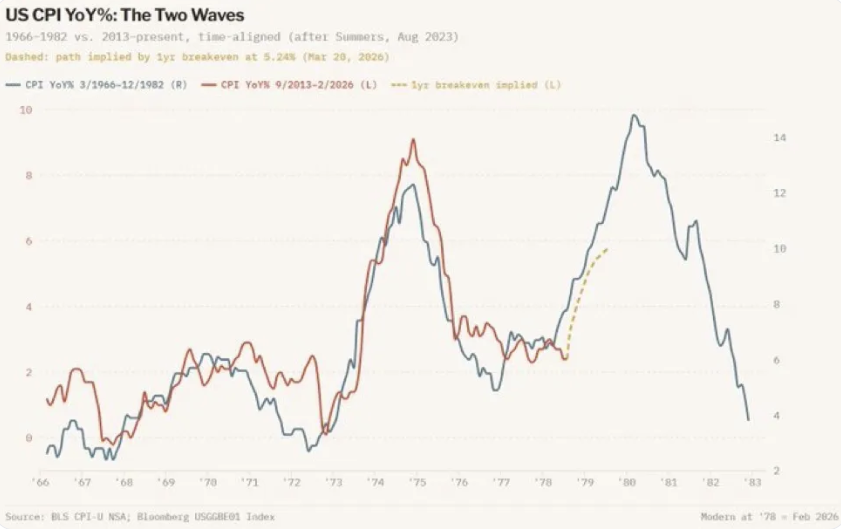
Iran appears to be attacking oil tankers that try to cross the Strait. Oil traders are going to have a field day tomorrow. This could be the biggest global energy crisis since 1973. You know what that means: inflation and lots of it. 🛢️📈
Crypto Weekly Roundup:
If you’re only watching price, you’re missing the story. This has been one of the most sustained drawdowns I’ve seen in 10+ years in crypto, and yet it's not all bad:
Tokenization & RWAs: Real-world assets are climbing even as prices slide. Tokenized stocks + fresh VC flowing into onchain finance show capital is rotating, not disappearing.
Bitcoin ETFs holding the line: Despite recent outflows, spot BTC ETFs still sit on ~$53B in cumulative inflows. Institutions haven’t left — they’re consolidating.
Miners pivot to AI: With hashprice pressure mounting, miners are chasing ~30 GW of AI-focused capacity. Compute is the new hedge.
Stablecoins go mainstream: Crypto rails are merging with TradFi — stablecoin settlement now sits alongside ACH and wires.
Crypto’s other halving: Bittensor completes its first 4-year cycle, echoing Bitcoin’s supply model. @Grayscale breaks it down.
100+ subnets and rising AI compute use cases.
https://t.co/zzbqdaEE9Y
Bob has been saying this publicly since 2018 (?), yet crypto people still think cycles are unique to crypto and that the exact peak has to mirror prior cycles. A peak next year doesn't invalidate cycle theory.
The word cycle is thrown around carelessly a lot or co-opted to fit narratives.
But the technical definition is Cycles are always measured from low to low. That’s the only count that is relatively consistent, the duration between one low and the next defines the cycle’s timeframe.
The top of the cycle is the wildcard, and will change from cycle to cycle. It’s not a consistent duration because it’s dictated by the broader trend. In raging secular bull markets, tops form late in lower timeframe cycles to allow price to stretch upwards, deep into the cycle. In bear markets, they show up early, giving the downtrend time to dig in and extended lower.
In bull phases, a common theme is price rising about three-quarters of the time, one-quarter down. Bitcoin, still in a secular bull market, has followed that pattern fairly well across several cycles so far. Mature assets like gold have too, but they also have seen periods of only 1/4 up, 3/4 down, defined as secular bear phases.
When people say the Bitcoin “4-year cycle” is dead, what they’re really saying is it’s stupid to expect every peak to arrive at the same interval from the last low, every 4 years. And they’re 💯 right, the next top could easily form later than in the last! And in the next cycle, much sooner potentially. But pretending the cycle structure can’t repeat again in this one, is equally foolish.
So Cycles bring the most clarity when identifying bear market lows. On shorter timeframes (weekly or daily Cycles), although noisier, they also help time intermediate entries when the higher-timeframe trend is up.
Like any tool, cycles can provide a great edge, but nothing (should go without saying) close to certainty. They can also give many false signals in directionless markets, because not every cycle will have a clean sine wave structure. And beyond that, there’s always discretion involved with identifying where we stand in a cycle and when key turning points (trough-peak-trough) have occurred. There are tools (like TA and sentiment) that help with this, but confirmation often has to come after the fact, because one cannot discern easily between a normal dip in an uptrend vs a dip that begins the bear (declining) phase.
Outside of the rare euphoric blow-offs, which can be easier to front-run, nailing the exact top is never easy, and in some ways, not the intent. Cycle analysis is trend-following by nature, and waiting for top confirmation means surrendering a bit (or a lot) of upside. The strategy attempts to get a good head start (more predictable lows) and then capture the meat of the upside move.
"What began with a fleet of 400 GPUs managed by two employees is now scaling toward a $100M annual revenue."
@bulldogholmes and @AydinKilicHIVE break down HIVE's strategy for the back half of 2025 in an exclusive sit-down with @Cointelegraph:
https://t.co/thet9Yuu6s