Crazy thing happened this weekend. I was showing houses to out of state buyers ( NJ ) this weekend in a white Tesla Model Y supplied with FSD supervised. After picking them up from the hotel I entered the address of all homes in the Tesla vehicle. FSD took us to the all address’s flawlessly with zero problems. Then 4 more properties followed.
My buyers were not only happy/impressed with homes and purchased a property from me but they also ordered a Tesla Model Y after the showing. These kind of weekend are unforgivable and made my weekend. Thank you @elonmusk@Tesla
We're making Grok Bot more widely available.
All SuperGrok Plus, Cursor Pro+, and Cursor Teams subscribers now have access.
We're also offering a free trial with limited usage for all other users.
Grok Bot is the first AI agent system I’ve used right out of the box with zero coding experience.
I now have an assistant, researcher, writer, clipper, and accountant running 24/7 from the cloud.
Trained them on my X archive and they’re already automating work for me.
How are you all using yours?
Best use cases so far?
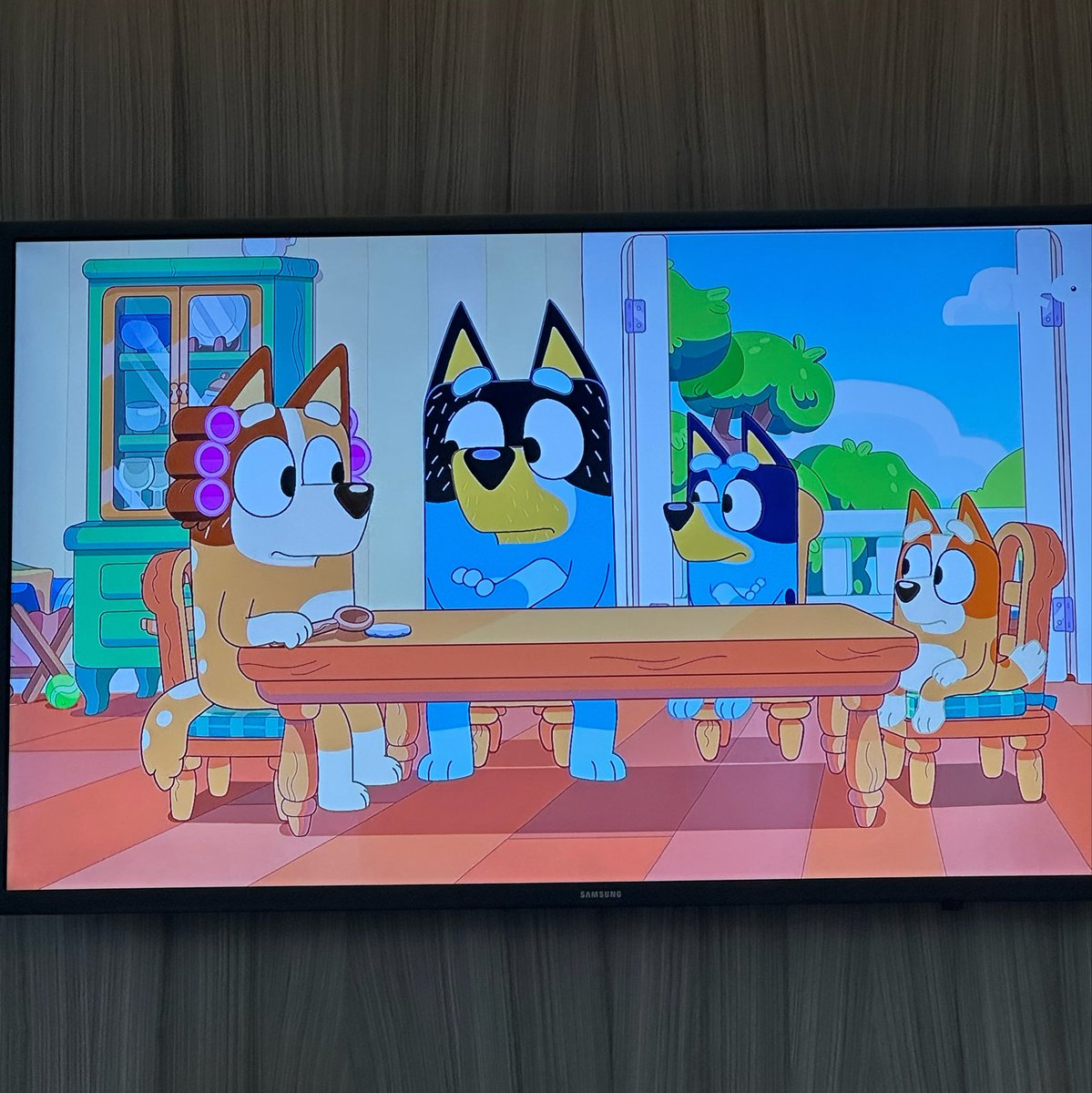
Je crois que Bluey est le dessin animé le plus subversif du moment.
Ça fait vingt ans que je regarde des dessins animés avec mes neveux, mes nièces, puis mes filles. Et je n’en ai jamais vu d’aussi intelligent.
Déjà parce que, dans Bluey, les parents ne sont pas débiles.
La barre paraît basse. Mais le père sympathique, immature et vaguement incapable de survivre sans sa femme est devenu un personnage récurrent des programmes familiaux.
Une petite étude menée à l’université Brigham Young sur deux séries Disney destinées aux préados estimait que près de 40 % des comportements paternels montrés à l’écran relevaient du ridicule ou de la bouffonnerie. Soit un père transformé en imbécile toutes les 3 minutes 24. Et, une fois sur deux, les enfants réagissaient en levant les yeux au ciel, en se moquant de lui ou en l’ignorant.
Bandit, lui, peut être très drôle sans que son autorité soit systématiquement tournée en dérision. Comme Chilli, il est imparfait, parfois fatigué, parfois agacé, mais compétent. Ils jouent avec leurs enfants, les écoutent et savent reconnaître leurs erreurs. Mais ils restent les adultes.
Les émotions de Bluey et Bingo sont prises au sérieux sans devenir le centre de décision de toute la famille. Elles peuvent perdre, attendre, s’ennuyer ou être frustrées. On les console, mais on ne renégocie pas nécessairement la règle ni l’organisation de toute la maison. Et, fait assez fou : elles survivent !
J’avais lu que Bluey était un dessin animé « conservateur ». Pas au sens partisan. Simplement parce qu’il montre la famille non comme une addition d’individus dont il faudrait satisfaire tous les désirs, mais comme un cadre dans lequel on apprend à vivre ensemble.
Les parents y assument de guider leurs enfants, les enfants ne sont pas chargés de tout décider et personne ne semble particulièrement opprimé par cette organisation. Au contraire : ils ont l’air très heureux.
Et tout cela sans grand discours, avec une finesse assez folle et énormément d’humour.
Je ne sais pas comment sont recrutés les scénaristes de Bluey, mais pour écrire aussi justement sur les enfants, les parents et la vie de famille, il faut probablement être un parent assez extraordinaire.
Ou avoir installé des caméras chez moi entre 18h30 et 20h …
Grok 4.6 is now available on Amazon Bedrock. Thanks to @elonmusk and the @SpaceXAI team for the partnership.
Looking forward to what customers build with this.
Very sad to hear about Hayden. I got to work with her on many projects and always had an absolutely great time with her.
I have so many amazing stories and memories with her. I hope she rests in peace.
Last week I posted a new paper with Patrick Norrick: “Terra Incognita: The Economics of a Shrinking World.”
We chose the title deliberately. No society in history has experienced the fertility levels now seen in South Korea, China, Thailand, Colombia, Chile, and many other countries. Our knowledge of the causes (and of the economic consequences) remains far more limited than most public discussion acknowledges. Much of what we write is, at best, educated conjecture.
The paper also struggles against a space limit. We wrote 20,000 words, far from the 250,000 or so we would need to address some issues in more detail (if I had the time and resources to hide away for a year, I could do that, but not now). That means some ideas are only sketched.
Nonetheless, we emphasize several important points.
First, fertility has fallen very fast everywhere: rich and poor countries, east and west, north and south, conservative and liberal societies, religious and non-religious societies (with the exception of the Jewish population of Israel; fertility has also collapsed among the Muslim population within the pre-1967 borders), you name it. Even in sub-Saharan Africa we see fast and unprecedented drops in fertility (alas, from a high initial level).
Second, and this is really interesting, the fertility collapse has been concentrated in poor and lower-middle-income countries much more than in rich countries. By now, income per capita and fertility are positively correlated within OECD countries. We conjecture this will hold globally in a few decades.
Third, and related to the second point, the fertility collapse has been concentrated among poor and lower-middle-income women within countries. In countries such as the U.S., the rich and highly educated now have more children than the poor and less educated.
Fourth, we document why we do not understand the data from the U.N. World Population Prospects. See, for example, Tables A.1 and A.2.
Fifth, we explain why some proposed mechanisms struggle when confronted with the data.
A more subtle point is at work here. Many commentators do not seem to understand the difference between proximate causes and ultimate causes. Yes, births might have gone down because fewer women are in long-run relationships. That is the proximate cause. But you need to explain why fewer women are in long-run relationships (the ultimate cause), and saying that they spend more years in school, to take one example, does not get us very far. Why do they spend more years in school? Once you start down the whole chain of reasoning, things become much harder than they seem.
The paper can be found here:
https://t.co/VrCHr0lBPa
Comments always welcome!
Origin, our code hosting platform, is now live.
It's fast, easy to use, and deeply integrated with Cursor.
Get started by syncing your repos from GitHub.