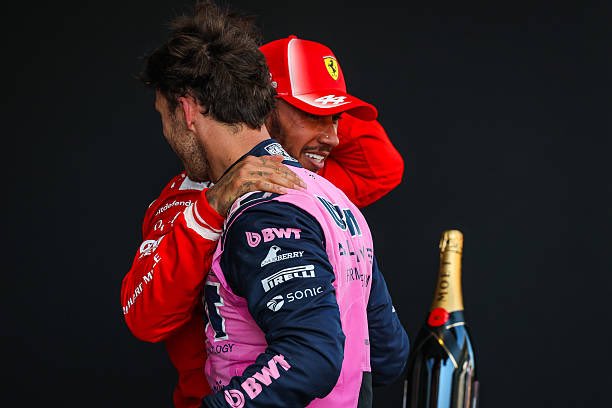
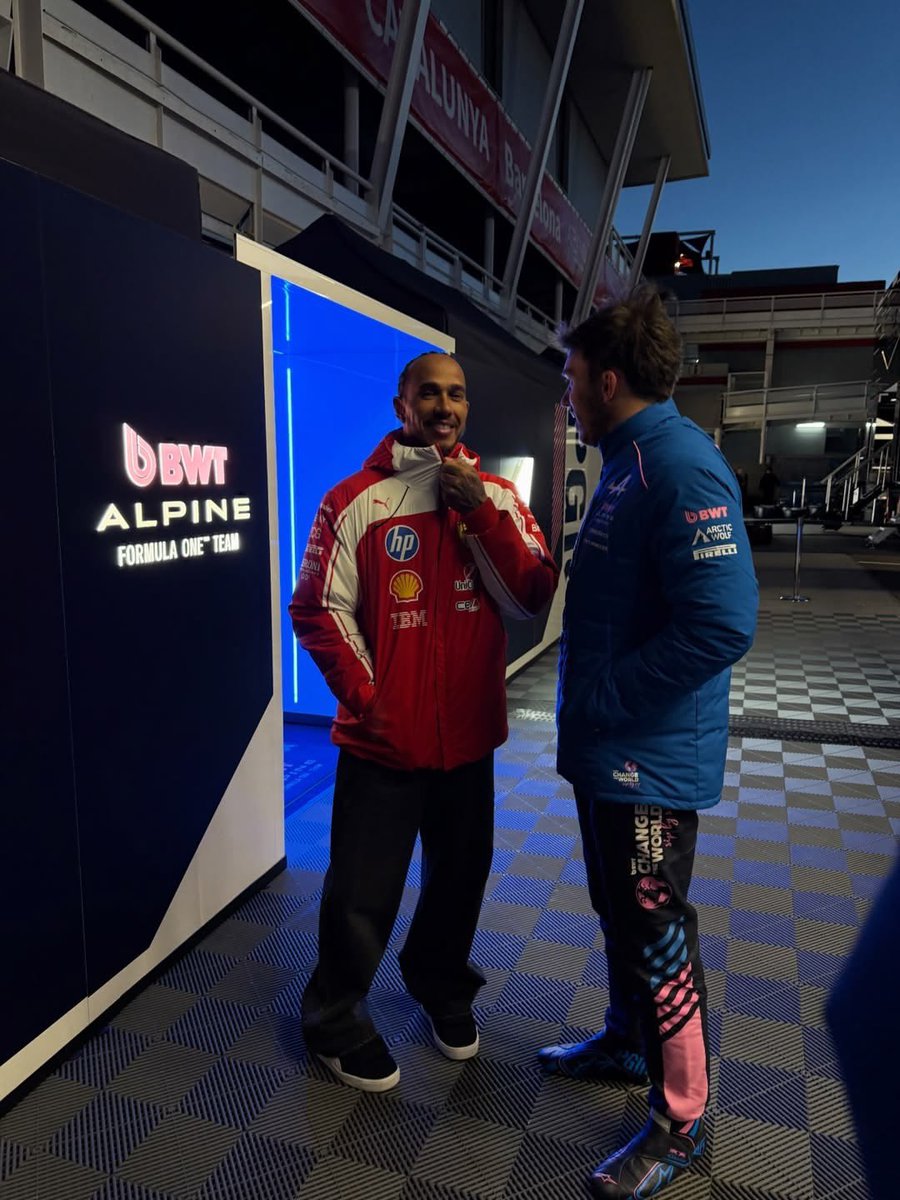
Q: Your next step is to find a new word with Carlo (Santi) to replace Hammertime. You have to find a new one!
Lewis: I know! I asked him how you say it in Italian but-
(Press Secretary): It's "martellare"
Lewis: Oh really? Guys it's not the same, yeah we'll find a new one...
[video and translation by @velvetstarlit]
Three things had to line up for the stewards to overturn this.
1. The rule never says the timing system is the final word. The speeding rule (Article B1.6.3a) just says there's a speed limit, 60 km/h at Monaco. It doesn't say "speed as measured by the official timing system". Compare the false start rule (B5.11.1), which spells out exactly which system decides whether you jumped the start. Because the speeding rule names no source, the only question the stewards had to answer was: was the car actually going faster than 60? Not: did the screen say so.
2. The timekeeper proved its own number wrong. Pit lane speed is calculated as distance divided by time, and the official distance for that zone was 77 cm too long, because the barriers moved this year and opened a shorter line. The timekeeper found this itself with a laser scan after the race. Redo the maths with the correct distance and Gasly was doing 58.7 and 58.8 km/h. Under the limit, both times. The stewards actually rejected all of Alpine's own evidence; what convinced them was the official system contradicting itself.
3. The penalty could still be undone. Gasly never served his penalties during the race they were added to his finishing time afterwards, and that's the only kind the stewards have the power to erase. A penalty served at a pit stop is gone forever; nobody can give you back time you spent stationary. Alpine then filed for a review within the 96-hour deadline (Article 14 of the Sporting Code), with the new evidence the rules require. They were the only team that did.
That's why Gasly got his podium back and the other four drivers caught by the same faulty zone got nothing: all three conditions held for him, and only him.