My mind is blown
“Who was the guy who attacked Jake Lang in Dearborn and also attacked a police car? Did he have all charges dropped by local and county officials?”
Answer: “The attacker was 57 year old Abbas Abdoush, an Iraqi national who's a convicted murderer. After the August 2nd incident, he faced assault, battery and malicious property charges, but both city and Wayne County prosecutors dismissed them, so he has no pending local or county charges”
“Alexa, you said he's a convicted murderer? Why wasn't he deported after he served his sentence for murdering somebody?”
Answer: “He stayed a lawful permanent resident after the 1999 conviction, so deportation didn't kick in right away. ICE only issued a removal order in 2022, and he appealed it, leaving the case pending while he was out of prison”
I have verified that as of today he has not been deported. He still has a order of removal
As far as his murder charge, in 1999 he was convicted of second degree murder in Michigan for intentionally striking a woman with a van in Detroit, she later died
He was out free and attacked Jake Lang, attacked police, through a rock at the police car with Jake Lang inside
He was arrested and they dismissed all charges
What are we even doing in this county
🚨BREAKING UPDATE: The WSJ editor who exposed Scott Bessent's new home, forcing him to move onto a military base, is in the U.S. on a visa.
Her visa should be revoked, and she should be deported immediately.
In 1974, a twenty-three-year-old man named Dan Jury made a decision that went against everything expected of someone his age.
He took his eighty-one-year-old grandfather, Frank Tugend, out of a nursing home and brought him into his small apartment.
Dan was young. He had no money to spare. No medical training. No guarantee that he would be able to handle what lay ahead. But he had watched his grandfather fade inside an institution, surrounded by routines instead of relationships, efficiency instead of tenderness. And he could not accept that this was how the man who had shaped his childhood would spend the end of his life.
So Dan brought him home.
From that moment on, Dan became a caregiver in every sense of the word. He helped Frank bathe. He gave him medication. He cooked, cleaned, lifted, waited, stayed. He learned the slow rhythms of an aging body. He learned how fragile dignity can be, and how carefully it must be protected.
Friends his age were building careers, falling in love, chasing independence. Dan was changing sheets, sitting through long nights, and holding a hand when pain made words impossible. People told him he was sacrificing his youth.
Dan would later say those years taught him more about life than anything else ever could.
As Frank’s health declined, Dan began to photograph their days together. Not staged portraits. Not sentimental images. Honest ones. A frail body resting.
A grandson leaning close. Moments of exhaustion, tenderness, frustration, humor, and quiet connection.
Nothing was hidden.
In 1978, Dan and his brother Mark published the photographs in a book titled Gramp.
The book was unlike anything most Americans had seen. Aging was usually kept behind closed doors, handled by institutions, softened or erased in public life. Gramp showed the truth. The vulnerability. The intimacy. The humanity of dying at home, surrounded by someone who loved you.
The images were difficult. They were also deeply moving.
Frank Tugend, who had lived through war, labor, hardship, and loss, became a teacher in his final years. Not through speeches or advice, but through presence. Through the way he accepted help without surrendering dignity. Through the way he allowed himself to be seen, cared for, and loved.
He taught Dan patience. He taught him how love shows up in small, unglamorous acts. He taught him that care is not something you delegate when life becomes inconvenient.
When Frank died, Dan was changed forever.
Their story quietly shifted how many people thought about elder care in America. It challenged the idea that institutions were always the most humane option. It showed that caring for an aging family member is not a burden to endure, but a relationship that can deepen both lives.
Dan did not lose his youth.
He spent it learning how to love without turning away.
And in doing so, he helped the rest of us see aging not as something to hide, but as a final chapter that still deserves tenderness, dignity, and human presence
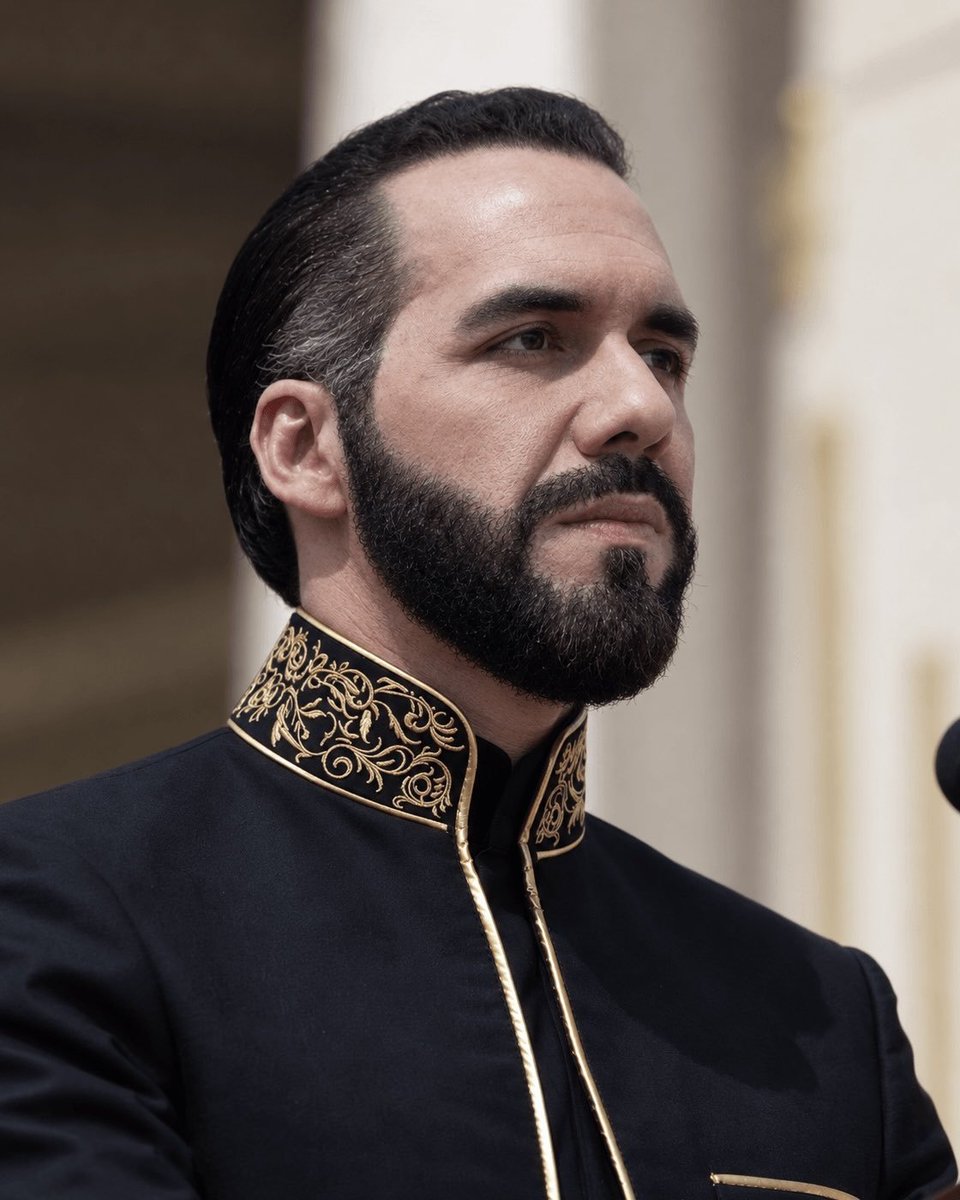
The same people who call Nayib Bukele a dictator called Nicolas Maduro "the leader of Venezuela."
Nicolas Maduro destroyed Venezuela.
He turned the richest oil nation in South America into a place where millions fled.
And they called Nicolas Maduro a leader. They defended him. They respected him.
But Nayib Bukele. The man who actually saved his country. They call him a dictator.
Nayib Bukele locked up the criminals. He cleaned the streets. He made El Salvador safe.
El Salvador was the murder capital of the world. Gangs ruled. People lived in fear. Mothers buried sons every day. Now El Salvador is the safest place in the Americas. A success story. A great transformation tale.
That is not dictatorship. That is leadership.
The respect should be directed to the leader of El Salvador. Not to the failures who smile while their countries burn.
Nayib Bukele did in five years what others have failed do to in decades. He made his people safe. He gave them dignity back. He gave them a country back.
The man behind that success must be respected.
Nayib Bukele delivers what democracy is supposed to deliver.
Nora Stephanie Morales, a Democrat who was just elected Judge of a felony criminal court in Harris County, is being sued over delinquent property taxes and owes over $45k in penalties for campaign finance law violations.
https://t.co/KXawR9wVdg
Elon Musk:”You get taxed on what you earn, you get taxed on what you buy, and you get taxed on what you own. And what does it get spent on? A bunch of stuff you don’t even agree with.
That’s why we need to reduce the size of government, spend less money and let the people keep a lot more of their hard-earned money.”
JOIN US 👉 https://t.co/OprhFXf2Ms
LETS CONNECT THE DOTS…
1: Why did Obama and his allies go to such extremes (possibly even treason) to sabotage Trump before he took office?
Because Trump wasn’t just a political threat.
He was a threat to everything they were hiding.
2: From Bush Sr. to Obama, a decades-long web of corruption, shadow power, and cover-ups ruled Washington.
Trump didn’t play along.
He didn’t need them.
He was the wrecking ball aimed at their entire machine.
3: Bush Sr. laid the foundation—former CIA Director turned President.
Covert wars. Drug trafficking. Money laundering. Off-the-books operations.
The deep state as we know it was built on his watch.
4: The Clinton’s cashed in.
Mena Airport. ChinaGate. The rise of the Clinton Foundation as a global pay-to-play empire.
Every scandal vanished down the memory hole.
Protected. Insulated. Untouchable.
5: Bush Jr. enabled the next phase.
9/11 gave them the excuse.
Surveillance exploded. Patriot Act. Black sites. Secret kill lists.
The military-industrial complex raked in trillions while Americans gave up their rights.
6: Obama sealed the system.
He promised hope and change. Delivered mass censorship, intelligence manipulation, and weaponized federal agencies.
IRS against dissidents. DOJ to cover tracks. Intelligence turned inward.
7: Then came Trump.
He talked openly about human trafficking, corrupt intelligence players, globalist control.
He signed orders. Froze assets. Threatened their black budgets.
He wasn’t one of them—and that terrified them.
8: They hit back with everything:
Illegally unmasking his team
Fabricated dossiers
FBI infiltration
Russiagate
Two sham impeachments
Full-blown lawfare
Why? Not politics. Self-preservation.
9: The media calls it “Resistance.”
It’s not.
It’s a criminal enterprise trying to bury its tracks—before Trump exposes the rot they’ve spent 30+ years protecting.
This wasn’t about stopping Trump.
It was about stopping the truth.
10: And now? The desperation is louder than ever.
They’re unhinged. Coordinated. Frantic.
Why?
Because Trump still knows.
They know that it’s all out there now . The empire wears no cloths.
11: This is the fight of our lifetime.
Not left vs right.
Truth vs power.
And they’re losing control of the story."
12: Like I’ve been saying ever since I retired from the OSI back in 1978 when I felt like I was protecting national security by protecting the lie.
Well, I’ve been praying for this day to come and not to tell all the people who said I was a conspiracy theorist, but because the only thing that is going to heal this Nation is the TRUTH!!
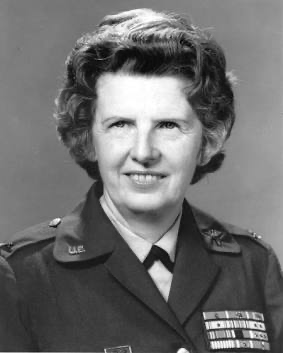
In December 1941, Japanese troops captured an American surgical nurse in the Philippines.
Colonel Ruby Bradley, United States Army Nurse Corps.
For the next 37 months, she ran an operating room inside a prison camp while starving alongside her patients.
Her name was Ruby Bradley.
Born in West Virginia in 1907, she taught school before joining the United States Army Nurse Corps in 1934.
In 1943, the Japanese Army locked her inside the Santo Tomas Internment Camp in Manila with thousands of prisoners.
Food was scarce and people were dying in the barracks every week.
Ruby refused to leave the hospital ward.
As starvation stripped the weight from her bones, her uniform hung loose on her frame.
She used the empty space under her clothes to smuggle surgical tools, soap, and medicine past armed guards into the clinic.
Whenever she saw starving children crying in the dirt, she gave them her own small food ration and went to sleep hungry.
Over three years in captivity, she assisted in 230 major surgeries and helped deliver 13 babies behind barbed wire.
The prisoners called her one of the Angels in Fatigues.
On February 3, 1945, American tanks smashed through the camp gates and set them free.
Ruby walked out weighing just 86 pounds.
Everyone expected her to go home and leave the military forever.
She refused to quit.
Then war broke out in Korea in 1950.
At age 42, Ruby volunteered for the front lines as Chief Nurse of the 171st Evacuation Hospital.
In one afternoon in November 1950, her team treated 780 wounded soldiers in the bitter cold.
Days later, 100,000 Chinese troops surrounded her hospital in Pyongyang.
With enemy artillery shelling the city, commanders told Ruby to take an early flight to safety.
She refused to board a plane while wounded men were still lying in the snow.
With shells exploding nearby, she stayed on the freezing runway and loaded every injured soldier onto transport planes first.
She was the last one out.
Seconds after she stepped onto the final plane, an enemy shell blew up the ambulance she had just left behind.
She later led 500 combat nurses across Korea and became the third woman in United States Army history to reach the rank of Colonel.
She retired in 1963 with 34 medals for bravery, died in 2002 at age 94, and was buried at Arlington National Cemetery.
Across two wars, three years in a prison camp, and an enemy siege, she never once left a patient behind.