The Role of the Diaspora African in Sustainable Development
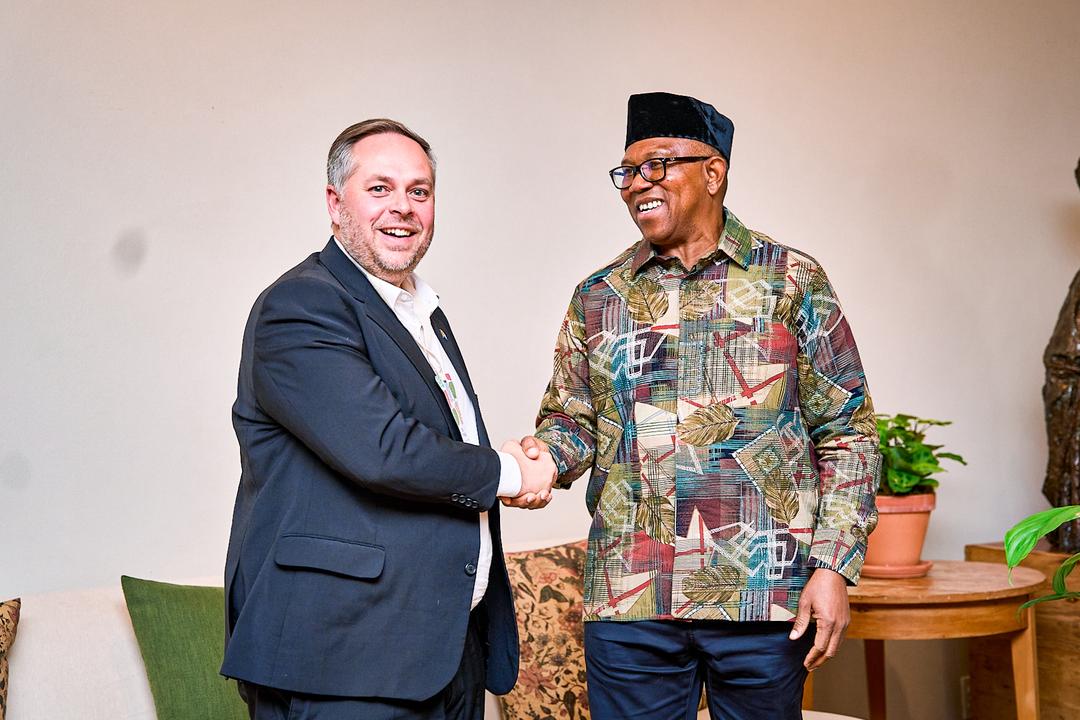
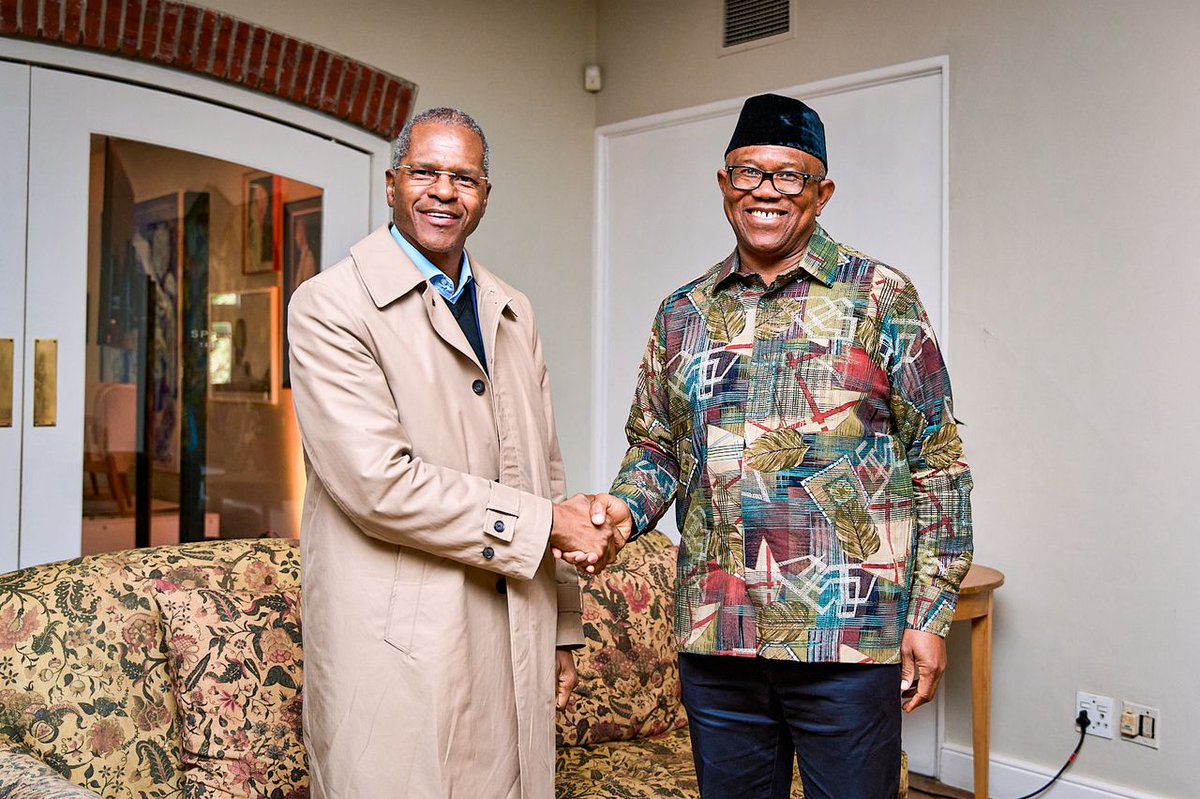
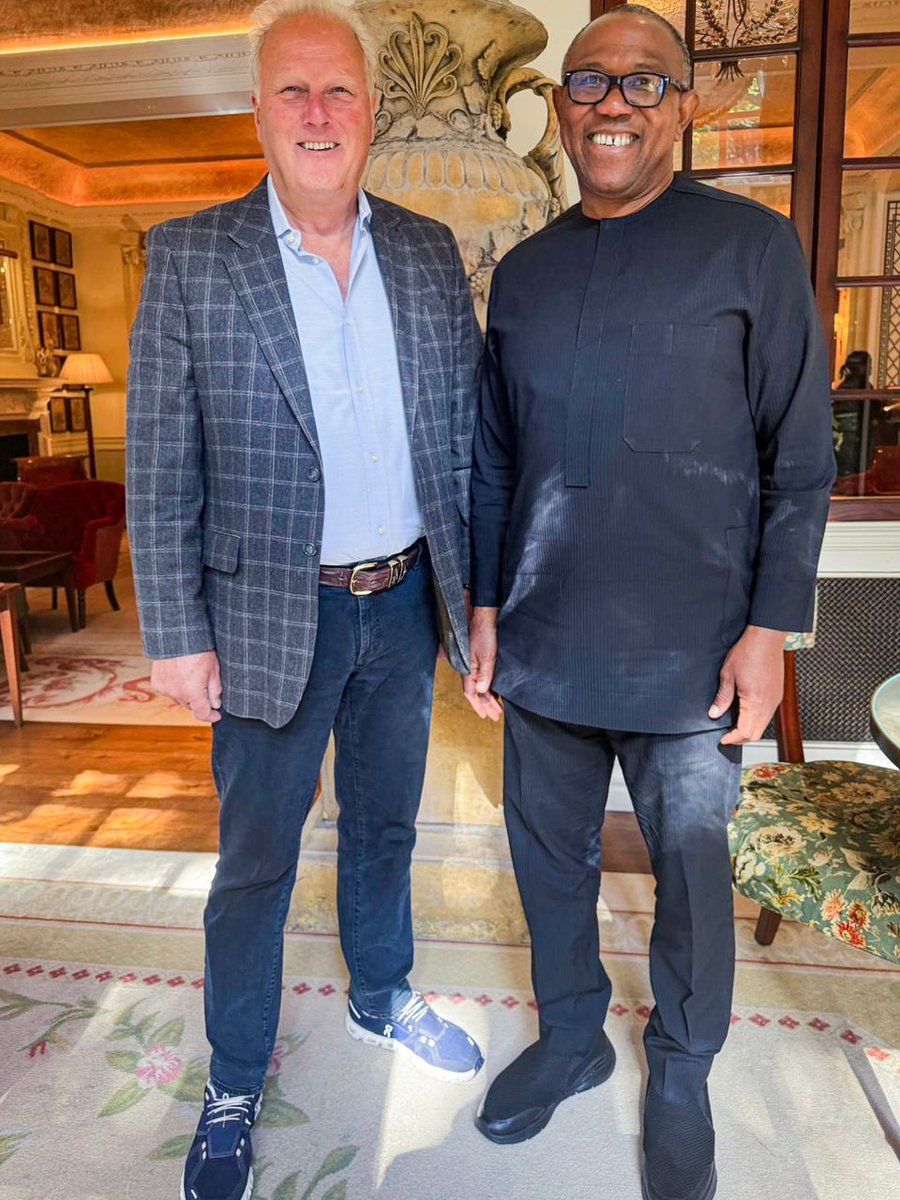
On Friday, July 10, 2026, I had the honour of delivering the keynote address at Mandela Hall, African Union Permanent Observer Mission to the United Nations in New York, on _The Role of the Diaspora African in Sustainable Development across Africa.
Africa is a continent of immense riches. Indeed, it is the richest continent in the world, not only because of its vast mineral resources but also because of its greatest asset, its people. It is the second largest continent by landmass, after Asia, covering more than 30 million square kilometres. It is also the second most populous continent, with over 1.5 billion people. Significantly, more than one billion of these are young people in their productive years, making Africa home to the largest youthful workforce in the world.
When this demographic advantage is combined with nearly one billion hectares of arable land, about 60% of which remains uncultivated, it becomes clear that Africa possesses everything required not only to feed itself but also to become the food capital of the world.
Regrettably, despite this enormous potential, Africa remains home to the largest concentration of the world’s poorest people. Of the approximately 800 million people living in extreme poverty globally, nearly 60% are in Africa. That is about 480 million people, with Nigeria and the Democratic Republic of the Congo among the countries most affected. In other words, nearly one in every three Africans lives in extreme poverty. Likewise, in multidimensional poverty, Africa continues to bear the greatest burden.
The question, therefore, is simple. With all these advantages, why has Africa not been able to lift its people out of poverty?
It means there is a missing link. That missing link is Competent Leadership with Capacity, Compassion, Character, and Commitment to good governance.
What Africa needs is leadership that will rise to the challenge and drive the continent in the right direction. This means competent leadership with character, capacity, compassion and commitment to begin turning the continent around. When we get leadership right, everything else begins to change. We start realising our true potential.
So, what is the role of the Diaspora African in this journey?
You have an enormous role to play.
Because you live in societies where institutions largely work, where democracy is strengthened by accountability and where systems function more effectively, you have both an opportunity and a responsibility to help build Africa. It is time to become stronger advocates for good governance. Even where you cannot vote, your voices matter. They should be heard both at home and abroad whenever things are going wrong on our continent. Stand firmly for what is right. Speak truth to the leaders who visit you. Let them know where they are getting it wrong. That is what some of us have continued to do.
The contribution of the African diaspora extends far beyond advocacy. History teaches us that many of the world’s great economic transformations were driven, in part, by their diaspora communities.
Japan offers one example. Following the Meiji Restoration of 1868, the country embraced modernisation and benefited immensely from Japanese scholars, professionals and citizens who studied and worked abroad, especially in Germany, before returning home to drive the technological transformation for which Japan is admired today.
China presents another remarkable example. It was under Deng Xiaoping’s reforms, beginning in 1978, that China embraced education, innovation and global engagement. These reforms created opportunities for the Chinese diaspora to contribute significantly to the country’s extraordinary economic transformation. In 1980, China had more people living in poverty than Africa. Today, China has reduced extreme poverty dramatically, while Africa continues to struggle with the challenge.
The wait is over.
We have 2 golds: Chimdiebube Onwubiko and Don Anele Munachimso.
We are the best in the world!
Egejurum Onyedikachi’s name was omitted. He should have a gold.
Education Crisis: Calls for Fundamental Change, Not Just Policy
The Federal Government has finally admitted to its poor management of the education sector. Recently, the Minister of Education acknowledged that the policy separating junior and senior secondary schools has failed to improve educational outcomes. This is evident in recent examination results. In 2024, the West African Examinations Council (WAEC) reported that only 38.32% of candidates passed English and Mathematics in the WASSCE. In 2025, only 32% passed the computer-based WASSCE. This poor performance has been consistent across major examinations over the past two years.
This admission is tragic because education is the most vital contributor to human capital development, which forms the foundation for growth and economic development of any society. We cannot overcome economic stagnation without prioritising education, healthcare, and job creation to lift millions of unemployed youths out of poverty. As successful Asian nations have demonstrated, educational excellence requires sustained investment in curriculum development, motivated teachers, and better learning environments.
Unfortunately, the government continues to neglect the sector. In the 2026 budget, education received only ₦3.52 trillion, just 6.17% of total expenditure, down from 7.87% in 2025, and well below UNESCO’s recommended 15–20%. This low allocation indicates a failure to recognise education as a driver of sustained economic growth.
Education advocate, Mr Alex Onyia @winexviv , recently revealed that Nigeria failed to sponsor students to the International STEM and Mathematics Olympiads due to a lack of funding. It is heartbreaking that the government can sponsor hundreds to irrelevant international conferences yet fail to support its brightest students on the world stage.
The Minister’s admission reflects a broader failure of public leadership. The issue is not the JSS/SSS policy itself, but the lack of commitment to properly fund, manage, and deliver quality education.
In Anambra State, we proved that committed leadership can transform educational outcomes. Through effective funding, oversight, provision of laptops, generators, internet connectivity, and other learning aids, we turned the sector around. For example, our effort in providing computers across all secondary schools (public and private in the state) was recognised by HP Africa Head, who declared that Anambra had procured the largest number of laptops for school children of any subnational government in Africa.
For the future of our society, we must deliberately invest in education, healthcare, and job creation. As I have always said, failing to do the right things is equivalent to abusing society, and the society we abuse today will take its revenge on us and our children tomorrow.
A New Nigeria is POssible. -PO
Voter Registration: The First Step in the Journey to a New Nigeria
Yesterday, while passing through Waru Wazobia in Abuja, I made a chance stop to interact with our people. I seized the opportunity to encourage them, especially our youths and women, to take advantage of the ongoing voter registration exercise.
The power to change Nigeria does not begin on Election Day; it begins with voter registration. Registering to vote is not just a civic responsibility; it is an investment in the future we all desire.
I urge every eligible Nigerian who has not yet registered to do so without delay. Those who already have their voter cards should encourage their family members, friends, neighbours, and colleagues to register as well.
A new Nigeria will not happen through wishful thinking. It will be built by citizens who participate, who believe, and who act. Let us continue to choose hope over despair, participation over apathy, and nation-building over division.
A New Nigeria is POssible. -PO
My Stance on Road Development
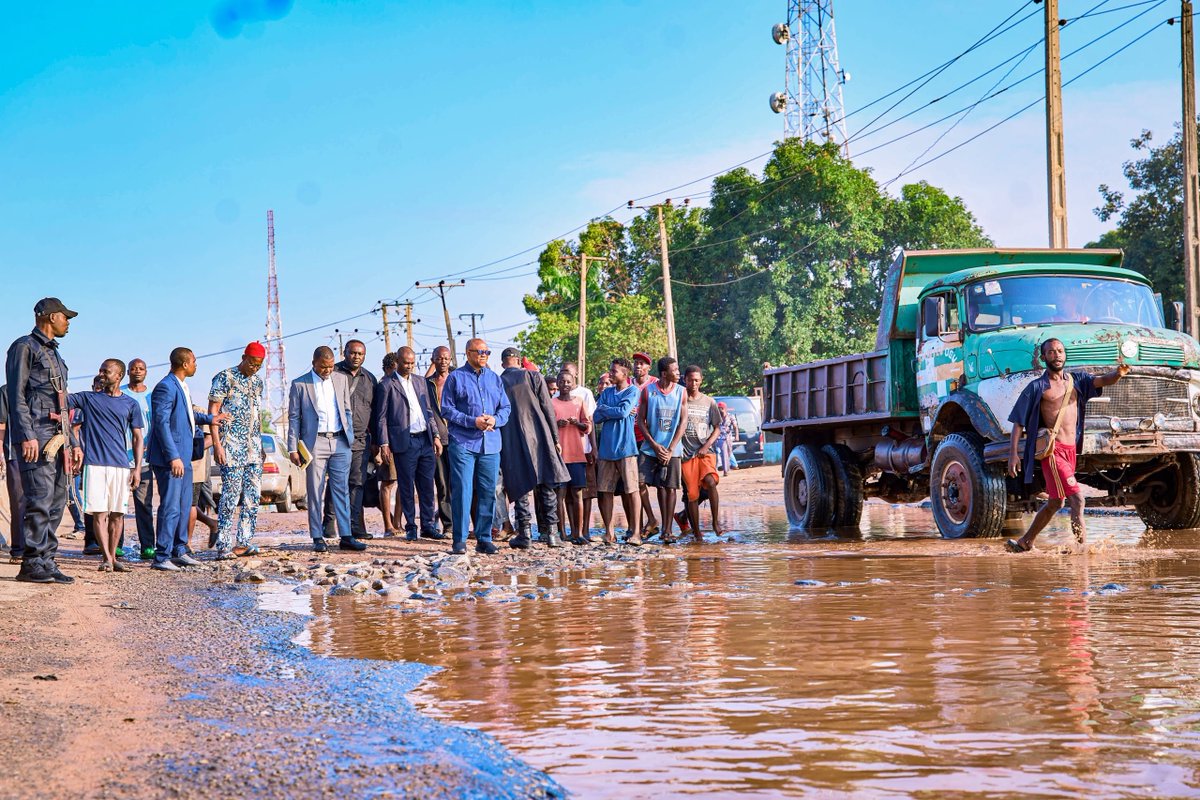
There is a pertinent reason I have consistently advocated that we should refrain from initiating new road construction projects until we have thoroughly rehabilitated and maintained our existing road network. Instead of undertaking new ventures and dualization projects that offer marginal benefits, our primary focus ought to be on repairing the critical roads already in place.
Consider, for instance, the Asaba–Benin Road. This thoroughfare is a vital artery within Nigeria's transportation infrastructure. Travellers traversing from Akwa Ibom, Anambra, Rivers, Imo, Ebonyi, Cross River, Abia, Enugu, and portions of Benue and Kogi States to Lagos are compelled to utilise this route.
Despite its significance, substantial sections of this road are in a lamentable condition. It has become a major impediment, precipitating persistent traffic congestion and inflicting undue hardship on travellers, businesses, and transport operators.
Regrettably, this situation is not unique; it reflects the reality on many of our busiest national highways.
Our efforts should be directed towards the reconstruction and maintenance of our current road infrastructure before we announce plans for new road projects. The Nigerian populace requires functional and motorable roads, not merely projects that garner public attention.
Efforts aimed at superficial improvements for political gain should not supersede the urgent need to address the condition of our existing, critical roadways.
A new Nigeria is POssible. -PO
Owning Up to Leadership Failures and Political Responsibility
This morning, I listened to the British Prime Minister’s speech announcing his planned resignation in July. As a keen observer of global politics, my primary interest lies in examining what successful nations do right and the structural factors that cause others to lag or struggle with governance and development.
The Prime Minister’s planned resignation comes amid mounting public frustration over a stagnant economy, a worsening cost-of-living crisis, and a perceived failure to honour key campaign pledges.
Looking inward in our dear country, we can recall our own situation. Before 2015, our President on several occasions championed the call for the then President Goodluck Jonathan to resign over economic hardship and insecurity affecting Nigerians. During the Chibok school kidnapping incident, he demanded the immediate resignation of President Jonathan, arguing that the government had failed in its most fundamental duty of protecting lives.
During the 2023 election campaign, President Bola Ahmed Tinubu made several promises, including improved electricity supply. He also challenged the electorate not to vote for him for a second term if he failed to deliver on those commitments—particularly in providing stable power, fighting corruption, and improving the welfare of Nigerians.
At present, however, these conditions have worsened. Electricity supply remains unreliable, insecurity has intensified in many areas, including kidnappings, and economic hardship has deepened rather than eased. Similar concerns are reflected across other critical sectors such as security, infrastructure, transportation, and anti-corruption efforts, all of which have regressed. We are in the worst possible condition.
I, therefore, join Nigerians of goodwill in calling for the resignation of the President over monumental failure in governance. Such a gesture would help enthrone a political culture rooted in accountability and responsibility, rather than further entrenching impunity. It would also send a powerful message that public office is a sacred trust, not an entitlement, and help build a society in which future leaders understand that failure carries consequences. Only by ending the culture of impunity can we secure a better future for the society our children will inherit in a New Nigeria that is possible. -PO
Accountable Borrowing: The South Africa Example.
I have consistently maintained that borrowing, in itself, is not a bad thing. Every nation borrows. The critical issue is not the act of borrowing, but what the borrowed funds are used for and whether citizens can clearly see and measure the impact of such borrowing in their daily lives.
There is a lot to learn in the open and transparent manner in which South Africa handled its recently secured a $1 billion loan from the New Development Bank, with a clearly defined purpose. Publicly announcing the targeted purpose of the loan for all to know and monitor, upgrading water supply systems, modernising sanitation infrastructure, improving electricity distribution, and strengthening waste management services across eight major metropolitan cities, including Johannesburg, Cape Town, and Durban.
This is indeed what accountable borrowing should look like; the purpose is clear, the projects are identifiable, and the expected benefits to citizens are measurable. Such investments directly improve living conditions, enhance productivity, and stimulate economic growth.
In Nigeria, however, the opposite is the case: public debt has risen dramatically under the current administration, and its deployment is shrouded in secrecy from the people who will indeed pay back the loan. Today, our total public debt has increased from about ₦87 trillion in 2023 to nearly ₦200 trillion.
Yet, despite this unprecedented accumulation of debt, Nigerians are often left without a clear and detailed account of how these borrowings are being deployed to improve critical sectors such as education, healthcare, power, security, and infrastructure.
Borrowing must never become an end in itself. Every loan obtained in the name of the Nigerian people must be tied to specific, productive investments capable of generating economic value, creating jobs, reducing poverty, and improving the welfare of citizens.
Good governance demands transparency and accountability. The government must be able to clearly explain what was borrowed, where it was invested, and what measurable outcomes have been achieved. The ordinary Nigerian should be able to see and feel the benefits of every debt incurred on their behalf.
At a time when millions of Nigerians are struggling with rising costs of living, unemployment, insecurity, and declining purchasing power, fiscal discipline and prudent management of public resources are no longer optional; they are imperative.
Every borrowing decision should answer one simple question: How does this improve the life of the ordinary Nigerian? If that question cannot be convincingly answered, then we risk merely transferring today's burdens to future generations.
A New Nigeria is POssible. - PO
BRICS bank approves $1 billion lifeline for South Africa’s struggling cities | Business Insider Africa https://t.co/VN0C0Xo8zp
As the World Cup Begins Without Nigeria
As the World Cup begins today across three nations, I identify with our teeming football followers and urge them not to be despondent that Nigeria is not participating, despite the abundant talent in our land.
Our failure to participate on the global stage is not due to a deficit of talent; it is a direct consequence of a deficit in leadership, planning, and institutional support.
The task of building a better Nigeria rests primarily on the shoulders of the younger generation. Do not watch the World Cup with despair; rather, see it as a reminder of where Nigeria ought to be. We must move our country from being a nation of mere consumers of global entertainment to a nation of proud producers and competitors.
A new Nigeria is POssible. -PO
Exponential increase in revenue with excessive borrowing: Yet more hardship for Nigerians!
In celebrating three years of his administration, President Bola Tinubu included, among his achievements, an increase in revenue from N16.8 trillion in 2022 to N35 trillion in 2025. An increase of over 100%.
Shockingly, while Nigerians expected a reduction in borrowing with the exponential increase in revenue, the opposite is the case. In just three years, President Bola Tinubu’s government seems to be obsessed with excessive and imprudent borrowing, with our total debt currently about N200 trillion—a deeply disturbing increase of over N100 trillion.
In addition to the exponential increases in both revenue and debt, it is also important to note that Nigeria has earned far more than the budget revenue targets due to global and regional geoeconomic and political tensions.
Alarmingly, even with the astronomical increase in both revenue and debt, almost all key socio-economic and governance indicators are worse than in 2023. Multi-dimensional poverty has increased from 87 million people in 2023 to over 140 million people in 2025. Rapidly increasing unemployment and a decline in GDP per capita from $1,597 in 2023 to $1,223 in 2025, and the list goes on.
Just more and more hardship for Nigerians! The question Nigerians and even the international community are asking is, “Where did all the money go?”
Nigerians deserve a detailed and transparent explanation of what happened to our economy and financial resources since 2023, and a stop to the imprudent, unaccountable, and opaque management of our common patrimony.
A new and productive Nigeria is POssible, and Nigeria will be OK! -PO
Excessive Borrowing Without Accountability: Further Affirmation of Imprudent Governance.
President Bola Tinubu's administration has engaged in remarkably imprudent borrowing, escalating Nigeria's total debt to approximately N200 trillion. This represents an increase of over N100 trillion within a mere three years, a stark contrast to the roughly N49 trillion accumulated during President Muhammadu Buhari's eight-year tenure, which would have projected to around N80 trillion. As millions of Nigerians grapple with the shock of this unsustainable debt accumulation, the situation is exacerbated by the government's reckless approach to borrowing and a profound absence of accountability and transparency in the utilisation of these funds.
For instance, data from the Federation's Budget Office reveals that the Bola Tinubu government borrowed N11.89 trillion in the first three quarters of 2025 (January to September), exceeding the planned borrowing target of N10.34 trillion by approximately N1.54 trillion. Under a responsible and accountable government, such an overshoot would necessitate rigorous scrutiny and explanation from relevant governmental bodies. Regrettably, this is not the reality under the current administration.
Compounding this issue, only N3.10 trillion of the borrowed funds was allocated to capital expenditure during the same January-September 2025 period. This constitutes a mere 17.66% of the N17.58 trillion earmarked for capital projects, leaving a deficit of roughly N14.48 trillion, or 82.34% of planned capital expenditure unfunded.
The most disturbing aspect of the financial management fiasco under Bola Tinubu is that there is no explanation or information regarding how the balance was utilised or deployed. The question that Nigerians are rightly asking and deserve an answer to is what happened to the balance? Was it deployed for recurrent expenditure/ consumption, for the entertainment of guests to Aso Rock or transferred to the Renewed Hope Agenda 2027 Election Campaign Fund? Nigerians deserve an answer on how our economy and resources are most unpatriotically managed.
A New and Productive Nigeria is POssible, and Nigeria will be OK!
-PO
A Faithful Father in the Faith at 85
On behalf of my family, I join millions of believers and well-wishers across the world in celebrating your 85th birthday, Papa Kumuyi.
For decades, you have exemplified integrity, humility, discipline, and unwavering commitment to the Gospel. Through your teachings, leadership, and personal example, you have inspired and transformed countless lives across generations and nations.
As you mark this milestone, I pray that Almighty God grants you continued good health, renewed strength, and greater wisdom to keep impacting lives and advancing His Kingdom.
Happy 85th Birthday, Papa Kumuyi. May your light continue to shine brightly. -PO
Dear Young Nigerians,
One lesson from the 2023 elections, particularly in Lagos, should never be forgotten.
In the period following the presidential election and leading up to the governorship election, we witnessed a troubling shift in public discourse. Conversations that should have focused on competence, governance, development, and the future of our nation were gradually diverted towards tribal sentiments, ethnic divisions, and unnecessary suspicion among citizens.
Many sincere and well-meaning Nigerians participated in these conversations without realising that they were being drawn into narratives carefully designed by others.
Throughout history, whenever politicians find it difficult to compete on ideas, performance, character, or vision, some resort to exploiting the fault lines of ethnicity, religion, and identity. Their calculation is simple: a divided people are easier to manipulate than a united people.
Today, I see similar efforts emerging again, sometimes in more subtle and sophisticated ways. Narratives are planted, amplified, and circulated, often by individuals who genuinely believe they are defending a worthy cause, without recognizing the broader agenda behind such campaigns.
Let me state clearly that Pastor Enoch Adeboye remains one of the foremost fathers of faith in our nation. For decades, he has consistently preached the virtues of peace, prayer, love, reconciliation, and national unity. Even when faced with provocation, his response has always reflected humility, restraint, wisdom, and grace.
At 84 years of age, it would be unfair for young and able-bodied Nigerians to transfer to him responsibilities that properly belong to them. The task of building a better Nigeria rests primarily on the shoulders of the younger generation. It is their duty to lead the conversations, champion the reforms, and drive the positive change our nation urgently requires.
We must be careful not to become instruments in the hands of those who secretly nurture division while publicly preaching unity. In most cases, their target is not the individual being attacked; instead, it is the person who is attacking. Their real objective is to weaken the bonds that hold us together as one people and one nation.
I therefore urge all young Nigerians: do not allow anyone to recruit you into hatred. Do not allow anyone to weaponise your ethnicity, your faith, or your admiration for respected leaders.
Question every narrative. Verify every claim. Follow the facts. Resist manipulation.
The Nigeria of our dreams can only be built by citizens who refuse to be divided, who choose unity over hatred, and who place our collective future above narrow interests.
A New Nigeria is POssible. -PO
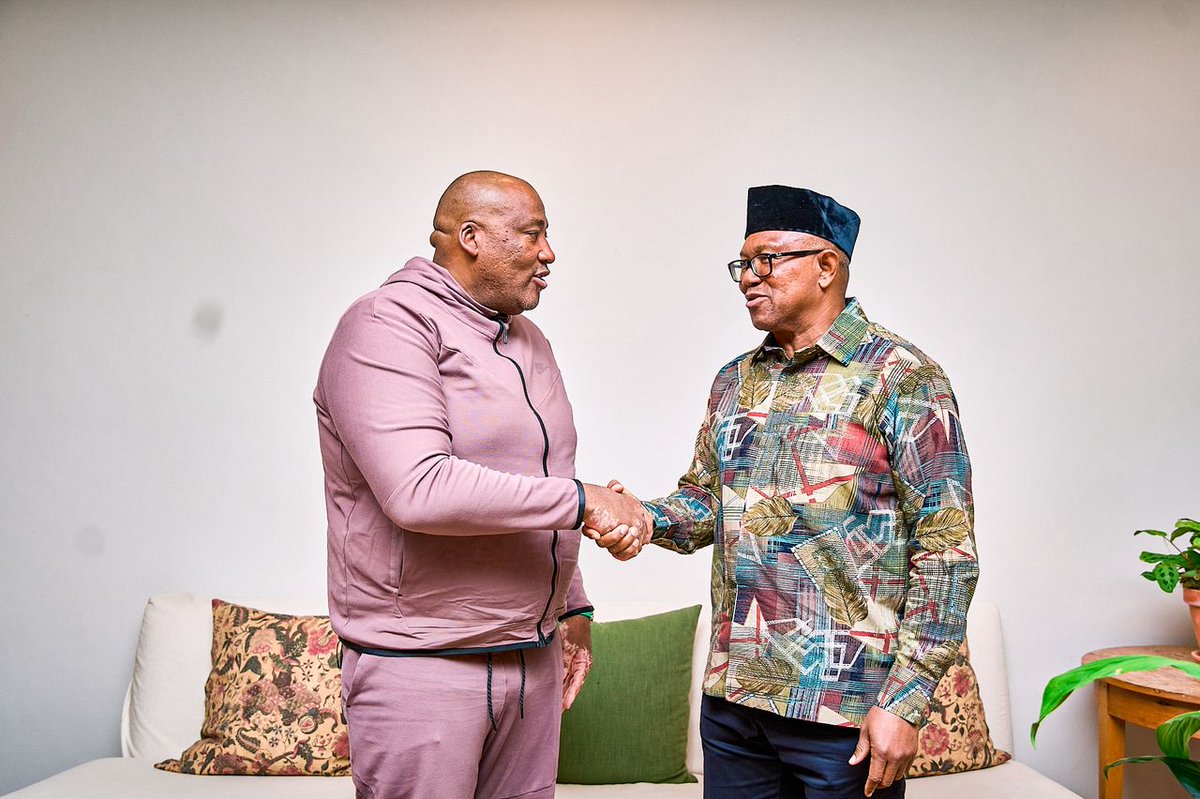
After speaking with Nigerians in Cape Town yesterday, I was able to have meaningful discussions this morning with three South African ministers and political party leaders regarding the ongoing challenges related to immigration, regional collaboration, and fostering peaceful coexistence between our nations.
I had the pleasure of meeting with Mr Leon Schreiber, the South African Minister of Home Affairs and a prominent figure in the Democratic Alliance; Mr Velenkosini Hlabisa, the Minister of Cooperative Governance and Traditional Affairs and leader of the Inkatha Freedom Party (IFP); and Mr Gayton McKenzie, the Minister of Sports, Arts and Culture and leader of the Patriotic Alliance (PA).
Our conversations were productive and candid, focusing on the current challenges that affect both countries—particularly those related to migration, economic strains, youth unemployment, security issues, and the rising tensions faced by African foreigners in South Africa.
I firmly believe that Nigeria and South Africa, both prominent African nations, must enhance dialogue, bolster cooperation, and seek solutions based on justice, mutual respect, and adherence to the rule of law. In challenging times, leaders and citizens alike need to demonstrate responsible leadership, compassion, and restraint.
We collectively stressed the importance of law-abiding behaviour, avoiding violence, resisting hate or provocation, and allowing lawful institutions to address grievances through democratic and constitutional processes, regardless of the challenges we face.
The progress of Africa hinges on our ability to create unity, foster economic inclusivity, invest in our communities, and uphold the dignity of every African, no matter where they live. -PO
Our Children Deserve Enhanced Learning Environments.
Today, May 21st, I had the opportunity to visit Practising Primary School in Agulu, my hometown, which has been a cornerstone of education since its establishment in 1922. Unfortunately, the school suffered significant damage from a fire last year, resulting in the loss of a historical building that had educated generations.
During a previous visit, I committed to supporting the school's reconstruction and to helping create a modern, supportive environment for the students.
This morning, I was pleased to return and deliver an initial amount of 10 million Naira to help initiate the rebuilding process. Education is a crucial investment for any community, and restoring schools is essential for renewing hope and ensuring a brighter future.
I also took the time to engage with the students, encouraging them to take their education seriously. Their future will be shaped by the discipline, effort, and dedication they demonstrate today.
A New Nigeria is POssible. -PO
Yesterday, May 19th, in Abuja, I attended the Presidential screening organised by our party, which took over two and a half hours. They carefully reviewed all my documents, including my degree certificates, NYSC credentials, and age declarations.
During the process, I also addressed questions regarding my vision for a new Nigeria and the type of leadership our nation urgently needs right now. Following this, I was cleared and received the presidential nomination form I had previously paid for.
I would like to commend the screening committee, led by former governor Sam Egwu, for their thorough and professional approach. Additionally, I appreciate our party's leadership for upholding the democratic process.
A New Nigeria is POssible. - PO
State visits by Leaders are not tourism, and diplomacy is not a fashion parade. Every foreign trip undertaken by a government must deliver measurable benefits to the people, including investments, technology transfer, trade agreements, factory expansion, industrial partnerships, and job creation.
During President Trump’s recent visit to China, the American delegation reportedly included a few top government officials, and many of the biggest figures in global business and technology:
Consequently, huge trade deals worth several billion dollars including about 200 Boeing orders were achieved.
The list of the entourage included
1. Donald J. Trump – President of the United States
2. Marco Rubio – Secretary of State
3. Pete Hegseth – Secretary of Defence
4. Elon Musk – CEO, Tesla & SpaceX
5. Jensen Huang – CEO, Nvidia
6. Tim Cook – CEO, Apple
7. Larry Fink – CEO, BlackRock
8. Stephen Schwarzman – CEO, Blackstone
9. Kelly Ortberg – CEO, Boeing
10. Brian Sikes – CEO, Cargill
11. Jane Fraser – CEO, Citigroup
12. Larry Culp – CEO, General Electric
13. David Solomon – CEO, Goldman Sachs
14. Sanjay Mehrotra – CEO, Micron Technology
15.Cristiano Amon – CEO, Qualcomm
16. Dina P. McCormick – President of Meta
17. Ryan McInerney – CEO, Visa
18. Michael Miebach – President, Mastercard
19. Jim Anderson – CEO, Coherent
20. Jacob Thaysen – CEO, Illumina
That is how serious nations approach diplomacy, by aligning foreign policy with economic expansion, industrial growth, innovation, and national productivity.
I hope that lessons can be learned from these recent visits comparing them with the President of Nigeria’s recent state visit to the United Kingdom.
A large entourage of politicians, aides, and government officials travelled, yet Nigerians are still asking a simple question: what exactly did Nigeria bring home?
Which factories are coming to Nigeria?
What power, technology, manufacturing, agricultural, or industrial agreements were secured?
How many direct jobs will this visit create for Nigerian youths?
What investments were attracted?
What measurable economic outcomes can the ordinary Nigerian point to?
The delegation reportedly included:
1. President Bola Tinubu
2. Senator (Mrs) Tinubu
3.12 governors
4.9 ministers
5.7 members of the National Assembly
6. Over 20 senior State House staff
7. Over 30 security personnel
8. Over 10 domestic staff
9. Several supporters and associates
It is not enough to ride horses, wear matching uniforms, attend royal banquets, and release glossy photographs. Symbolism without substance cannot feed hungry citizens.
Today, Nigeria is in decline, battling serious insecurity, food insecurity, unemployment, a weakened naira, declining industrial productivity, and worsening poverty.
At a time when millions of Nigerians struggle daily to afford food and survive economic hardship, every kobo spent on foreign trips must produce tangible national value: investments, factories, jobs, exports, infrastructure, and economic opportunities.
Nigeria needs leadership that is focused less on optics and more on productivity; less on ceremony and more on measurable economic results.
A New Nigeria is POssible. -PO
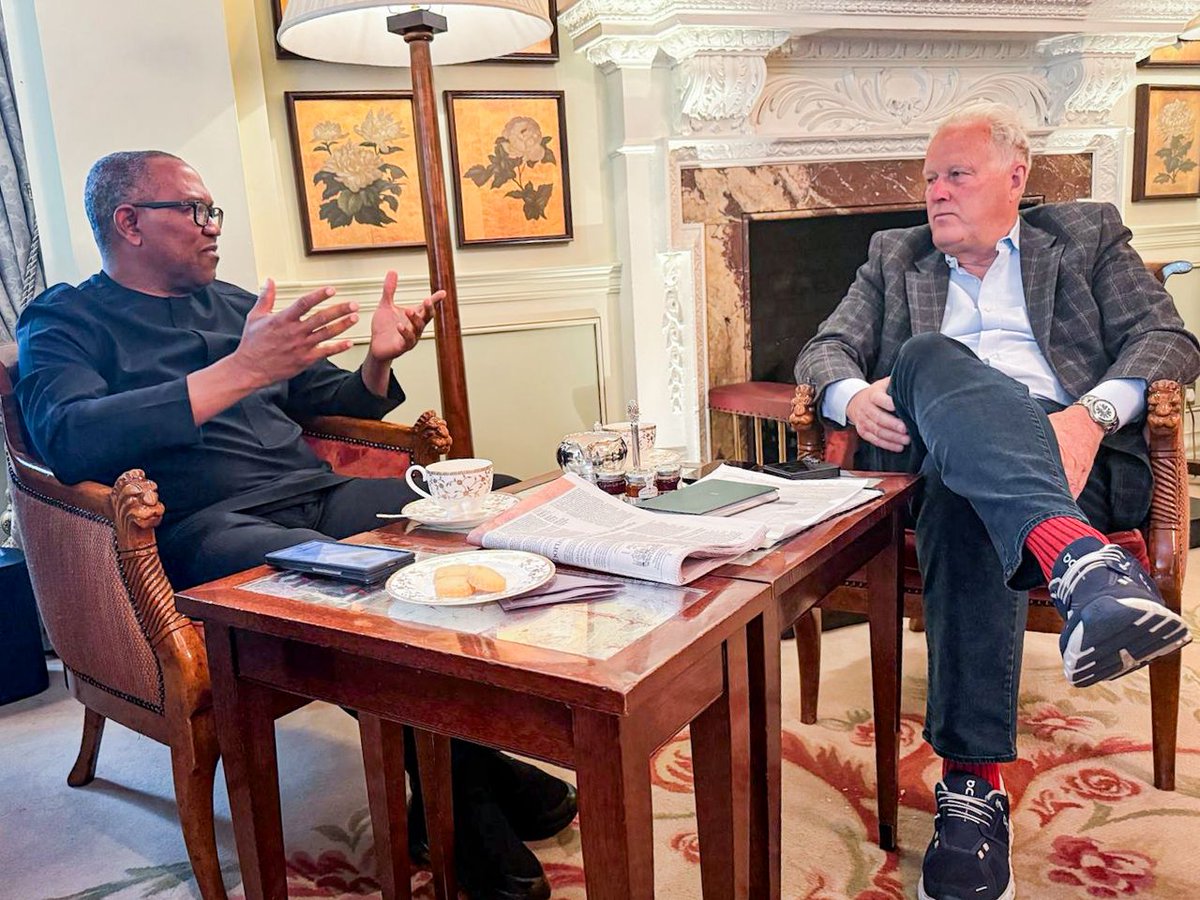
Today, I held meetings in London with some stakeholders in British politics and business community, including Lord Jonathan Marland, the Chairman of the Commonwealth Enterprise and Investment Council (CWEIC).
The discussion with Lord Marland held particular importance as it centred on prospective trade opportunities, economic advancement, and the promotion of small businesses throughout Nigeria.
It is clear that fostering a robust economy and generating employment, as evidenced by rapidly growing nations like China, Indonesia, and Vietnam, necessitates a concerted effort to prioritise support for micro, small, and medium-sized enterprises.
As I have consistently asserted, our micro, small, and medium enterprises (MSMEs) serve as the driving force behind economic growth, and it is imperative that we provide them with vigorous support to enhance development and create significant employment opportunities, particularly within the agriculture and manufacturing sectors.
A New and revitalised Nigeria is POssible. -PO
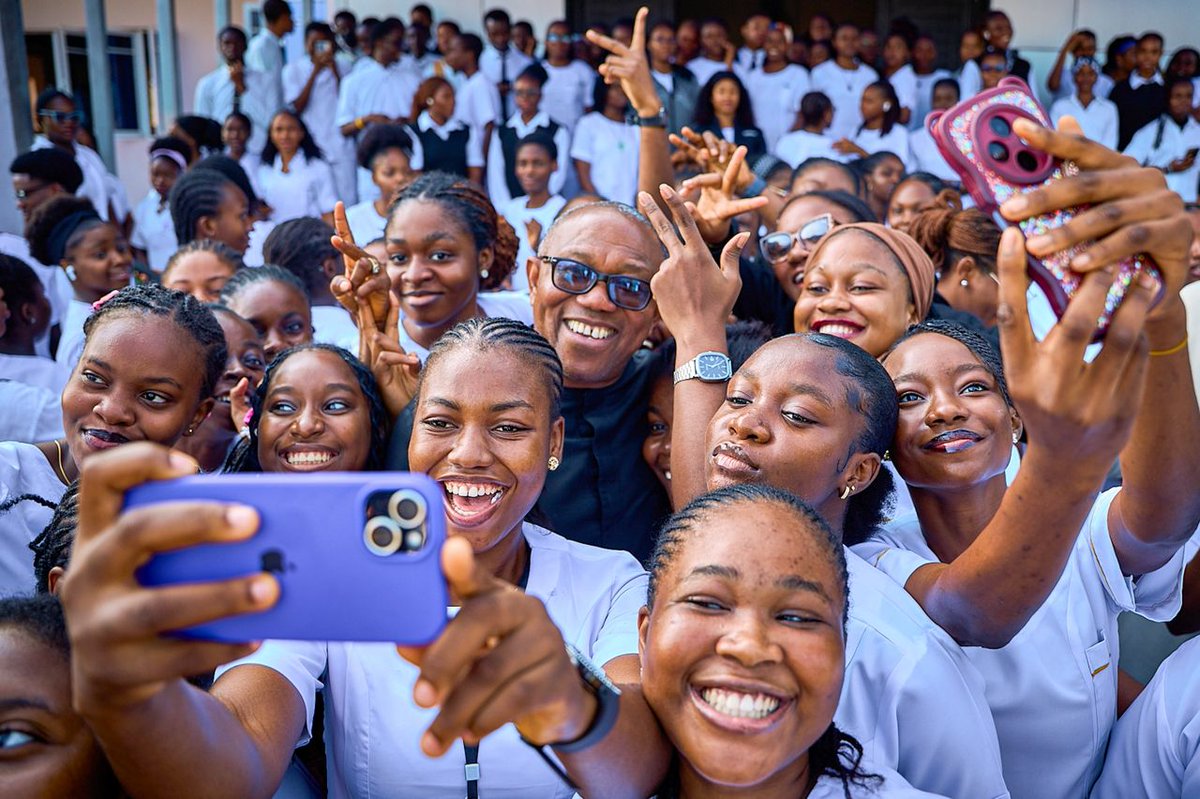
On this World Nurses Day, I would like to take a moment to appreciate all the nurses and midwives in our dear nation, who occupy a very special place and play very critical roles in our health sector. As one who has been on the vanguard of investing in our critical sectors of human and national development, I have always maintained that you, our dear nurses, are the heart of our health sector.
Over the years, I have traversed different corners of our nation supporting different schools and colleges of nursing and midwifery because I understand the inevitable role you play in our healthcare delivery. As you mark this special day, I wish to, firstly, thank you for all your efforts and sacrifices. Your compassion, sacrifice, and resilience keep our nation alive. And secondly, I wish to encourage you not to relent in your service to humanity. Nigerian nurses work under some of the toughest conditions with dignity and courage. From physical and mental stress to high patient-to-nurse ratios, to lack of equipment and poor working environments, your resilience keeps our health sector going.
And beyond the shores of the nation, our nurses have continued to make exploits on the global stage. From leading the next generation research in nursing practice to championing excellence in clinical practice—many Nigerian nurses have written their names on the sands of time and lifted our national banner high. I celebrate you all.
My firm commitment to you all remains this — we will build a New Nigeria where your hard work and sacrifices will never go unnoticed. We will invest in your education and training to ensure that you remain competitive on the global stage. Happy World Nurses Day to you all.
A New Nigeria is POssible. -PO
Where we are, national unity is no longer optional; it is a national necessity. We must rise above ethnicity, religion, region, and political divisions to recover the soul of our nation.
With unity and effective leadership, Nigeria can become a productive and prosperous nation once again. We must deliberately support agriculture and manufacturing so they become the highest contributors to our Gross Domestic Product. Special strategic attention must be given to unlocking the enormous agricultural potential of Northern Nigeria and connecting it to industrial production across the federation. We must move decisively from a nation of consumption to a nation of production.
We can no longer afford policies that foreclose our youth.
With competent, compassionate and transformative leadership, we can defeat insecurity, reduce corruption, create jobs, tame inflation, improve education, and restore hope to millions of Nigerians. Our youths must no longer be viewed as problems to manage, but as assets to empower. Our women must no longer be neglected, but included as equal partners in nation-building.
I remain convinced that a new Nigeria is possible, a Nigeria that is united, secure, productive, inclusive, and governed by justice and fairness. Let us therefore move forward with courage, with unity, and with our collective resolve. -PO
"Some men change their party for the sake of their principles; others change their principles for the sake of their party." Winston Churchill
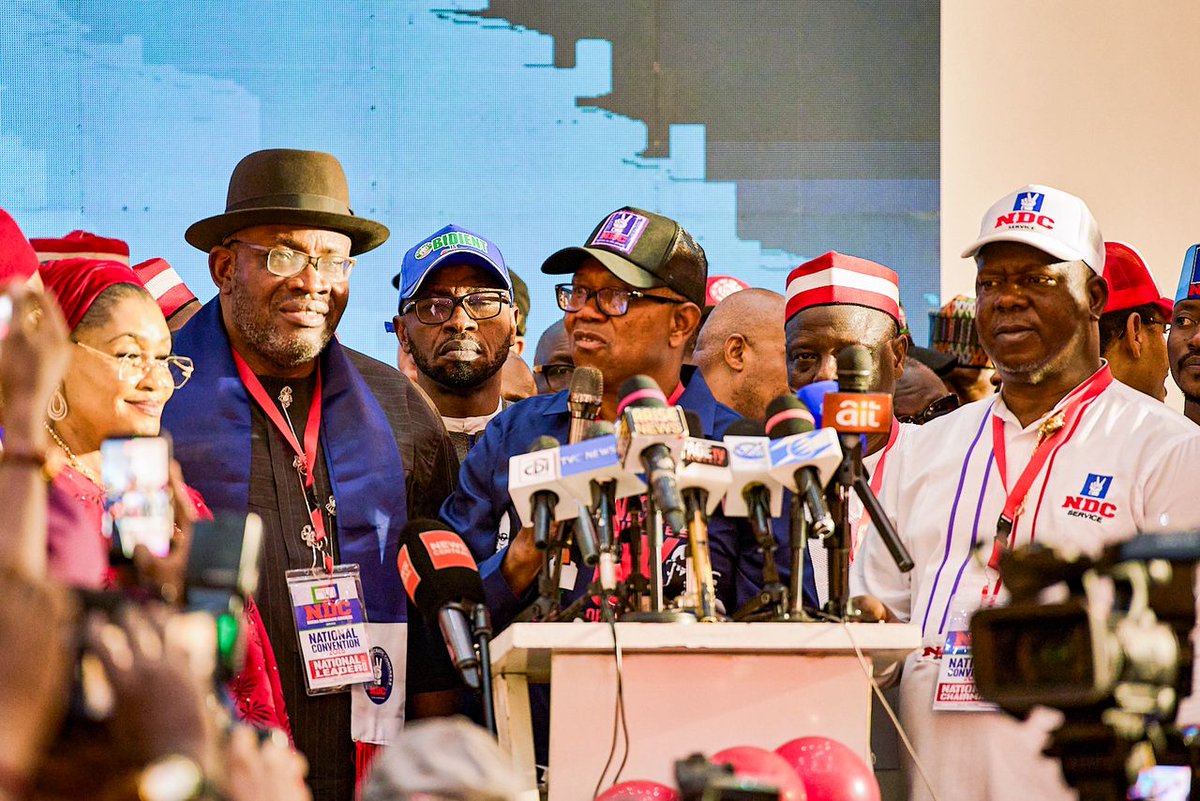
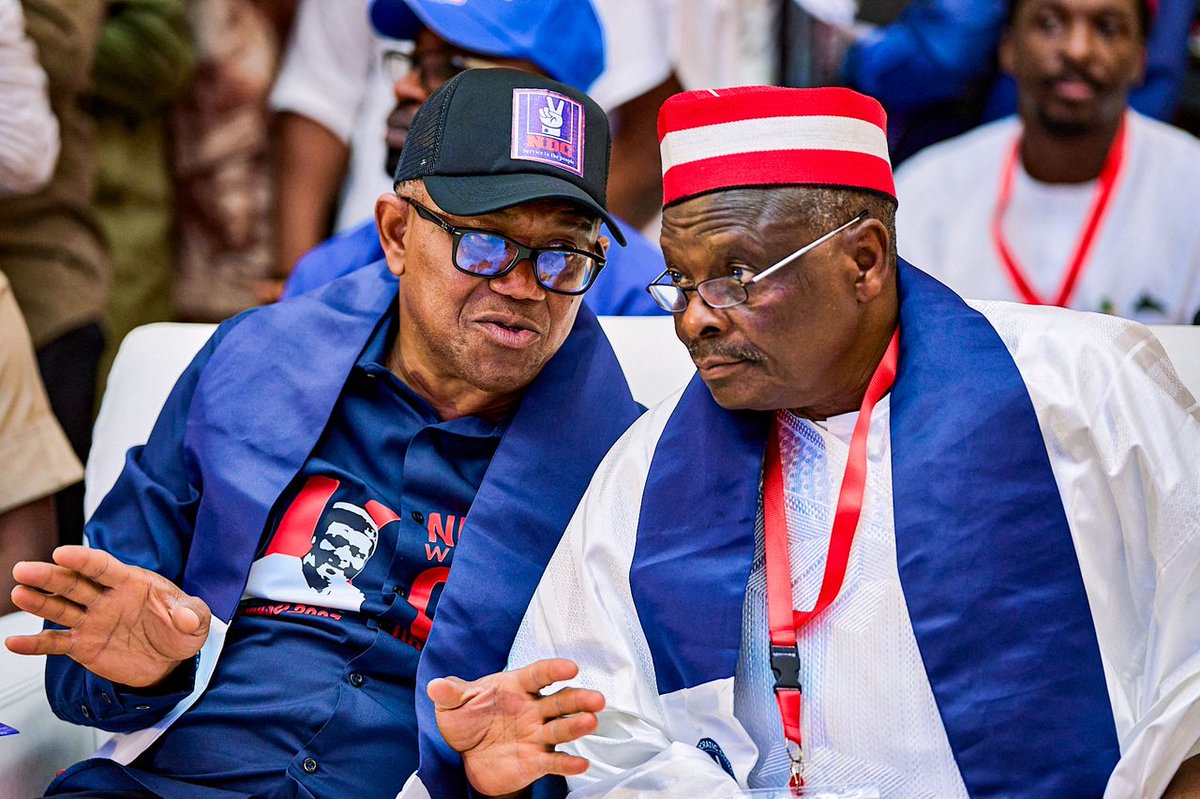
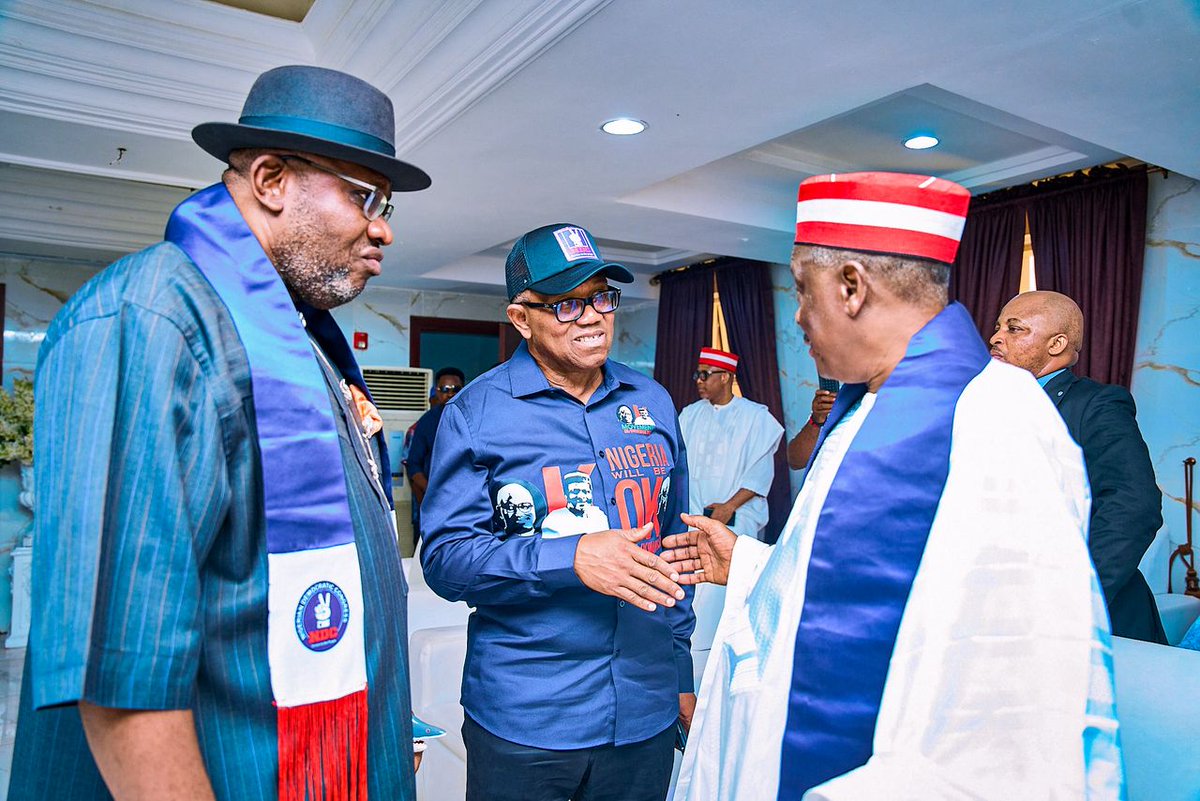
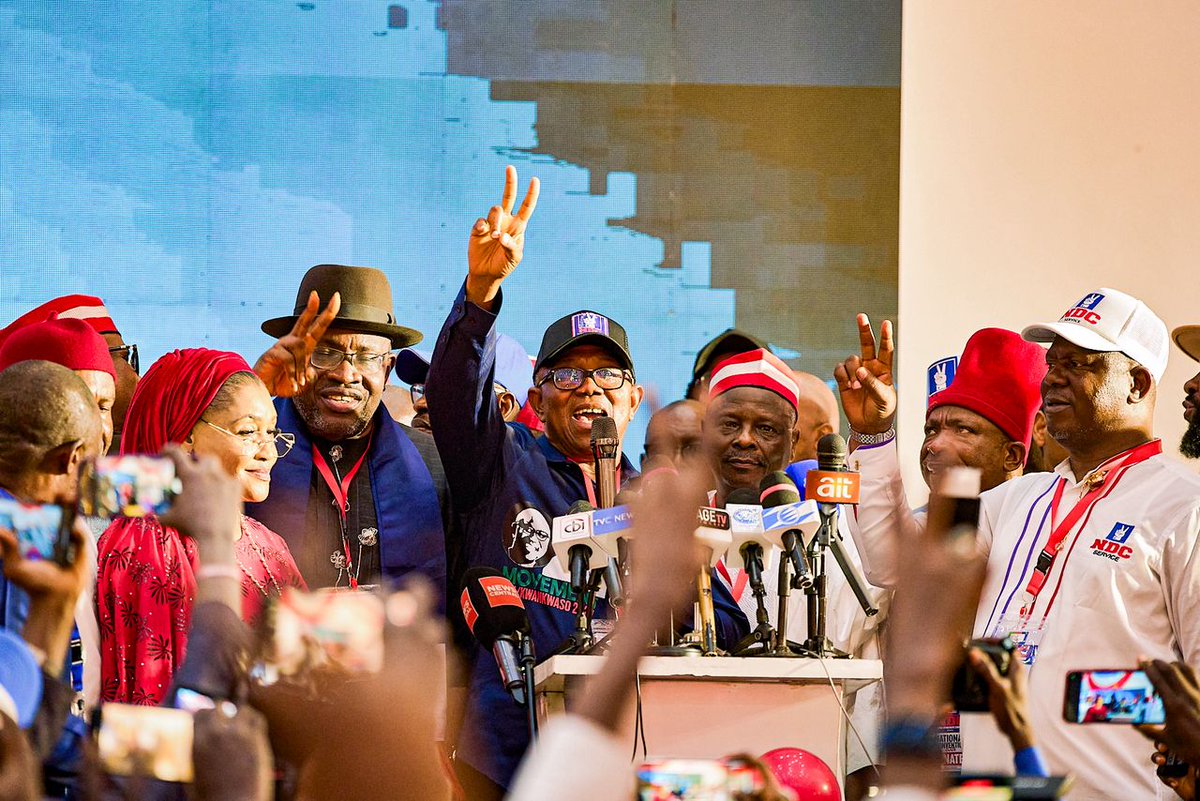
Today, May 9th, I attended the 1st convention of my latest party, the Nigeria Democratic Congress (NDC) in Abuja, Nigeria. The convention was successful and continued to show the resilience of Nigerians to change
I express my sincere appreciation and gratitude to the NDC family, led by the distinguished Senator Henry Seriake Dickson, for inviting us and for the generosity of spirit with which they have accommodated us at this critical moment in our national journey.
I also wish to express profound gratitude to the African Democratic Congress(ADC), particularly Distinguished Senator David Mark, for providing a democratic platform and showing uncommon understanding when the ongoing litigation forced us out of the Labour Party and the New Nigeria People's Party, NNPP respectively. That spirit of solidarity must remain the foundation upon which a better Nigeria will be built.
Today, the most painful aspect of our political existence is that many who once benefited from democratic governance have now become willing accessories to the destruction of democracy itself. Those who once fought for justice now openly celebrate electoral injustice. Those who once spoke against impunity now defend coercion, manipulation, intimidation, and outright political gangsterism, especially against opposition voices. What we are witnessing is not politics; it is a systematic assault on democracy and the will of the people.
Nigeria today stands at a dangerous crossroads. Our democracy is under severe threat. Our nation is drifting without direction, and our people are passing through immense suffering. Across the world, Nigeria is increasingly described as a failing and disgraced nation. This is not the destiny God ordained for our great country. It was not always so, and it must never be allowed to remain so.
Across virtually every recognised indicator of good governance - accountability, political stability, rule of law, control of corruption, government effectiveness, regulatory quality, and the separation of powers - Nigeria continues to record alarming failures. The institutions that should protect the people are weakening daily, while the burden on ordinary citizens grows heavier with each passing moment.
Today, over 140 million Nigerians live in multidimensional poverty. Tens of millions of young people remain unemployed or underemployed. Inflation continues to crush families. Businesses are shutting down. Farmers can no longer safely access their farms. Communities live in fear. In this month alone, hundreds of innocent Nigerians have lost their lives to insecurity, while many others have been kidnapped, displaced, or thrown deeper into poverty.
The most heartbreaking question confronting us is this: Who consoles the grieving mother whose child was abducted on the way to school? Who speaks for the father who can no longer feed his family despite working every day? Who defends the young Nigerian whose dreams have been destroyed by a nation that rewards connections over competence and corruption over character?
Our present tragedy is not accidental. It is the direct consequence of years of deliberate sabotage by a political class that prospers by dividing the people and weakening the nation. Nigeria is not a poor country; rather, we are being looted into poverty. We have abundant human and natural resources, yet we remain trapped in deprivation because leadership has failed to place the common good above personal interest.
Our choice as a people is therefore clear: whether to surrender to despair and national decline, or to summon the courage to rescue our country and rebuild it on the foundations of unity, equity, justice, competence, and productivity.