Tras una desafortunada gira de medios en la que involuntariamente confesó todos sus delitos, la Gobernadora de Chihuahua decidió jugar su carta más desesperada:
Rogarle al país vecino su intervención para impedir que aparezca en la boleta electoral.
De ese tamaño es el miedo.
🇮🇱 🏗️ 🇲🇽 Ciudad de la Torah: proyecto residencial #Sionista en el #Edomex | El proyecto es un desarrollo inmobiliario residencial ubicado en #IxtapandelaSal diseñado específicamente para familias judías. Al respecto, el periodista #ErnestoLedesma (@eledesmaa) analiza los intereses detrás del proyecto, trazando un paralelismo con las dinámicas territoriales sionistas de despojo realizadas contra el pueblo #Palestino.
#ResumenInformativo👇
https://t.co/ChGaw8V8st
@alitomorenoc@rochamoya_ en esta se habla de los nexos, encubrimiento y colaboración con el narcotraficante más buscado en México, Amado Carrillo, de quien además recibió cohecho con un departamento lujoso en la Ciudad de México, 5 automoviles último modelo y cantidades no especificadas en dólares.
@alitomorenoc@rochamoya_ Enrique Cervantes Aguirre leyó ante los 31 comandantes de todas las zonas y regiones militares de la República Mexicana la investigación a que fue sujeto el destituido general Gutierrez Rebollo
@EvGabriel10@JorgeGalicia95 Sobre Antioquia: existió la sucesión apostólica. Como se que no me creés aunque te muestre la verdad, ve a Wikipedia y busca quien fue el antecesor de obispo de Antioquia y de ahí te vas hacían atrás hasta que llegues a los apóstoles. La iglesia primitiva es católica
@EvGabriel10@JorgeGalicia95 ¿No creés?
NO. Jesus dejo claro lo que si es y pensar distinto es anti Cristiano.
La iglesia católica primitiva lo hacía y aun al día de hoy se hace en cada misa.
Lo que tu creas que es el deber ser no me interesa, es anti bíblico. O dame una cita con biblia
@EvGabriel10@JorgeGalicia95 Como católico, debes confesar tus pecados (𝘷𝘦𝘯𝘪𝘢𝘭𝘦𝘴) en cada misa como lo hacían en la iglesia primitiva, pero en silencio. El sacerdote realizará el 𝒂𝒄𝒕𝒐 𝒑𝒆𝒏𝒊𝒕𝒆𝒏𝒄𝒊𝒂𝒍 y pedirá perdón a Dios por tus pecados. Ergo la confesión es siempre.
@EvGabriel10@JorgeGalicia95 Todo es rechazo a la iglesia (por eso les llamamos protestantes) hasta que aparece la verdad en santiago 5,14–16
Y aun leyendo, lo negaran.
https://t.co/l3XaWtK3VC
Confession to a Priest Isn’t a Catholic Invention. It’s in the Bible.
The Bible itself shows that Jesus did not leave forgiveness as a completely private affair between you and God.
He gave that authority to His Church.
After the Resurrection, Jesus appeared to the apostles and said something extraordinary in Gospel of John 20,22–23: “Receive the Holy Spirit. Whose sins you forgive are forgiven them, and whose sins you retain are retained.” Think carefully about that.
Jesus did not say: “Tell people to confess privately to God.” He gave human beings the authority to forgive or retain sins.
But here is the obvious question critics rarely answer: How would the apostles know which sins to forgive or retain if no one confessed them?
The very structure of Christ’s command implies confession. Not because priests replace God.
But because God chose to use His Church as the instrument of His mercy. And this was not invented by Catholics centuries later.
The earliest Christians practiced it openly. In Acts of the Apostles 19,18: “Many of those who believed came confessing and divulging their practices.”
In the early Church, confession was public. Over time, the Church wisely moved it into private sacramental confession to protect the dignity of the sinner. But the principle remained the same:
Christ forgives.
The priest is His instrument.
In fact, the Bible even connects forgiveness with the authority of the Church in Epistle of James 5,14–16: “Call the elders of the Church, and if he has committed sins, he will be forgiven.
Therefore, confess your sins to one another.” Notice the pattern.
Call the elders.
Confess the sins.
Receive forgiveness.
This is not medieval Catholic theology. This is New Testament Christianity.
Many Christians say they believe the Bible completely until the Bible gives authority to the Church. Then suddenly authority becomes a problem. But if Jesus could use fishermen to preach the Gospel, If He could use mud to heal the blind, If He could use water for baptism, why is it so hard to believe He could use a priest to forgive sins?
The priest does not forgive instead of God.
The priest forgives in the name of Christ. Which is exactly what Jesus intended when He breathed on the apostles and gave them the authority to forgive sins.
Reject confession if you want. But be honest about it. You are not rejecting a Catholic tradition. You are rejecting something Jesus Himself instituted.
-Fr. Chisom
@Emrys295@UcheMaryOkoli Como católico, debes confesar tus pecados (𝘷𝘦𝘯𝘪𝘢𝘭𝘦𝘴) en cada misa como lo hacían en la iglesia primitiva, pero en silencio. El sacerdote realizará el 𝒂𝒄𝒕𝒐 𝒑𝒆𝒏𝒊𝒕𝒆𝒏𝒄𝒊𝒂𝒍 y pedirá perdón a Dios por tus pecados. Ergo la confesión es siempre.
The Biblical Case for the Pope :
The most famous passage supporting the papacy is Matthew 16:16-19 but I think most people do not realize how much it says. Let's start with reviewing the text.
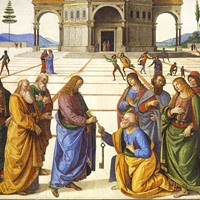
"Simon Peter answered, “You are the Messiah, the Son of the living God.” Jesus replied, “Blessed are you, Simon son of Jonah, for this was not revealed to you by flesh and blood, but by my Father in heaven. And I tell you that you are Peter, and on this rock I will build my church, and the gates of Hades will not overcome it. I will give you the keys of the kingdom of heaven; whatever you bind on earth will be bound in heaven, and whatever you loose on earth will be loosed in heaven.”
Here we have Jesus renaming Simon to Rock (Petros in Greek) and telling him that he will build his church on him that the gates of hell will not overcome. But then Jesus begins a ceremony. I call it a ceremony because it appears that Jesus is following a ceremonial formula for ordaining the Vicar (representative) of a King. Jesus, who regularly quoted from Isaiah (over 20 times), closely follows the formula in Isaiah 22:20-22.
Consider:
“In that day I will summon my servant, Eliakim son of Hilkiah… I will place on his shoulder the key to the house of David; what he opens no one can shut, and what he shuts no one can open."
The parallels are striking. A key is given. Peter/Eliakim is then given the power to bind/shut or loose/open. The similarity of the phrasing and the tendency of Christ to quote from the prophet Isaiah make it seem HIGHLY unlikely that this is coincidental. Jesus is nearly quoting the Prophet Isaiah on purpose. What is he getting at?
To understand, let’s look at who Eliakim was. He was the Vicar of King Hezekiah. And we see his role in 2 Kings 18:18. In that passage, the Assyrian Commander calls for King Hezekiah. But instead of the King going out, Eliakim is sent to speak on his behalf. Eliakim was the vicar, the representative and the spokesperson for King Hezekiah.
With that in mind, let's get back to the ceremony that Jesus performed on St Peter in Matt 16:16-19. Jesus (a king) was performing a ceremony of a Vicar and the Vicar's role (as seen in 2 Kings) is to speak on behalf of the King. He is making Peter his Vicar.
There are other proofs in the bible. Jesus promised that Peter would be the one to strengthen the brothers (Luke 22:31-32). In John 21:10-14 Peter hauled in the fish (a symbol for the faithful) by himself when all the disciples together couldn't do it (v6) and the text says the net did not tear (the greek for tear is schism). And throughout the book of Acts you see Peter acting as Pope. In Acts 5, it is Peter (not the other apostles) who sits in judgement of Ananias and Sapphira. In Acts 15, at the first council only Peter speaks during the deliberations and when James wraps up the discussion he quotes one person: Peter. We see St Paul say that when completed his period of contemplation, he went to Peter first (Galatians 1:18). And the list of the apostles changes in order quite a bit throughout the New Testament but it always starts with St. Peter (and ends with Judas) - the others change in order. In many cases, it just says “Peter and the others.”
Peter is clearly given a unique role of leadership, vicarship of Christ, and spokesman for the Christian movement. But did he pass it on? Is it possible that Peter was indeed given a special role but that ended with Peter? The answer to this is no. The offices off the apostles were passed on. We know this both from the bible and from history.
Consider Acts 1:12-26. In that passage, Judas (one of the twelve apostles) has died an ignominious death and Peter (acting as the leader of the Apostles) says that “it is necessary to choose” someone to take his office (v 20-21). The word for office here is “episkopēn” which is the Greek word for bishopfrik. And then Matthias is chosen to replace Judas “in this ministry and apostleship” (v25) and that he “was numbered with the eleven apostles.” (v26) Here we have an apostle dying and a successor being chosen. How in the world is this not apostolic succession? And, relevant to the topic of Peter, it explicitly states that Matthias would take the office (bishopfrik) of Judas. This is a handing down of an ecclesial office.
And lest people think this is a one off situation with Judas, there is another very interesting account from St Clement of Rome writing in 90AD. He writes, “Our apostles knew through our Lord Jesus Christ that there would be strife for the office of bishop. For this reason, therefore, having received perfect foreknowledge, they appointed those who have already been mentioned and afterwards added the further provision that, if they should die, other approved men should succeed to their ministry” (Letter to the Corinthians 42:4–5, 44:1–3)
In short, the papacy is clearly a biblical office instituted by Christ.
Ese ataque es tan viejo que viene desde que lo recuerdo con Juan Pablo II y funciona porque mezcla media verdad con ignorancia histórica.
Confunden símbolo con riqueza personal. Esa “corona de oro” no es el patrimonio de un Papa ni un lujo cotidiano, es patrimonio histórico y artístico acumulado durante siglos, donado por fieles, reyes y culturas enteras. No está en la cabeza de un Papa viviendo en opulencia, está en vitrinas como cualquier pieza histórica que custodia la memoria de una civilización.
La Iglesia no es un banco central ni una empresa con accionistas, es una estructura viva que sostiene hospitales, comedores, misiones, escuelas y refugios en todo el mundo. Si “vendiera todo”, no resolvería el problema de fondo: perdería patrimonio irrepetible y, peor aún, debilitaría la red permanente de ayuda que actúa todos los días donde muchas veces ni los Estados llegan. No es una bóveda, es una presencia activa en el sufrimiento humano.
Además, es la mayor organización caritativa del mundo, con millones de personas atendidas diariamente y una presencia constante en las zonas más pobres del planeta.
Muchos de los que atacan no donan, no sirven y no construyen, pero exigen que la Iglesia desmantele lo que durante siglos ha sostenido la caridad real.
El ataque, en el fondo, no es moral sino ideológico, porque la Iglesia tiene influencia, historia y una verdad moral que incomoda. Por eso reducen todo a una caricatura: riqueza igual a hipocresía, sin entender qué es la Iglesia ni cómo funciona.
Cristo no pidió destruir lo valioso, pidió ordenar el uso de los bienes, servir al prójimo y no idolatrar el dinero, y esa tensión entre lo material y lo espiritual ha sido vivida por la Iglesia con errores humanos, sí, pero también con una obra que ningún crítico ha logrado igualar.
Y aquí está el punto que casi nadie explica bien: por qué la Iglesia no vende sus reliquias. Porque no son objetos intercambiables, son testimonio. El Sudario de Turín, por ejemplo, no es una “pieza cara”, es un signo histórico y un objeto de veneración que apunta a Cristo.
Venderlo sería convertir lo sagrado en mercancía, sería ponerle precio a aquello que precisamente trasciende el precio. Por eso la Iglesia, desde sus orígenes, condena la SIMONÍA, es decir, la compra y venta de lo sagrado. No es que no quiera vender, es que no puede hacerlo sin traicionar su propia fe. Además, estas reliquias y objetos no son propiedad privada en el sentido moderno, son patrimonio espiritual y cultural de pueblos enteros, memoria viva de la historia humana. Reducirlos a “activos” para liquidar es no entender su naturaleza con más de 2.000 años de historia.
Por último, incluso si se vendiera todo, no se resolvería la pobreza. La pobreza no es un problema que desaparece con una venta única, sino con estructuras permanentes de asistencia, educación y presencia, que es justamente lo que la Iglesia ha sostenido durante siglos.
Venderlo todo podría generar un impacto momentáneo, pero destruiría la capacidad de ayudar de forma constante.
El error de fondo del crítico es pensar que todo lo valioso debe convertirse en dinero, mientras que la Iglesia sostiene que hay bienes cuyo valor no es económico sino trascendente, y que deben ser conservados y puestos al servicio del alma humana.
La Iglesia no vende sus reliquias porque no todo lo valioso tiene precio, y lo sagrado no se subasta.
FIN ¡Ignorantes!