Today we announced progress toward our goal of advancing 24/7 collateral mobility. DTCC’s Collateral AppChain, a shared infrastructure platform for collateral, will leverage the Chainlink Runtime Environment (CRE) and @chainlink data standard to enable near real-time collateral management across financial markets and blockchains.
The integration will enable the seamless pairing of asset prices, valuations, and movement, with the aim of overhauling how market risk is managed globally and unlock greater capital efficiency.
This milestone reflects our broader vision to enable 24/7, near real-time collateral management across the global financial system.
Read the full announcement: https://t.co/ELVio44scA
We’re excited to announce the launch of the Chainlink Runtime Environment (CRE)—the all-in-one orchestration layer powering the next massive leap in the adoption of onchain finance.
https://t.co/SgMVyWPNLi
CRE is already being adopted by the largest financial institutions and top DeFi protocols to simplify how they build institutional-grade smart contracts that enable the next stage of our industry 🧵⬇️
We're excited to announce that Chainlink and the United States Department of Commerce (@CommerceGov) have worked together to bring U.S. government macroeconomic data onchain.
https://t.co/Bea4iLirfZ
These new Chainlink Data Feeds securely deliver critical information around key U.S. economy metrics onchain, sourced from the Bureau of Economic Analysis (@BEA_News).
Metrics include the Real Gross Domestic Product (GDP), Personal Consumption Expenditures (PCE) Price Index, and Real Final Sales to Private Domestic Purchasers.
Bringing key U.S. government data onchain unlocks innovative use cases for blockchain markets, including:
• Automated trading strategies
• Increased composability of tokenized assets
• Issuance of new types of digital assets
• Real-time prediction markets for crowdsourced intelligence
• Transparent dashboards powered by immutable data
• DeFi protocol risk management based on macroeconomic factors
These datasets are updated monthly or quarterly as applicable, and are initially being made available across ten blockchain ecosystems, starting with Arbitrum, Avalanche, Base, Botanix, Ethereum, Linea, Mantle, Optimism, Sonic, and ZKsync. Support for additional blockchain networks can be incorporated over time based on user demand.
This development builds upon Chainlink’s accelerated work with the U.S. government in 2025, including meeting with several key officials and regulators to make policy recommendations that are advancing the growth of the blockchain industry.
We're excited to announce the launch of the Chainlink Reserve, a new upgrade centered on the creation of a strategic onchain reserve of LINK tokens.
https://t.co/Fgib8zR9uj
The Chainlink Reserve is designed to support the long-term growth and sustainability of the Chainlink Network by accumulating LINK tokens using offchain revenue from large enterprises that are adopting the Chainlink standard and from onchain service usage.
The Chainlink Reserve is being built up by using Payment Abstraction to convert offchain and onchain revenue into LINK, using a combination of Chainlink services and decentralized exchange infrastructure.
Demand for Chainlink has already created hundreds of millions of dollars in revenue, substantially from large enterprises that have paid offchain for access to the Chainlink Platform.
With increasing demand from a number of the world’s largest banking and capital markets institutions, this form of paying for the Chainlink standard is expected to grow into the future as the industry grows.
The Reserve has already accumulated over $1M worth of LINK from this early stage launch phase, which is expected to gradually grow in the coming months as more revenue is converted into LINK and placed into the Reserve.
We do not expect any withdrawals from the Reserve for multiple years and thus it is expected to grow over time. We believe that as the industry demand for Chainlink’s unique capabilities increases, that adoption of Chainlink services will enable the Reserve to grow further.
🧵👇
We’re excited to announce that Chainlink and @Mastercard have partnered to enable billions of cardholders to purchase crypto directly onchain.
https://t.co/bN5IVe1ieL
Chainlink verifies and synchronizes key transaction details to enable Mastercard holders to access crypto directly onchain.
This marks a major step forward in the mainstream adoption of Web3. Chainlink and Mastercard power the new @swapperfinance platform, with @ZeroHashX providing the onchain service and access to liquidity needed to convert fiat into crypto with seamless smart contract execution, alongside @Shift4, and @xswap_link, with liquidity sourced from @Uniswap.
Combining Mastercard’s global payments technology and Chainlink’s industry-standard infrastructure creates a secure user experience for billions 🧵
Stablecoin regulation in the US will kick off a wave of new stablecoins in the US and all over the world. They will all need proof of reserves and cross-chain connectivity to be used as a source of payment for the growing digital asset economy and tokenized funds.
Chainlink is the only platform that provides proof of reserves and cross-chain connectivity in one system.
This is before we look at the need for on chain identity and the ability to use stablecoins as a form of payment with minimal friction when fulfilling compliance requirements. Chainlink will then be the only platform to provide proof of reserves, cross-chain connectivity and on-chain identity/compliance in a single system.
As the complexity of blockchain transactions grows with more data, connectivity, compliance and other requirements, Chainlink will be being built as the only platform that can fulfill all those requirements in a single unified system of transactional standards.
All of these Chainlink capabilities can then be easily configured, deployed and managed in one piece of workflow code on CRE. So you're getting all the services you need to prove reserves, connect across chains, solve compliance/identity issues and manage all this complexity with a single piece of code, in one system.
The CCIP v1.6 upgrade is officially live on mainnet—bringing support for @Solana as the first non-EVM chain on CCIP.
https://t.co/VhSPjJmrME
The new release introduces the following key benefits for developers and users:
• Access to non-EVM chains: Solana is live today, with many more non-EVM chains to come
• Faster chain expansion: New streamlined architecture accelerates the rate of new EVM & non-EVM chain integrations
• Lower fees: Multi-chain message batching reduces user gas costs, especially as cross-chain volume scales
With v1.6, apps and tokens that use CCIP will benefit from seamless connectivity to more chains than ever before without disrupting existing integrations.
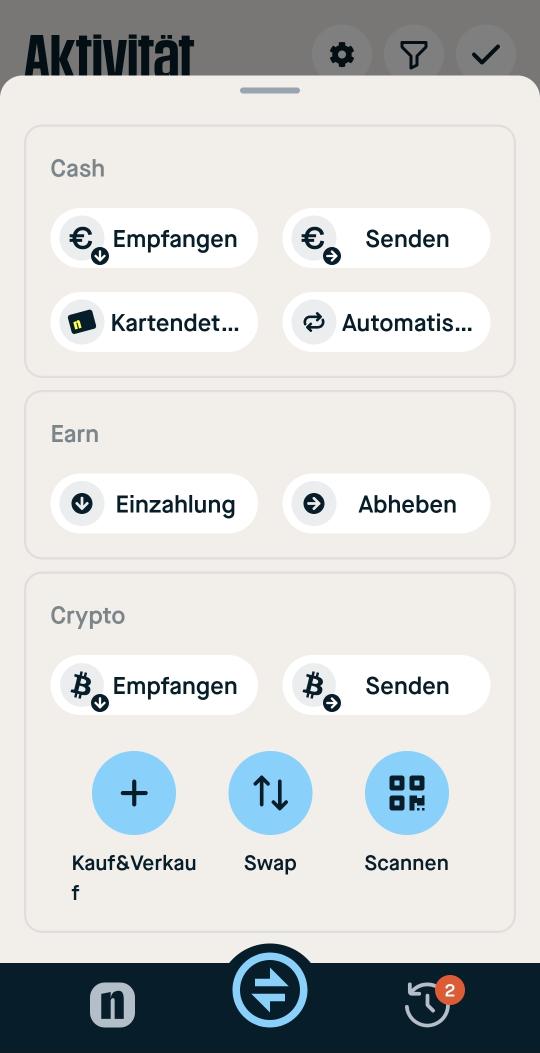
@nashsocial I'm a nash user from the very first day. While I still like the concept and find it a highly trustworthy project - THIS, from a UI/UX perspective is an absolute catastrophy.
We’re also excited to share that the first phase of the Chainlink Build claims mechanism is code-complete and expected to launch this year.
This mechanism will make Build tokens claimable by Chainlink ecosystem participants, including Stakers. More info to come.
We’re excited to announce Chainlink Payment Abstraction is officially live on mainnet, enabling user fees to be converted into LINK.
Network fees generated from Chainlink SVR—including @aave's usage of SVR—will now be converted to LINK.
🧵👇
https://t.co/ZXkRSqJ9c6