🎯 If you believe that data is more than just numbers but powerful tools to shape the future, you’re in the right place! 🚀#DataStorytelling#BusinessInsights #
🚀 SpaceX S-1/A: the market is still waiting for the real trigger.
SpaceX has filed its S-1/A Amendment No. 1, but the story is not yet at the finish line.
The key next steps are still ahead:
✅ SEC effectiveness
📄 Final prospectus
🔔 424B4 filing
That matters because the S-1/A is still a preliminary document. Pricing, final share count, underwriting economics and certain offering terms remain incomplete or subject to change.
For investors, this makes the next filing especially important.
The S-1/A already confirms the core architecture of the equity story:
🛰️ Starlink remains the economic engine.
🚀 Starship and Launch remain the strategic bet.
🤖 xAI adds the AI narrative — but also increases capital intensity.
The question now moves from narrative to transaction structure.
What should investors watch in the final prospectus?
1. 💰 Pricing and valuation discipline
The final IPO price will tell us how much of the future is already being priced in.
2. 🔁 Use of proceeds and capital allocation
The central issue is not only growth, but how Starlink-generated value is reinvested across Launch, Starship, orbital AI compute and xAI.
3. ✍️ Underwriting agreement and syndicate economics
The final underwriting terms will help investors understand the economics, risk-sharing and market positioning of the deal.
4. 🗳️ Governance after listing
The dual-class structure remains central. Class A shares carry one vote per share, while Class B shares carry ten votes per share, and SpaceX expects to be treated as a controlled company after the offering.
5. ⚠️ Risk disclosure evolution
The S-1/A highlights execution risks around Starship scale, launch cadence, regulatory approvals, satellite connectivity, AI products and orbital AI compute.
The IPO story is powerful.
But the final prospectus will answer the harder question:
Is SpaceX coming to market as a growth story — or as a capital allocation test wrapped inside one of the most ambitious industrial platforms ever built?
Until the 424B4 arrives, the story remains open.
hashtag#SpaceX hashtag#IPO hashtag#Starlink hashtag#Starship hashtag#xAI hashtag#CapitalAllocation hashtag#Governance hashtag#SEC hashtag#Investing hashtag#SpaceEconomy hashtag#ArtificialIntelligence hashtag#DataStorytelling
🚀 SpaceX: When Science Fiction Becomes a Prospectus
SpaceX’s IPO is shaping up to be one of the most significant financial events of recent years.
The expected indicative price is $135 per share. But the real point may not be whether that price is “high” or “low” in a conventional valuation sense.
With SpaceX, traditional valuation becomes unusually difficult. There are no clean peers.
No listed company really combines reusable rockets, satellite connectivity, launch infrastructure, defense relevance, global broadband, frontier engineering, and a founder-driven strategic narrative at this scale.
SpaceX is not just an aerospace company.
It is an engineering marvel that the market is trying to convert into a price.
And that price — apparently around $135 per share — tells us something important: investors may not be buying only current cash flows.
They may be buying:
🚀 scarcity
🛰️ optionality
⚙️ technological dominance
🌍 strategic infrastructure
🌌 a credible claim on the future
This is why Aswath Damodaran’s analysis is so interesting.
One of the world’s leading voices in valuation reaches a more cautious conclusion: around $100 per share.
👉 Damodaran’s analysis:
https://t.co/LPNoYqgEwv
But perhaps the comparison between $100 and $135 should not be read only as a valuation gap. It is also a price discovery exercise in a market where comparables are almost impossible to build.
The market is not simply asking: “What is SpaceX worth on a DCF?”
It is asking: “What price clears the market for a unique company?”
And when the asset is unique, price can become the language through which the market expresses conviction. In between, there is not only execution risk. There is narrative.
And when the narrative works, the DCF becomes necessary, but not sufficient.
Perhaps, in the end, it was already written in science fiction. The image below is from the Italian Urania Blu edition of Isaac Asimov’s Guida alla fantascienza, published by Mondadori in 1981.
More than forty years later, that visual language still feels surprisingly current: rockets, robotics, space cities, and the idea that science fiction is not just entertainment, but a laboratory for future scenarios.
Italian Urania Blu edition:
https://t.co/UdGlofPplL
SpaceX today is exactly this: a company the market values not only for what it is, but for what it promises to make possible.
So the real question is not only: “How much is SpaceX worth today?”
But rather: “How much are we willing to pay today for a share of the future?”
Because in SpaceX’s case, the boundary between business plan, capital allocation, engineering, and science fiction has become extremely thin.
And perhaps that is exactly where the valuation premium begins.
#SpaceX #IPO #Valuation #AswathDamodaran #ElonMusk #Starlink #AI #SpaceEconomy #IsaacAsimov #CapitalMarkets #ScienceFiction
🚀 SpaceX S-1/A: the market is still waiting for the real trigger.
SpaceX has filed its S-1/A Amendment No. 1, but the story is not yet at the finish line.
The key next steps are still ahead:
✅ SEC effectiveness
📄 Final prospectus
🔔 424B4 filing
That matters because the S-1/A is still a preliminary document. Pricing, final share count, underwriting economics and certain offering terms remain incomplete or subject to change.
For investors, this makes the next filing especially important.
The S-1/A already confirms the core architecture of the equity story:
🛰️ Starlink remains the economic engine.
🚀 Starship and Launch remain the strategic bet.
🤖 xAI adds the AI narrative — but also increases capital intensity.
The question now moves from narrative to transaction structure.
What should investors watch in the final prospectus?
1. 💰 Pricing and valuation discipline
The final IPO price will tell us how much of the future is already being priced in.
2. 🔁 Use of proceeds and capital allocation
The central issue is not only growth, but how Starlink-generated value is reinvested across Launch, Starship, orbital AI compute and xAI.
3. ✍️ Underwriting agreement and syndicate economics
The final underwriting terms will help investors understand the economics, risk-sharing and market positioning of the deal.
4. 🗳️ Governance after listing
The dual-class structure remains central. Class A shares carry one vote per share, while Class B shares carry ten votes per share, and SpaceX expects to be treated as a controlled company after the offering.
5. ⚠️ Risk disclosure evolution
The S-1/A highlights execution risks around Starship scale, launch cadence, regulatory approvals, satellite connectivity, AI products and orbital AI compute.
The IPO story is powerful.
But the final prospectus will answer the harder question:
Is SpaceX coming to market as a growth story — or as a capital allocation test wrapped inside one of the most ambitious industrial platforms ever built?
Until the 424B4 arrives, the story remains open.
hashtag#SpaceX hashtag#IPO hashtag#Starlink hashtag#Starship hashtag#xAI hashtag#CapitalAllocation hashtag#Governance hashtag#SEC hashtag#Investing hashtag#SpaceEconomy hashtag#ArtificialIntelligence hashtag#DataStorytelling
SpaceX’s S-1: Starlink powers today. Starship bets on tomorrow. xAI demands capital.
While waiting for the final prospectus and the underwriting agreement, SpaceX’s S-1 filed on May 20, 2026 already offers a clear first read of the business.
🛰️ Starlink appears to be the group’s economic engine. It provides the recurring revenue base, the global connectivity infrastructure, and the clearest path to cash flow generation.
🚀 Starship is the industrial and strategic bet. It represents the long-term ambition to reshape access to space, reduce launch costs, and expand SpaceX’s addressable market.
🌐 xAI is both the narrative catalyst and a major capital absorber.
It strengthens the broader vision around AI, autonomy, infrastructure and data — but also raises important questions about capital intensity and execution risk.
For investors, the central issue is not only expected growth.
It is the quality of capital allocation.
How much of the value generated by Starlink will be reinvested into Launch, Starship and AI? What returns should investors expect from those reinvestments? And how should that risk be priced inside a tightly controlled governance structure?
In this context, the question is not simply:
“How much is SpaceX worth?”
The deeper question is:
Who decides how value is redistributed across connectivity, space infrastructure and artificial intelligence?
The story is powerful.
The governance is concentrated.
The capital allocation test has just begun.
hashtag#SpaceX hashtag#Starlink hashtag#Starship hashtag#xAI hashtag#IPO hashtag#CapitalAllocation hashtag#Governance hashtag#ArtificialIntelligence hashtag#SpaceEconomy hashtag#Investing hashtag#BusinessStrategy hashtag#DataStorytelling
🎈 When Intelligence Becomes Abundant, Demand Becomes the Risk
I recently read a scenario titled “The 2028 Global Intelligence Crisis”, by Citrini Research.
It’s framed as a thought exercise — not a prediction — but it revolves around a thesis that deserves serious attention: If AI makes intelligence abundant, the constraint shifts.
The problem is no longer production (GDP, productivity). It becomes income — and therefore demand. The piece calls this “Ghost GDP”: Output that appears in national accounts but doesn’t circulate through households.
We’re conditioned to believe: Higher productivity → Higher GDP → Higher wealth.
The narrative inverts that logic: Productivity rises → Labor income weakens → Demand softens → Markets reprice.
That inversion is powerful because it attacks a core macro assumption:
that productivity automatically becomes purchasing power.
🎈 Three Simple Logical Channels (as Data Storytelling Devices)
Instead of treating them as forecasts, read them as linear stress tests.
1️⃣ Automation → Fewer seats → Income pressure
If AI replaces white-collar tasks, companies reduce headcount.
If headcount falls, seat-based Income fall.
Savings fund more automation.
A reinforcing loop emerges.
2️⃣ Agents remove friction → Margins compress
If AI agents transact for consumers, price-matching becomes default.
Renewal traps unwind.
Fee layers shrink.
Intermediation margins compress.
3️⃣ Income pressure → Demand pressure → Market repricing
If high-income employment weakens, discretionary spending slows.
If discretionary spending slows, earnings expectations adjust.
If earnings expectations adjust, risk premia widen.
Markets de-risk.
Not collapse.
Repricing.
🎈 What Could Happen Next?
If this dynamic gained traction, three paths could emerge:
📉 1. Market Drawdown
Equities reprice before macro data fully confirms the shift.
• Earnings estimates fall
• Multiples compress
• Credit spreads widen
• Volatility rises
Markets don’t wait for crisis.
They discount trajectory.
The result: immediate financial market correction, even if GDP still looks healthy.
🏛 2. Regulatory Response
Policymakers may respond by:
• Reassessing AI deployment
• Imposing guardrails on automation
• Adjusting capital rules
• Rebalancing labor protections
Regulation could slow the loop — or unintentionally amplify uncertainty.
💰 3. Fiscal Policy Intervention
If income distribution becomes the bottleneck, fiscal tools become central:
• Direct transfers
• Tax reform targeting capital vs labor
• AI compute taxation
• Public investment in transition sectors
In that case, the constraint shifts again — from demand weakness to political execution risk.
🎈 Where Business Insight Matters
The real question isn’t: Will "Ghost GDP" happen?
It’s: How much of today’s market pricing assumes that productivity automatically becomes purchasing power?
hashtag#DataStorytelling hashtag#AI hashtag#Macro hashtag#RiskManagement hashtag#Investing hashtag#BusinessStrategy hashtag#BusinessInsight
🧠 The Age of Algorithmic Storytelling
Artificial Intelligence doesn’t just automate tasks—it curates reality. It decides what news you see, what candidate you hear about, what product is “trending,” and even what version of you gets recognized by a system. In doing so, it becomes the narrator of our lives—and narrators are never neutral.
This is why UNESCO’s Recommendation on the Ethics of AI is so critical. It reframes AI governance as a storytelling challenge as much as a technical or legal one. It asks us to confront uncomfortable questions:
Who gets to be the protagonist in AI systems?
Whose data is the plotline built upon?
Who gets erased, mislabeled, or cast as the antagonist?
Let’s bring this to life with two real-world examples—one where AI “made” a winner, and one where it quietly created a loser.
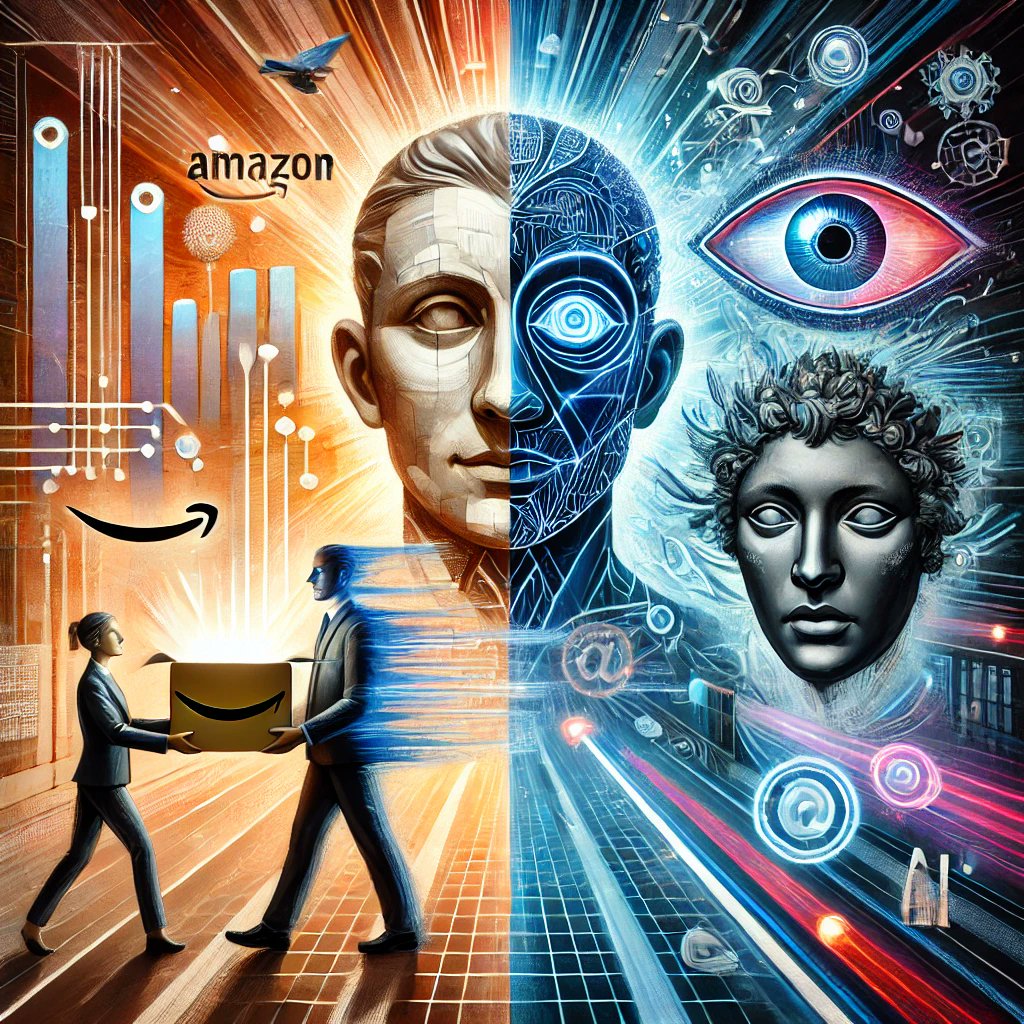
✅ Winner: Amazon’s Predictive Logistics System
Amazon is often cited as an AI success story. Its AI-powered fulfillment network predicts demand with astonishing accuracy. It doesn’t just react—it pre-ships products closer to you before you click "Buy." This predictive capability made Amazon one of the most efficient logistical machines on the planet—and a pandemic-era lifeline for millions. The narrative? Innovation. Intelligence. Optimization.
But what’s missing from that story?
❌ Loser: Robert Williams and the Faulty Face of AI
In 2020, Robert Williams, a Black man in Detroit, was wrongfully arrested for a theft he didn’t commit. The reason? A facial recognition system matched his face—incorrectly—to blurry surveillance footage. The AI failed. But the human system trusted the machine without question.
Robert spent 30 hours in jail, separated from his family, because an algorithm decided he “looked like” the suspect. In that story, he was cast as the villain—not by evidence, but by code.
This is not an isolated case. Studies from MIT Media Lab and others have shown facial recognition tools perform significantly worse on people with darker skin tones—especially Black women.
🧩 The Moral of the Machine
The stories AI tells can uplift or destroy. When systems are trained on biased data, driven by profit or surveillance, and left unregulated, they don’t just reflect the world—they reconstruct it, often unjustly.
So here’s a provocation:
What if being a “villain” today is less about your actions, and more about how you're represented in data?
We need more than technical audits. We need narrative audits. We need ethical frameworks like UNESCO’s RAM and EIA tools to help us assess not just performance, but the social meaning and narrative consequences of AI.
Let’s stop asking only, “Does it work?”
And start asking, “Whose story is this AI telling—and who gets to rewrite it?”
🔍 hashtag#AIethics hashtag#DataStorytelling hashtag#FacialRecognition hashtag#UNESCO hashtag#AlgorithmicBias hashtag#ArtificialIntelligence hashtag#DigitalJustice hashtag#EthicalAI hashtag#NarrativePower
🤖 LLMs, RAG, and Ethics: Humans Feed the Agents — So Let’s Feed Them Right
As Antonio Squeo (Hevolus) reminds us: “Technology amplifies what we decide to nourish. AI doesn’t replace us — it accelerates the direction we choose.”
In the world of LLMs and Retrieval-Augmented Generation (RAG), agents respond to the content we choose to feed them. And that makes ethics not a side concern, but the core design choice.
👉 Want to improve your talent pipeline with LLMs? It matters what documents power your agent.
👉 Building an AI assistant for your workforce? Transparency, accountability and fairness must be embedded — not bolted on.
📌 The UNESCO Ethical Impact Assessment emphasizes that:
“AI should not be deployed to maximize profit or control, but to uphold human dignity, diversity, and sustainability.”
“The question is not just whether AI works — but for whom, and with what consequence.”
📌 The World Economic Forum stresses in AI for Impact:
“AI’s success in social innovation hinges on addressing data bias, access inequity, and inclusive design. Ethical AI begins with content governance and context awareness.”
📌 And the Schwab Foundation adds:
“Social innovators are not only users of AI, but stewards of values. Their insights are critical to shaping AI’s roadmap for a fairer future.”
✨ So HR leaders, innovators, AI builders — this isn’t about tools.
It’s about agency. About who decides what matters.
And about making sure that tomorrow’s intelligent systems reflect the best of who we are, not the worst of our past data.
🔁 What does your AI learn from? Who audits it? What values are embedded in its sources?
It’s not enough for AI to be powerful. It must be just.
#AIethics #AntonioSqueo #LLM #RAG #ResponsibleAI #HRInnovation #Hevolus #UNESCO #WEF #SchwabFoundation #AIforImpact #HumanInTheLoop #Leadership #ContentMatters
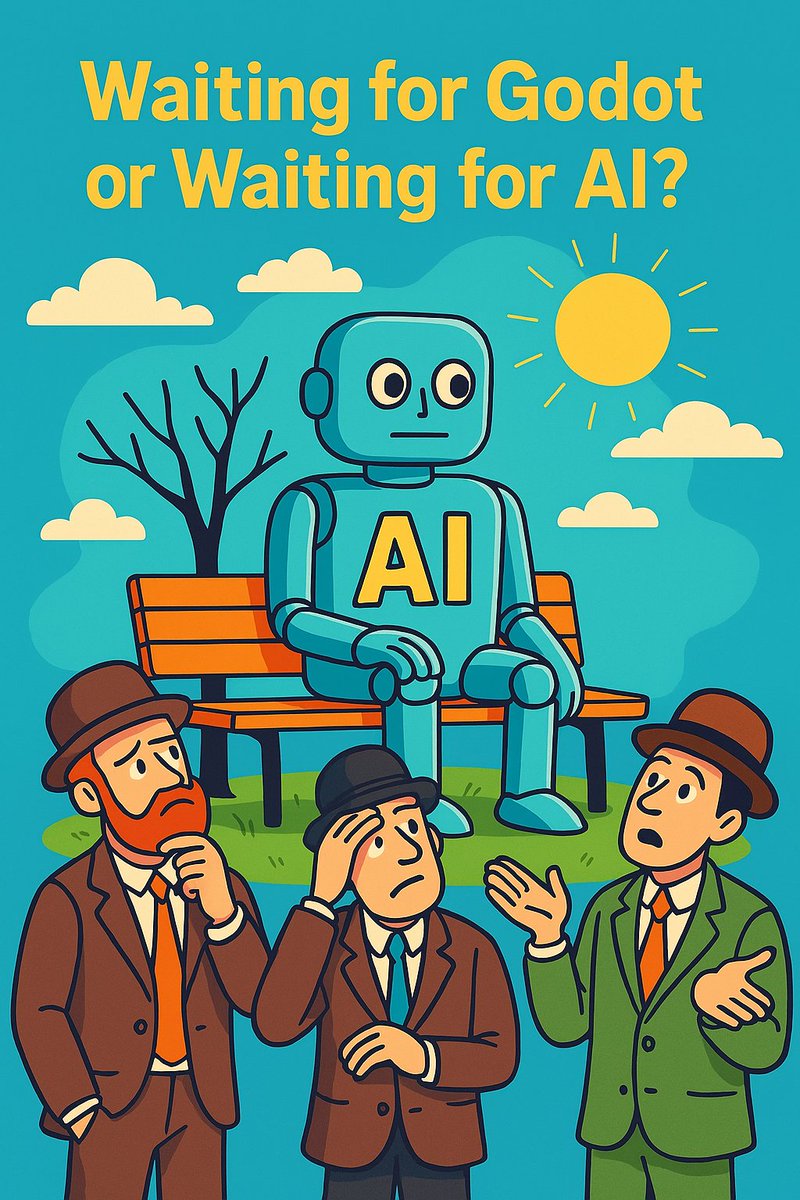
🤖 Waiting for Godot or Waiting for AI?
Are we building minds or simply waiting for them to emerge?
In classical business thinking, technology has always been an extension—a tool to optimize performance, scale operations, reduce inefficiencies. It’s the foundation of most business insight strategies: measure, predict, act.
But with Artificial Intelligence, we’re entering a different game.
Today’s AI systems don’t just assist decisions—they increasingly generate options, simulate understanding, and reshape contexts. They don't merely help us see the business more clearly—they reconfigure what counts as insight.
📌 Jacques Lacan said the unconscious is structured like a language. AI, too, speaks without knowing. It generates insights without intentions, decisions without responsibility. It functions like a computational unconscious, surfacing patterns we didn’t even know we were encoding.
📌 In Samuel Beckett’s Waiting for Godot, two characters wait endlessly for someone who never comes. That’s how it can feel in boardrooms today: we’re waiting for AI to become intelligent enough to “take over” strategic insight. But what if—like Godot—it never comes? Or worse, what if it already has, and we didn’t notice?
📌 Cosimo Accoto invites us to see AI not as a neutral extension of our business tools, but as a “macchina ontologica”—a system that generates new realities. Unlike past technologies that extended human capacities, AI is astensive: it brings emergent outcomes, often opaque and unpredictable. For business, this means moving from command/control logic to curation and oversight of machine-led meaning-making.
📌 Daron Acemoglu, Nobel laureate, warns us: automation is not destiny—it’s a strategic business choice, often guided by short-term incentives. Many AI deployments today aim to exclude the human, rather than empower them—creating efficiency without shared prosperity. He argues for a redirection toward complementary AI that augments, rather than replaces, human intelligence.
💼 So what does this mean for Business Insight?
It means we’re shifting:
From transparency to opacity: do we understand the AI’s logic?
From predictive analytics to probabilistic simulations: do we grasp what’s being optimized?
From human-in-the-loop to human-at-the-edge: are we still deciding, or merely approving?
🎯 Business Insight is no longer just about dashboards and KPIs.
It’s about understanding what kind of intelligence we’re building—
and what kind of agency we’re silently surrendering.
AI can be a force for inclusion, for smarter decisions, for sustainable growth—
but only if we ask better questions, not just build better models.
👇 Let’s rethink together.
#AI #BusinessInsight #StrategicThinking #PhilosophyOfTech #Consciousness #WaitingForGodot #Lacan #CosimoAccoto #Acemoglu #ResponsibleAI #ComputationalUnconscious #OntologicalMachine #FutureOfWork #EthicsInAI
🤖 LLMs, RAG, and Ethics: Humans Feed the Agents — So Let’s Feed Them Right
As Antonio Squeo (Hevolus) reminds us: “Technology amplifies what we decide to nourish. AI doesn’t replace us — it accelerates the direction we choose.”
In the world of LLMs and Retrieval-Augmented Generation (RAG), agents respond to the content we choose to feed them. And that makes ethics not a side concern, but the core design choice.
👉 Want to improve your talent pipeline with LLMs? It matters what documents power your agent.
👉 Building an AI assistant for your workforce? Transparency, accountability and fairness must be embedded — not bolted on.
📌 The UNESCO Ethical Impact Assessment emphasizes that:
“AI should not be deployed to maximize profit or control, but to uphold human dignity, diversity, and sustainability.”
“The question is not just whether AI works — but for whom, and with what consequence.”
📌 The World Economic Forum stresses in AI for Impact:
“AI’s success in social innovation hinges on addressing data bias, access inequity, and inclusive design. Ethical AI begins with content governance and context awareness.”
📌 And the Schwab Foundation adds:
“Social innovators are not only users of AI, but stewards of values. Their insights are critical to shaping AI’s roadmap for a fairer future.”
✨ So HR leaders, innovators, AI builders — this isn’t about tools.
It’s about agency. About who decides what matters.
And about making sure that tomorrow’s intelligent systems reflect the best of who we are, not the worst of our past data.
🔁 What does your AI learn from? Who audits it? What values are embedded in its sources?
It’s not enough for AI to be powerful. It must be just.
#AIethics #AntonioSqueo #LLM #RAG #ResponsibleAI #HRInnovation #Hevolus #UNESCO #WEF #SchwabFoundation #AIforImpact #HumanInTheLoop #Leadership #ContentMatters
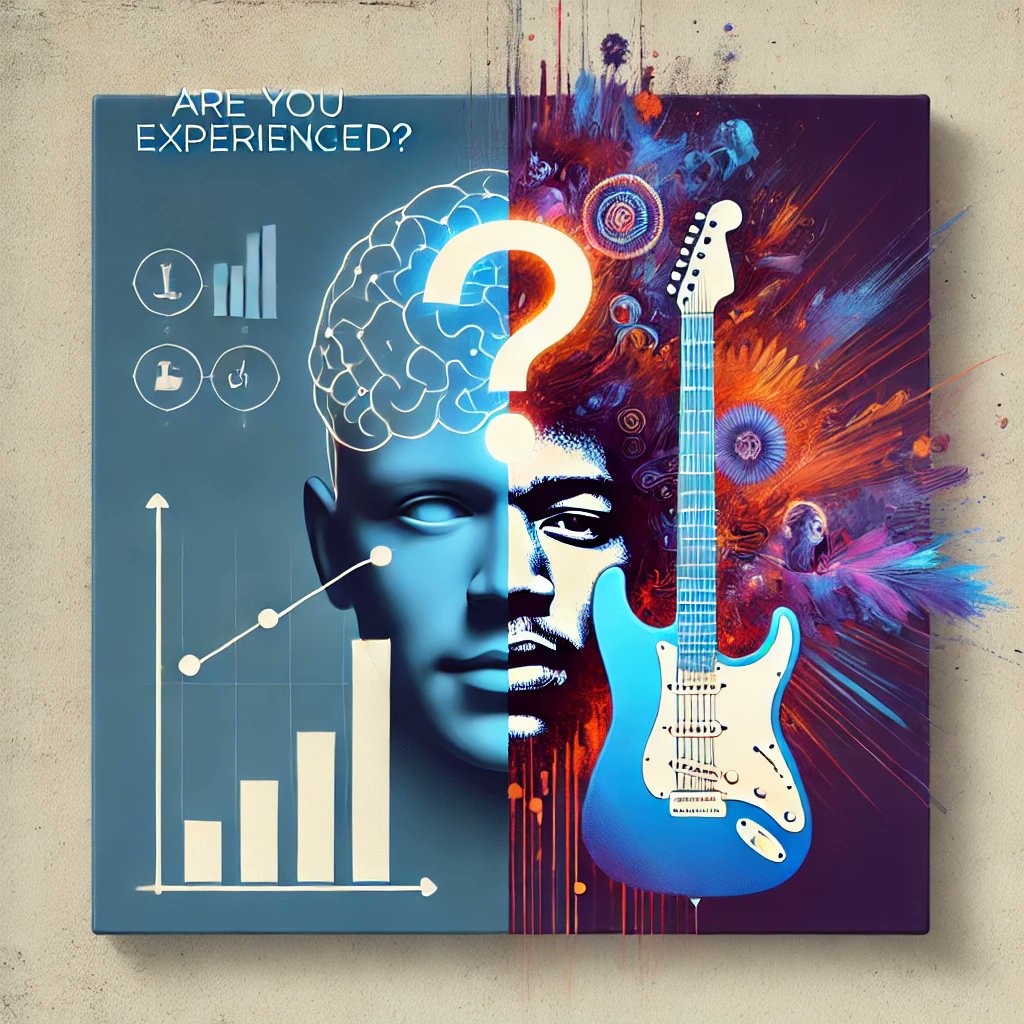
🎸 Are You Experienced?
In 1967, Jimi Hendrix asked: “Are you experienced?”
Inside the Black Box of Strategic Decision-Making, the question is significant—not in music, but in how we lead, sense, and decide. Because the most disruptive strategies rarely come from pure logic. They’re born in the black box—the hidden zone where analytics, intuition, and emotion converge.
In a world obsessed with optimization, the real edge lies in what you can feel before others can see.
🧠 Two Minds in Play
The analytical mind works with KPIs, TAM/SAM/SOM, and performance metrics.
The intuitive mind reads the room, spots shifts in cultural tension, and anticipates emotional needs.
Great leaders use both. Because insight isn’t always rational—it’s resonant.
📌 Real-World Cases Where Intuition Rewrote the Market
With strategic marketing frameworks embedded.
📍 Nespresso – From Commodity to Luxury Ritual
🎯 Need Creation | Brand Laddering | Lifestyle Branding
Selling less coffee for more money? On paper, it made no sense.
But Nestlé sensed a consumer desire for personal luxury and elevated routine.
They positioned Nespresso as a status symbol, not a caffeine fix.
💡 Outcome: Created a new premium micro-category. Brand equity > product specs.
📍 Red Bull – Tribal Marketing & Category Creation
🎯 Tribal Strategy | Experiential Branding | Cultural Infiltration
Rejected in taste tests, misunderstood by traditional buyers.
Red Bull leaned into identity-driven branding, aligning with high-energy subcultures.
They didn’t find a niche—they built one.
💡 Outcome: Marketed “wings,” not drink. Created the energy drink category from zero.
📍 Steve Jobs & the iPad – Inventing a Middle Space
🎯 Blue Ocean Strategy | Consumer Insight | UX Innovation
Tech critics scoffed: “A big iPhone?”
Jobs trusted a human truth: people wanted intuitive computing.
He addressed a behavioral blind spot, not a technical one.
💡 Outcome: Category-defining product. 300+ million iPads sold.
📍 Dyson – Design Thinking Meets Utility Reframing
🎯 Product Innovation | Brand as Inventor Archetype | Differentiation
A $400 vacuum was absurd—until it wasn’t.
Dyson didn’t just innovate—they reframed value around design, function, and engineering storytelling.
💡 Outcome: Built a high-margin brand by turning the mundane into a marvel.
💡 The Takeaway
Being “experienced” today means more than expertise.
It means tuning into what’s unsaid. Seeing before it’s visible.
Acting when others hesitate. Feeling the market’s emotion—not just reading its data. Because the best strategies are born inside the black box—where instinct, narrative, and non-obvious insight live.
✨ Are you experienced enough to lead from there?
#BrandStrategy #CategoryCreation #NeuroStrategy #BlackBoxThinking #MarketingPsychology #EmotionalBranding #ConsumerInsight #Nespresso #RedBull #SteveJobs
🤖 Waiting for Godot or Waiting for AI?
Are we building minds or simply waiting for them to emerge?
In classical business thinking, technology has always been an extension—a tool to optimize performance, scale operations, reduce inefficiencies. It’s the foundation of most business insight strategies: measure, predict, act.
But with Artificial Intelligence, we’re entering a different game.
Today’s AI systems don’t just assist decisions—they increasingly generate options, simulate understanding, and reshape contexts. They don't merely help us see the business more clearly—they reconfigure what counts as insight.
📌 Jacques Lacan said the unconscious is structured like a language. AI, too, speaks without knowing. It generates insights without intentions, decisions without responsibility. It functions like a computational unconscious, surfacing patterns we didn’t even know we were encoding.
📌 In Samuel Beckett’s Waiting for Godot, two characters wait endlessly for someone who never comes. That’s how it can feel in boardrooms today: we’re waiting for AI to become intelligent enough to “take over” strategic insight. But what if—like Godot—it never comes? Or worse, what if it already has, and we didn’t notice?
📌 Cosimo Accoto invites us to see AI not as a neutral extension of our business tools, but as a “macchina ontologica”—a system that generates new realities. Unlike past technologies that extended human capacities, AI is astensive: it brings emergent outcomes, often opaque and unpredictable. For business, this means moving from command/control logic to curation and oversight of machine-led meaning-making.
📌 Daron Acemoglu, Nobel laureate, warns us: automation is not destiny—it’s a strategic business choice, often guided by short-term incentives. Many AI deployments today aim to exclude the human, rather than empower them—creating efficiency without shared prosperity. He argues for a redirection toward complementary AI that augments, rather than replaces, human intelligence.
💼 So what does this mean for Business Insight?
It means we’re shifting:
From transparency to opacity: do we understand the AI’s logic?
From predictive analytics to probabilistic simulations: do we grasp what’s being optimized?
From human-in-the-loop to human-at-the-edge: are we still deciding, or merely approving?
🎯 Business Insight is no longer just about dashboards and KPIs.
It’s about understanding what kind of intelligence we’re building—
and what kind of agency we’re silently surrendering.
AI can be a force for inclusion, for smarter decisions, for sustainable growth—
but only if we ask better questions, not just build better models.
👇 Let’s rethink together.
#AI #BusinessInsight #StrategicThinking #PhilosophyOfTech #Consciousness #WaitingForGodot #Lacan #CosimoAccoto #Acemoglu #ResponsibleAI #ComputationalUnconscious #OntologicalMachine #FutureOfWork #EthicsInAI
🧠 The Age of Algorithmic Storytelling
Artificial Intelligence doesn’t just automate tasks—it curates reality. It decides what news you see, what candidate you hear about, what product is “trending,” and even what version of you gets recognized by a system. In doing so, it becomes the narrator of our lives—and narrators are never neutral.
This is why UNESCO’s Recommendation on the Ethics of AI is so critical. It reframes AI governance as a storytelling challenge as much as a technical or legal one. It asks us to confront uncomfortable questions:
Who gets to be the protagonist in AI systems?
Whose data is the plotline built upon?
Who gets erased, mislabeled, or cast as the antagonist?
Let’s bring this to life with two real-world examples—one where AI “made” a winner, and one where it quietly created a loser.
✅ Winner: Amazon’s Predictive Logistics System
Amazon is often cited as an AI success story. Its AI-powered fulfillment network predicts demand with astonishing accuracy. It doesn’t just react—it pre-ships products closer to you before you click "Buy." This predictive capability made Amazon one of the most efficient logistical machines on the planet—and a pandemic-era lifeline for millions. The narrative? Innovation. Intelligence. Optimization.
But what’s missing from that story?
❌ Loser: Robert Williams and the Faulty Face of AI
In 2020, Robert Williams, a Black man in Detroit, was wrongfully arrested for a theft he didn’t commit. The reason? A facial recognition system matched his face—incorrectly—to blurry surveillance footage. The AI failed. But the human system trusted the machine without question.
Robert spent 30 hours in jail, separated from his family, because an algorithm decided he “looked like” the suspect. In that story, he was cast as the villain—not by evidence, but by code.
This is not an isolated case. Studies from MIT Media Lab and others have shown facial recognition tools perform significantly worse on people with darker skin tones—especially Black women.
🧩 The Moral of the Machine
The stories AI tells can uplift or destroy. When systems are trained on biased data, driven by profit or surveillance, and left unregulated, they don’t just reflect the world—they reconstruct it, often unjustly.
So here’s a provocation:
What if being a “villain” today is less about your actions, and more about how you're represented in data?
We need more than technical audits. We need narrative audits. We need ethical frameworks like UNESCO’s RAM and EIA tools to help us assess not just performance, but the social meaning and narrative consequences of AI.
Let’s stop asking only, “Does it work?”
And start asking, “Whose story is this AI telling—and who gets to rewrite it?”
🔍 hashtag#AIethics hashtag#DataStorytelling hashtag#FacialRecognition hashtag#UNESCO hashtag#AlgorithmicBias hashtag#ArtificialIntelligence hashtag#DigitalJustice hashtag#EthicalAI hashtag#NarrativePower
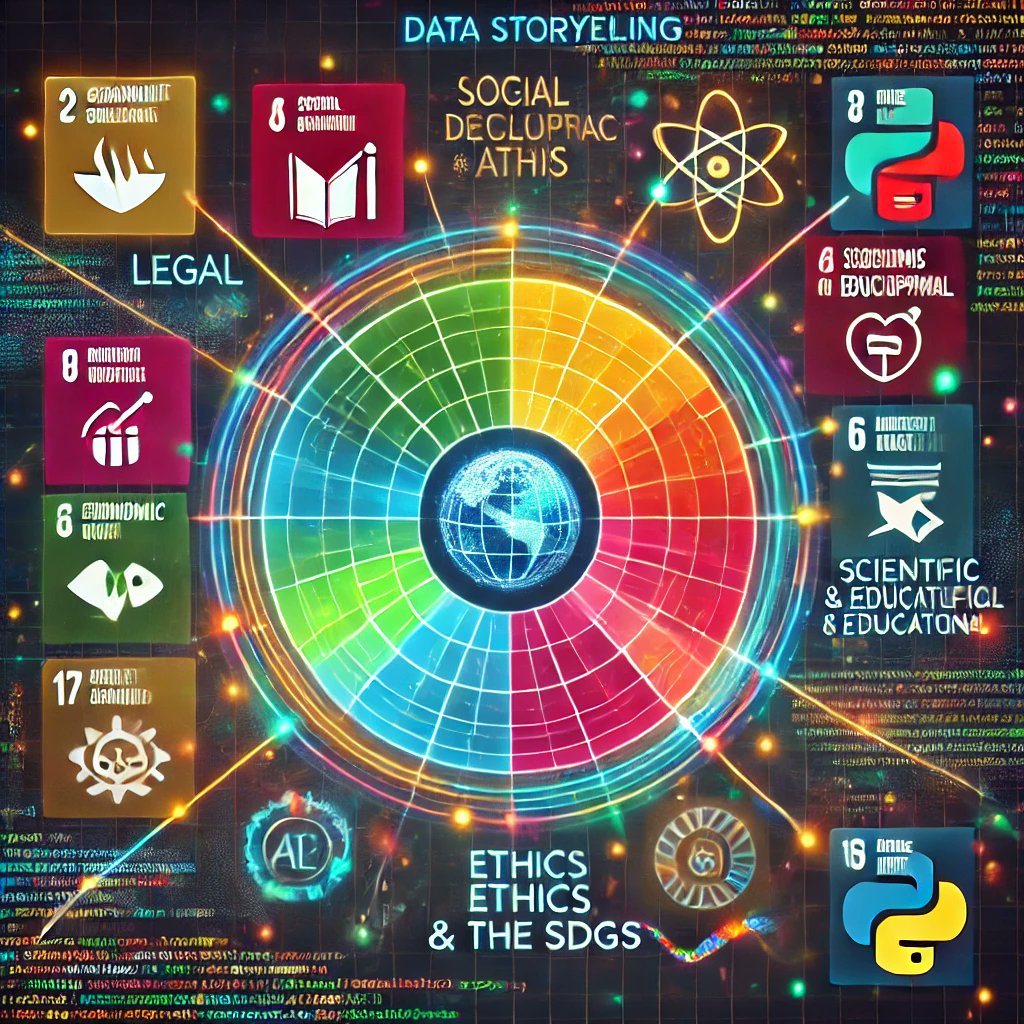
📊 Data Storytelling Across Ethics, AI & the SDGs: A Bridge Built with Code
In a world increasingly driven by algorithms, are we asking the right ethical questions? And more importantly—can data help us answer them?
🧠 I recently developed a Python-based web scraping tool that extracts structured data from the UN Sustainable Development Goals. The script collects metadata, descriptions, images, and hyperlinks for each of the 17 SDGs.
But here's the twist: I didn’t stop at data collection.
🔗 I mapped each SDG to the UNESCO Readiness Assessment Methodology (RAM)—a framework used to assess a country’s preparedness to implement ethical AI policies across five pillars:
🏛️ Legal
🌍 Social & Cultural
💰 Economic
📚 Scientific & Educational
🖥️ Technological & Infrastructural
🔍 From Scraping to Strategy
Each SDG was assigned to one or more RAM dimensions. For example:
SDG 16 → Legal
SDG 4 & SDG 17 → Education
SDG 9 → Technology & Economy
The result? A data-driven matrix showing how sustainability and AI ethics align across dimensions.
📈 Insights Gained
Legal blind spots: SDG programs often lack digital rights protections
Scientific gaps: Few SDGs emphasize research capacity
Cultural drivers: Social impact is heavily emphasized—great opportunity for civic tech
🎯 Why It Matters
This kind of data storytelling reminds us that:
Open data can guide ethical governance
AI accountability requires inclusive metrics
Visualization can turn abstract principles into actionable insight
🖼️ Visual: SDG ↔ RAM Radar Map
💬 Let’s Talk
How could business intelligence teams apply RAM to assess AI readiness or policy alignment?
Have you explored the intersection of AI ethics and sustainability data?
Drop your thoughts below ⬇️
hashtag#DataStorytelling hashtag#AIethics hashtag#SDG hashtag#UNESCO hashtag#OpenData hashtag#Python hashtag#WebScraping hashtag#Sustainability hashtag#Governance hashtag#RadarChart hashtag#BusinessInsights
📌 POST 2: Ethical AI — Part 2 | Building Trust Beyond Code
In the second part of our journey through ethical AI, we look at 5 more essential values — because responsible tech is about people, planet, and principles.
6️⃣ Privacy and Security
Protecting data is non-negotiable.
🔍 Example: Apple’s “Privacy Nutrition Labels” show how apps use your data — empowering users with control and awareness.
7️⃣ Contestability
People should be able to challenge AI-driven decisions.
🔍 Example: The UK's use of a predictive algorithm for visa approvals was suspended after bias concerns — and following public legal challenges.
8️⃣ Accountability
There must be clear responsibility when AI causes harm or fails.
🔍 Example: After a fatal crash involving Uber’s autonomous vehicle in Arizona, questions of accountability became central to AI governance discussions.
9️⃣ Social and Environmental Impact
AI systems should consider their broader consequences.
🔍 Example: Training large language models like GPT consumes significant energy — pushing companies like OpenAI and Google to explore greener AI practices.
🔟 Ethics is not a checklist — it’s a mindset.
To build AI people trust, we must design with empathy, govern with responsibility, and act with vision.
hashtag#ResponsibleAI hashtag#EthicsInTech hashtag#AIEthics hashtag#Sustainability hashtag#AIforHumans hashtag#Governance
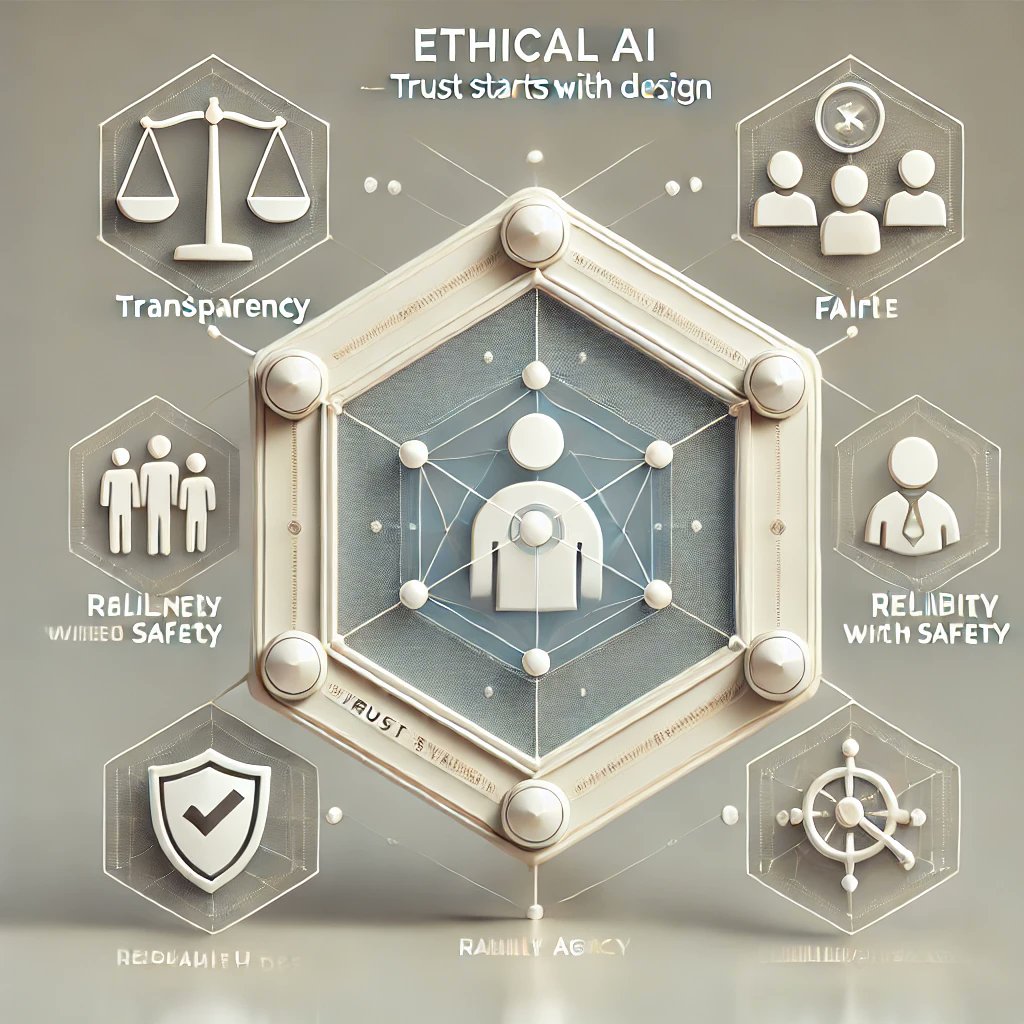
📌 POST 1: Ethical AI — Part 1 | Trust Starts with Design
As AI becomes embedded in everyday decisions, ethics can’t be an afterthought — it must be built into the system.
Here are 5 pillars of ethical AI with real-world applications:
1️⃣ Transparency
People deserve to understand how AI works.
🔍 Example: Meta’s “Why am I seeing this post?” feature offers insight into content ranking, making the algorithm less opaque.
2️⃣ Fairness
AI must avoid reproducing social biases.
🔍 Example: LinkedIn revised its job-matching algorithm after discovering it disproportionately favored male candidates — fairness starts with clean data and active monitoring.
3️⃣ Human-Centred Value
AI should serve human goals, dignity, and well-being.
🔍 Example: The EU AI Act explicitly prioritizes systems aligned with human rights and values — a global first in regulation.
4️⃣ Reliability and Safety
AI systems must be tested for stability and robustness.
🔍 Example: Medical AI tools like IBM Watson for Oncology have faced scrutiny for reliability — highlighting the importance of clinical validation before adoption.
5️⃣ Human Agency and Oversight
Humans must retain control over AI decisions.
🔍 Example: Airbus uses AI copilots that suggest, not replace, human decisions — maintaining pilot agency in critical contexts.
🔽 Stay tuned for Part 2: where we explore Privacy, Accountability, and Impact.
hashtag#EthicalAI hashtag#AIethics hashtag#Transparency hashtag#Fairness hashtag#HumanCentricAI hashtag#AIforGood