It’s not so much about how long you move; it’s how often.
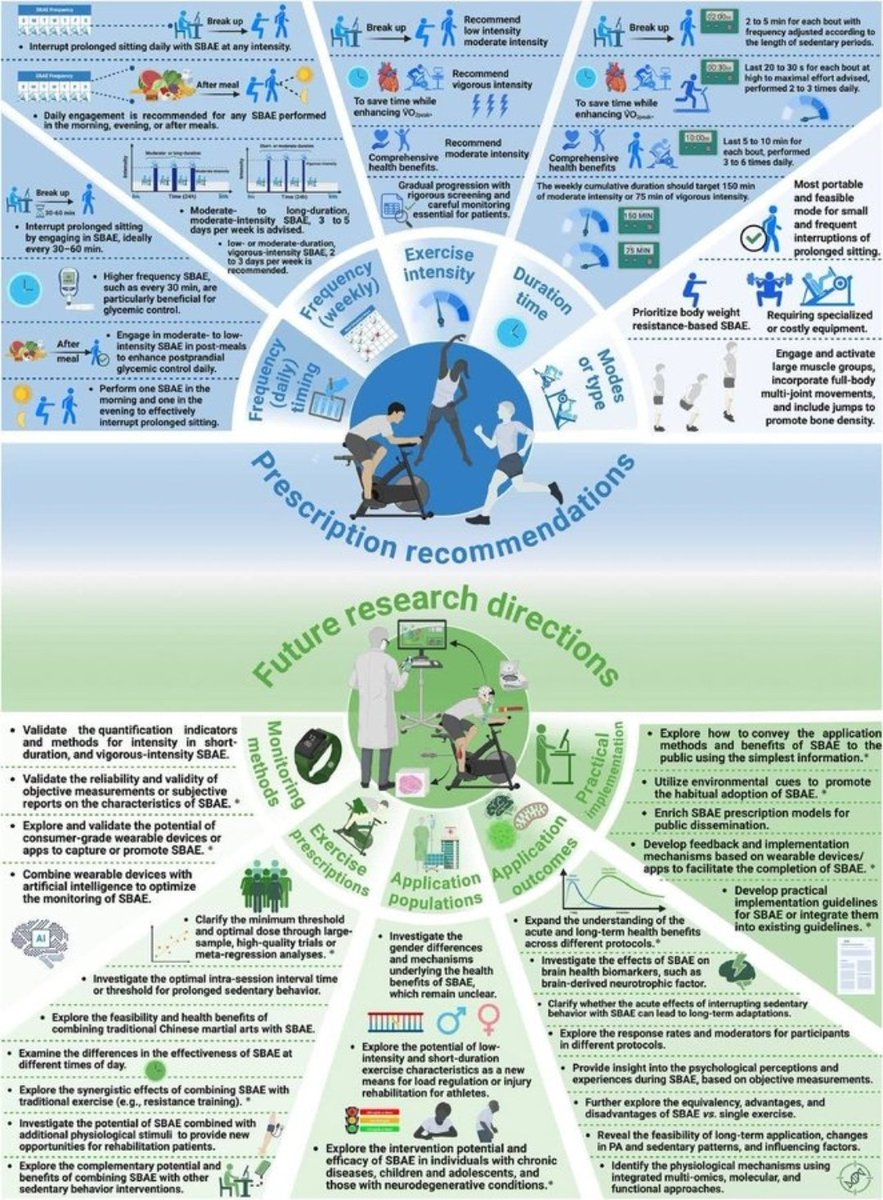
A growing body of research shows that you don’t need long gym sessions to improve health. The 2025 expert consensus statement (citation below) highlights how brief, frequent bursts of movement throughout the day, called short bouts of accumulated exercise (SBAE), can deliver many of the same benefits as structured workouts.
1️⃣ What Is SBAE?
Short bouts of accumulated exercise are small sessions of movement, often 2–10 minutes, performed several times per day.
They “add up” to meaningful totals of physical activity over time.
🟢 Example: Walking up the stairs, doing air squats after a meeting, or brisk walking after meals.
2️⃣ Why It Works
Each short bout boosts blood flow, glucose control, and mitochondrial activity, while breaking up long periods of sitting — a key driver of metabolic and cardiovascular risk.
🟢 Example: Even a 2–5 minute walk every 30 minutes can help regulate blood sugar and reduce insulin spikes.
3️⃣ How to Apply It (Prescription Recommendations)
The consensus provides a practical “exercise prescription” for SBAE:
Frequency: Move every 30–60 minutes, several times daily.
Intensity: Start light to moderate; progress to brief vigorous bouts if tolerated.
Duration: Aim for ≥150 minutes per week of total activity, accumulated in short bouts.
Timing: Post-meal movement is especially beneficial for glucose control.
Type: Prioritize bodyweight or resistance-based movements that activate large muscle groups.
🟢 Example: Three 10-minute brisk walks daily = similar cardiovascular benefit as a single 30-minute session.
4️⃣ Key Benefits of SBAE
Improves insulin sensitivity and glycemic control
Enhances vascular function and blood flow
Reduces inflammation and oxidative stress
Supports cardiometabolic health and mental well-being
🟢 Example: Studies show SBAE improves blood pressure and mood, even in people who don’t meet standard exercise guidelines.
5️⃣ Who It’s For
SBAE is feasible for nearly everyone, including older adults, people with limited mobility, and those managing chronic conditions like type 2 diabetes or cardiovascular disease.
🟢 Example: Breaking up sitting with 2–5 minutes of movement is a practical, accessible strategy for desk workers and older adults alike.
6️⃣ Future Directions
The consensus calls for research into:
Optimizing intensity and timing for different populations.
Using wearable tech and AI to track and personalize SBAE.
Integrating SBAE into clinical guidelines for chronic disease prevention.
You don’t need a gym or an hour - just consistency.
Short bouts of accumulated exercise break the “sit–disease” cycle, enhance metabolic health, and make movement accessible for all.
Yin M, Chen P, Mao L. Expert Author Group. Short bouts of accumulated exercise: Review and consensus statement on definition, efficacy, feasibility, practical applications, and future directions. J Sport Health Sci. 2025 Sep 18:101088.
"Older adults are particularly vulnerable to the adverse consequences of problematic polypharmacy. "
Read the latest BGS blog written by @aislingjennings on her research into problematic polypharmacy and unintentional prescribing.
https://t.co/2f2uOT7iUT
Gain knowledge and confidence to spot the signs of sepsis in different groups to save lives. Access elearning on sepsis in adults, paediatrics and learning disabilities now. https://t.co/N76jXDB5pe
Every citizen, not just patients, needs to be informed about their responsibilities, set out in a contract or ‘terms and conditions’ setting out what is expected of them. https://t.co/sYu31qN2GO
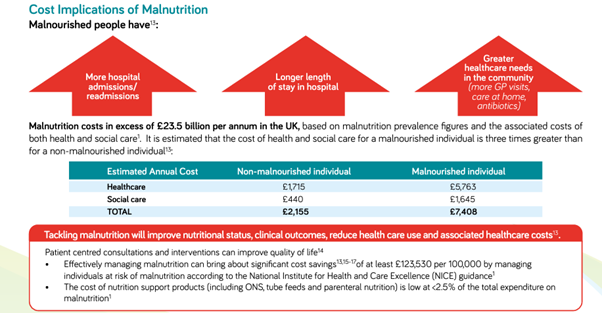
Today’s @UKMAW2024 focus is on the importance of screening. Malnutrition costs in the UK are estimated to be in excess of £23.5 billion per year. By screening for malnutrition risk we can ensure that individuals are effectively managed and have an improved quality of life whilst also making significant cost savings - https://t.co/TTXxY75v9e
Publication of 2nd edition of Sod70! https://t.co/zrbd8tOITR by @BloomsburyBooks
10 years after the 1st edition - how to live well in your 70s, 80s and 90s!
https://t.co/vWR03Sex8w
We need to be bold and innovative in our approach. The Ageing Well Programme in @cornwallft addresses some key aspects addressed in Lord Darzi's report around how we move our current and future workforce to a proactive and preventative focus. #ageingwell#closertohome
The National Education and Training Survey (NETS) has been open for a week.
We are asking all healthcare learners and trainees to share your experience and shape your future by taking 10 minutes to complete the survey. #NETS2024
https://t.co/u6nnYisxUM
"#VirtualWards are a complex intervention and there is mixed evidence of their effectiveness. We thought a realist @Age_and_Ageing review would give different answers to the effectiveness questions." https://t.co/cQdAOG6Kup
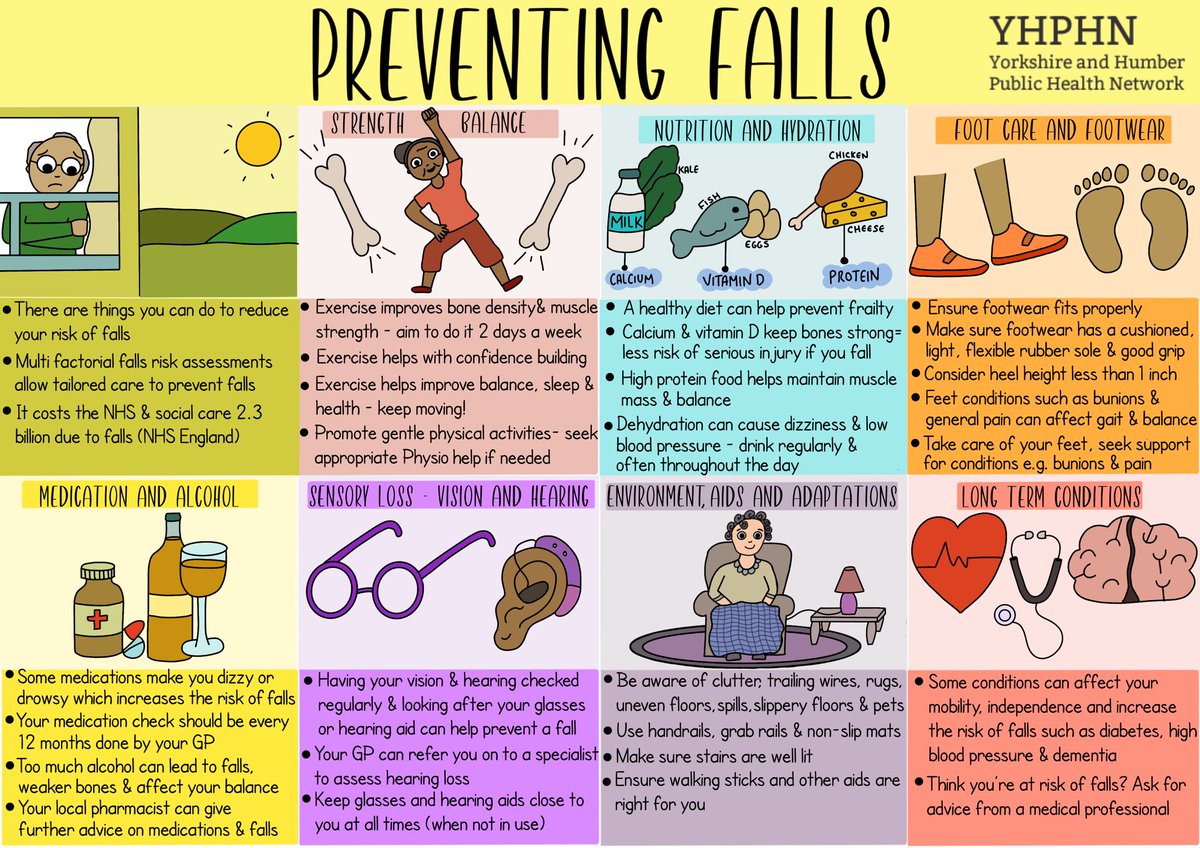
Falls Awareness Week 2024 will run from 16-20th September.
We've already had an amazing response with over 200 of you already signed up!
#ThinkFalls#BeFallsPrepared
You can register for your digital campaign kit here: https://t.co/lzYgIgPhXf
Head of Ageing and Stroke Research @UniversityLeeds, @drandyclegg will be sharing expertise on updates in frailty as one of our #Keynote speakers.
Discover first-hand why Dr. Clegg is an internationally-renowned leader in frailty research.
Register NOW: https://t.co/pkR4l5ZBDV
Our wonderful cohort of clinicians who are taking part in the #Ageing Well Programme. They include physiotherapists, community support workers, dementia practitioners, nurses (RMNs and RNs) and occupational therapists all learning with and from each other #NHSpreventionagenda
Register today for our self-paced #Frailty eLearning course FREE to all healthcare professionals. Course includes 'Identifying frailty', Understanding and communicating frailty', 'Building systems fit for frailty' and 'Managing those living with frailty' https://t.co/2IIAogKFku
ANNOUNCING new falls prevention classes provided by our trusted partners #icareimove. Falls are not an inevitable part of ageing. Improving strength & balance is so important and regaining confidence after a fall.
https://t.co/L51aTZskeq
The message I take away is that the NHS will not be able to recruit its way out of the challenges that are coming. Nor will it be able to treat its way out. We MUST focus on prevention and on ensuring we have health care practitioners with the generalist skills necessary.
"Quality of life should be the principal aim and then we accept we might get some extension of life as a result of that, and probably will, but the quality comes first."
@CMO_England discusses a rapidly ageing UK population at #NTSummit@NuffieldTrust https://t.co/LmnmLnOLRp
Escape from the infoglut maze with a tailored search on the NHS Knowledge and Library Hub. For all NHS staff and students - simple searching and rapid results. Find out more https://t.co/gwdXQrbJuu #KLHub
BGS is currently working on 2 documents to support members implementing #ProactiveCare for older people with #frailty services & would like to feature case studies. Please email Sally via [email protected] for more information.
Related BGS Blog 👇 https://t.co/HJqaTEsSRv