New paper by NRI scientists @chickpeaman, @framaha & colleagues describes innovative way to identify mosquito plant hosts from ingested nectar. It advances our understanding of vector-insect ecology – with key implications for tackling vector-borne diseases.
Check it out ⤵️
Our new paper is out “Identifying mosquito plant hosts from ingested nectar secondary metabolites.” We determine species-specific phytophagy in mosquitoes by detecting taxon-specific secondary metabolites in nectar. https://t.co/cKcond1exJ @KewScience @cntrouniv@NRInstitute
We're recruiting x2! If you're interested in any aspects of vector biology, behavioural ecology, pest/pollinator behaviour across medical, veterinary or agricultural areas, then come and join us!
Ass. Prof:
https://t.co/reHYB03Wpu
Senior Research Fellow:
https://t.co/6xgHkOb9rK
We further develop & use some of the new tools for Simulium surveillance & xenomonitoring to show an area of Nigeria that was thought to be free of onchocerciasis may in fact have active transmission; these tools need wider uptake https://t.co/f0f4LjE9KG
@NRInstitute@uniosune
Very happy to share Monique's great paper on lethal and sublethal effects of ivermectin in Anopheles coluzzii mosquitoes, which advances how we consider dosing in humans to achieve vector control aims https://t.co/xS5OP1eBQY
Check out our research characterising the distribution, seasonality and ecology of Culex modestus in England: https://t.co/AjFm0ZkDIC
Everyone put in lots of hard work, over many years, up and down the country, to get such comprehensive data on what could be a UK vector in future
Exciting news! Monique Shepherd-Gorringe, an @NRInstitute PhD student, has just had her 1st publication accepted! "Lethal and sublethal impacts of membrane-fed ivermectin are concentration-dependent in Anopheles coluzzii" Congratulations Monique! 🦟🌍
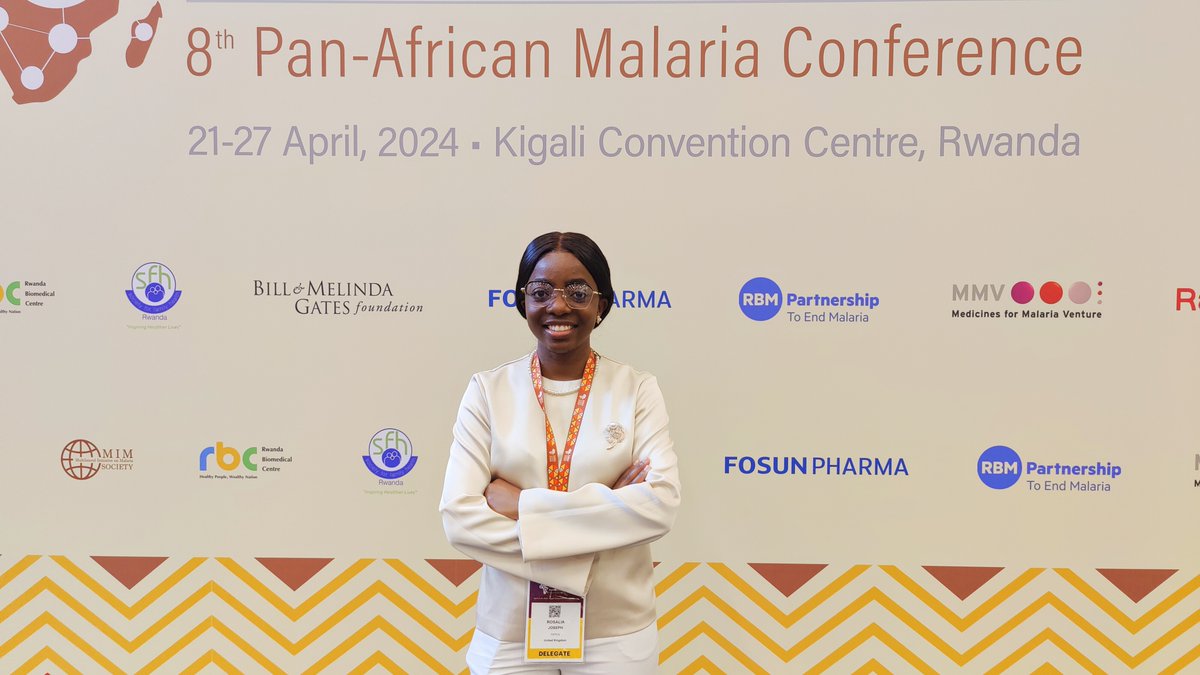
#WorldMalariaDay
🌍🦟Celebrating #WorldMalariaDay with inspiring work from @NRInstitute's PhD student Rosalia Joseph!🌟Presenting at the Pan-African Malaria conference, Rosalia empowers African women in malaria control through effective communication & leadership training💼📢 @NRIPSociety
Here to shout about v. meticulous research by @ManuelaCarnaghi & colleagues examining the effect of precise target properties on malaria mosquito landing behaviour, with a bonus model predicting mosquito target resolution distance for you to play with! https://t.co/BmBzmd6wIb
Check out our latest research from PhD student @HardyMedEnto showing how organic fertilisers commonly used in agriculture inhibit mosquito oviposition
https://t.co/0lrCLMwcCr
Neat paper from @HardyMedEnto about how organic fertilisers in mosquito breeding sites affect traits including survival & development time - v. important for rice cultivation in particular
We have an exciting, funded #PhD scholarship @NRInstitute to explore gender-based exposure to malaria vector mosquitoes, closes 31st Oct 2022. More info here: https://t.co/6p0AnBj98m
@e17chrisfleming Unis often have restrictive (fear-based) digital policies. Eg we have OneDrive but it only works internally, so useless for collaborating with external partners. No adequate formal solutions ever provided, & other tools like Dropbox are prohibited. So, email (or break the rules)
@e17chrisfleming In my experience, primarily emailed Word docs, with manual merging & version control. Once with Google docs but this requires a personal Google account and may not be permitted if collaborating on sensitive data. Once via Dropbox, but this now banned.