The hate Argentina got this tournament made me realize how easy it is to brainwash and program people. Would love to see someone publish work on this some day as it’s a very interesting case study.
I've lived in Argentina for over 18 years. I'm a migrant here. And I want to say it clearly: Samuel L. Jackson's accusation is false.
I'm not speaking from theory. I'm speaking from the experience of having built a life here, of having been welcomed, integrated, of having seen firsthand what it means to be a country made of migrants.
Let's go over some history, since he brought it up:
🇦🇷 Argentina abolished slavery in 1813 with the Free Womb Law, and definitively in the 1853 Constitution — earlier than much of the continent. This is a country built by receiving waves of immigrants from Italy, Spain, the Middle East, Eastern Europe, and today from all over Latin America. Multiculturalism isn't a talking point here, it's the foundation of national identity.
🇺🇸 The United States didn't abolish slavery until 1865, and upheld legal racial segregation (Jim Crow laws) until 1964-65. Less than 65 years ago, that same country had separate bathrooms, schools, and bus seats by skin color.
🇬🇧 England built much of its economic power on the transatlantic slave trade, and its colonial empire left a record of institutional racism across four continents that's still being reckoned with today.
Before pointing fingers, it might be worth looking at your own history. Argentina has its own unresolved issues, like any country — but calling it "the most racist country in the world" isn't criticism, it's misinformation.
You should be ashamed @SamuelLJackson
#Argentina #FakeNews #SamuelLJackson #Migrants #ArgentineHistory
Si el precio de haber tenido los huevos de mostrar esta bandera, mojando la oreja a la FIFA, a Trump y a Milei, fue haber perdido la Copa del Mundo, entonces que se metan la Copa en el OGT, porque la gloria es Argentina, y las Malvinas también.
Americans calling Argentinians Nazis while literally having active concentration camps in their country is probably one of the most ridiculous things to happen on Twitter
The recent hate campaign towards Argentina 🇦🇷 is one of the most despicable things I have ever seen.
AI images, conspiracies, double-standards, and legit racism have all driven this narrative they are bad & evil.
I've seen how people are so easily propagandized and it's scary.
5 comentaristas en televisión asintiendo con la cabeza cuando este hombre enuncia un disparate de análisis económico, sugiriendo que las fuerzas de la oferta y la demanda en el mercado laboral conducirían a que los salarios en competencia tiendan a cero.
Pues no. Los salarios dependen de la productividad. Si yo aporto cero valor a la medicina, nadie estaría dispuesto a pagarme por trabajar allí. Por eso busco adaptarme y moverme hacia actividades donde sí puedo generar valor. Eso es lo que hacemos todos. ¿Realmente se puede subestimar tanto a los trabajadores como para creer que son incapaces de generar valor en cualquier industria?
Incluso en los casos donde la oferta de trabajadores es muy grande, si la demanda no puede absorberlos a todos, también es necesario buscar otros sectores o regiones donde sí haya oportunidades. La movilidad —laboral, geográfica o formativa— forma parte natural del funcionamiento del mercado.
Y, paradójicamente, la legislación laboral que pretende “proteger” el empleo muchas veces termina haciendo lo contrario: encarece la contratación, limita la flexibilidad y agrava el desempleo. Son lecciones básicas de teoría económica. Si vamos a debatir temas económicos en TV, por favor lleven un economista. Eleva el nivel del debate público!
🇦🇷 Riesgo País: de 2.000 a 676 puntos.
El riesgo país heredado por el gobierno de Javier Milei rondaba los 2,000 puntos básicos. El compromiso con el equilibrio fiscal permitió la baja de este hasta los 676 el día de hoy. La escalada reciente se disipó inmediatamente después de las elecciones, confirmando que fue puro “riesgo Kuka”.
@JMilei@LuisCaputoAR@Kicker0024@fundfaro@ABENEGASLYNCH_h@AgustinLaje@AXELKAISER@llalapampa@LLibertadAvanza
Clarísimo gráfico sobre cómo se eliminó el exceso de pesos y el fuerte ajuste en términos reales en la BMA.
La foto actual muestra un BCRA saneado y capitalizado.
Las reservas, por sí solas, no dicen nada si no se observan los pasivos del BCRA. Ese balance hoy es claramente sólido.
Otro tema es la consigna de “industrializar Argentina”, como si fuese mero voluntarismo político.
Los países actuales rondan entre 20-25% de industria, el resto es servicios. Hay excepciones si, pero no se supera el 30% sobre el PBI. La realidad es que desde los ‘90 para acá el peso en el PBI global bajó hasta el 25%.
Hay una incompatibilidad en Argentina: querer industrializar, por la fuerza y aún en sectores sin ventajas comparativas, y pretender un nivel de salarios alto. No se puede las dos, tampoco tendría sentido. Hay sectores en donde nuestro país puede competir e incluso liderar a nivel regional, otros que no. No se puede producir todo, y tampoco es necesario.
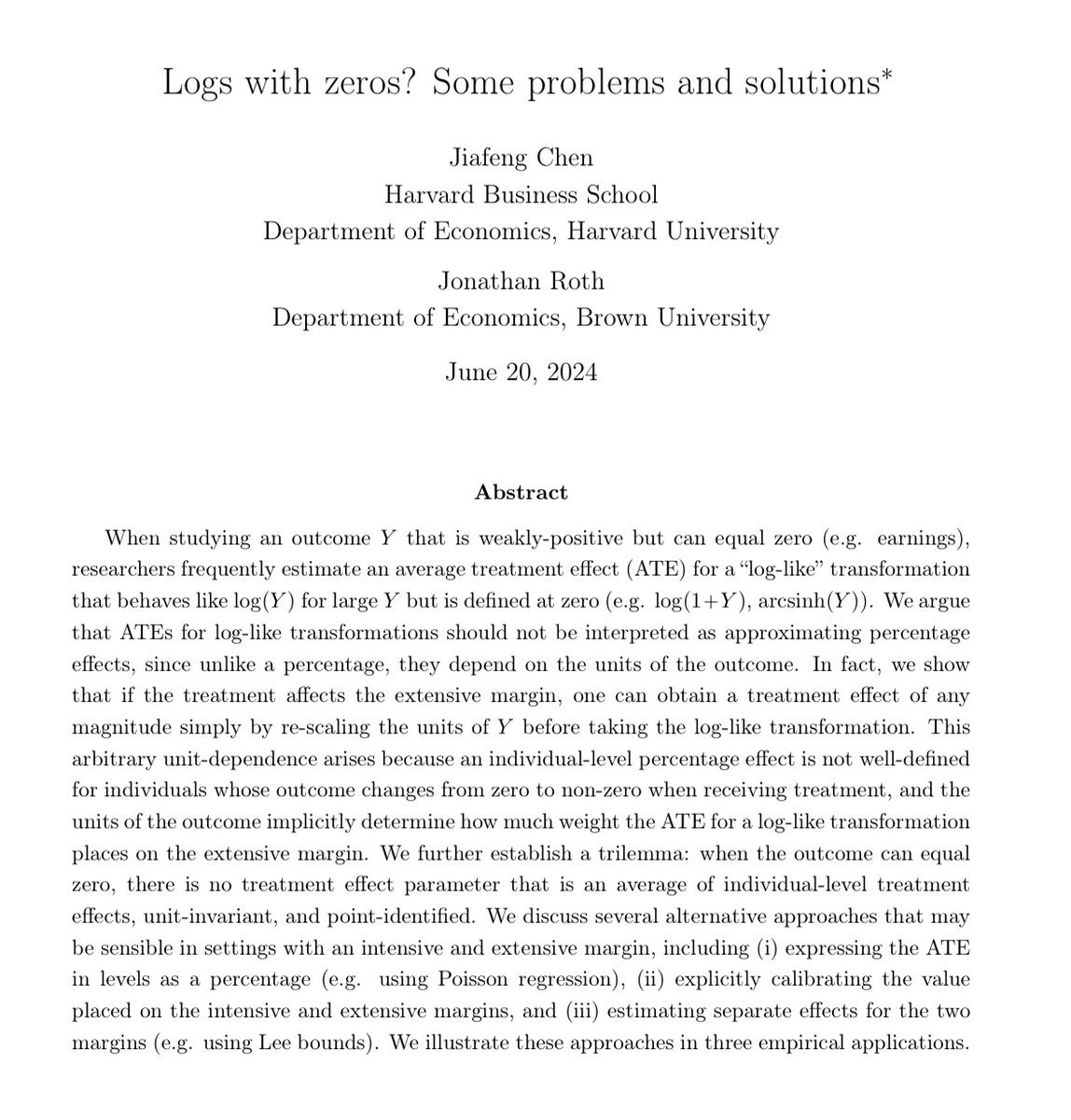
Logarithms are ubiquitous in economics. They allow you to conveniently express percentage changes. However, your data includes a zero, the log representation breaks. It turns out that there is no solution fully robust to the choice of units used! 1/
Behind this paper is an old school debate:
Competitive equilibrium is the workhorse model of economics.
But competitive markets don’t “just happen.” Someone has to set prices.
So what makes a reasonable strategic foundation? We think complexity matters for feasibility
Fed independence is only a means to an end. It's not the end goal. It's a quid pro quo with the legislature and the voters. Independence, in the hopes of better outcomes, in exchange for a narrow mandate and accountability. If the central bank is not held accountable and/or steps outside of its mandate, then the status quo is not tenable.👇
Los dirigentes de la actual versión del peronismo desconocen la historia de su propio movimiento.
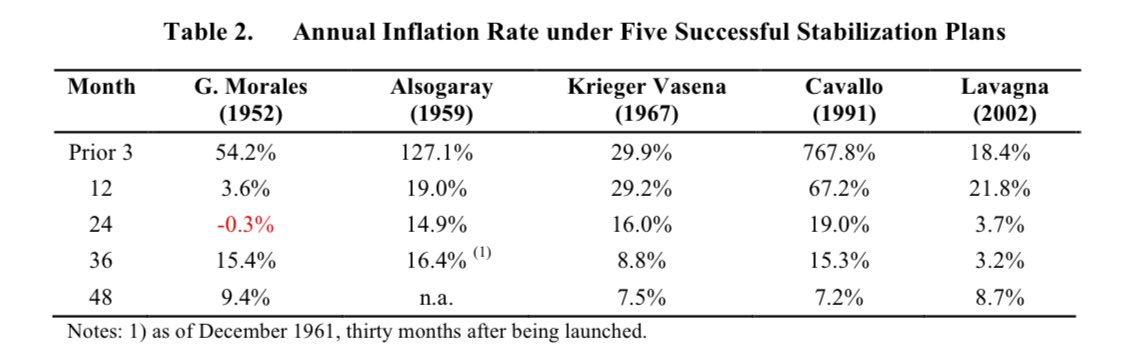
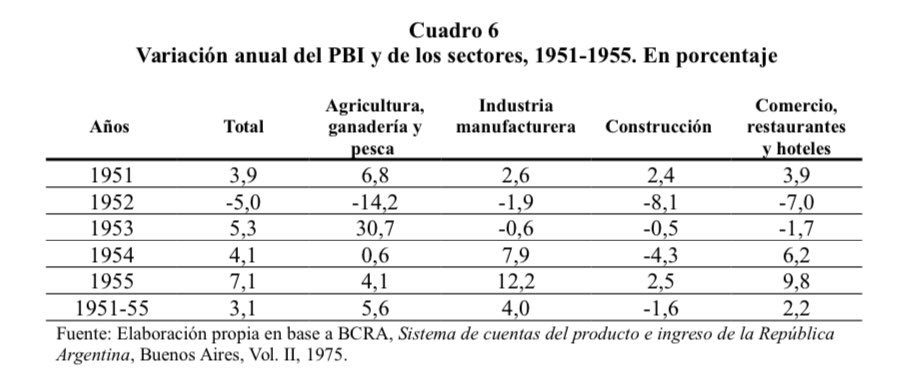
La “primavera” del ‘46-‘51, junto a su brutal expansión crediticia y monetaria, tuvo sus consecuencias. Esa es la razón por la cual Perón opta por cambiar a Miguel Miranda por Alfredo Gómez Morales y lanzar un plan de estabilización en 1952.
Ese plan recesionó la economía en el primer año y creció sostenidamente en 1953. G. Morales agarra la inflación en 54% y a los dos años tuvo 0%. Es uno de los pocos planes de estabilización que fueron exitosos y al cual le doy una importancia particular: no es fácil hacer un ajuste con electorado peronista en la década del ‘50.
Heterodox pages like this spent two weeks saying that it's absurd to claim that they don't understand math, and then they turn around reveal they don't know what an expectation is.