Mario #Draghi sull'Unione Europea: "Quello che proporrò nel mio report è un cambiamento radicale".
Lo ha dichiarato l'ex premier alla conferenza di alto livello sul pilastro europeo dei diritti sociali a La Hulpe: «Non abbiamo avuto un industrial deal a livello europeo [...]. Investiamo meno di Stati Uniti e Cina nel digitale e nelle tecnologie avanzate, compresa la difesa. Ci sono solo quattro top player europei tra i primi 50 aziende globali»: https://t.co/tdemXjSG0a
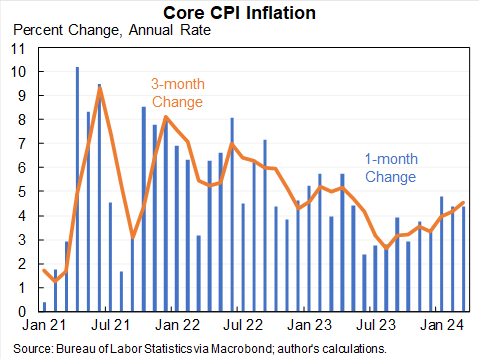
Core CPI coming in very hot for the third month in the row. The numbers are not kind to the thesis that January was a seasonal anomaly.
12 months: 3.5%
6 months: 3.2%
3 months: 4.6%
1 month: 4.6%
Lesson from yesterday's FOMC isn't that the Fed is dovish. Instead, it's that US inflation fell much faster than expected. Fed is just reacting to that. ECB now must make the same shift. What's true for the US (lhs) is even truer for the Euro zone (rhs). Inflation is tumbling...
Interesting article but would argue deposits are way stickier, more diversified and smaller avg tickets. Risk of liquidating long term bonds & govvies is quite different from US style banks.
The world is slowly waking up to the biggest systemic risk out there.
Japanese bank regulators on alert for SVB-style rate risks https://t.co/hf4rtMK2Oc via @ft
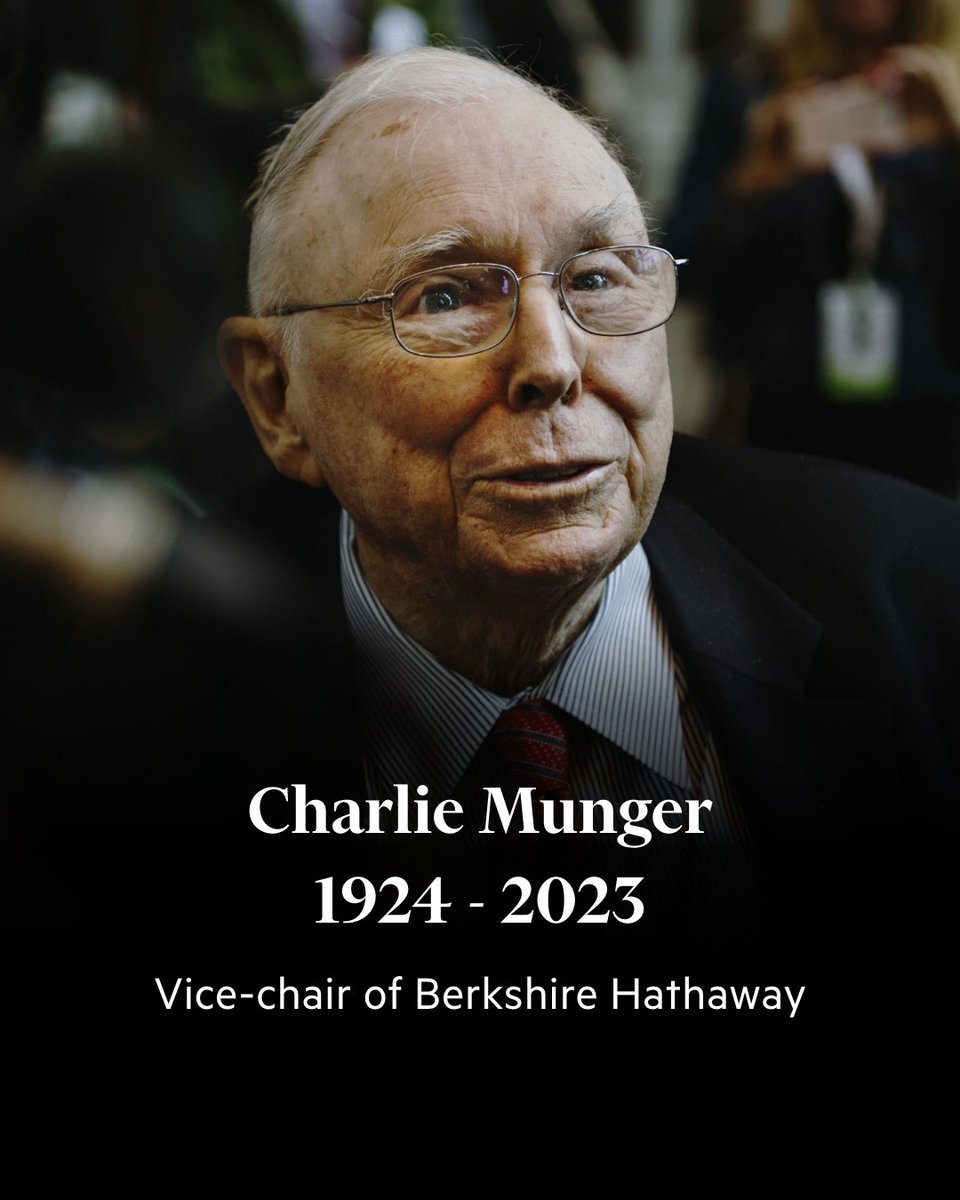
Charlie Munger, the vice-chair of Berkshire Hathaway, died at the age of 99 on Tuesday at a California hospital, the US investment conglomerate announced: https://t.co/JY9yIj1M9B
The next time someone mansplains to you how Germany is again the sick man of Europe, smile, make eye contact, and then say this: "German real per capita GDP is up 13% since 2007, France is up 6%, Spain is flat and Italy is down -4%. How exactly is Germany the sick man of Europe?"
Quindi fatemi capire.
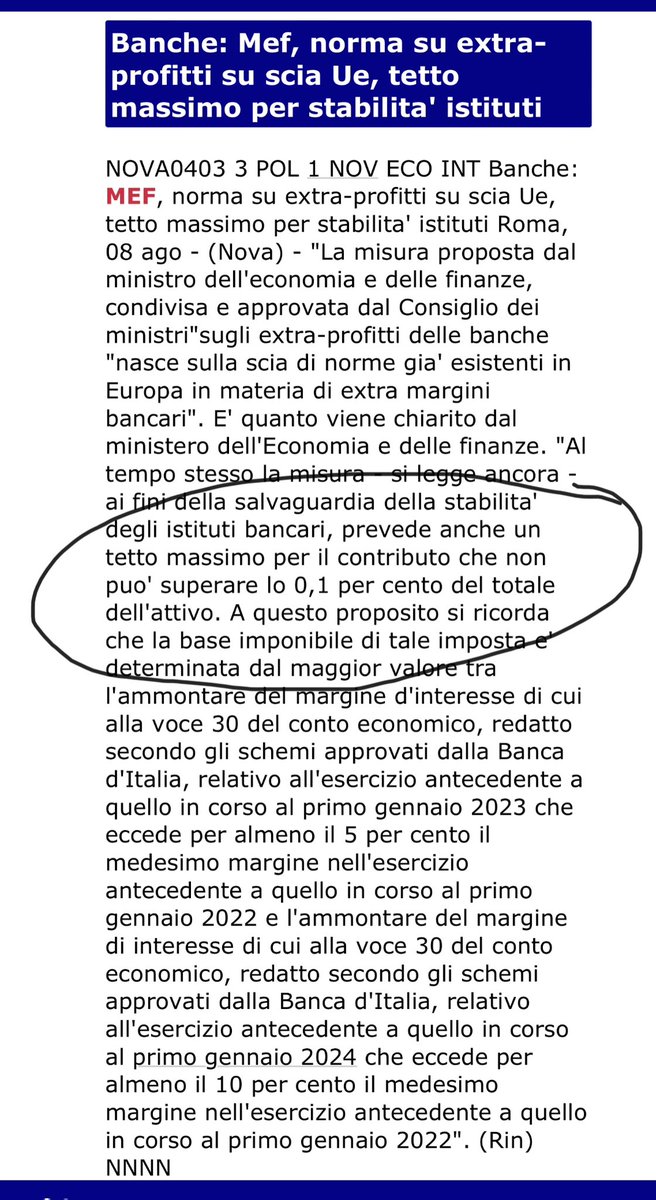
Ieri in conferenza stampa si annuncia una pesante e inaspettata misura contro le banche, le più importanti delle quali sono società quotate in Borsa.
Oggi i titoli bancari crollano, perdendo valore per circa 9 miliardi di euro.
Nella serata di oggi il Ministero dell’Economia rilascia una nota (qui riprodotta in allegato) in cui annuncia che la misura avrà un tetto massimo, il che limita l’incasso massimo a circa 2,5 miliardi.
Qualche domanda, che sarà mia cura formalizzare presto in un’interrogazione parlamentare:
1) questo tetto annunciato 24 ore dopo dal Mef era presente nel testo che il Consiglio dei Ministri ha formalmente approvato?
Se si, perché non è stata annunciata in conferenza stampa ieri?
Se no, perché il Cdm non si riunisce nuovamente per votare il testo così significativamente cambiato?
2) il governo è consapevole dell’enorme distorsione sul mercato borsistico causata da queste informazioni altalenanti e contraddittorie, e le conseguenze sulla possible manipolazione del prezzo dei titoli bancari?
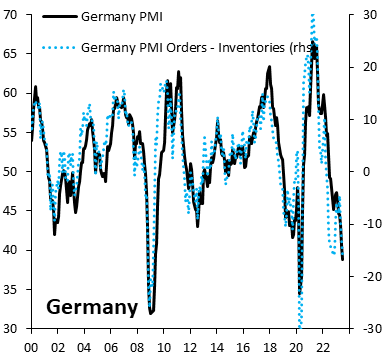
What's going on in German manufacturing is very bad. Headline manufacturing PMI (black) and forward-looking orders - inventories (blue) are worse than at the height of the energy shock in 2022. A sign that the energy shock is far from over and is weighing on "Standort" Germany...
⚠️Trigger warning:
If you are a hardcore gold bug, crypto maximalist, believer in the end of all fiat money and think we need a new BRICS reserve currency: This may hurt your feelings.
I have grown quite tired of seeing charts that show how currencies are being eroded by inflation and monetary debasement which are then being used as a segue into making a case for something that is supposed to be much more stable.
The reality is that, yes, inflation and rising money supply (who are very close cousins) are debasing currencies.
But what is often wilfully ignored is that these currencies also pay interest which is precisely there to compensate for the loss of purchasing power over time and the opportunity cost of having to defer consumption.
So, I went back nearly 200 years and looked at the available data to reconstruct the chart for the US dollar to include annual inflation/deflation as well as short-term interest paid on dollars via deposits or government bills.
The result is a very different message, showing a 37x increase in the real value of one 1834 dollar over the following decades and a good (but not perfect) capacity of the currency to hold its real value over a reasonably long period of time over the last 100 years or so.
The only reason why the often-quoted blue line below, showing a loss of 98% of purchasing power would apply to you, is if you kept your money under your pillow (and that's also fine, I am not judging).
Obviously, and logically, many other assets (including gold after the Bretton Woods collapse) have performed better over this period of time in inflation-adjusted terms and this makes perfect sense: they are risk assets and one needs to be compensated for holding them.
Conclusion: Purely as a store of value, in real terms, the dollar has done a much better job than it usually gets credit for. 🎖️
Crucial info and big differentiator between US and EU banks. NSFR forces banks to have stable deposits. Add this to low retail pass through rate in most of Europe and you get high margins for the banking system.
This, from my parsing of approx 100 europeans banks LCR disclosures, is share of retail deposits that are stable per country
- It's important for credit risk (see switzerland - I do NOT include CS which had 0 stable deposits)
- It's crucial for P&L because stable = profitable
Lucky us, Deutsche Bank had an investor update planned for today and here's the slide ya all wanted to see
Structure of their deposit book
(there's also a slide on CRE but nothing new on that front)






![classcnbc's tweet photo. Mario #Draghi sull'Unione Europea: "Quello che proporrò nel mio report è un cambiamento radicale".
Lo ha dichiarato l'ex premier alla conferenza di alto livello sul pilastro europeo dei diritti sociali a La Hulpe: «Non abbiamo avuto un industrial deal a livello europeo [...]. Investiamo meno di Stati Uniti e Cina nel digitale e nelle tecnologie avanzate, compresa la difesa. Ci sono solo quattro top player europei tra i primi 50 aziende globali»: https://t.co/tdemXjSG0a](https://pbs.twimg.com/media/GLSDdLsWsAEP-RP.jpg)