ZANU PF is not a political party that lost its way. It is an evil system.
A political, economic and social parasite. It cannot be negotiated with. Cannot be reformed. Cannot be waited out.
It has attracted the greedy, the opportunistic, every manner of social misfit. Mediocrity is now the standard. And this system is now in some of us — in how we drive, how we treat each other, how we litter our streets.
It must be uprooted root and branch.
Here is what you do, starting today:
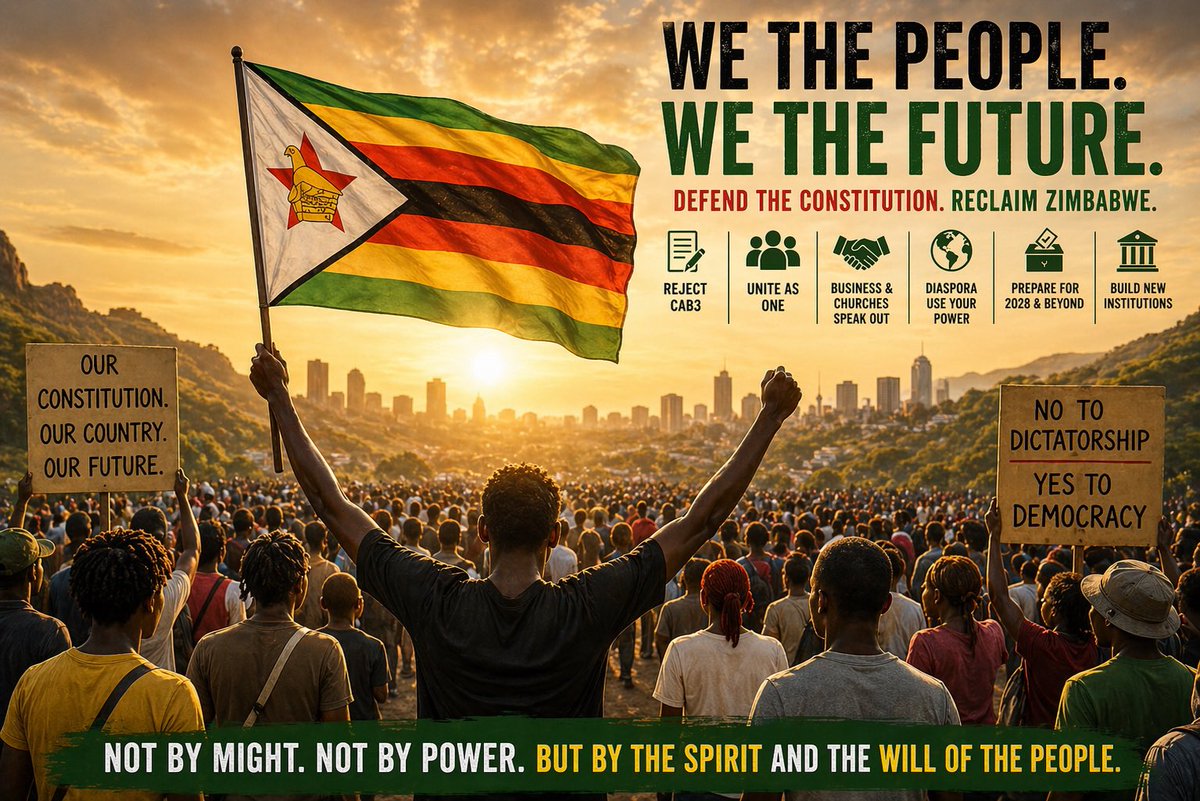
You have until 17 May to send written opposition to CAB3 to the Clerk of Parliament. I will soon publish a template for this. Use it. Share it. Make your MP answer publicly for their vote.
Seven specific actions. A programme, not slogans.
Read my impassioned views here 👇
https://t.co/Dwdargr3uE
#Zimbabwe #CAB3 #DefendTheConstitution
I want to make this special plea to all Zimbabweans from all ethnic backgrounds. Let us not amplify the voices of wicked, cruel, and bad people in our midst. We know who they are. We know that they create divisions within communities and within ethnic groups. Some of them are even funded to do so. Because if we remain divided, those who exploit us will continue to remain strong.
So I want to appeal to you, my dear brothers and sisters, whether you are Ndebele, Shona, Shangani, Nambya, or from any other ethnic group, please let us not amplify the voices of people who divide us. I have been tagged in so many posts where you have a Shona man saying bad things about Ndebele people or a Ndebele man saying bad things about Shona people. Please do not tag me in those posts, because I will never repost them or comment on them. By doing so, I would be irresponsible. I have over 1.7 million people following me across three social media platforms, and the moment I respond to or amplify that nonsense, I give that person access to those 1.7 million people. That would be irresponsible, and that is why I will never participate in those kinds of discussions.
I am not a tribalist. I am not a racist. I am a decent human being who wants to live in harmony with my compatriots from Zimbabwe and with people wherever I live, whether in South Africa or in Britain. I have lived in many countries and studied in different environments where there were significant differences in ethnic identity between myself and others, yet we got on very well. So what would stop me from getting along with my own people?
As a man, I have had relationships across different ethnic groups, Ndebele, Manyika, Karanga, and even those close to me such as Zezuru, as I was growing up. I was never taught to hate a person on the basis of their ethnic identity.
So please, let us not amplify such destructive voices in our communities. Block them if you can. The moment you amplify, retweet, or reshare such content, you are participating in it. You are validating it. And that is something we must all reject.
Tribalists are useless people with no purpose in life except destroying communities.
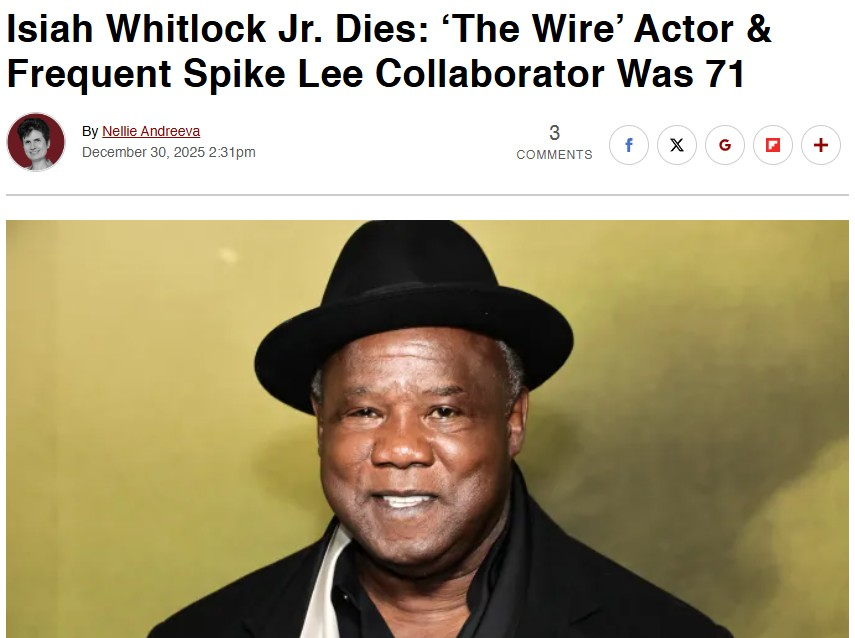
Hard to think of a better compliment to one's work than how almost everyone who sees the news of his passing will react by saying the same word, exactly the same way 🙏
This video posted by Gayton McKenzie, the Sports Minister of South Africa, is important for us as Africans, although the lesson I take from it is different from the one he intended.
But thanks to him for sharing it, because it touches on something fundamental that many of our leaders still do not understand.
I have said for decades in Zimbabwe that it was political foolishness not to make Ndebele and Shona compulsory in all schools. Not because one group must be elevated over another, but because language expands the mind.
My mother taught me two things about language when I was growing up; the more languages you speak, the more your mind opens, and language is business.
This is why the Chinese learn Zulu, Xhosa, Afrikaans, and other African languages. They do not feel “undermined” by it. They know exactly what they are doing. They are opening markets and embedding themselves where opportunities lie. It is called strategic intelligence.
It is unbelievable that for 45 years Zimbabwean political leaders have refused to make Ndebele compulsory. I have always argued that Ndebele is not just a cultural language, it is a business language.
Our biggest trading partner is South Africa. They speak Zulu, which is closely related to Ndebele. If you speak Ndebele and you arrive in Johannesburg, Durban or Cape Town, you are immediately at home. You understand them, they understand you. Business becomes easier.
When you speak a person’s language, you speak to their heart. That is what Nelson Mandela meant. And if you look at everyday life, Shona-speaking traders travel to South Africa more than they travel anywhere else. Yet they cannot speak the language that dominates that market but is spoken in their country. That is an economic loss created by political short-sightedness.
The Chinese are not learning African languages for fun. They learn them to do business and, yes, even for espionage. Meanwhile, some Zimbabwean politicians discourage their own people from learning languages that would empower them, while their own children are fluent in French, English, Portuguese, and Mandarin.
Across Africa, the most widely used languages outside vernacular ones are English, French, and Portuguese, with Spanish in Equatorial Guinea. Yet you still hear politicians calling French “neocolonial” if ordinary children are taught it, while their own children attend French schools, hold foreign passports, and work in international institutions.
Look at Emmerson Mnangagwa’s government. Several senior officials hold American, British, Australian, or European passports. Nick Mangwana is a British citizen, yet he insults Zimbabweans who take up British citizenship. That level of hypocrisy tells you everything.
Serious countries invest in language. Britain and America have entire divisions staffed by people who specialise in Mandarin and Arabic. These are the most sought-after languages in global intelligence and diplomacy. They do this for national self-interest. We should do the same.
When I was studying Film at Brunel University in England, I tried to enrol in a Mandarin course. I could not get in. The moment the registration link went live, every place was taken. The British understand the value of language. That is why if you visit China today, you will find Chinese people who speak Shona. They study us more seriously than we study ourselves.
It breaks my heart that 45 years after independence, Zimbabwean leaders still do not understand the importance of teaching Ndebele compulsorily. Someone will ask, what about Shangani? But the point I am making is simple, Ndebele is economically strategic for Zimbabwe. It is the bridge language to our biggest market. When you speak Zulu in South Africa, even Xhosa speakers will understand you. It is a regional business language, and every Zimbabwean should know it.
I am 54 years old. It is too late for me. But young Zimbabweans must be given this advantage. Languages also reduce political toxicity. I speak Zezuru, chiManyika, and Karanga because I went to school in the Midlands and I am Barwe.
I can switch between them easily. It dismantles ethnic suspicion. If I had learned Ndebele, it would have enriched my life even more, especially now that I partly live in South Africa.
Now coming to international languages. If French were made compulsory in Zimbabwean schools, job and business opportunities for our children would double instantly. Half of Africa speaks French. We speak English, but we do not speak French. That puts us at a disadvantage. If you go to the DRC or Congo-Brazzaville or Côte d’Ivoire or Senegal, French opens doors. With French, you do business without interpreters.
Countries with intelligent leadership understand this. Look at Rwanda. Today they are bilingual in international languages. If you speak English, they respond in English. If you speak French, they respond in French. That is leadership. Not this village thinking that learning another language “undermines culture”.
If we were serious about Pan-Africanism, I should be able to go to Algeria and work there because I speak French. An Algerian should be able to work in Zimbabwe because they speak English. That is how continental integration works. If we had serious thinkers at the African Union instead of political actors, Africa would be far ahead.
Africa is the richest continent in the world in minerals, yet we remain poor because of leaders who cannot grasp basic developmental logic. It breaks my heart to see Zimbabweans miss opportunities simply because they do not speak French or Ndebele. They lose jobs, lose contracts, lose global relevance.
Meanwhile, the elites’ children speak these languages fluently and work at the United Nations. When you apply for a UN job, the first question from Zimbabwe is often, “Do you speak French?” It immediately puts you ahead of others if the answer is yes.
I pray that one day Zimbabwe will have leadership that understands these simple, basic, yet transformative principles. Because language is not politics. Language is power. Language is economics. Language is opportunity. Language is the future.
Now, some will argue that those who want to speak Ndebele should simply learn it on their own. But that is not how any serious society operates if it wants genuine transformation. Languages are taught institutionally, through schools, not left to chance or to individual families.
Before children learn about Picasso or the Renaissance, they should be grounded in languages that will shape their economic, social, and intellectual futures.
If you leave it to parents, you immediately create inequality. What happens to a child whose parents are poor, who cannot afford private lessons, or who do not understand the long-term economic value of languages? That child is left behind through no fault of their own.
This is exactly why government exists, to intervene where inequality would otherwise reproduce itself, and to make sure that opportunities are structured, not accidental.
When languages are taught at school, they become institutional, accessible, and universal. They stop being optional and become part of a national developmental strategy.
That is how you build a society that transforms itself economically, intellectually, and socially. That is how you open the minds of citizens and give every child, rich or poor, a genuine chance to compete in the region, on the continent, and in the world.
We don’t support because it’s easy. We support because it’s Liverpool🔴
I have been in dressing rooms that felt this kind of pressure. You feel the noise, the doubt, the headlines. But you also feel the energy from those who support. That’s what carries a team through.
So yeah… things might not look great right now. But that’s exactly when a team needs its people the most.
#YNWA #LFC
A five hour long parade in the pouring rain in front of millions of singing and dancing fans for a title no team has won more often. No player in the world sees this and isn't hugely impressed. It does seem to mean a little bit more when it's Liverpool.