Patriarchy existed to STOP OTHER MEN.
You really think men invented patriarchy to hold YOU down? You are too weak, too fragile, too irrelevant for men to waste invention on you.
Men invented patriarchy to protect their lands, food, money, resources, women and children FROM MEN.
500 years ago women didn't know what patriarchy was because it was SURVIVAL.
No police. No 911. No guns. No cell phones. If a rival tribe wanted you, they killed your men, raped you, took your land, took your food, and married you off to their sons or kept you as maids, servants, and sex slaves. That was history.
Patriarchy said: TOUCH HER AND YOU DIE. She belongs to this man, this family, this tribe. That was not oppression. That was a DEATH THREAT to other men to keep you safe.
Pregnancy = 9 months useless. Breastfeeding mother can't run, can't fight, baby cries and brings wolves.
Who hunted? MEN.
Who fought bears? MEN.
Who fought other men? MEN.
Who built houses in snow? MEN.
Who died in wars? 90% MEN.
If men left women alone to be "independent" in 1500, you would have gone EXTINCT in one winter. No food. No fire. No protection.
You are alive today because of patriarchy.
Modern luxury - AC, Uber Eats, iPhone, birth control, police made yall RETARDED and ungrateful. You think world was always safe.
You think animals don't hunt humans for food?
Who stopped all these? Patriarchy. Men who built walls, laws, armies, civilization so you can sit on TikTok with fake eyelashes and say "patriachy oppress me."
You are not oppressed. You are PROTECTED and too dumb to know it.
Without patriarchy, you wouldn't be CEOs. You'd be extinct or a sex slave to the strongest man in your own village that’s been conquered by the enemy.
Patriarchy is not why you are suffering. Patriarchy is why you are ALIVE to complain.
I recently did an experiment. I cheated in a monopoly game. I wanted to examine the extent to which undue advantage such as embezzlement/inheritance influenced economic outcomes relative to chance and initiative. I ended up building 2 hotels before the others could build a house (CAPITAL ACCUMULATION).
It got to a place where, I stopped accepting rent from players that landed in the hotels. I instead offered to wipe away their debt in exchange for their land, which was sometimes only a quarter of the debt owed (ASSET-PRICE INFLATION).
The other players could not outbid me for the land as the owner owed me too much (BARGAINING/MARKET POWER).
The more land I got, the more I built. I was barely using the money I had. If I landed in their owned properties, the other players were more willing to overlook what I owed them because after every round I awarded each of them about $50 just to keep them in check (SOCIAL CAPITAL).
And every time I did, I sang about how generous I was (POLITICAL LEGITIMACY).
By the end of it, I owned all land. Had 5 hotels, across 5 prime lands (ASSET CONCENTRATION).
I came to the conclusion that unless by some miracle, you cannot outwit a flawed economic system. Undue advantage has a better compounding influence on positive economic outcomes than initiative and chance (OUTLIERS).
Pharmacists carry themselves with the quiet, terrifying authority of a supreme court justice, despite being trapped behind a glass counter surrounded by cough drops and orthopedic insoles. You can spend three hours in a multidisciplinary meeting debating a complex patient case, write out a meticulously thought-out prescription, and send it down.
Ten minutes later, the phone rings. It’s a 23-year-old intern pharmacist with a monotone voice saying, "Yeah, doctor, you wrote for twice-daily dosing but the guidelines from the European Consensus Group of 2022 recommend a 12-hour interval staggered with their morning porridge. I’m going to need you to log back into the system and rewrite the entire electronic order."
They don't just dispense medication; they audit your soul.
A HARVARD psychologist says: “if you’ve achieved nothing by 25, you’ve avoided the most destructive illusion of youth”
> In 2021, a Harvard psychologist surprised a lecture hall with an unexpected statement:
“If you haven’t accomplished much by 25, you may have escaped one of youth’s biggest illusions.”
At first, the room laughed.
She wasn’t kidding.
> The illusion of early success.
In your early 20s, the brain seeks quick proof of worth ~status, attention, rapid achievements.
But psychologists warn that chasing recognition too soon can lock people into roles or paths they never consciously chose.
They decide too early… and spend years trying to undo it.
> The exploration phase.
Research on career development suggests that people who explore more before 30 often build stronger long-term directions.
Testing ideas.
Making mistakes in public.
Changing course.
At 25 it looks like confusion ….but by 35 it often turns into clarity.
People who feel “behind” in their mid-20s frequently gain something others miss:
Perspective.
Patience.
And a clearer sense of what truly matters to them.
That foundation often leads to better decisions later on.
At the end of the lecture, the psychologist left the students with one final thought:
“You’re not meant to have life fully figured out at 25.”
“You’re meant to discover who you’re not.”
I recently walked into a vacated spa and salon that had shut down <1 yr from rent arrears. It told a very quiet but expensive story. From my estimates, over KES 2M had been spent on design and fittings.
Before you quit your 9–5 here are hard truths you must confront first...🧵
EE ended my religious stint for this reason. The realization that we don't know why electricity exists really shook me.
Ontology vs epistemology: We know the laws, and have tried to reverse engineer the essence, but its existence is largely a question mark.
I just finished shoveling my driveway. Took me 90 minutes. My back is killing me, and I have to drive to work now.
My neighbor has a snowblower. He did his driveway in 10 minutes, then offered to do mine.
I told him no thanks, I like the exercise.
Real reason? If he does my driveway once, I owe him. Next thing you know, he's asking me to "take a quick look" at his computer because "it's running slow."
I don't do free IT work. Not for family, not for neighbors, not for anyone.
Last year, this same neighbor asked me to help him set up his printer. I told him I'm a "network architect" and I don't work with consumer hardware.
He looked confused. I said, "It's like asking a heart surgeon to check your kid's scraped knee. Different skill set."
He hasn't asked me for tech help since.
So yeah, I'll shovel my own driveway. A sore back is temporary. Becoming the neighborhood Help Desk is forever.
Boundaries aren't rude. They're strategic.
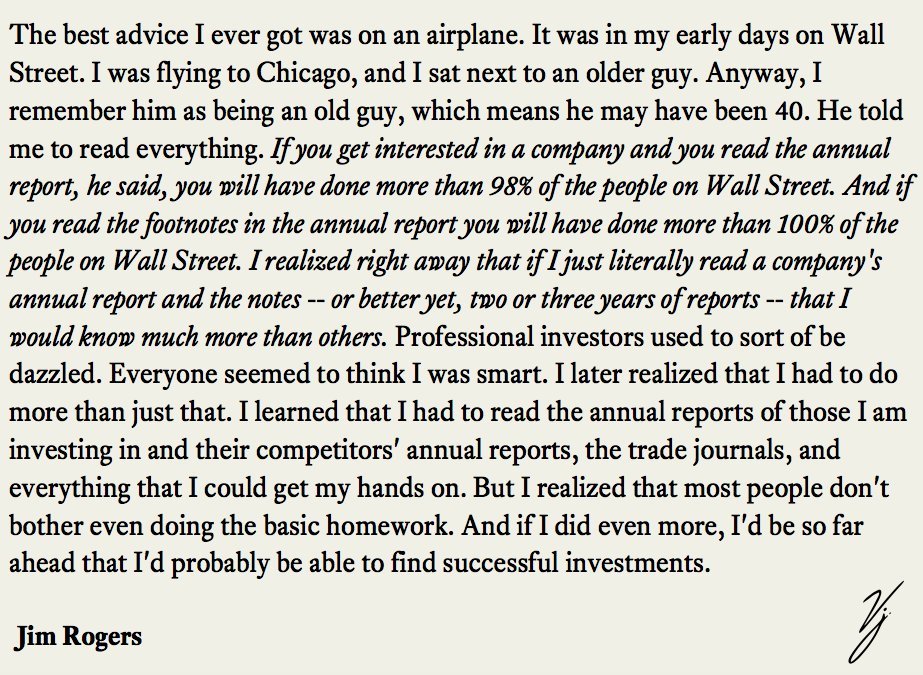
"If you get interested in a company and you read the annual report... you will have done more than 98% of the people on Wall Street. And if you read the footnotes in the annual report you will have done more than 100% of the people on Wall Street."
Happy boxing day.
@diouf_kenya The case is the very first one that pops up on your Google. I've simply asked you to read and tell us what you understand from it. Is it a legal, ethical or moral case? It is the very first lesson of the very first day of law school. Should be easy enough for you right?
Let's not go too far. Without using A.I, you have 10 minutes to read and explain to everyone here what you understood from The Case of the Speluncean Explorers. I'll have 2K for you judged on responses as to your accuracy. Go.
The reason government programs are so inefficient is that, unlike a commercial company, the feedback loop for improvement is broken, because they have a state-mandated monopoly and can’t go out of business if customers are unhappy.
No matter how bad the service is at your DMV (sorry to pick on DMVs), you still have to use your DMV, because it’s a monopoly.
In my twenties, I invested a lot of time and money in physical businesses; I opened a hospital, a restaurant, did supplies, built schools, roads, and springs as a tenderpreneur, real estate, tried farming, but none of these businesses succeeded, and neither did they give me satisfaction. In fact, I lost a lot of money, and if I sum everything together in losses and debt I owe in loan defaults and unpaid debts/bills, it’s close to 50 million cumulatively. What has worked for me and still sustains me is the digital or Wi-Fi economy, where you build a product or sell a service, get paid, and move on to the next one.
Today, I was talking to my friend on the same subject about our 20s and the hustles we did, and it was apparent that being a jack-of-all-trades and master of none is where most of us fail. I came to realize that maybe I am not so good as an entrepreneur of physical businesses but good as a digital one. In my 30s, I am thinking of the best ways to build a business purely online without much liability; I rarely invest my time or money in physical businesses but on the many digital products and services that can be availed.
My only regret in life so far is not identifying a narrow, specific area where I can thrive and work hard to perfect and be the best at it.
You don’t need to try doing everything at a young age; I have lost more trying to be an astute businessman, which obviously I ain’t. Kiherehere ya biashara ni mbaya. I give mad respect to people who build their massive physical business empires from scratch legitimately without stealing or conning anyone; it’s not easy.
Beyond the psychological component, there is a socioeconomic angle to this:
For many millenials, it was not so much the physical distance between them and their parents but the assumption of parental emotional and material duties at a very tender age, which often happens to kids from not-so-wealthy backgrounds.
Parents become a fleeting shadow of authority only, not a place of refuge. And when we view ourselves in relation to them, it was often only as responsibilities because their parenting ended with taking care of us. Giving us food, shelter, and clothes - paltry as they were. And you were constantly reminded to be grateful because there were so many kids out there without such "privileges".
And - in adulthood - when you view subsequent relations (familial, romantic, friendships) it is almost entirely through the lens of responsibility, not the emotional warmth of camaraderie in such affiliations.
So you never really invest wholly into connections with humans for fear of the responsibilities they come with. And when they are out of sight, it is one less responsibility on your part. And you are one less responsibility on theirs. It is some sort of flight response, where you do not wish to burden, but do no also wish to be burdened by expectation of any form. Whether emotional or material.
It is also the contributing factor behind the situationship plague, which was mainstreamed by the millenial, and resides within the anxious-avoidant spectrum.
Short story from something I read not so long ago.
Around 2012, Sameer as Yana tyres were doing about 4 billion in revenue. Manufactured being over 80% and the rest imported. Then Operation costs, cheaper imports affected market dynamics. These factors pushed revenue lower each year. Ministry officials and KRA cared less. There was robust, brisk business from imports. By 2016, they were closing down NBO and also focusing on importing cheaper tyres from China and India. By this time they were doing about 1.6b which further plummeted to less than 200 mil by 2020.
In 8 years they had gone from a multi billion giant to barely paying salaries. Job cuts were massive. Then they decided to focus on real estate which grew revenue to around 400 mil. When they were manufacturing, their real estate wing was previously classified as supplemental income. Kitambo, that would be their pesa ya chai na mandas. 😂 And even then, they still downsized staff to just property management. Sold about 4 Acres, Cleared a 500 mil facility and posted 250 mil in profit. The highest in 11 years. What I'm saying is, when you see manufacturers closing shop for real estate ventures you will know this country has a policy issue. Think installed capacity, supply and reliability, cost of electricity, haphazard tax policies, directives from Ministries etc. While all these are happening, the taxman is clapping for himself for surpassing collection targets and govt is proud to spend on more lavish items.
We went from Firestone to selling buroti maguta maguta.
Kenya has a policy problem. Not a manufacturing, agroprocessing, industrialization problem.
I think Standard Bank bosses may have read my book The Time Travelling Economist.
Kenya is on track to be Africa’s next “Asian-style” industrialisation story, in the 2030s.
In 10-20 years, high growth economies will be called “African-style”. Asia will be low growth like Korea