Là ça commence à bien faire, c’est n’importe quoi. Trois tentatives et ils finissent par réussir ? Et sans difficulté ? Il y a forcément des responsables. Et c’est de l’or, le risque de la fonte est énorme. https://t.co/eDO0pJNnm3
Feb 24th 1989 - Laura Palmer was murdered in the early hours of the morning. Later that morning, her body was discovered down river. FBI Special Agent Dale Cooper was assigned the case.
📺📅 Twin Peaks (1990) #TwinPeaks#TwinPeaksDay
#AIGovernance needs a global effort—world, step up!
The Council of Europe AI Convention offers the first framework to ensure human rights, democracy & the rule of law. At its best #AI can benefit all.
#CouncilOfEurope
🚨 [AI & HEALTHCARE]: There have been interesting AI-led advancements in healthcare, as well as discussions on related risks & compliance challenges. Below are 10 great resources to learn more. Download, read & share⬇️
Le cancer du pancréas est en passe de devenir la 2ème cause de mortalité par cancer en Occident. Mais l’origine de cette épidémie n’a toujours pas été trouvée.
Très bonne synthèse des pistes de recherche expliquant cette ⬆️ inquiétante par @beauantoine
https://t.co/XolvHAvmGX
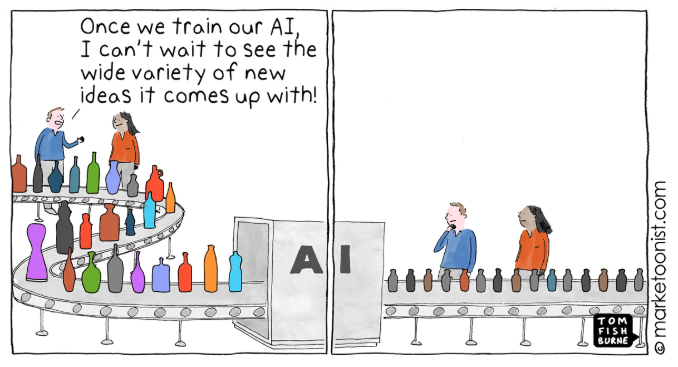
🚨 [AI RESEARCH] "AI models collapse when trained on recursively generated data" by @iliaishacked, @Zakobian, @aaronzhao123, @NicolasPapernot, @yaringal & Ross Anderson is a MUST-READ for everyone in AI. Quotes & comments:
"The development of LLMs is very involved and requires large quantities of training data. Yet, although current LLMs2,4–6, including GPT-3, were trained on predominantly human-generated text, this may change. If the training data of most future models are also scraped from the web, then they will inevitably train on data produced by their predecessors. In this paper, we investigate what happens when text produced by, for example, a version of GPT forms most of the training dataset of following models. What happens to GPT generations GPT-{n} as n increases? We discover that indiscriminately learning from data produced by other models causes ‘model collapse’—a degenerative process whereby, over time, models forget the true underlying data distribution, even in the absence of a shift in the distribution over time"
-
"Our evaluation suggests a ‘first mover advantage’ when it comes to training models such as LLMs. In our work, we demonstrate that training on samples from another generative model can induce a distribution shift, which—over time—causes model collapse. This in turn causes the model to misperceive the underlying learning task. To sustain learning over a long period of time, we need to make sure that access to the original data source is preserved and that further data not generated by LLMs remain available over time. The need to distinguish data generated by LLMs from other data raises questions about the provenance of content that is crawled from the Internet: it is unclear how content generated by LLMs can be tracked at scale. (...)"
-
➡ As I've been discussing in my newsletter, most general-purpose AI providers rely on legitimate interest as the lawful grounds to process data - including personal data - to train their AI models & systems. When attempting to justify their legitimate interest grounds, these providers often cite the collective & societal benefits to be reaped from their AI. I disagree with the legitimate interest argument from a data protection perspective (links to my newsletter article below). But leaving the data protection context aside for a moment, there is a general interest in preserving the quality of those models from ethical, environmental, and fairness perspectives (at least), not to mention the loss of human, technical & computational resources in case most existing models collapse. Perhaps regulation should also ensure that AI training, as a rule, preserves the sustainability of present and future models.
➡ Link to the paper below.
🔥 To stay up to date with the latest developments in AI policy, compliance & regulation, including excellent research, join 32,300 people who subscribe to my newsletter (link below).
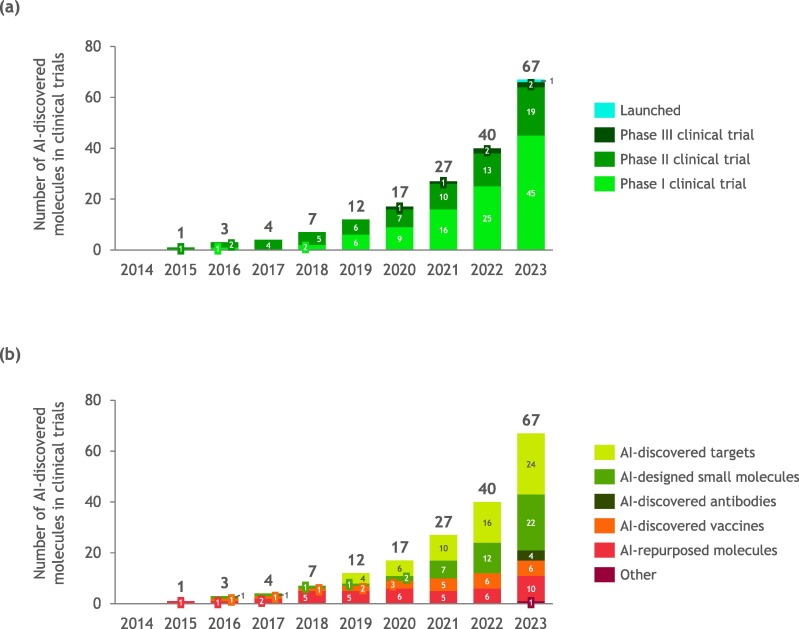
Les molécules médicamenteuses découvertes par l'IA ont un taux de réussite de 80 à 90 % dans les essais cliniques de phase I, alors que la moyenne historique dans l'industrie pharma avec les méthodes traditionnelles est de 40 à 65 %.
Source : https://t.co/QRgK0g83rp
🥰 "Il y a 8 ans, on prend le club en Ligue 2 avec 8 joueurs. Là, on va jouer l'Europe. Magique ! Je ne suis pas démonstratif, mais je suis fier ! Ce qu'on a fait est historique, personne ne pourra l'enlever, c'est gravé dans les coeurs"
G. Lorenzi, DS du Stade Brestois #FBSport
🚨AI policy alert: the EU Commission's group of Chief Scientific Advisors published their scientific opinion on "Successful and timely uptake of Artificial Intelligence in science in the EU." These are some of their recommendations:
"Develop and deploy frameworks, including flexible dedicated funding mechanisms for research with AI, that evolve with the fast-paced and dynamic advancements of AI to support and strengthen the use of AI in research."
-
"Improve quality standards of AI systems (i.e., data, computing, codes) and provide fair access for all researchers working on and with AI research."
-
"Protect and invest into efficient concerted actions between existing research infrastructures, Euro HPC (as computing power provider) and a future Institute for Research with AI (EDIRAS) – as they will play a key role in ensuring the EU's competitiveness in all scientific disciplines"
-
"Ensure that AI is driven by people (individuals and communities) living in an open society. Protect researchers, individuals, and communities from being driven by AI to only generate profit or be controlled by entities while ignoring or opposing EU core values and principles."
➡️ Read the scientific opinion below.
➡️For more information on AI policy & regulation, subscribe to my newsletter.
🚨EXCELLENT PRIVACY & AI PAPER ALERT: Prof.
@DanielSolove has recently published "Artificial Intelligence and Privacy," and you can't miss it. Interesting quotes below:
"Privacy laws generally do not mandate that a site protect against scraping. It is up to organizations to protect user data in their terms of service and then to enforce their terms of service. But privacy laws should mandate protection against scraping. If an organization attempted to transfer massive amounts of personal data to third parties without consent, this practice would violate many privacy laws. Failing to prevent third parties from just taking the data is the functional equivalent of selling or sharing it." (page 27)
-
"Decisions derived from predictive models challenge the principles of due process. Justice traditionally dictates that individuals should not face penalties for actions they have not committed. However, predictive models enable judgments and potential repercussions based on actions that individuals have not undertaken and may never undertake. As Professor Carissa Véliz contends, “by making forecasts about human behavior just like we make forecasts about the weather, we are treating people like things. Part of what it means to treat a person with respect is to acknowledge their agency and ability to change themselves and their circumstances.” (page 39)
-
"One remedy that is increasingly being used is algorithmic destruction. For example, in In re Everalbum, Inc., the FTC ordered a company to delete “any models or algorithms��� developed with data it had improperly collected. However, Li argues that the remedy of algorithmic destruction can be too severe and might “harm small startups and discourage new market entrants in technology industries.” Additionally, it is one thing for the FTC to order a small company to delete an algorithm, but what about a gigantic company such as Open AI? It is hard to imagine the FTC or any regulator ordering the deletion of a hugely popular algorithm with a multi-billion dollar value." (page 59)
Link to the full paper below.
Unpopular opinion: contrary to what most people say, AI might be one of the biggest drivers of new job opportunities in the next months. Read this:
As EU officials are tirelessly discussing the AI Act (which will likely be approved soon), and virtually every country in the world is putting effort into AI governance and regulation, it becomes clear that the next few years will bring massive regulatory changes to the tech sector.
As we get ready to leave the "AI wild west" behind and start building the "AI regulatory infancy," a group of AI professionals becomes essential. Besides engineers and data scientists, the AI field will desperately need professionals focused on:
AI governance
AI compliance
AI privacy compliance
Data governance
Responsible AI
AI ethics
and more.
From my point of view, the professional revolution around AI will be similar to what happened in the field of privacy & data protection. In the last few years, the field has grown, matured, and specialized so much that there are constantly new job openings in a variety of different positions. I think this will happen in the AI field too.
When researchers say that AI involves a lot of human work, directly and indirectly, soon it will also mean the numerous professionals needed to make sure AI systems: comply with existing laws (which will be many), respect privacy by design, follow industry practices in terms of consumer safety, are transparent, trustworthy, fair, and accountable.
In parallel to that, there will be a demand for professionals who help build, maintain, and grow this new ecosystem of professionals (similarly to what happens in privacy & data protection).
I've been constantly thinking about it, and when people say that AI will replace jobs, to some extent, it might be true, but there will be so many AI-related jobs created. And for some people, this might be a great time for a career transition.
With that in mind, we've gathered this list of AI-related jobs, which if you take a close look, go much beyond machine learning engineers and data scientists. Check it out below.
Get ready for the rise of the AI governance career (and perhaps transition before everyone else does).
Le centralisme ne marche ni en Bretagne ni en Corse: la demande d’autonomie exprimée par nos collectivités est une réponse à cette inefficacité des politiques publiques de l’Etat que les citoyens ressentent au quotidien. Rapprochons les décisions au plus près des réalités locales









![LuizaJarovsky's tweet photo. 🚨 [AI & HEALTHCARE]: There have been interesting AI-led advancements in healthcare, as well as discussions on related risks & compliance challenges. Below are 10 great resources to learn more. Download, read & share⬇️ https://t.co/2EG6VWuS33](https://pbs.twimg.com/media/GWKgI2xW4Acu-hF.jpg)
![LuizaJarovsky's tweet photo. 🚨 [AI RESEARCH] "AI models collapse when trained on recursively generated data" by @iliaishacked, @Zakobian, @aaronzhao123, @NicolasPapernot, @yaringal & Ross Anderson is a MUST-READ for everyone in AI. Quotes & comments:
"The development of LLMs is very involved and requires large quantities of training data. Yet, although current LLMs2,4–6, including GPT-3, were trained on predominantly human-generated text, this may change. If the training data of most future models are also scraped from the web, then they will inevitably train on data produced by their predecessors. In this paper, we investigate what happens when text produced by, for example, a version of GPT forms most of the training dataset of following models. What happens to GPT generations GPT-{n} as n increases? We discover that indiscriminately learning from data produced by other models causes ‘model collapse’—a degenerative process whereby, over time, models forget the true underlying data distribution, even in the absence of a shift in the distribution over time"
-
"Our evaluation suggests a ‘first mover advantage’ when it comes to training models such as LLMs. In our work, we demonstrate that training on samples from another generative model can induce a distribution shift, which—over time—causes model collapse. This in turn causes the model to misperceive the underlying learning task. To sustain learning over a long period of time, we need to make sure that access to the original data source is preserved and that further data not generated by LLMs remain available over time. The need to distinguish data generated by LLMs from other data raises questions about the provenance of content that is crawled from the Internet: it is unclear how content generated by LLMs can be tracked at scale. (...)"
-
➡ As I've been discussing in my newsletter, most general-purpose AI providers rely on legitimate interest as the lawful grounds to process data - including personal data - to train their AI models & systems. When attempting to justify their legitimate interest grounds, these providers often cite the collective & societal benefits to be reaped from their AI. I disagree with the legitimate interest argument from a data protection perspective (links to my newsletter article below). But leaving the data protection context aside for a moment, there is a general interest in preserving the quality of those models from ethical, environmental, and fairness perspectives (at least), not to mention the loss of human, technical & computational resources in case most existing models collapse. Perhaps regulation should also ensure that AI training, as a rule, preserves the sustainability of present and future models.
➡ Link to the paper below.
🔥 To stay up to date with the latest developments in AI policy, compliance & regulation, including excellent research, join 32,300 people who subscribe to my newsletter (link below).](https://pbs.twimg.com/media/GVa0E47XoAE0_KD.jpg)