🧵War causes direct civilian deaths but also indirect deaths over the following years.
Recent paper estimates eventual total direct & indirect deaths in Gaza attributable to the war - 10% of entire pop'n.
I want to explain these estimates and why deaths must be counted. 1/13
"Ratios in regression analyses with causal questions" - interesting new paper in @AmJEpi warning about the casual use of ratio variables in regression analyses when interested in causal effects.
#EpiTwitter
https://t.co/qAyqrVA91E
“Math ability is mostly genetic. Either you have it or you don’t”
Math education is so bad that there’s no way to know if this is true based on observing the current status quo. Has anyone ever explained to you how to read math books? If you’re like most people the answer is no.
I am a methodologist. Methods is a speciality. We make recipes for others to use.
When I publish methods, I include relevant code, equations, assumptions, & interpretations. I *intend* for people to re-use these.
Citation is expected. Quotation marks would be ridiculous.
Horrific. My heart goes out to the victims and their families.
Gunman opens fire in a Prague university, killing 14 people in Czech Republic’s worst mass shooting https://t.co/FGAR0nJ2Q8
Call for papers! We are now accepting papers for a Special Collection on Treatment Burden and Multimorbidity with guest editors Dr. @krboehmer and Dr. @GallacherKatieand and Coordinating Editor Dr. @FrancesMair. 1/4
I would like to supplement @kareem_carr introduction with a note on the analogy between Causal Inference (CI) and algebra.
1. CI is a mathematical method that takes us from what we know (assumptions) to what we wish to know (conclusions, or an answer to a query). It resembles algebra, more than statistics.
2. In algebra, a typical problem goes like that: My brother is 5 years younger than my sister. Last year my sister was twice older than my brother. How old is my brother? Formalizing what we know: X = Y - 5, Y- 1 = 2(X-1), gives us, after some manipulations, what we wish to know: X=6, Y=11
3. In causal inference, we may face a situation in which we know that:(1) Y cannot cause X, (2) no variable is a cause of both X and Y, (3) DATA: P(x,y). What we wish to know is Q: the causal effect of X on Y.
4. Trouble: we have no language of formalizing (1) (2) or Q. [We have statistics to give us (3)]
5. CI provides us such language.
(1),(2): X--->Y, (3) P(x,y); Q = E(Y|do(X=x)] = ?
6. CI gives us both, a language to represent what we know and what we wish to know and a mathematical method of going from the former to the latter.
7. BTW, In our example, the answer is: E(Y|do(X=x)] = E(Y|X=x), as explained by Kareem.
Fifty-five years ago, on the night of August 20-21, 1968, the Warsaw Pact invasion of Czechoslovakia began, marking a definitive end to the hopes that the series of liberalising and democratic reforms, known as the Prague Spring, had brought with it.
https://t.co/I3WwmPNfNa
French liked Kundera for the wrong reasons, and some Czechs disliked him for the wrong reasons, too. @MurielBlaivePhD on Milan Kundera https://t.co/0HyADh1ErS
My colleague Marije Splinter is presenting our ongoing joint project on validating and comparing #multimorbidity indices for predicting mortality #weon2023
Math is not special.
Like any skill, everyone can learn it if they put in the effort. Like playing basketball, guitar, or anything else that takes practice. Math is not special.
If you struggle with it, take comfort in the fact that everyone struggles with it. 🧵
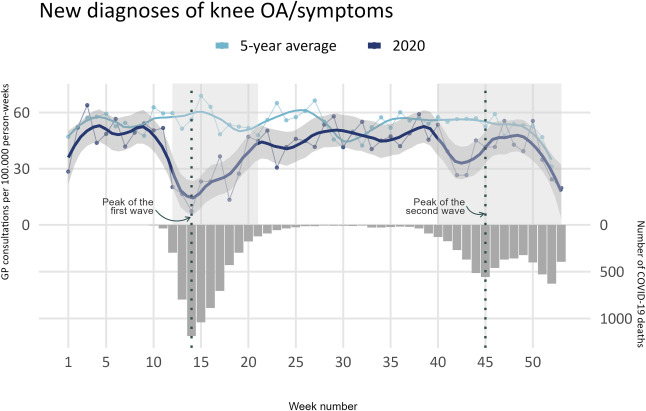
How did COVID-19 impact primary care for musculoskeletal complaints? During March-May 2020 we found 50% drop in GP consultations for any musculoskeletal complaints and 90% drop in number of new diagnoses of osteoarthritis! More in our paper https://t.co/1FFFUViJ9V
@OACJournal
“Multimorbidity deserves its makeover”.
An excellent opinion piece from @tessajlrichards in the @bmj_latest recently.
Where are the advocates, lobbying for better care? The fund raisers and the champions? The slick slogans?
https://t.co/kHEm8RR4Qb