OPINION & ANALYSIS
#Eritrea@35: Independent Development Policy, Human Capital, and the Promise of a Knowledge-Driven Future; By Ezra Musa (Red Sea Beacon)
"At the center of Eritrea’s economic development story is a defining principle: ownership of its development path as it cultivates investment and trade ties anchored on symmetric partnerships with primary and rigorous focus on national human capital development; particularly through education, capacity-building, and citizen-driven innovation – both inside the country and across the diaspora".
https://t.co/D9ty8G820b
#African states need a coherent, regionally agreed foreign policy in dealing with the United States, #Europe, and other global powers; otherwise, they will struggle to achieve the peace and stability that are the essential bedrock for economic and social development across the continent.
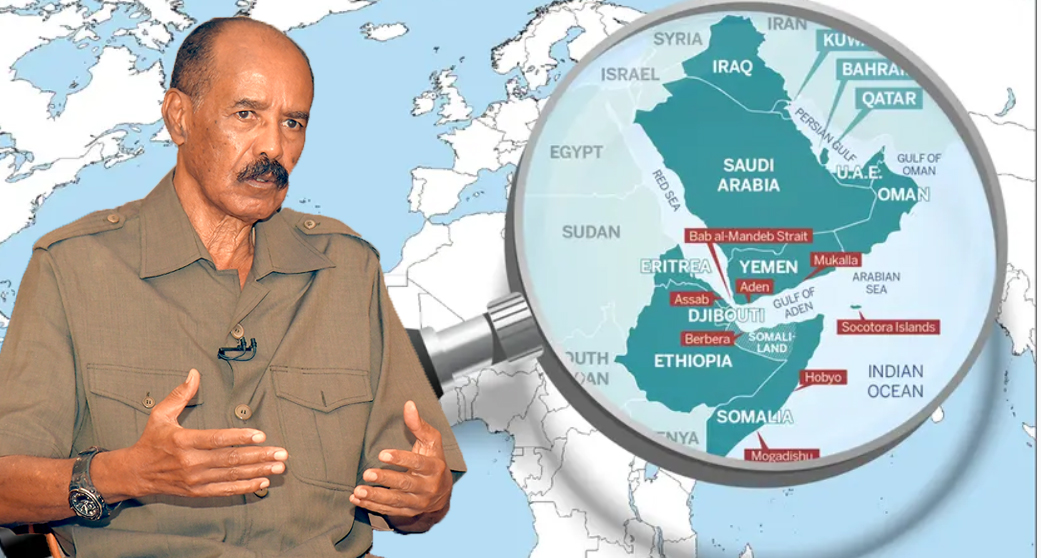
Earlier this year, President Isaias Afwerki explained that bilateral relations with the U.S. and other global powers is secondary—even tertiary—for #Eritrea's foreign policy, compared to the higher priority of building regional cooperation and fostering a harmonious political environment in the Horn of Africa. He underscored 'We need to do our homework, before we blame others for our predicament'
For much of the past century, the Horn of Africa (as it is in wider Africa) has witnessed leaders and states that believed themselves more powerful, wealthier, or historically superior to their neighbours, and were willing to act as satellite states at the expense of those neighbours. Abiy Ahmed is a typical and worst current example!
As a result, the peoples of the region have remained underdeveloped, too often drawn into conflict with one another, and deprived of the collective strength needed to negotiate and act as a serious global force.
For the sake of future African generations, this mentality of slavery and division must end. African states must respect one another, cooperate, and prosper together.
There is no alternative.
Prosperity Party (aka Potemkin Party) signature media trademark is better encapsulated in the following algebraic equation:
PP propaganda = Optics + Posturing + Deception + Disinformation; (the four variables have different weights depending on the event/intended objective).
This is indeed the hallmark of the numerous articles churned out on a daily/weekly basis by PP's extensive media platforms (Horn Review; Foreign Policy Institute; X accounts of hired lobbyists etc.).
Latest spin in this profusely boring and stale saga revolves on misconstruing the ordinary and periodic foreign military visits to Addis Ababa - Italian Navy; AFRICOM, France's Armed Forces etc. - as "explicit and pronounced endorsement of its quest for access to the sea".
The hollow optics of the whole affair apart, the controversy has never been on normative access to the sea. Truth is, Ethiopia enjoys a "buyers' market" with a wide latitude of choices and options for cementing viable commercial agreements with all the transit countries in the HoA neighbourhood for purposes of trade.
"Sovereign access to the sea" is however a toxic agenda that infringes on the sovereignty and territorial integrity of Ethiopia's neighbours in flagrant violation of international law, and, the foundational principles of the UN Charter and the AU Constitutive Act.
Another intriguing/perplexing dimension of PP's quest for "sovereign access to the sea" is its repeated allusion to the exigency of projecting "Naval power in the Red Sea".
True, the Red Sea is an important maritime route for global commercial trade. But this does not mean that all the countries - from near or far - whose commercial transactions somehow pass through the Red Sea have a "legal right or exigency" to acquire naval bases on the shores of the Red Sea!
As expounded in the link below, the littoral States of the Red Sea and Gulf of Aden have a consensual position on their obligations and legal prerogatives in securing and promoting enduring and sustainable stability of the crucial international maritime route.
In the event, Potemkin Party's elusive obsession of projecting "naval power" in the Red Sea has no security rationale or dividends whatsoever. And besides its dangerous legal and security ramifications, the obsession is indeed akin to the adage: "ጽንብላሊዕ'ሲ መቐመጫኣ ዘይከደነት፥ ምድሪ ከደነት" ።
https://t.co/Y69MJ6Tn4u
#FestivalSeason: Graphic photos of Annual Festival of the Eritrean Community in Jeddah and its environs, held from 9th-15th November, featuring Photo Exhibitions; Video shows; display of cultural artifacts; youth sports competitions etc.
Seminar on current domestic and regional issues by Ambassador Estifanos Habtermariam, Director General for Regional Desks at the Ministry of Foreign Affairs.
Another eloquent demonstration of a cohesive Diaspora that moves in lock-step with the Homeland.
Good Read - A journey through "three seasons in two hours"; by Irdi Issaias
*"...Eritrea is a country with incredible diversity — a wide range of climates, cultures, landscapes, and ecosystems, making it a truly unique and fascinating place to live in and explore. Nature is one dimension that demonstrates Eritrea’s diversity, reinforcing the idea that the country is a fascinating place, with diverse environments and landscapes that offer unique experiences".
*"...With its year-round pleasant climate, rich cultural heritage, and diverse landscapes, Eritrea is an attractive destination for tourists. The country’s 70-mile journey from Asmara to Massawa offers a thrilling experience, with beautiful scenery, unique cultures, and refreshing climates. When you drive from Asmara to Massawa at any time of the year, within a two-hour journey, you might feel like you’re in a different season as the landscape, vegetation, and the climate changes dramatically".
*"...Known for its pristine beaches and marine life, the port city of Massawa offers a unique combination of history and architectural beauty,... As you delve into the detailed aspects of the country’s extensive marine environment, Eritrea’s coastline features stunning beaches, mangrove forests, and coral reefs, with an incredible array of marine species waiting to be discovered."
https://t.co/nBdQjHQLO2
The @UN must uphold
its Charter & international law!
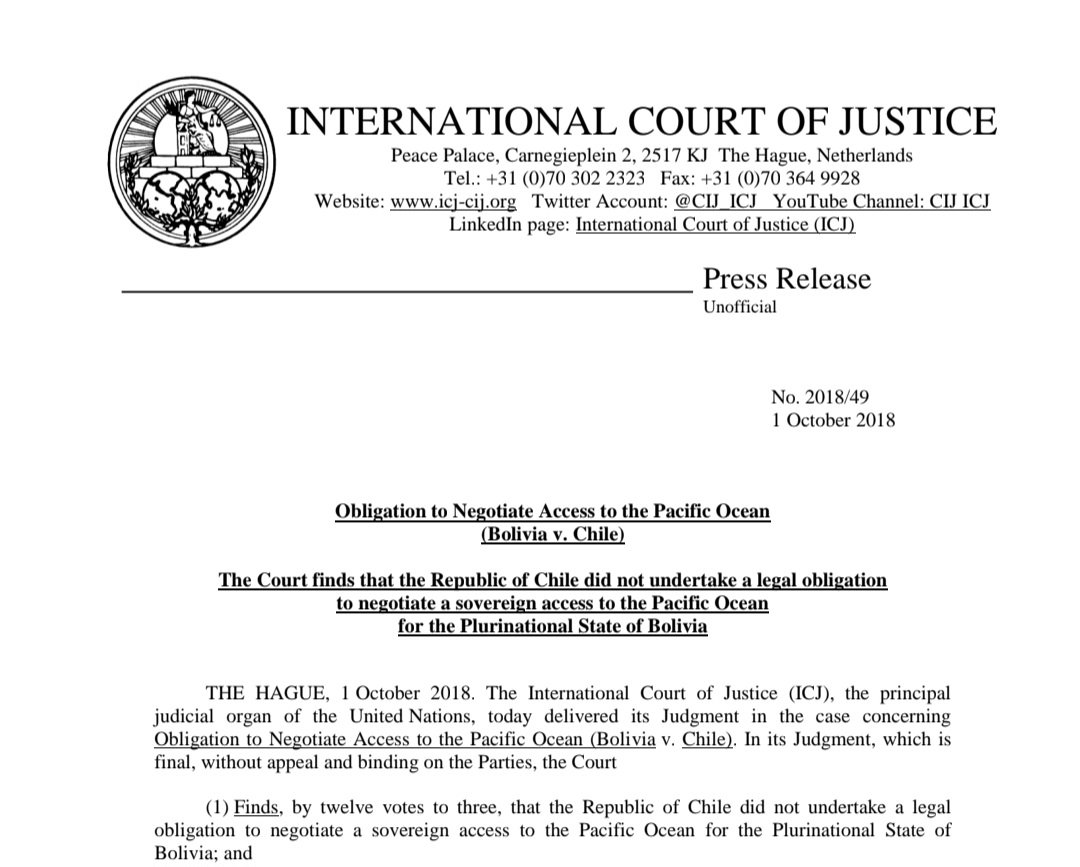
@CIJ_ICJ, the principal judicial organ of the UN, unequivocally ruled in 2018, in the Bolivia v. Chile case that coastal states do not have legal obligation to negotiate sovereign access to the sea/ocean for landlocked states.
The Great Bereket Menghsteab has passed away. The man and his music are extraordinary. He has touched, influenced and inspired generations of #Eritreans over the past 6 decades. I loved his music. May he rest in eternal peace.
President Isaias Afwerki met and held talks with UN Special Envoy to Horn of Africa
President Isaias Afwerki met, in the late afternoon hours today at the Denden Guest House, Mr. Guang Cong, the new UN Special Envoy to the Horn of Africa.
In the extensive discussions which focused on developments in the Horn of Africa, President Isaias noted that UN role and track-record in the resolution of conflicts in the region has not been effective and will require a new approach.
In this respect, President Isaias underlined that mere deployment of Peace-Keeping forces without rigorous accountability modalities and holistic underlying frameworks could not indeed bear the desired results. But the blame cannot be attributed to the UN as the problem essentially stems from the prevailing flawed international order, President Isaias stressed.
President Isaias also referred to the shortcomings of regional organizations whose efficacy have been compromised - despite the lofty objectives enshrined in their mandates - due to unwarranted external interventions. In most cases, the regional organizations have become vehicles for external agendas.
On the situation in Sudan, President Isaias emphasized the historical ties and partnership that bind together the two countries. In this spirit, Eritrea had submitted, in 2022, a concept paper on the establishment of a popular governance structure based on citizenship in its sincere efforts for a modest contribution for the restoration of peace and stability in Sudan. But the initiative could not make much headway due to external interventions which have only exacerbated the conflict.
In a brief statement to the Eritrean News Agency, the UN Special Envoy stated that his visit to Eritrea is part and parcel of his engagement in the region. Mr. Guang Cong further expressed his satisfaction in the fruitful discussions that he held with President Isaias Afwerki; paid tribute to Eritrea's contributions in the resolution of conflicts in the region; and affirmed his full readiness to work with Eritrea for the promotion of regional peace and stability.
The meeting was attended by Mr. Osman SALEH, Minister of Foreign Affairs, and Ms. Nahla Valji, UN Resident Coordinator in Eritrea.
Mr. Guang Cong was appointed as UN Special Envoy to the Horn of Africa in July 2025.
#Eri101: Quiz 1 🤔
Why would anyone go out of their way to search for their neighbor’s birth certificate?
And what gives them the right to question their neighbor’s very existence simply because they don’t have a copy of it?
Eritrea was never part of Ethiopia in a manner that required “approval” for separation. Its federation with Ethiopia was unilaterally dissolved by Emperor Haile Selassie in violation of United Nations resolutions. Eritrea’s independence was not granted by Ethiopia—it was won through a thirty-year war of liberation, and internationally endorsed through the UN-supervised 1993 referendum, in which 99.8 per cent of Eritreans voted for independence
✪ THE SECOND BEST STRATEGIC OPTION
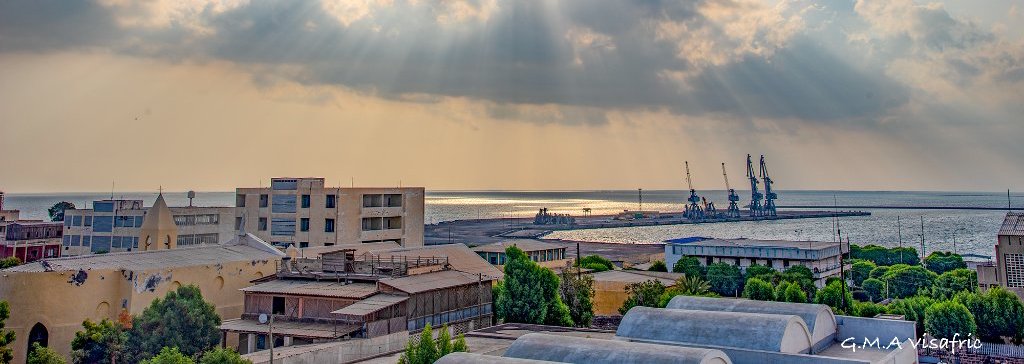
The port of #Assab carries political and strategic importance, yet turning it into a modern commercial port would demand hundreds of millions of dollars, an amount that is far beyond Eritrea’s current financial capacity. Even if such funds were available, relying on future Ethiopian import and export traffic to repay the investment would leave the country exposed to unnecessary risk.
Eritrea has other pressing domestic priorities that require attention long before any attempts to revive Assab as a modern commercial port.
On top of that, Ethiopian officials have signaled that their interest in "sovereign Red Sea access" is tied to naval ambitions rather than trade, which makes the idea even less practical.
Many Eritreans, including myself, however, believe there is a more practical path forward: instead of pursuing a commercial model, Assab could be transformed into a «military and logistical hub» in partnership with our regional allies who share strategic interests in the Red Sea.
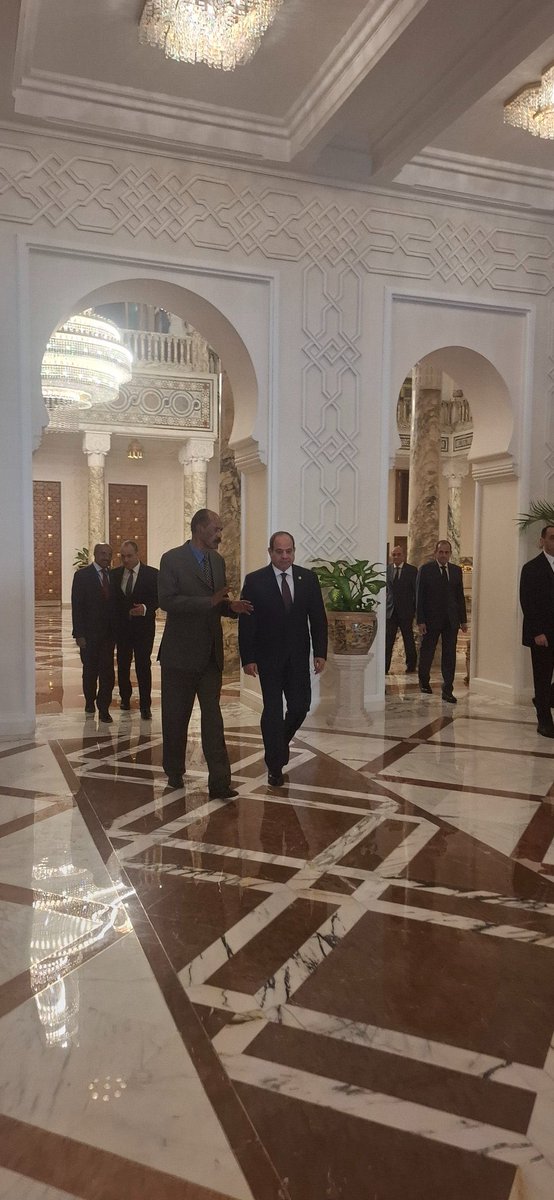
For example, Egypt, besides Saud Arabia, would likely join such a partnership without hesitation.
This approach not only provide predictable revenue without straining public finance, it also reinforce Eritrea’s defensive posture at a time when Ethiopian leaders continue to circulate expansionist narratives that defies international law and question Eritrean sovereignty.
Our government has repeatedly warned against these threats, and therefore, turning Assab into a fortified military asset would make it clear that the nation’s borders are not negotiable.
Such policy shift is believed to help Eritrea safeguard its coastline, enhance security in the Bab al Mandab corridor, and reduce the risk of future provocations.
Unless our government has a more effective plan under its sleeves, it's high time to reconsider such a realistic option that anchors the port’s future in national security interests.
--* #My2cents *--
The discussions surrounding sea ownership for Ethiopia act as a cover for the ambitions of a greater Oromo Kingdom. Many gullible Ethiopians have been misled into supporting this quest for sea access. The Oromumma rulers are not only intent on expanding their sovereignty over neighbouring territories but are also aiming to incorporate the lands of the Amhara, Somali, Afar, Benishangul, and Southern regions into their domain. Their expansionist strategy targets Harar, Dire Dawa, and Jigjiga in the Somali region, with plans to later pursue the Semra territories in Afar, claiming “historical connections” to the Oromo nation. Ultimately, this strategy includes aspirations for Assab Port as part of their expanding territory. Meanwhile, the brave Somali community in Dire Dawa has risen up against the expansionists, firmly asserting that Dire Dawa is not Oromo territory. Additionally, the Ogaden rebels are dusting off their Kalashnikovs to defend their gas and oil-rich lands from the Orommuma elites.
#Ethiopia #Eritrea
ETHIOPIA — Anger is rising among ethnic Somalis after PM Abiy Ahmed falsely claimed in a recent parliamentary speech that “ድሬድዋ የኦሮምያ ነበረች” (Dire Dawa was once part of Oromia).
They are now demanding that he retract the statement and issue a formal apology as such claim has a potential to incite ethnic violence.
Dire Dawa is a chartered city in eastern Ethiopia, near Oromia region, founded in 1902.
Abiy’s reckless talk of “producing three million” & grabbing Red Sea access isn’t bravado—it’s a direct threat to global peace. Any attack on Eritrea or the Red Sea would drag Egypt & Saudi Arabia into action; it would choke a lifeline of world trade. The UAE-Ethiopia axis in Sudan risks igniting a crisis the UN must not ignore.
@AmbStesfamariam@unsc@US_SrAdvisorAF@SecRubio@StateDept@antonioguterres@ChinaEmbEritrea@mfa_russia
#Ethiopia #Eritrea #RedSeaSecurity #HornOfAfrica #UNPeace #GlobalStability #AbiyAhmed #IsaiasAfwerki #Egypt #SaudiArabia #UAE #Sudan #UNSC #PeaceAndSecurity #Geopolitics #RedSea