5 DAYS UNTIL REAL $CYS.
Point Swap.
Pre-Sale.
Real Token Tasks.
Everything starts now.
The road to TGE is now straight ahead.
A new section has been added:
PRE-SALE.
It will happen in 4 stages.
And very soon inside the TGE Qualification Hub:
Point conversion goes live.
Your earned CYS points will become real $CYS tokens.
A new $CYS Token Balance has also been added to the dashboard.
You will be able to grow it by:
• Swapping CYS points into tokens in 5 days.
• Completing the new token-reward tasks.
And yes —
new tasks are already live.
For the first time, they reward not points, but real $CYS tokens.
The next phase is beginning.
At the same time —
the biggest cleanup in project history is starting.
Fake accounts.
Bot farms.
Abusers.
Final warning.
Only real users move forward into TGE.
And one more thing:
Major partners have entered the ecosystem.
Hint:
Tier-1 👀
5 days left until your points become real tokens.
🤖 Community Question:
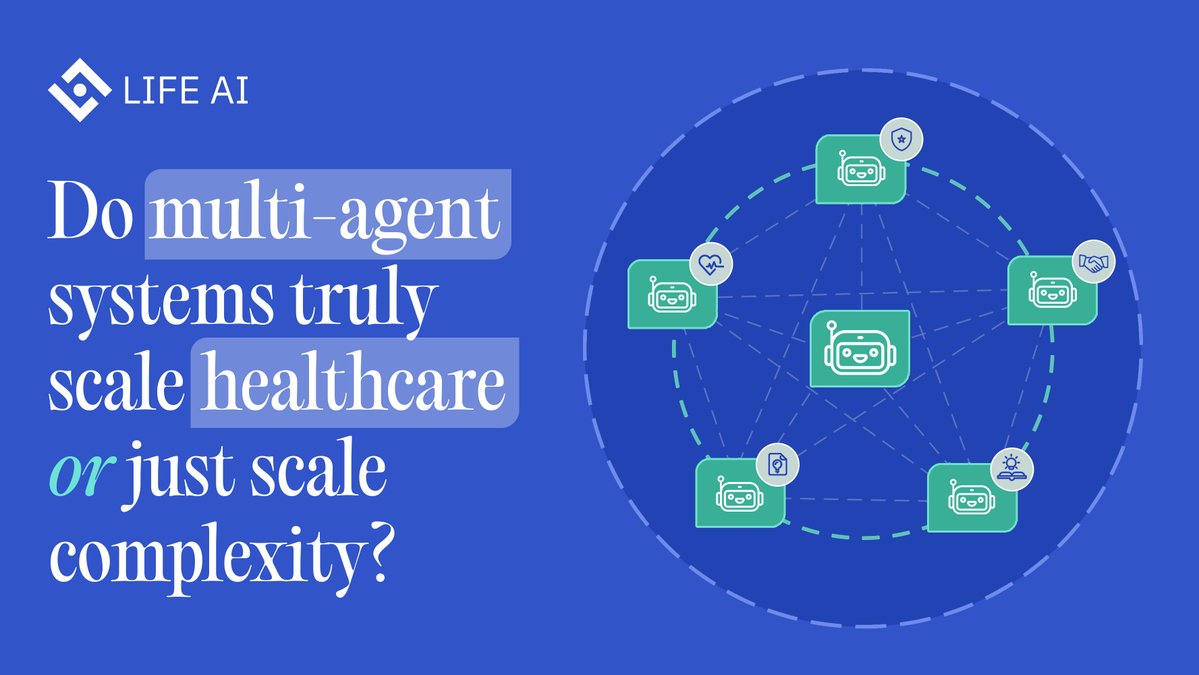
Do multi-agent systems truly scale healthcare or just scale complexity?
Viewpoint A: Scalable Coordination
Healthcare workflows are too complex for a single agent.
Multi-agent systems split tasks, cross-check outputs, and improve efficiency at scale, especially in areas like care coordination and prior authorization. With the right guardrails, they offer a practical path forward.
Viewpoint B: Compounding Risk
More agents also mean more risk.
Errors can cascade, decisions become harder to explain, and accountability gets blurred. As systems grow, governance becomes more difficult and scaling too early increases exposure.
👇 Drop A or B and share your perspective
@LifeNetwork_AI B. Valuations look wild. Infra spend is exploding way faster. Tons of startups have huge valuation without real customers, and enterprise adoption isn’t catching up to the hype speed. So a lot of player are set up for an ugly repricing the tech itself keeps advancing.
🌐 Community Question: With soaring investment and valuations in AI, is the AI bubble real or a myth?
Viewpoint A: The AI Bubble Is a Myth
Supporters argue that AI reflects a fundamental shift in computing. Demand for AI infrastructure continues to grow rapidly as industries adopt AI across areas such as healthcare, robotics, and digital biology. They also point to falling compute costs, improving reasoning capabilities, and expanding real-world applications as evidence that the growth is driven by genuine technological progress rather than speculation.
Viewpoint B: The AI Bubble Is Real
Critics warn that AI valuations and investment could be driven by hype and expectations of rapid breakthroughs. They argue that spending on infrastructure and startups could outpace real revenue and adoption, creating risks of market correction similar to the Dot-com Bubble.
👇 Drop A or B and share your perspective
Earn while helping define how the world approaches health.
Your voice drives the change.
Join me: https://t.co/SrM37cejAc
Code: W7XTBLZ
#LifeAITestnet#HealthcareAI
🌐 Community Question:
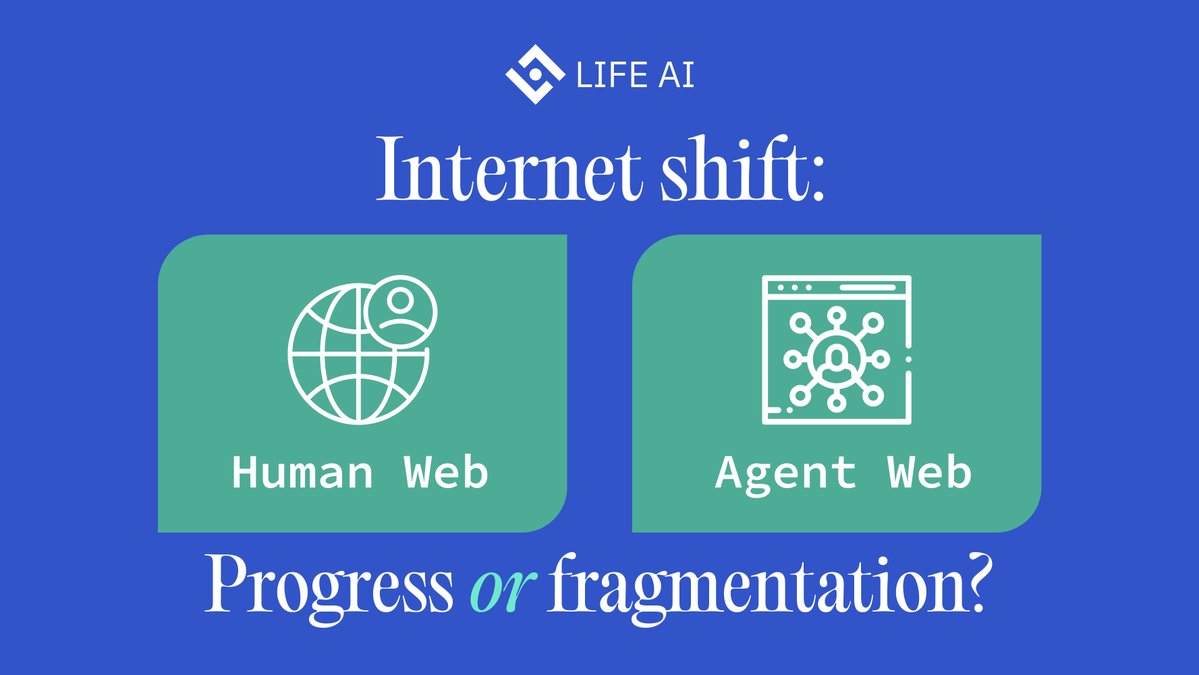
As the internet evolves to support autonomous AI agents, splitting into the Human Web (interfaces for people) and the Agent Web (API-driven infrastructure for machines), will this shift drive innovation and automation, or fragment and dehumanize the online experience?
Viewpoint A: A New Layer of Internet Intelligence
The rise of AI agents interacting directly with digital systems could transform the internet into a more intelligent infrastructure. Agents can automate tasks such as trading, payments, data analysis, and content generation, enabling a new agent economy. This machine-to-machine coordination may significantly improve efficiency, scalability, and innovation across industries.
Viewpoint B: Erosion of the Human-Centered Web
Expanding the Agent Web may reduce the role of the Human Web, as machines increasingly interact through APIs rather than human interfaces. This could create privacy and security risks, weaken traditional web models, and concentrate power in automated systems, potentially leading to a fragmented internet with less authentic human participation.
👇 Drop A or B and share your perspective
🩺 Community Question: Is the “AI five layer cake” framework sufficient to power healthcare AI systems?
(The “AI five layer cake” framework: Energy → Chips → Infrastructure → Models → Applications, introduced by Jensen Huang of NVIDIA)
Viewpoint A: Yes
Healthcare AI aligns with the stack. Energy, chips, and infrastructure enable intelligence generation at scale. Medical models, trained on clinical and biomedical data, interpret complex signals; applications then deliver value through radiology assistance, drug discovery, and clinical workflow automation.
Viewpoint B: Not entirely
The stack shows how capability is produced, but impact depends on translating that capability into clinical use. Strict validation, regulation, and the need to integrate with hospital workflows slow translation; consequently, healthcare applications often scale more slowly than the underlying AI stack.
👇Drop A or B and share your perspective
You've never joined a testnet like this.
Zero grinding. Pure conversation. Real rewards.
Join me @LifeNetwork_AI: https://t.co/SrM37cejAc
Code: W7XTBLZ
#LifeAITestnet#HealthcareAI
🩺 Community Question
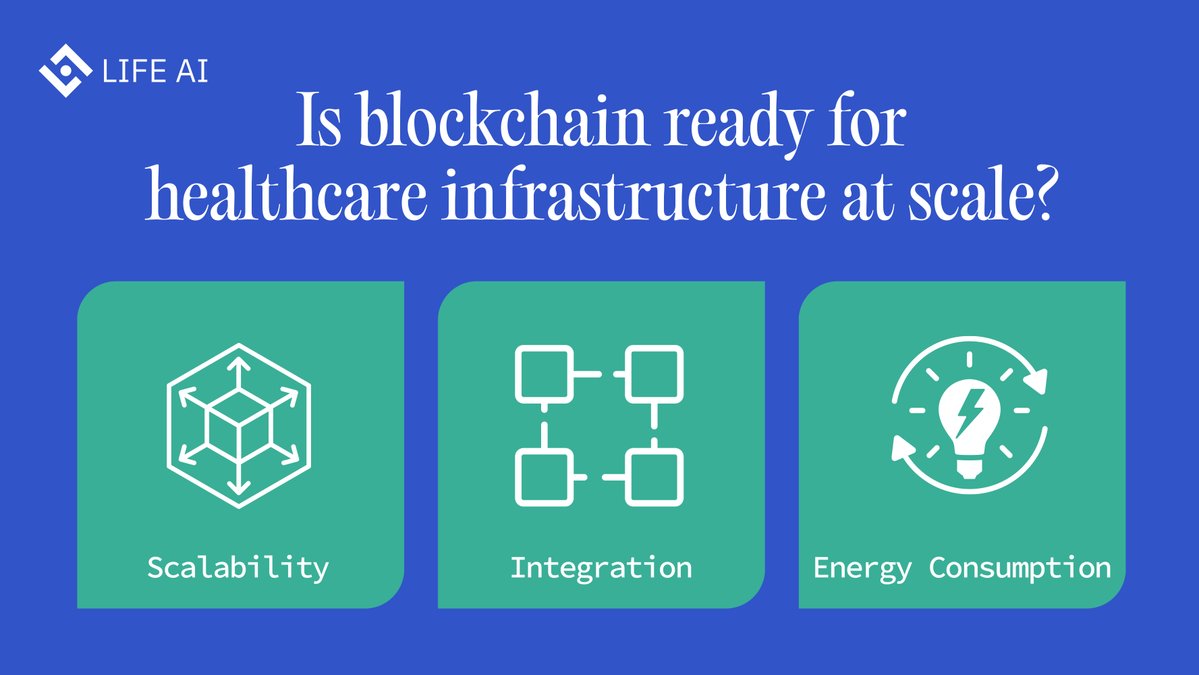
Is blockchain ready for healthcare infrastructure at scale?
Viewpoint A: Structural barriers remain.
Blockchain still struggles with scalability for large health datasets, integration with legacy hospital systems, and regulatory compliance. Operational adoption remains limited, with most initiatives still at the pilot stage.
Viewpoint B: The technology is maturing.
New blockchain architectures are improving speed, efficiency, and scalability. Hybrid models are advancing interoperability with existing healthcare systems. Early pilots also show progress toward secure, patient controlled data sharing.
👇 Comment A or B and share your perspective.
🩺 Community Question
Is blockchain ready for healthcare infrastructure at scale?
Viewpoint A: Structural barriers remain.
Blockchain still struggles with scalability for large health datasets, integration with legacy hospital systems, and regulatory compliance. Operational adoption remains limited, with most initiatives still at the pilot stage.
Viewpoint B: The technology is maturing.
New blockchain architectures are improving speed, efficiency, and scalability. Hybrid models are advancing interoperability with existing healthcare systems. Early pilots also show progress toward secure, patient controlled data sharing.
👇 Comment A or B and share your perspective.
🩺 Community Question:
Healthcare is a paradox: trillions spent and cutting-edge technology, why is humanity only getting sicker?
Viewpoint A: The healthcare system is broken (reactive, wasteful, poorly coordinated).
The system prioritizes treatment over prevention, carries massive administrative waste, and fails to use advanced technology efficiently. The result is high spending and weak outcomes.
Viewpoint B: The real drivers lie outside healthcare (social factors, lifestyle, inequality).
Healthcare accounts for only a small share of health outcomes. Poverty, obesity, unhealthy lifestyles, and inequality are the root causes. Increasing medical spending alone does not address the core problem.
👇 Drop A or B and share your perspective
CLAIM YOUR SOLANA is officially LIVE.
https://t.co/lc2O2cEJTy
Testing phase is over.
Official release has begun.
Season 1 is now active.
The leaderboard is open.
Rewards are real.
Emission has started.
You can now:
• Scan your Solana wallet.
• Earn CYS/SOL based on real on-chain activity.
• Open mystery boxes
• Compete for 2500 SOL.
• 12 seasons.
Early activity matters.
The earlier you join — the stronger your position.
No more beta.
No more testing.
This is the official launch.
Go now → https://t.co/lc2O2cEJTy
Scan. Earn. Compete.
🩺 Community Question:
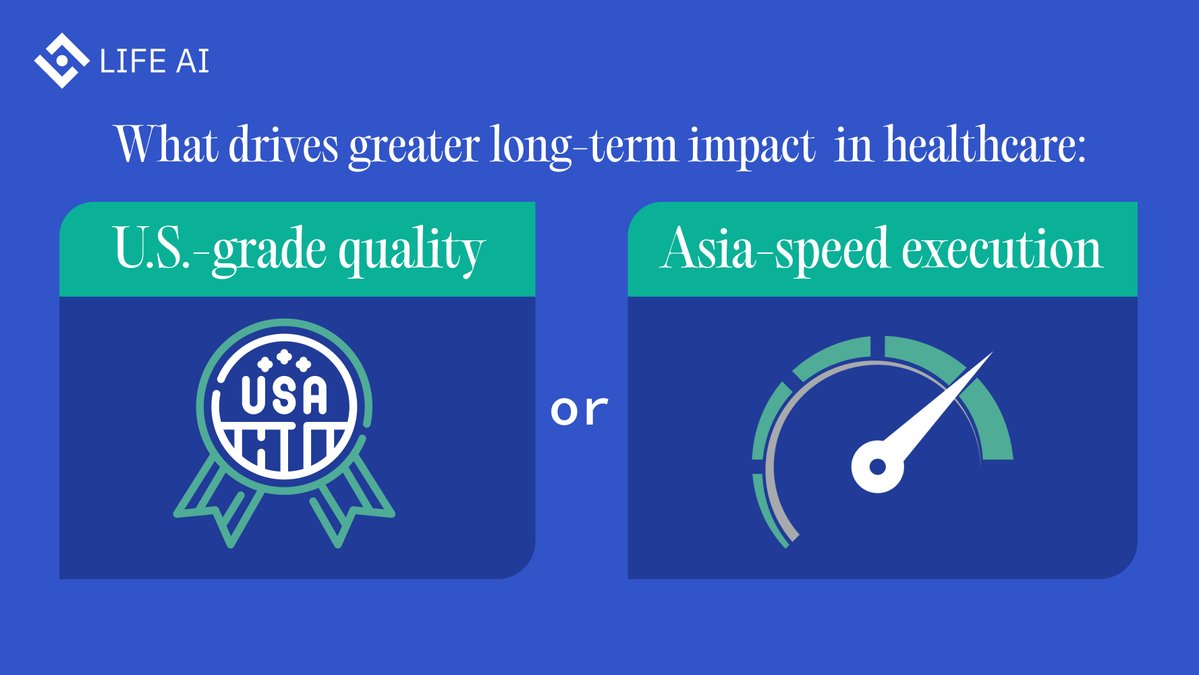
In medical innovation, what drives greater long-term impact:
U.S.-grade quality for rigorous validation and strict regulation
or Asia-speed execution for faster approvals and rapid scale?
Viewpoint A: U.S.-Grade Quality
Through institutions like the U.S. Food and Drug Administration, the U.S. emphasizes deep clinical validation before approval.
Rigor reduces risk, protects trust, and supports durable breakthrough innovation.
Viewpoint B: Asia-Speed Execution
Countries such as China and India accelerate approvals and deploy innovations at scale.
Faster access can save lives, especially in high-burden diseases.
👇 Drop A or B and share your perspective.
🩺 Community Question:
In medical innovation, what drives greater long-term impact:
U.S.-grade quality for rigorous validation and strict regulation
or Asia-speed execution for faster approvals and rapid scale?
Viewpoint A: U.S.-Grade Quality
Through institutions like the U.S. Food and Drug Administration, the U.S. emphasizes deep clinical validation before approval.
Rigor reduces risk, protects trust, and supports durable breakthrough innovation.
Viewpoint B: Asia-Speed Execution
Countries such as China and India accelerate approvals and deploy innovations at scale.
Faster access can save lives, especially in high-burden diseases.
👇 Drop A or B and share your perspective.
#NexiraPreTGE
I joined Nexira out of curiosity at first. But after doing a few task, I realized the task actually made me explore the product, It felt more like onboarding than farming.
Simple and clear, and honestly way less messy than most campaigns. #Web3Gaming $NEXI
🎼 And now the end is near ...
- Complete Pre-TGE Missions to allocate all boxes in RC.
- Unlock your boxes as scheduled.
- Do whatever you want at TGE.
Piece of cake! 😊
🎵 Yes it was our way.
PS. Don't forget 50 real Mini Warlord robots & secret bonuses for top participants (most referrals & completed tasks) are still up for grab.
👉 https://t.co/0TQXCjlTBr
#NexiraDAEP #TGE #Web3Gaming $NEXI