"You cannot ask Jesus into your heart alone. He will ask, 'Can I bring my friends?' You will look at his friends--the poor, the marginalized, the oppressed--and you will hesitate. But Jesus is clear, 'Only if I can bring my friends.'" -- South African Bishop Peter Storey
"In this respect fundamentalism has demonic traits. It destroys the humble honesty of the search for truth, it splits the conscience of its adherents, and it makes them fanatical because they are forced to suppress elements of truth of which they are dimly aware." ~ Paul Tillich.
Classic Principles of Discretion, Applied: "Never put anything sensitive on paper. Never email what you can say. Never say what you can expect smart people to infer." Update: "Never take sex pictures of yourself or solicit sex pictures from others." That about covers it.
"A good society is a society which believes that it is not good enough; (…) and that the quality of life is measured by the quality of life of its weakest, just like the carrying power of a bridge is measured by its weakest pillar." ~ Zygmunt Bauman
Justice is that which sustains life: as the Lord says, “I was hungry and you gave me food.” Justice establishes bonds of fraternity among peoples: “I was a stranger and you welcomed me.” Justice upholds human dignity: “I was naked and you gave me clothing.” Justice restores freedom: “I was in prison and you visited me.” Jesus’ discourse in the #GospelOfTheDay (Mt 25:31-46) applies to all times and all peoples; we are all equal before the law of God.
I am going to show you how Europe's leaders, by hesitating, are leading us straight into the war they say they want to avoid. I will do it with the record of the past three years, and with what happens to a population on the morning it realizes that every warning was written down, dated, filed, and ignored by the people paid to act on it. Stay with me, because that morning is far closer than anyone is willing to say out loud.👇
https://t.co/ItEFwIthqC
My earliest memory was seeing the fear on my parents faces as he announced the discovery of the missiles in Cuba. The first time I saw my mother cry was when he was murdered OTD 63 years ago. She was Irish-Catholic and revered him for breaking the class ceiling that kept non-protestants out of the White House. That he was a reckless serial adulterer is beyond dispute, and I understand why that would lead many Americans to dismiss him out of hand.
But from my perspective, President Kennedy challenged the American people, sometimes belatedly, asking them to deliver on the nation’s promise. He appealed to their “better angels,” urging them to devote themselves to something higher, the Peace Corps being one of the primary examples of his call for service before self. Kennedy was not far removed from his immigrant forbears, who came to America because they considered it the “last, best hope of mankind.” Kennedy encapsulated this spirit, both for his fellow citizens and for those watching from abroad. He offered a message of hope and optimism, not the snarling message of hate and fear that dominates American politics during the Trump presidency.
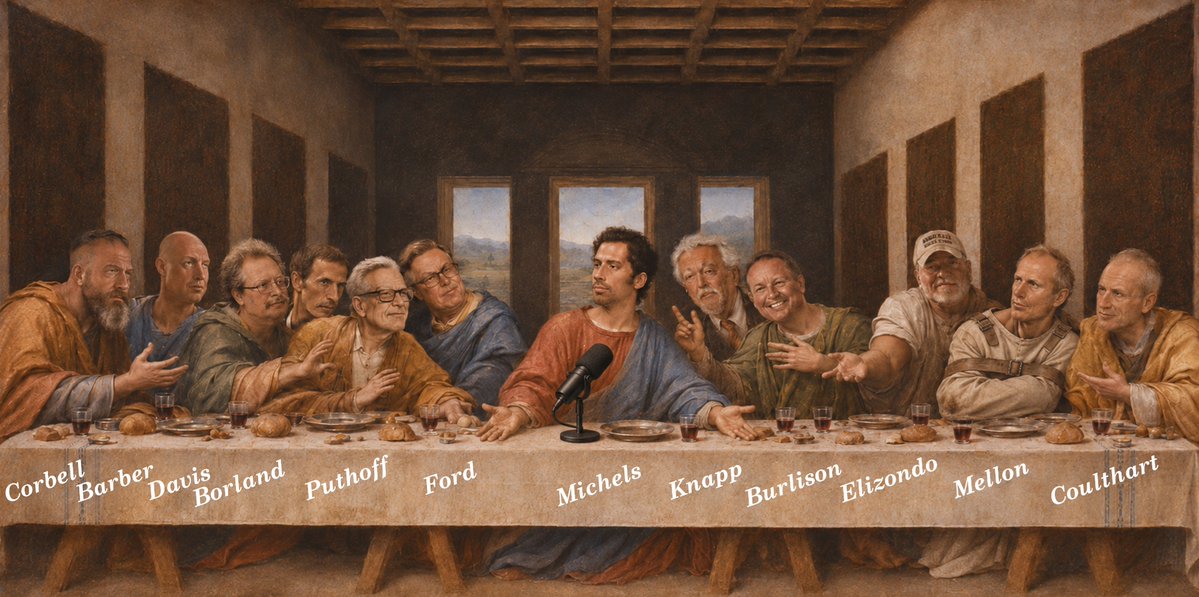
It is hardly "nitpicking." You are touching on a few of the incompatible assertions by different purported insiders. These contradictions relate not just to peripheral details but to core claims about purported hidden programs studying captive alien technology.
For example: In the "Wilson-Davis" tale written by Eric Davis in 2002, in 1997 executives of a contractor told "Admiral Thomas Wilson" they had "a craft -- an intact craft they believed could fly (space? air? water? dimensions?),” and that is was “technology that was not of this Earth -- not made by man -- not by human hands.” But in this Davis story, they couldn't figure out this single craft (reverse-engineering efforts were "agonizingly slow with little or no success"). People later said this contractor was Lockheed-Martin.
Yet in @jaystratton's book, Davis and Hal Puthoff introduced Stratton to James Ryder at Lockheed Martin in 2009, and "According to him, Lockheed had twelve recovered craft of non-human origin in total at that time" (p. 46), plus there were other craft elsewhere. In this account, Ryder "said point-blank that some of the capabilities they successfully reverse engineered were so extraordinary that revealing them, even to win a war, would be too dangerous of a risk." (p. 44) Imagine that-- fantastic success in reverse engineering had been achieved by 2009!
But wait-- a decade later, in 2019, Eric Davis said, as you quoted, "The crash retrieval program is a very small program. It is not a massive, huge government infrastructure. It’s a very poorly-funded program and it hasn’t actually, probably hasn’t had any money for a while. I do know that the program was terminated in 1989 for lack of progress in reverse engineering anything that they had, any of the hardware that they had." You suggest these 2019 statements "are an accurate representation of the Legacy program's size and funding." But if so, when did they reverse-engineer the alien technologies too risky to use even in war?
In his 2026 book, Stratton talks about the "Legacy Program" as a generations-old, continuous and huge enterprise; he refers to 2020 Pentagon funding levels and then asserts that "the Legacy Program got their hands on billions of dollars in misappropriated funds every year." (p. 324)
I will judiciously refrain here from getting into the incompatibility of the shoddy tales of scientist-impersonator Bob Lazar with either of these other incompatible narratives.