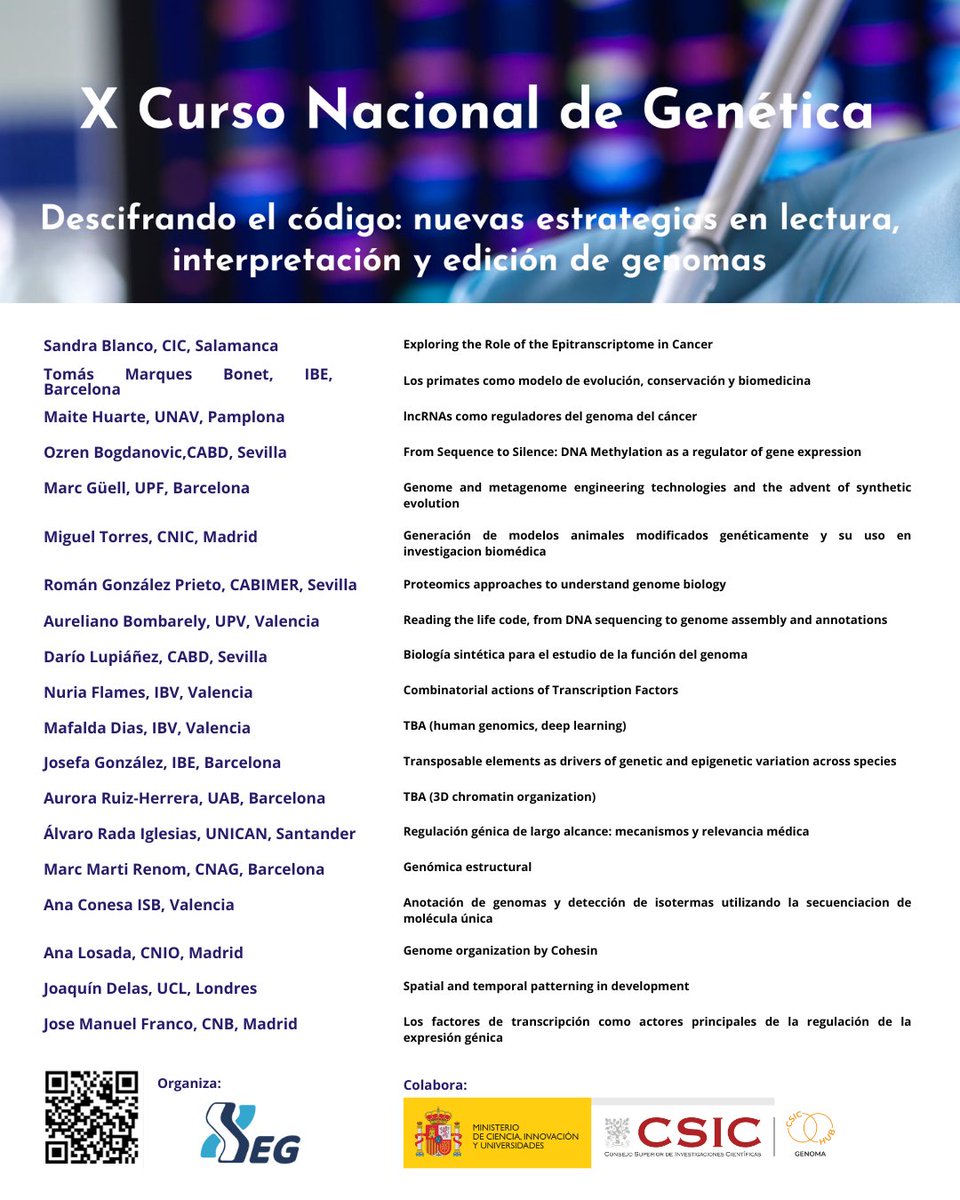
Una nueva edición de nuestro Curso Nacional de Genética llega del 14-19 de septiembre con ponentes de primer nivel. ¡Os esperamos a todos en La Cristalera, #Madrid! Sigue todas las novedades del programa a través de la web.
https://t.co/gnNfh8s945
Our new paper studying the chromosomes of the fairy shrimp Branchipus schafferi is out. An outstanding specie that lives in temporary ponds in which we detected different numbers of endopolyploidy, including odd numbers. @frobles_rod@CanalUGR@MuseoCeuta
https://t.co/o8MV25awWk
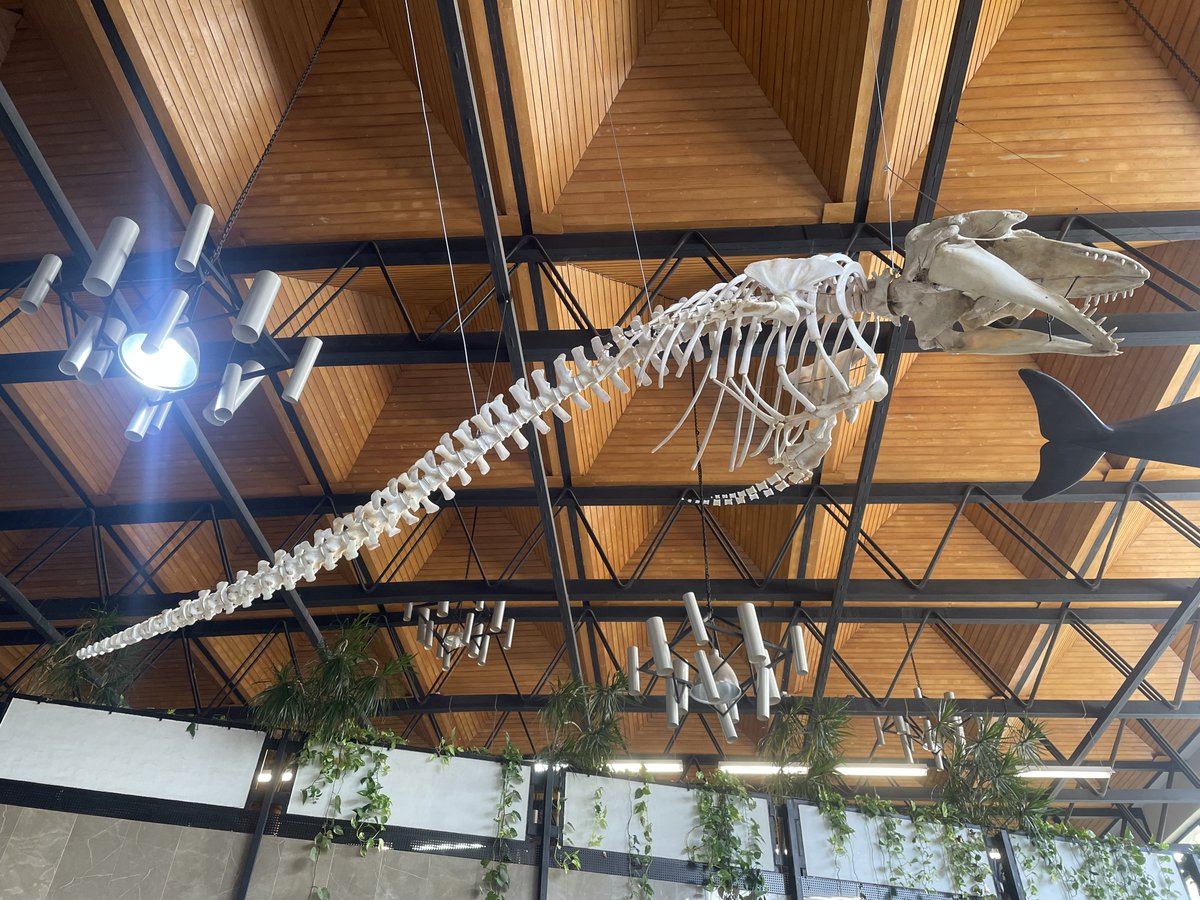
🐋 Seguramente os ha llamado la atención ese esqueleto que cuelga del techo de la @fcienciasugr
ℹ️ Es de calderón común, un cetáceo típico del Mar de Alborán
📲 Conoce los detalles: https://t.co/0qks9jcSJx
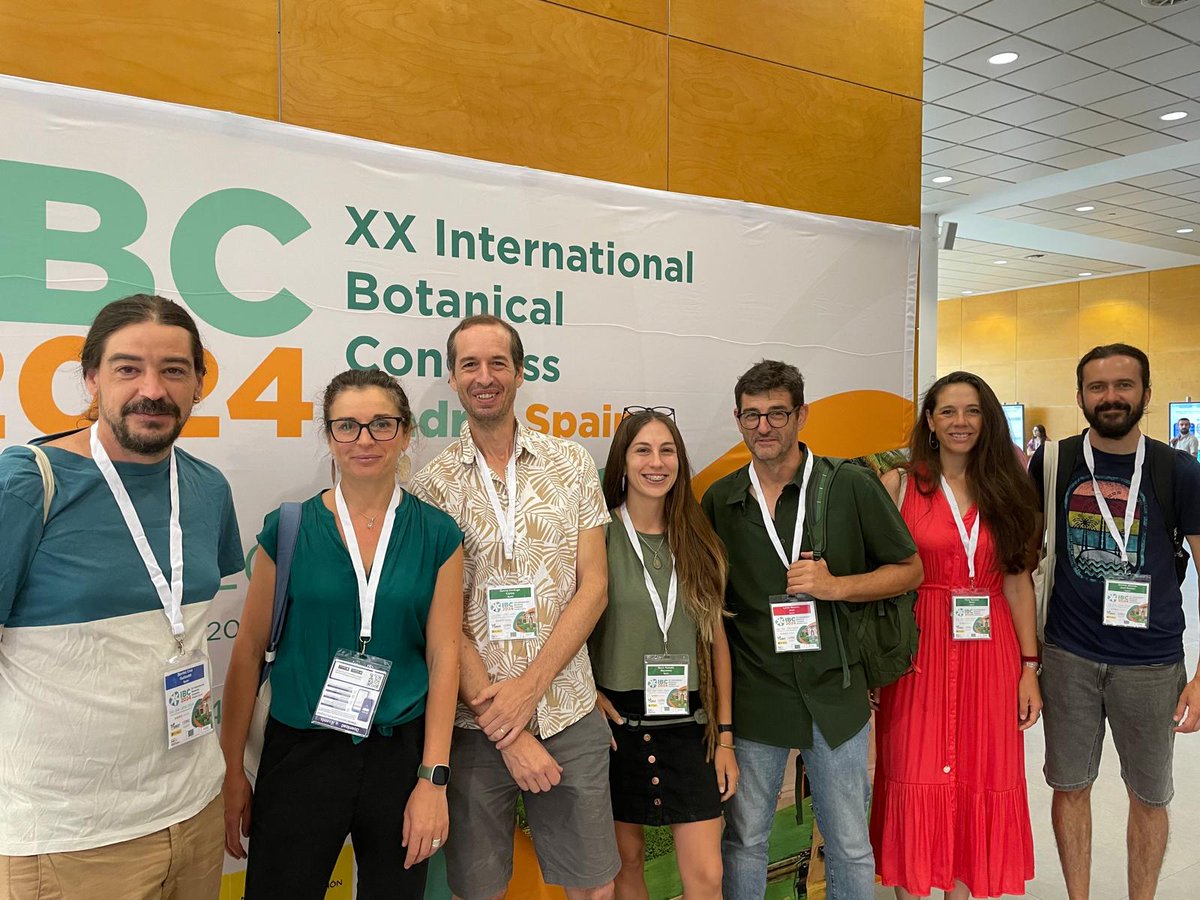
El Departamento de Botánica de @CanalUGR está participando en el XX International Botanical Congress Madrid 2024: consulta más información: https://t.co/yFCd4aLt7n
🏑 Con los campus deportivos de la #UGR, no hay verano aburrido
👧🥅 1.200 niñas y niños participan en ellos
🚣♂️ Los organiza @DeportesUGR e incluyen multitud de actividades
📲 Info: https://t.co/1sjAJGY3Nx
Our new paper about Carijoa riisei is out. A species that in the Canary Islands ended up being 6, with new 5 species, 3 genera and 2 subfamilies being proposed. Most might be hitchhiking newcomers, but we have found a also a relic species with a
distribution yet to be understand
🌊 Todos estamos conectados de una u otra forma al mar.
Desde el mariscador al científico, todas las profesiones formamos un entramado que aúna sus fuerzas para seguir cuidando uno de los bienes mas preciados para la humanidad.
El último libro de Marta @GarciaAller se titula 'Años de perro' (@CirculoDeTizaES) y es un extraordinario viaje en el loco tiovivo que ha sido el mundo (y España) entre 2017 y 2024. Charlar con la periodista y ex compañera de @Papel_EM fue un gustazo. https://t.co/k07lGM22iy
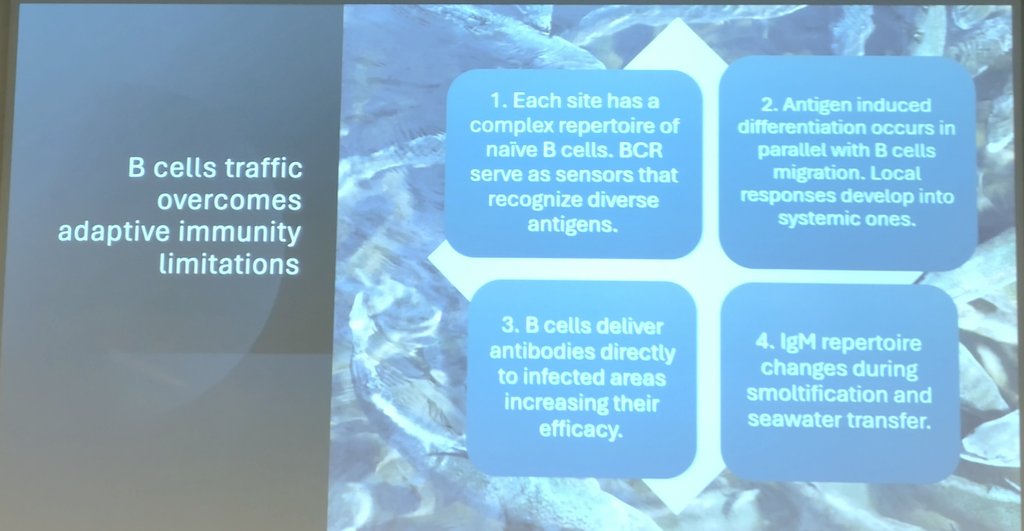
This was followed by a presentation from Aleksei Krasnov, also from @nofima on B cells immunity in key stages of Salmon life, involved in resistance to SAVirus, in smoltification and in melanin spots !
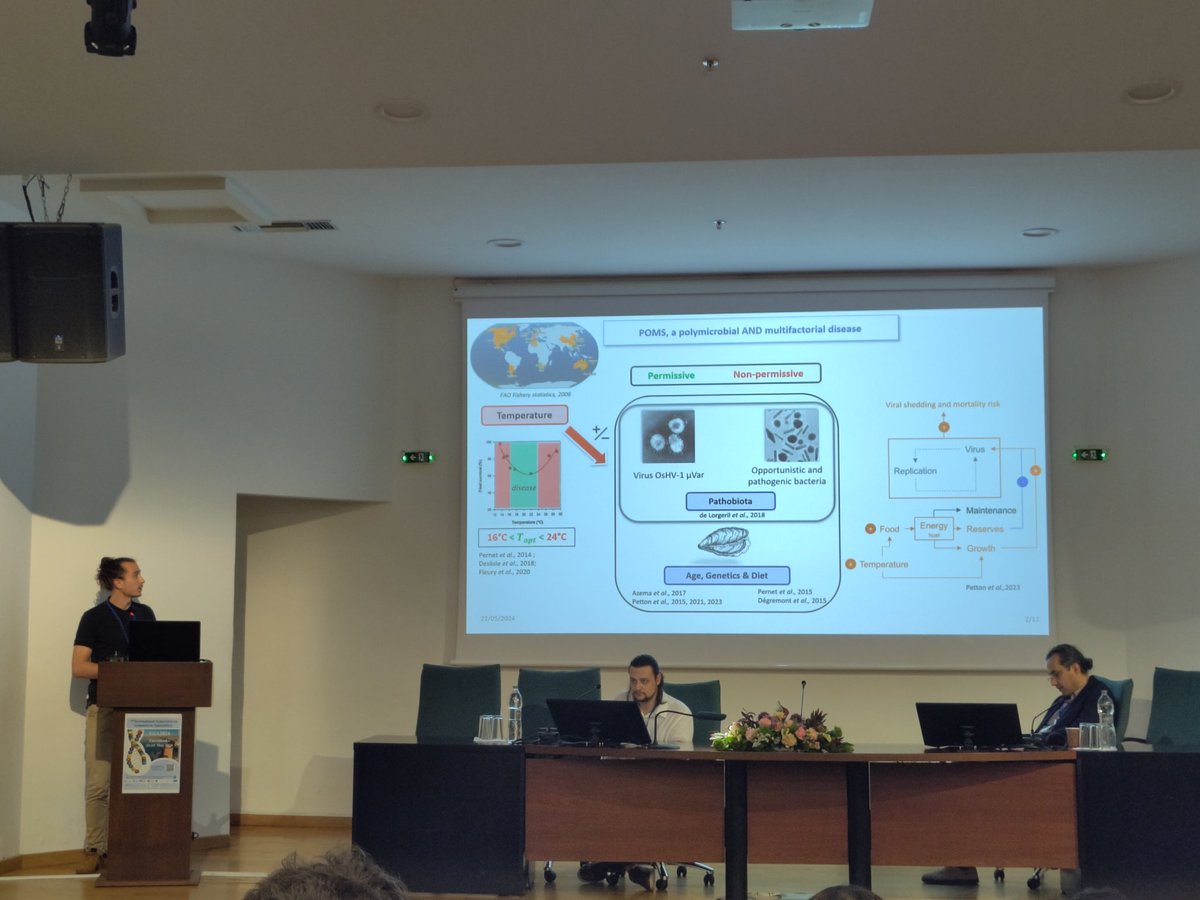
Another Oyster 🦪 presentation, by Léo Duperrey from @Ifremer_fr showing that at high temperature (30°!) a less efficient metabolism and a higher immune response create a less permissive condition for oyster infection to POMS
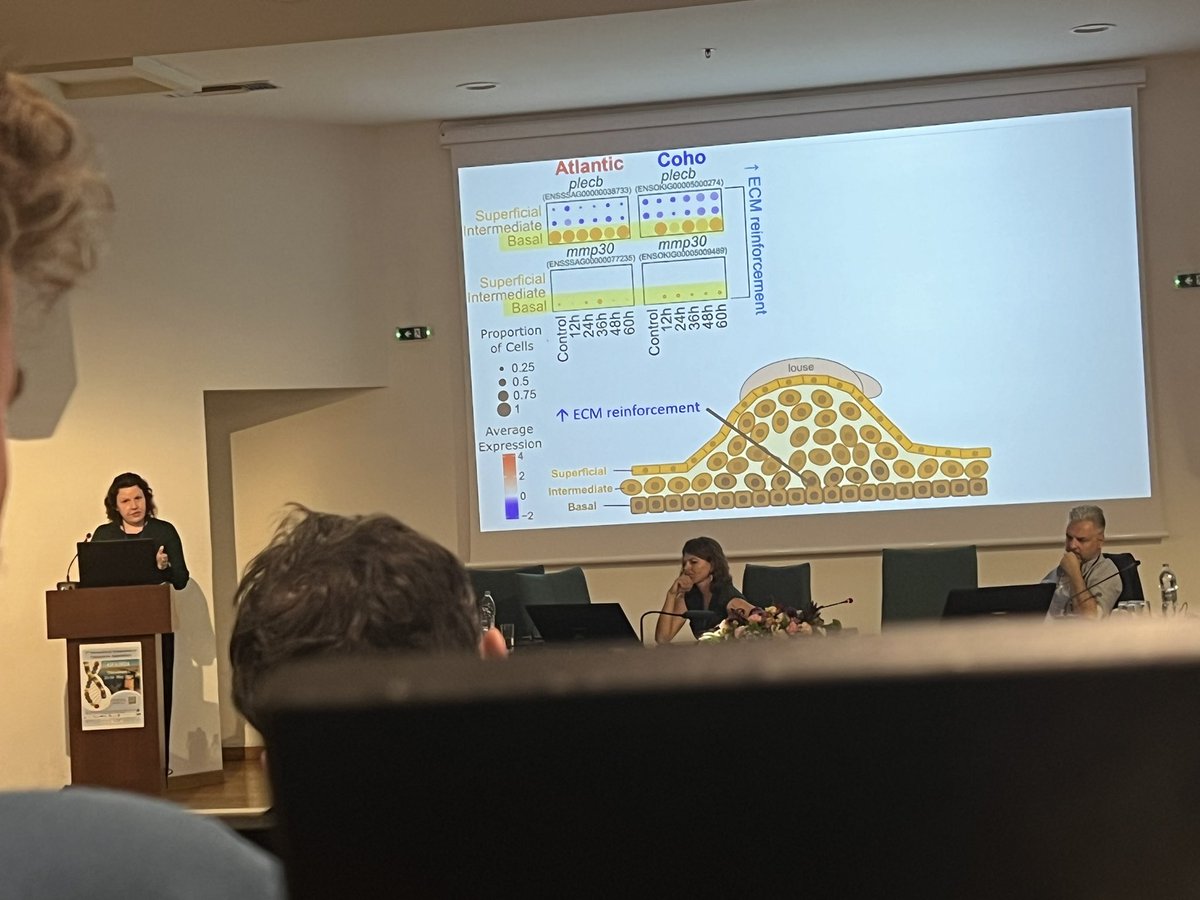
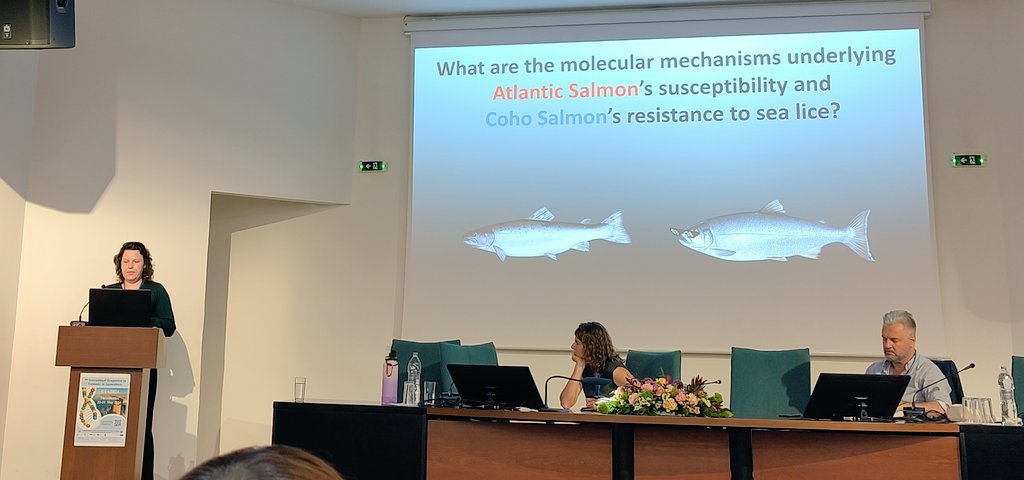
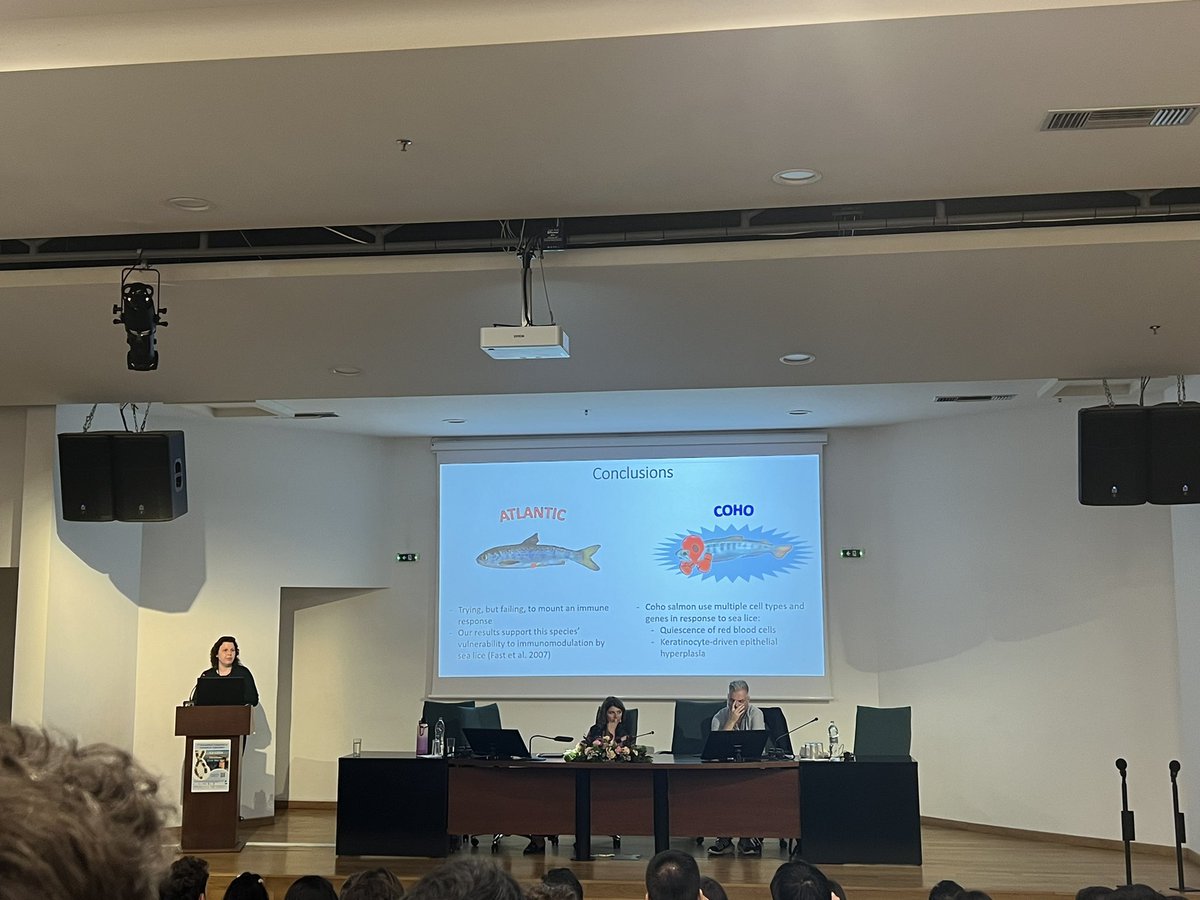
Great talk from @Salisbury_Fish on sealice resistance Atlantic salmon vs coho. Sarah is asking the question: "how coho get rid of sealices?". The answer is a combined response: quiescence of red blood cells + epithelial hyperplasia
"It's not the cell it's what you do with them"
Great talk: Dr. @Salisbury_Fish demonstrates the use of single-cell genomics to understand the genetic underlying the differences in resistance against sea lice infection between two closely related salmonid species (Atlantic salmon and coho salmon) @roslininstitute#GIA2024