I’m not Christian, but Jesus is to me the most important human that lived. We still haven’t learned what he came to teach us about the mobs of masses:
“on the outside you appear to people as righteous, but on the inside you are full of hypocrisy and wickedness."
Look at what they’ve done to Ed Sheeran. They’ve ruined him. And for what? For failing their hypocritical moral purity test?
To the world, their cruelty appears as righteous. On the inside, they are full of hypocrisy and wickedness.
I recently watched the famous lecture by the late MIT professor Patrick Winston, titled ‘How to Speak.’
He opens by saying: “Your success in life will be determined largely by your ability to speak, your ability to write, and the quality of your ideas, in that order.”
Freaking brilliant.
Globalism was sold with a promise of prosperity. In reality, it was the greatest redistribution of wealth in human history.
Globalism meant Western factories closed, borders opened, and jobs relocated to wherever it was cheaper and convenient. The industrial worker in Vienna, the Ruhr region, or Ohio became unemployed or was pushed into low-wage service sector work.
At the same time, profits ballooned for the middlemen who produce nothing. Financial conglomerates, importers, logistics giants, tech platforms, and consultants have pocketed the margin between cheap production in Asia and expensive sales in the West.
The result is a super-rich global elite and a left-behind, indebted proletariat. The middle class—the backbone of every free society—was crushed. This represents the greatest surge in inequality in a century. Without globalism, China would never have risen.
The West gave China everything, including its 2001 admission to the WTO, even though China lacked a true market economy or rule-of-law system. It was a voluntary technology transfer: anyone who wanted to produce in China was forced to hand over their intellectual property.
The West looked the other way on forced labor, state subsidies, currency manipulation, and technology theft. Capital on a scale of trillions of dollars has been pumped directly into China.
The West dismantled its own industrial base and rebuilt it in China. The West financed a totalitarian surveillance state that now uses Western money to rearm, buy up strategic ports, monopolise raw materials, and exercise leverage over us.
China did not rise despite the West, but because the globalist West built it that way. Short-term profit was prioritised over national security, industrial sovereignty, and local workforce stability.
A rootless, stateless elite in New York, Brussels, Berlin, and Shanghai feels at home everywhere and takes responsibility nowhere. In its wake are stranded communities, stripped of industry and upward mobility, entirely dependent on supply chains controlled by a foreign power.
This was no mistake. It is how the system was designed to work.
That's because you don't know your history.
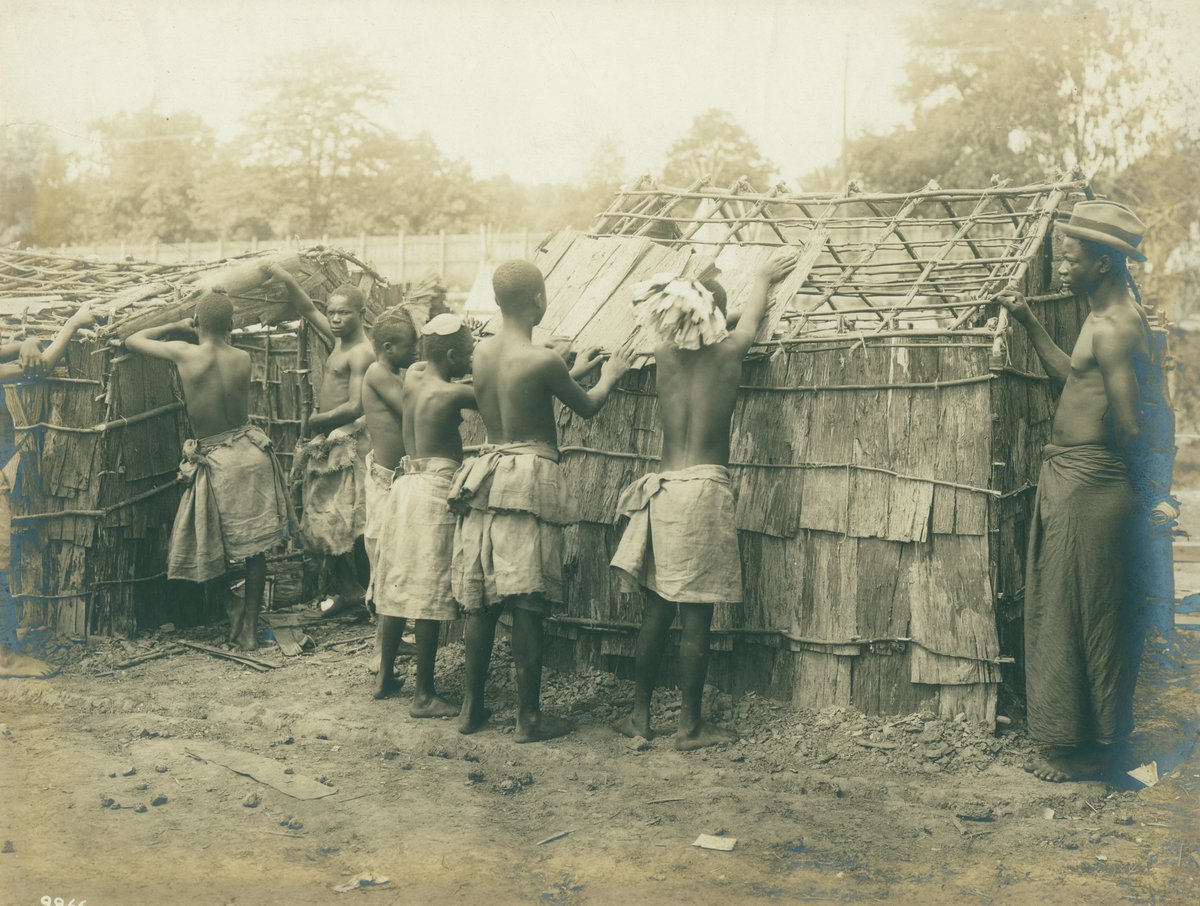
Roosevelt was an avid eugenicist. Roosevelt was closely allied with Madison Grant and William Temple Hornaday, who founded the Bronx Zoo and put a black kid named Ota Benga in a zoo cage and displayed him as a subhuman species. The child later committed suicide.
Roosevelt wrote a glowing endorsement of Madison Grant's book The Passing of the Great Race, which Hitler kept under his bed and referred to as his "Bible."
Roosevelt's endorsement: "The book is a capital book; in purpose, in vision, in grasp of the facts our people most need to realize. It shows an extraordinary range of reading and a wide scholarship. It shows a habit of singular serious thought on the subject of most commanding importance. It shows a fine fearlessness in assailing the popular and mischievous sentimentalities and attractive and corroding falsehoods which few men dare assail. It is the work of an American scholar and gentleman; and all Americans should be sincerely grateful to you for writing it."
Opposition to scientific racism and eugenics was mainly raised by Christians at the time, and was dismissed by Grant as "sentimentality."
Roosevelt strongly opposed "unfit" races being freely available to reproduce, in keeping with Darwin's prescription in his book The Descent of Man, and he advocated for forced sterilization of those deemed unfit to reproduce.
He was a product of his time, and eugenics was mainstream thought back then. We shouldn't judge too harshly.
But Hitler got his ideas from the U.S. eugenics movement. Calling Roosevelt "Proto Hitler" is not altogether unfair.
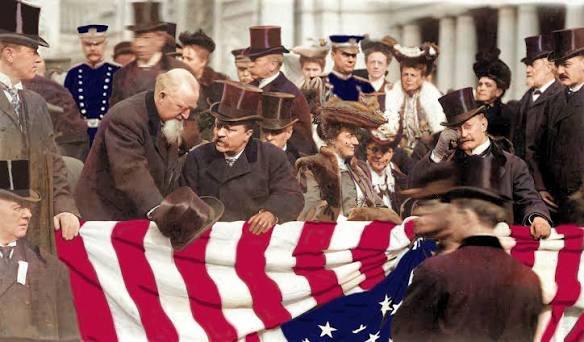
Pictures below: Teddy Roosevelt at the St. Louis World's Fair, where African pygmies were put in a zoo display as "missing links" in evolution. Also pictured: the zoo display.
In three parts, I explain how I was brainwashed into becoming a biased climate reporter.
Step 1: Deconstruct your identity.
When I entered a newsroom at 25, this was the pervasive ideology: The world is divided into two groups—the oppressed and the oppressors.
If you are white, straight, privileged, or American, you are inherently an oppressor. Everything you grew up believing is wrong or evil. You cannot be trusted to see the world as it really is because you are inherently racist, biased, and part of the oppressor class.
I was young, excited to be there, and surrounded by people I thought were smarter and cooler than I was. So I absorbed their worldview and ceded my judgment to the group.
Once you are demoralized, feel guilty for being an oppressor, can no longer trust your own intuition, or your own interpretation of the facts, you will believe whatever the group tells you to believe.
Step 2: Atone for your sins.
Because you are an oppressor all you can do is atone for the sins of your birth. You can do that by repeating and advancing the group’s ideology. You never question it, because questioning the ideology is treated as proof that you are racist, selfish, or an oppressor.
For me, this manifested as becoming a climate reporter. Through my work I could help the downtrodden, the indigenous people and other marginalized groups. I could be a good ally.
And so without questioning, I pushed the idea that climate change was an existential crisis, fossil-fuel companies were evil, capitalism was destroying the planet, and America was an imperialist country that had destroyed the environment. Essentially all of the problems we faced were because of Western imperialism.
If I had any doubts about this way of thinking I would shut them down. Who was I to question any of it? I was just some stupid, privileged white girl who didn’t know anything. That was what I had been told about myself and that is what I believed. Better to go along with the group, keep my head down, and be a good ally.
Step 3: Fully submit to the ideology.
The West is evil. America is evil. Capitalism is evil. White people are evil. Everything you grew up believing is wrong, and the only way to fix the world is to tear all of these systems down.
The weird thing is that I fell for all of this from a place of compassion. I wanted to help the downtrodden. I wanted to solve inequality. I wanted to fix the world.
I thought that by giving up my personal agency to this ideology, I was playing my part in atoning for the sins of my birth.
I believe what I went through is still incredibly relevant today. It helps explain the DSA’s growing power within the Democratic Party. Why most Democrats can’t bring themselves to condemn socialism. Why so many young people believe America deserved 9/11. Why young people and celebrities chant “Free Palestine” without understanding that Hamas is a terrorist organization or anything about the conflict. They’ve been told what to believe and who the oppressor is in each of these situations.
Ten years of cancel culture has taught people that questioning the ideology doesn’t simply mean you disagree. It means you are an evil oppressor. You are racist, sexist, privileged, out of touch, evil. Disagree and you will be cast out and lose everything.
Once people become afraid to trust themselves, examine the facts, or stand against the group, you’ve got them. They can be convinced to believe and do anything.
What do you all think? Did I describe this accurately?
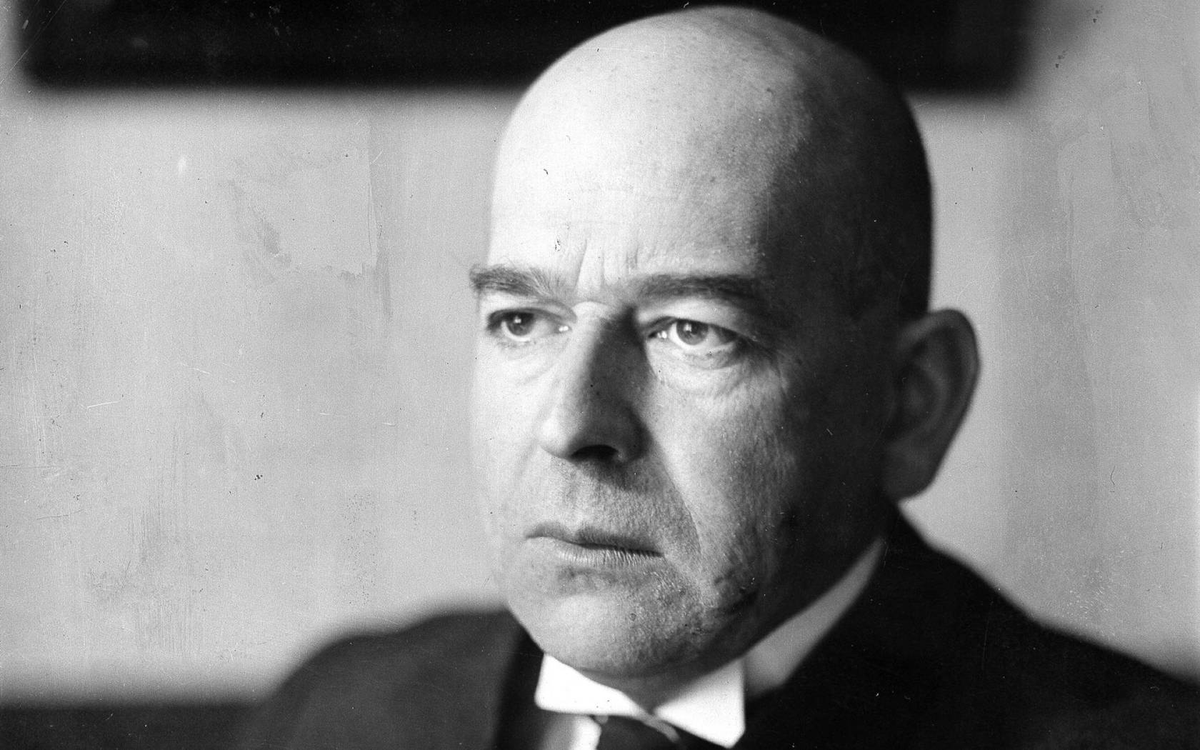
The West is in the process of destroying itself from within - and Oswald Spengler saw it coming a century ago.
In The Decline of the West (1918), Spengler argued that civilisations rarely perish from external conquest alone. They collapse when they lose faith in their own identity and begin to take pleasure in their own disintegration. Instead of confidently transmitting their traditions, values and achievements, they turn against themselves. They treat their history as a catalogue of crimes, their institutions as systems of oppression, and their core principles as sources of guilt. At that point, they become culturally defenceless.
The modern West displays these symptoms with disturbing clarity. Large parts of its elite actively participate in the vilification of Western civilisation. Western achievements in science, law and liberty are reframed as sources of shame. Mass immigration from incompatible cultures is often presented not as a policy to be managed, but as a form of historical atonement. Criticism of this process is frequently treated as morally illegitimate.
Spengler observed how late-stage democracies tend to become weak and sentimental. They struggle to defend their borders or uphold their own values because doing so conflicts with their self-image as open and non-judgemental. This creates a dangerous asymmetry: while the West engages in relentless self-criticism, other cultures remain far more assertive about preserving their own identity.
Spengler did not believe this process was easily reversed. Once a civilisation loses the will to defend itself, it has already entered its final stage. We are running out of time to prove him wrong.
El jazz no es aburrido, aburrida es la música de ahora. En 1959 #DaveBrubeck rompió todas las reglas con #TakeFive, metiendo un ritmo imposible que se convirtió en el tema de jazz más vendido de la historia. Elegancia y clase pura en 5 minutos. 🎷🥃
Seven hundred British soldiers, surrounded on a bare Korean hill by an entire Chinese army of some twenty seven thousand men, held out for three days, and when their ammunition was gone they answered the enemy's bugle calls with bugle calls of their own. It is one of the greatest last stands in modern military history, and most Americans have never heard of it.
In April 1951, the Chinese launched a massive spring offensive aimed straight at Seoul. Standing in the path, on the hills above the Imjin River, was a single British battalion, the Gloucestershire Regiment, the Glosters, about seven hundred men. Against them came three full divisions of the Chinese 63rd Army, roughly twenty seven thousand soldiers, determined to smash across the river and open the road to the capital.
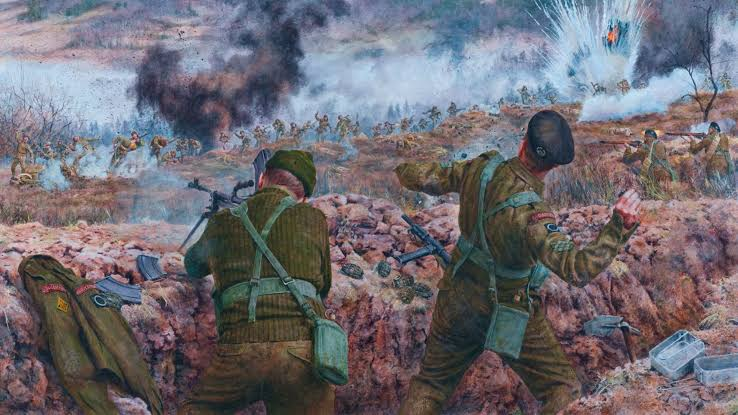
The Glosters were told to hold. And they did. As the Chinese poured across the Imjin in human waves, the battalion was steadily surrounded and forced back onto a single hill, Hill 235, that would forever after be known as Gloster Hill. There, cut off, running low on food, water, and ammunition, outnumbered something like twenty five to one, they fought on for three days and nights.
And here is the detail people never forget. The Chinese coordinated their night attacks with bugle calls, using them to signal and to unnerve the defenders. So the Glosters answered. Their drum major took up his own bugle and, on the surrounded hilltop, blew back British Army bugle calls, every call in the book except retreat, answering the Chinese note for note. It steadied the exhausted men and rattled the enemy, this defiant British bugle ringing out over a hill that was about to fall.
By the third day it was hopeless. Out of ammunition and completely surrounded, the survivors were finally told it was every man for himself, to try to break out and escape. Only a small number made it, perhaps forty men, back to friendly lines. The rest, more than five hundred, were killed, wounded, or captured, including their commander, Lieutenant Colonel James Carne.
Carne won the Victoria Cross for the stand. And in the brutal prison camp where he spent the next two years, he did something quietly extraordinary. Using a couple of stones, he carved a simple Celtic cross, a small symbol of faith and defiance to hold his men together in captivity. That little stone cross survives to this day, kept in Gloucester Cathedral, one of the most moving relics of the entire war.
Their sacrifice was not in vain. The Glosters' stand on the Imjin, along with the rest of their brigade, so badly bled and delayed the Chinese offensive that the UN was able to stabilize the line and hold Seoul. To this day the fight is remembered as the battle that saved Seoul, and the Glorious Glosters as the men who bought it, seven hundred against an army, holding a hill with rifles and bugles until there was nothing left.