@OkkiPepernoot Caillebotte is closer to realism than Monet, which is why comparisons are always complicated (and in any case, Monet's genius means that few artists can compare).
Look at the circular ripples on the water. Now look at the date: 1875.
This isn't just a landscape—it's Gustave Caillebotte’s L’Yerres, effet de pluie.
Rain is a nightmare to paint. Most Impressionists avoided it.
Caillebotte tilted the angle down and used his background in engineering to map the exact physics of a raindrop hitting the river.
While Monet dissolved reality into light, Caillebotte gave it structure.
Yet history wrote him off as a rich benefactor who paid his friends' rent. He funded the Impressionist movement, but critics dismissed his own technical genius as too rigid.
In reality, he was years ahead of them.
@OgOraOracle The technical and artistic level of Caillebotte is well established. His popularity among the general public is another matter. The two do not always go hand in hand.
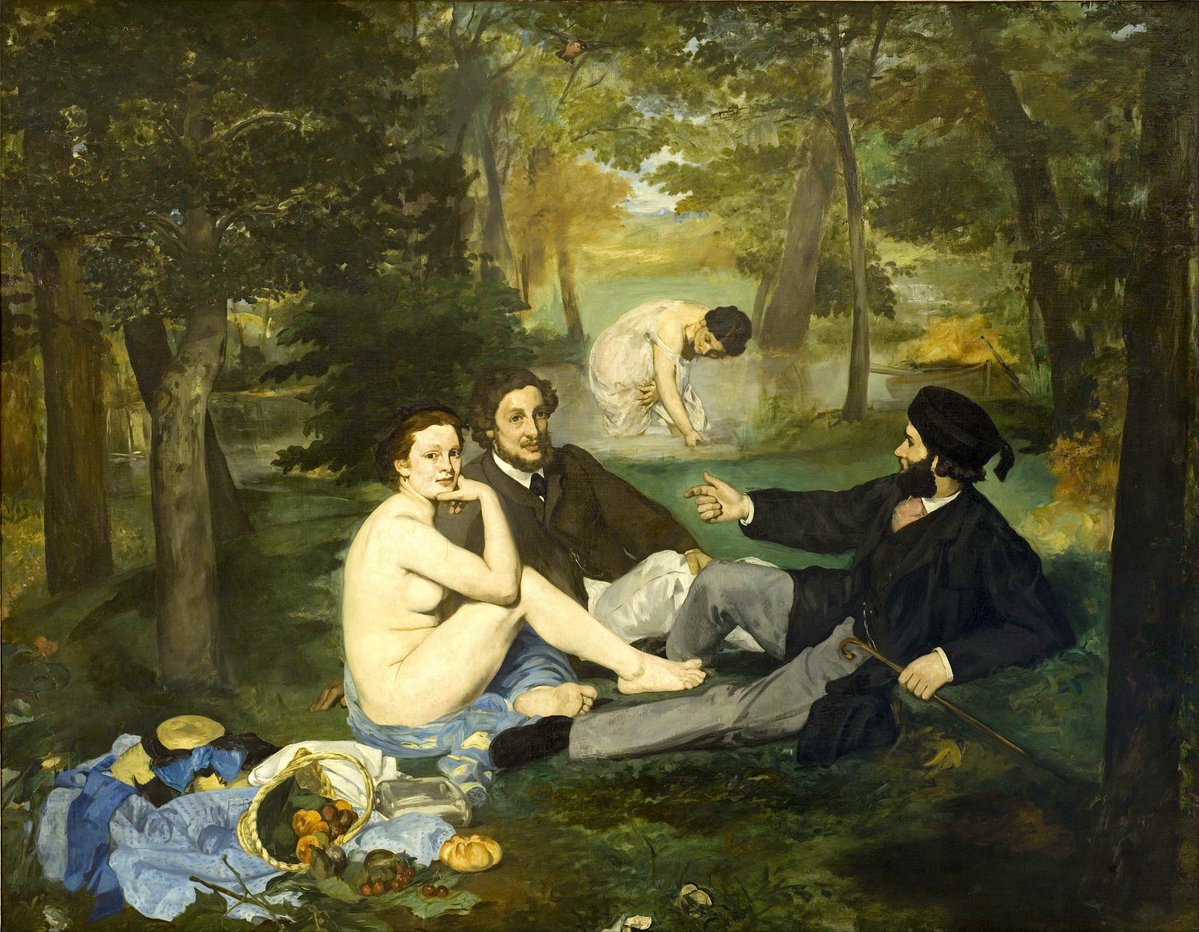
Manet shocked Paris.
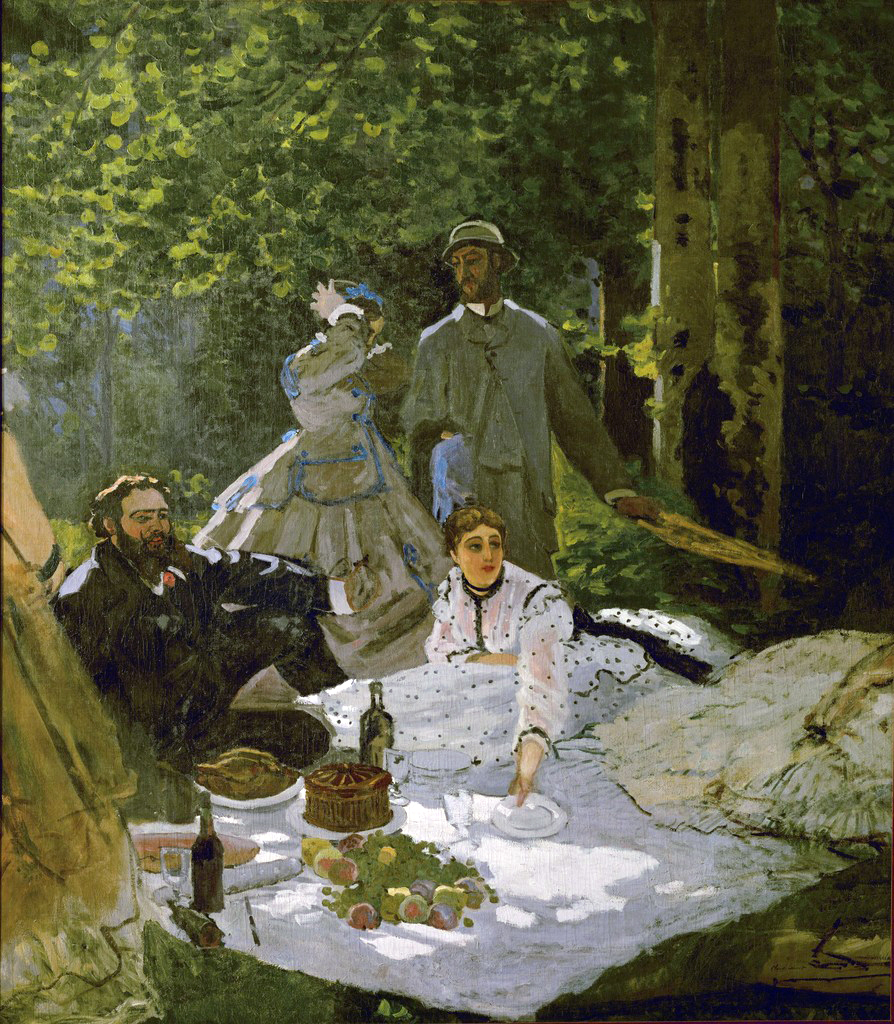
Two years later, Monet took on his friend’s painting.
But he did something completely different.
Manet wanted to shock you. He confronts yo
Monet wanted to make you feel the scene. He tries to immerse you.
It was perfectly in keeping with their personalities.
Did they succeed?
Le Déjeuner sur l’herbe, 1865.
You look at this painting and something feels wrong.
It’s not the nudity.
It’s the way she’s looking at you.
That small detail changes Le Déjeuner sur l’herbe, Manet’s 1863 painting, into something much stranger.
She knows you’re there. And she likes it.
Suddenly, you’re part of the scene.
You look at this painting and something feels wrong.
It’s not the nudity.
It’s the way she’s looking at you.
That small detail changes Le Déjeuner sur l’herbe, Manet’s 1863 painting, into something much stranger.
She knows you’re there. And she likes it.
Suddenly, you’re part of the scene.
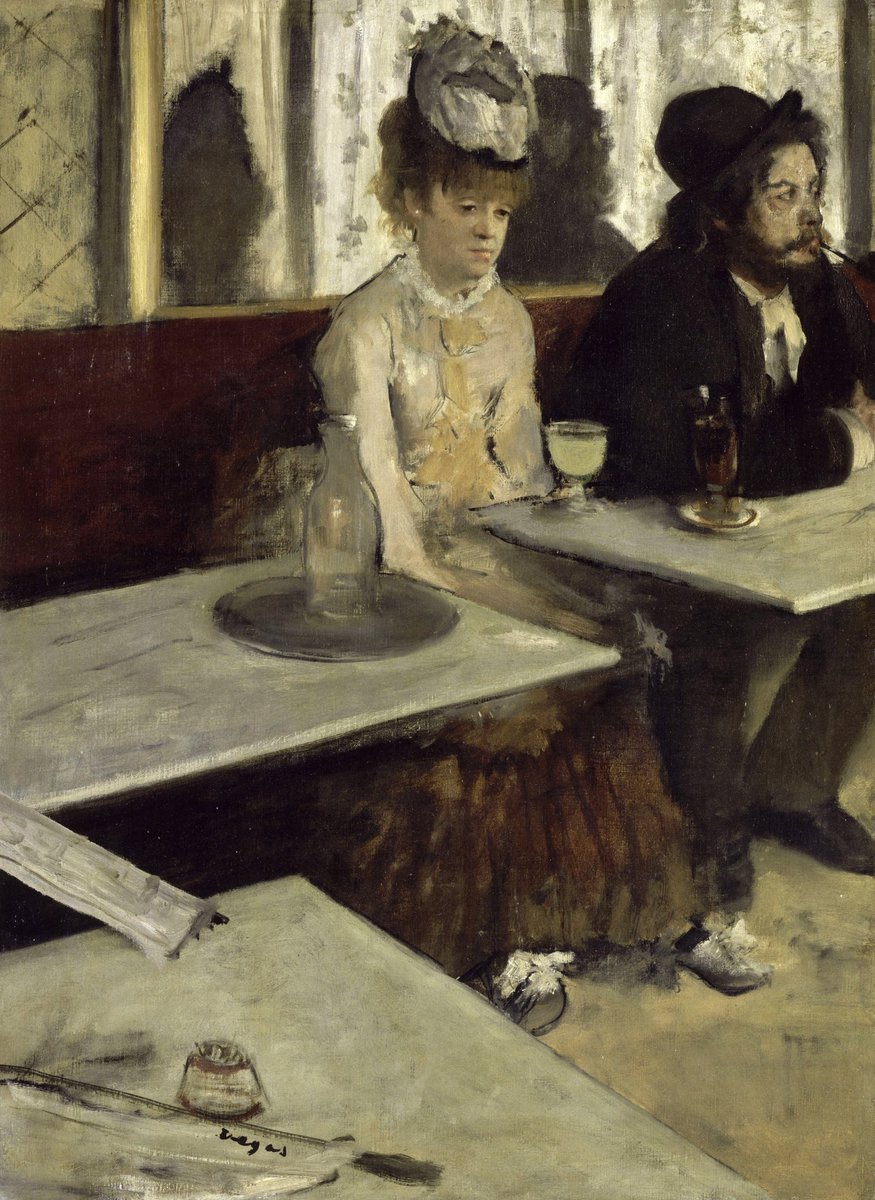
Hopper wasn't the first to portray loneliness in the big city.
Degas showed us the dark side of bohemian Paris.
The settings change, but human nature remains the same.
2/2
The reality behind the heist:
▪️ Planned from prison by yakuza boss Shinichi Yaegashi. He hired local thieves to buy his freedom and get rich.
▪️ Big mistake: he had no clue how to sell famous art.
▪️ The stolen works ended up in Corsica. No buyer touched them. The police heat was too high.
▪️ Cops found every painting intact in 1990. Yaegashi died in jail.
The ultimate irony?
Just like the Mona Lisa in 1911, the global hunt made it a worldwide icon.
November 1985:
▪️5 armed men walk into the Marmottan Monet Museum in Paris in broad daylight.
▪️ They lock the guards and 40 visitors in a bathroom.
▪️They make off with 9 masterpieces in minutes, including Monet's Impression, Sunrise.
A master plan? Quite the opposite👇
@madsenamyp Completely agree Amy. In a society that has placed individual freedom at the center, Hopper knew how to capture the contradiction of feeling alone in the middle of so many people. Nearly 100 years later, it still works the same or better.
What do you see first?
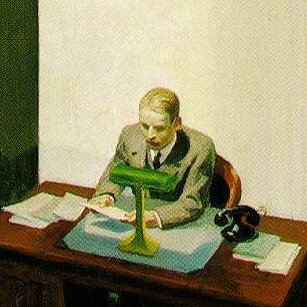
Overtime workers missing their families, or unresolved sexual tension?
On the surface, Hopper mixes two themes.
But are they actually different?
That longing isn't a second theme. It's just another face of loneliness—the kind that hits hardest when you're in the same room.
Makes you wonder: for many, is the office their only shot at human connection?
Edward Hopper, Office at Night 1940
@vietyork Probably the most incredible thing about Hopper is how he's more relevant today than ever. And it doesn't look like technology has helped much.
What do you see first?
Overtime workers missing their families, or unresolved sexual tension?
On the surface, Hopper mixes two themes.
But are they actually different?
That longing isn't a second theme. It's just another face of loneliness—the kind that hits hardest when you're in the same room.
Makes you wonder: for many, is the office their only shot at human connection?
Edward Hopper, Office at Night 1940
Matisse painted an open window.
But the view outside wasn't the real subject.
In Open Window, Collioure, the sea, sky, boats and room become patches of intense colour.
He wasn't trying to show you the view exactly as it was.
He wanted you to feel what it was like to stand on that beach in Collioure
That was Matisse's idea of colour: not description, but sensation.
Do you feel it?
It Says Nothing to Me.
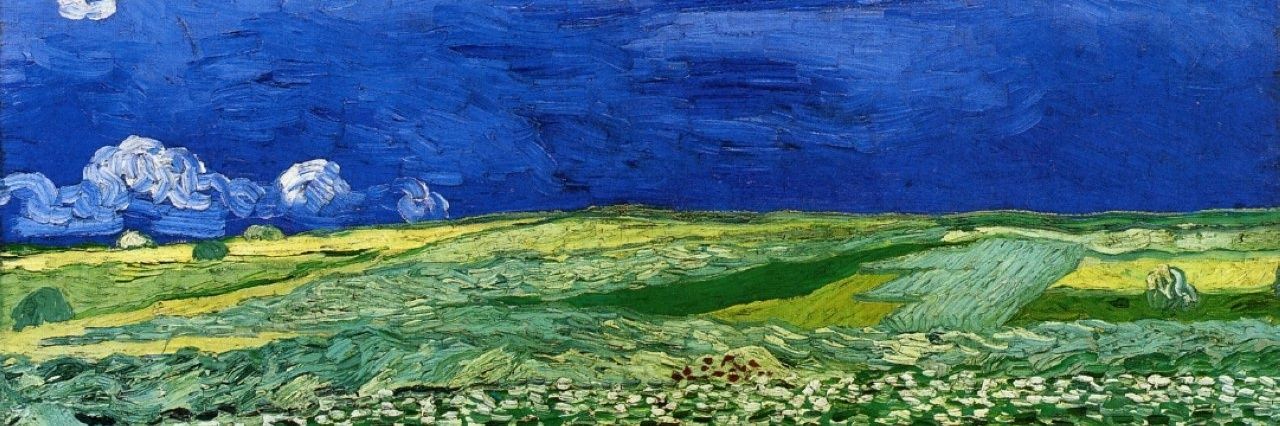
Van Gogh painted The Starry Night and still doubted his own work.
Just after painting it, he wrote to his brother Theo.
He mentioned a few works he considered good. Then, about the rest, he wrote:
“the rest says nothing to me.”
He added:
“Myself I’m very, very discontented with my work…”
Sometimes we’re simply too close to our own work to judge it properly.
So what do you do? Van Gogh simply kept working.