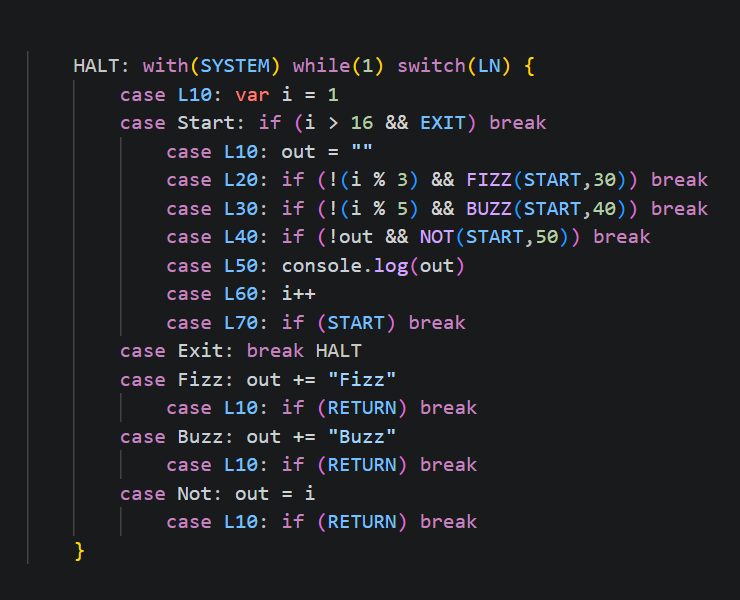
@xah_lee I think if that is wanted, this should be possible? @oriSomething
Going to use the first pass switch label init to define my uppercases, and understand rel line numbers. Haven't tested yet.
@bobtabor Using PC RAM even the fast varieties, is not very feasible for OpenCode in my testing, however VRAM works very well (Ollama, etc.); Seems this is changing soon, but hope you make good use of that 128.
@oriSomething I ran into some Opus output that did early-return in React but called hooks after it. Instant no-no. Somehow Solid’s early return ban doesn’t feel so arbitrary now.
@fscgo Based on Java’s equivalents (continue too, in a loop): https://t.co/lNfFmgoApi.
I wonder what fraction of JS hackers do not know about break to label.
break/label is the goto which we have in JS. Probably used like:
exit: { exit_cleanup: {
const err = doWork()
if (err) break exit_cleanup
else break exit
}
// exit cleanup code
return "error"
}
// exit normal
return "success
So your telling me onclick="foo()" is legacy because it pollutes the global namespace. So we then we added modules, which requires getElementById(..).addEventListener(".."), so then we added frameworks to re-add back on:click="foo()" but with magic. What is wrong with you all?
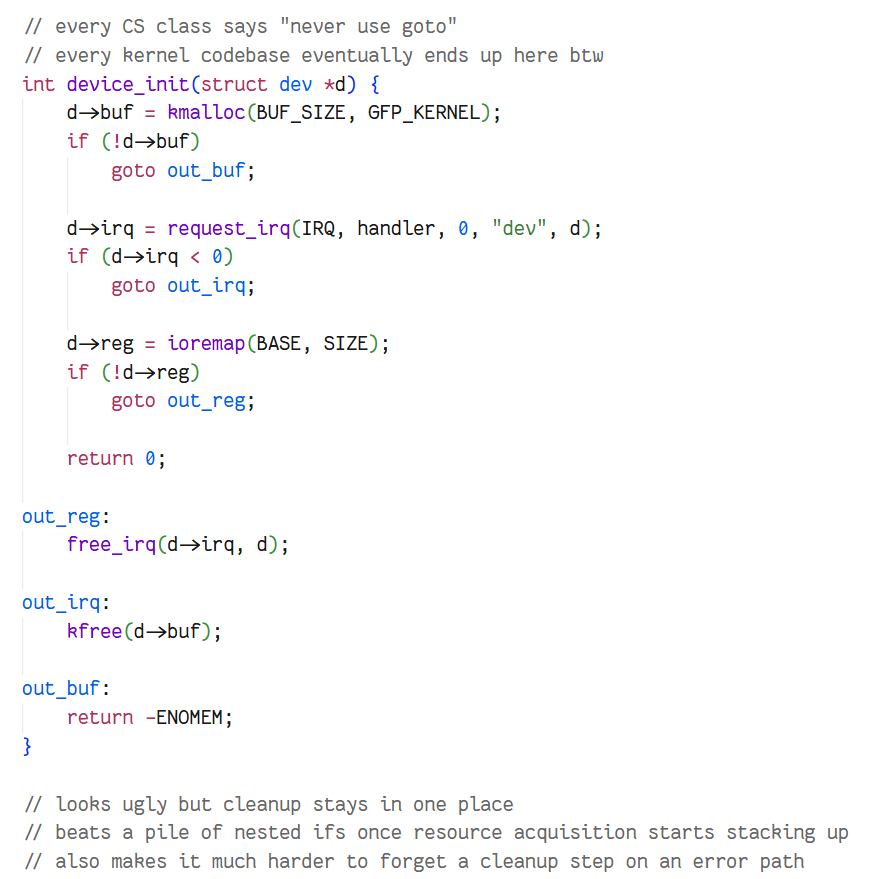
Dijkstra called goto harmful in 1968
the Linux kernel contains tens of thousands of goto statements
the label out alone appears thousands of times
Linus's response on LKML in 1997: "there's nothing wrong with gotos, especially for handling error cases"
the "in module protected" pattern is what made it possible to have Computed extends Signal without having neither classes exposing public fields anyone could accidentally play around with
this is my "new favorite" pattern for inheritance when classes need private fields + extend
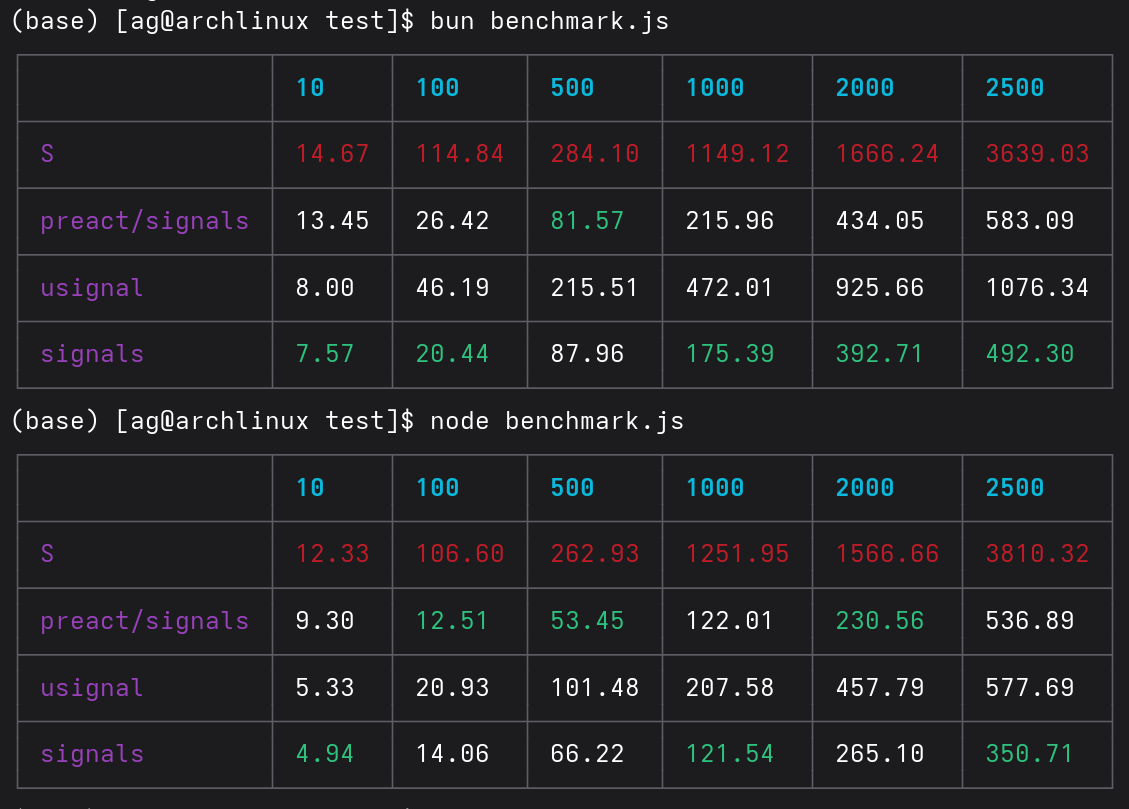
I wasn't too happy about JSC vs V8 performance so I went ahead and changed approach.
v0.2 is now classes based, just like Preact, but it's also now as fast, if not faster, than Preact.
still ~0.5KB but slightly bigger than before.
https://t.co/oRNbu2eUDj