Emma, unica, indimenticabile. Grazie per tutto. L’Italia e l’Europa ti devono tanto, tantissimo. Tutti ti dobbiamo tanto. Difficile, davvero difficile pensare un Mondo senza di te.
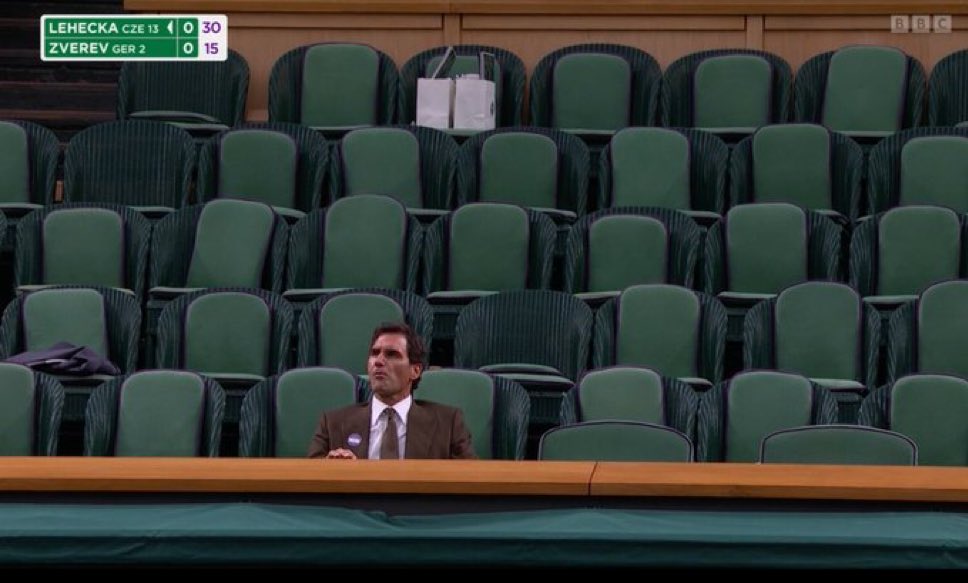
Cuando te gusta el tenis, te gusta el tenis.
Roger Federer viendo solo el partido con todo el Royal Box vacío es la imagen pura de pasión por este deporte.
Il Parlamento europeo ha dato un prima via libera al regolamento per la creazione dell'euro digitale, forma digitale della moneta unica che potrà essere utilizzata senza commissioni nell'Eurozona tramite app, anche offline. Il voto apre la discussione con Commissione e governi nazionali. La Banca centrale europea punta a sperimentare l'euro digitale dal 2027 con l'obiettivo di arrivare a regime nel 2029 e ridurre la dipendenza dai circuiti di pagamento gestiti da società statunitensi (come Visa e Mastercard). L'euro digitale non sostituirà il contante, ma sarà pienamente convertibile e interoperabile con esso
Nobel-prize winning economist Philippe Aghion believes that there is growth & employment potential in AI-development for Europe. In his passionate speech at #EUBEF26, he said that democracy, smart climate and social policies can attract talent to Europe.
SIIIIIIIIIIIIIIIIIIIIIIIIIIIIIIIIIIIIIIIII 💙💙💙
Che giornata per l'Italia a Kitzbühel: Giovanni Franzoni è imprendibile anche per Marco Odermatt e vince la storica discesa libera austriaca ⛷️🏆🇮🇹
#EurosportSCI
With apologies, a long tweet, about the likely macroeconomic outcomes of Liberation Day.
Tariffs can be imposed for understandable if not necessarily good reasons: Protect a sector, right or wrong. Extract rents from foreign producers if there are rents to be extracted. Sure, if there is retaliation, everybody will be worse off, but it maybe worth taking the risk.
Across the board tariffs, which sounds like what we are going to get, are however the worse possible tariffs. They are bad for the country that imposes them, even without retaliation.
Standard scenario: The initial effect of higher tariffs may look good: Lower imports. Higher demand for domestic goods. Smaller trade deficit.
But, with the smaller deficits, and the higher interest rates needed to keep demand under control, appreciation of the dollar (say), less competitive exports. Until trade deficit is back to square one.
So: Useless? Worse. Costly reallocation from exports to import competing sectors. Misallocation. And for the revenues from tariffs: They are there, but in the end, they are paid mostly by US consumers.
A relevant twist, which changes the standard scenario: The enormous uncertainty about Trumps’s tariff policy: Are the tariffs transactional or permanent? Will they remain/increase/decrease?
In that environment, if I am a firm, what do I do? Build a plant in Mexico or in the US, in Vietnam or in China, etc. I do not know, and so I wait. We all wait. Investment comes down, aggregate demand falls, and the effect is a recession.
Now the trade balance improves, for two reasons. The direct effect of tariffs, and lower activity means lower imports. As the Fed tries to maintain activity, lower interest rates and a lower dollar mean more exports. Looks great. Claim of success on the trade front (if you can make people forget the recession)
But only for a while. Over time, as the economy recovers, you go back to the first scenario. The depreciation eventually turns into an appreciation, activity recovers, the trade deficit returns to square one Overall result: a recession, no gain. A general mess.
We shall see how it all turns out.
As the Eurosystem balance sheet normalizes, the amount of central bank liquidity available to banks in the euro area will fall over the coming years. Banks should consider these operations as an integral part of their day-to-day liquidity management. https://t.co/myVvlDrQgM