The last few days of this election reek with the vibe of a guy getting shot down in a bar and hurling insults at the woman as he storms out.
#GrowUp#HarrisWalz#VoteBlue
The real J6. Those who participated do not deserve a dime from the US Government or taxpayer. If anything, they owe the police officers money for their pain and suffering.
UPDATED: Jeffrey Epstein's personal assistant Sarah Kellen alleges three men besides Epstein abused her, including former Miami Beach mayor Philip Levine and celebrity hair stylist Frederic Fekkai, the Miami Herald has confirmed.
"Us victims never had a chance," she said in testimony before House Oversight Committee. https://t.co/ykx9OtbGdO
In Telegram groups, men are sharing thousands of nonconsensual images of women and girls, buying spyware, and engaging in doxing and sexual abuse. https://t.co/3hR4euNhKd
The Trump administration is quietly trying to build medical dossiers on all federal employees.
Their prescriptions. Therapy appointments. Abortion records. For millions of people (and their families).
They won’t say how they’ll use it.
But I can venture a guess.
1/ Goldman Sachs analysts report that the biggest oil crisis in history is about to hit globally, with profound and highly destructive consequences. A new report asks ""Are We Running Out of Oil?", and concludes that the answer is yes. ⬇️
An absolutely excruciating moment at the Georgia Supreme Court this week.
Justice Peterson pressed state attorney Deborah Leslie over her citations to cases that apparently don’t exist.
🚨 BREAKING: Someone just open-sourced software that sees you through walls using only WIFI signals.
it’s called WiFi-DensePose. It maps your exact body pose in real-time. no cameras. no sensors. just your living room router.
100% Open Source.
🚨 Someone just turned your WiFi router into a full-body surveillance system.
No cameras. No wearables. No video. Just radio waves.
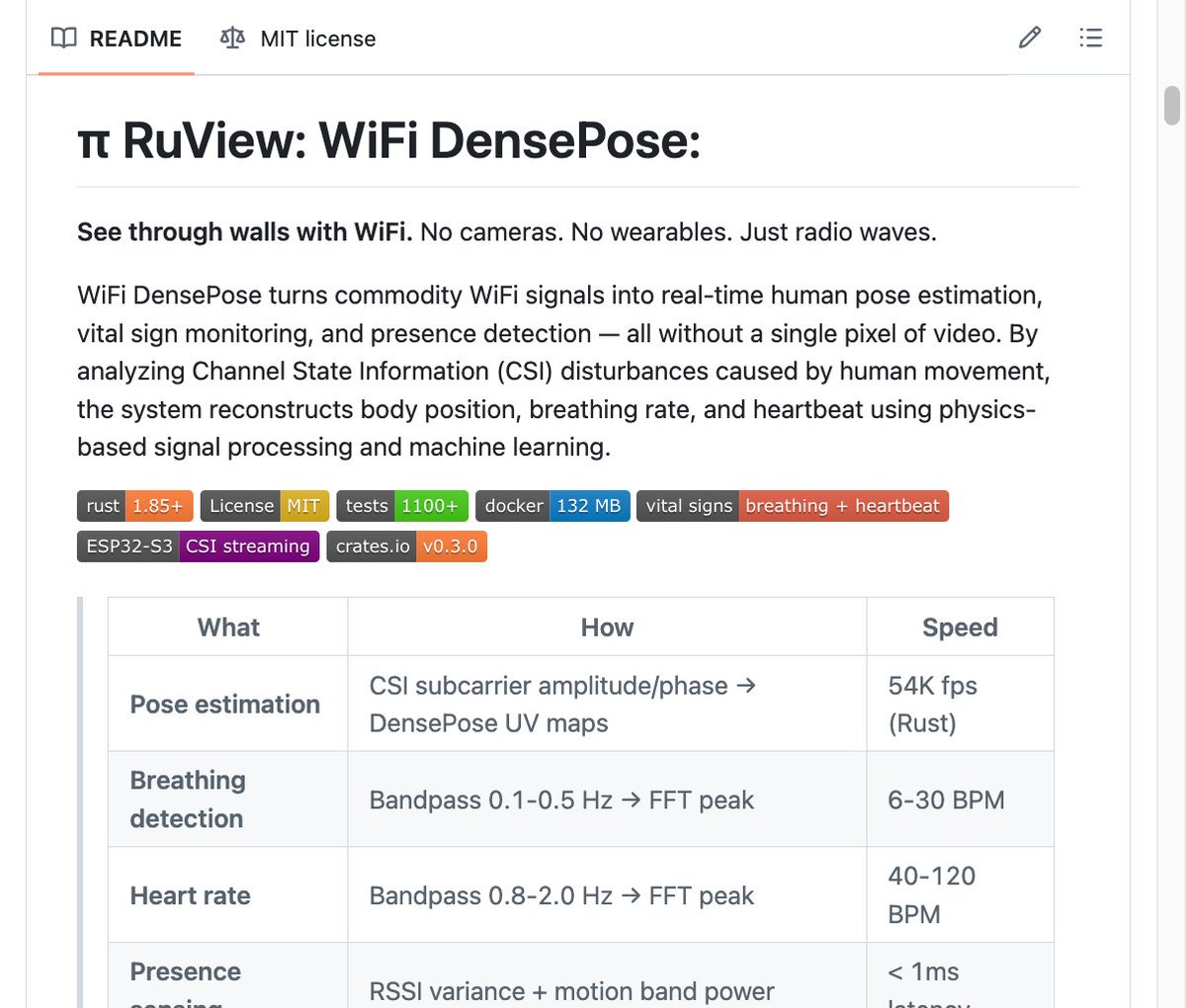
It's called RuView. It uses the WiFi signals already in your room to detect human poses, track breathing, measure heart rate, and see through walls.
Not a concept. Not a research paper. Working code you can run right now.
Here's what this thing actually does:
→ Tracks full 17-point body pose using only WiFi signals
→ Detects breathing rate (6-30 BPM) without touching anyone
→ Measures heart rate (40-120 BPM) from across the room
→ Sees through walls, furniture, and debris up to 5 meters deep
→ Tracks multiple people simultaneously with zero identity swaps
→ Self-learns from raw WiFi data. No labeled datasets needed
Here's how it works:
WiFi signals pass through your room and hit the human body. The body scatters those signals differently based on position, breathing, even heartbeat. RuView reads that scattering pattern and reconstructs everything.
A mesh of 4 ESP32 nodes ($48 total) gives you 360-degree coverage with 12 measurement links, 20 Hz updates, and sub-30mm precision.
Here's the wildest part:
It has a disaster response mode called WiFi-Mat. It detects survivors trapped under rubble through concrete walls, classifies injury severity using START triage protocol, and estimates 3D position. The kind of tool that saves lives after earthquakes.
The Rust implementation processes 54,000 frames per second. That's 810x faster than the Python version. The entire Docker image is 132 MB.
The AI model fits in 55 KB of memory. Runs on an $8 ESP32 chip.
Train once, deploy in any room. No retraining. No recalibration.
1,100+ tests. SHA-256 verified capability audit.
22.4K GitHub stars. 2.7K forks. MIT License.
100% Open Source.
Your AI conversations aren't privileged. Yesterday, Judge Jed Rakoff ruled that 31 documents a defendant generated using an AI tool and later shared with his defense attorneys are not protected by attorney-client privilege or work product doctrine.
The logic is simple: an AI tool is not an attorney. It has no law license, owes no duty of loyalty, and its terms of service explicitly disclaim any attorney-client relationship. Sharing case details with an AI platform is legally no different from talking through your legal situation with a friend (which is not privileged).
You can't fix it after the fact, either. Sending unprivileged documents to your lawyer doesn't retroactively make them privileged. That's been settled law for years. It just hadn't been tested with AI until now.
And here's what really hurt the defendant: the AI provider's privacy policy (Claude), in effect when he used the tool, expressly permits disclosure of user prompts and outputs to governmental authorities. There was no reasonable expectation of confidentiality.
The core problem is the gap between how people experience AI and what's actually happening. The conversational interface feels private. It feels like talking to an advisor. But unless you negotiate for an enterprise agreement that says otherwise, you're inputting information into a third-party commercial platform that retains your data and reserves broad rights to disclose it.
Judge Rakoff also flagged an interesting wrinkle: the defendant reportedly fed information from his attorneys into the AI tool. If prosecutors try to use these documents at trial, defense counsel could become a fact witness, potentially forcing a mistrial. Winning on privilege doesn't make the evidentiary picture simple.
For anyone advising clients or managing legal risk, this is a wake-up call. AI tools are not a safe space for clients to process their counsel's advice and to regurgitate their legal strategy. Every prompt is a potential disclosure. Every output is a potentially discoverable document.
So what do we do about it?
First, attorneys need to be proactive. Advise clients explicitly that anything they put into an AI tool may be discoverable and is almost certainly not privileged. Put it in your engagement letters. Make it part of onboarding. Don't assume clients understand this, because most don't.
Second, if clients want to use AI to help process legal issues (and they clearly will, increasingly), then let's give them a way to do it inside the privilege. Collaborative AI workspaces shared between attorney and client, where the AI interaction happens under counsel's direction and within the attorney-client relationship, can change the analysis entirely. I'm excited to be planning this kind of approach, and I think it's where the industry needs to head.
https://t.co/NFqsznVdXh
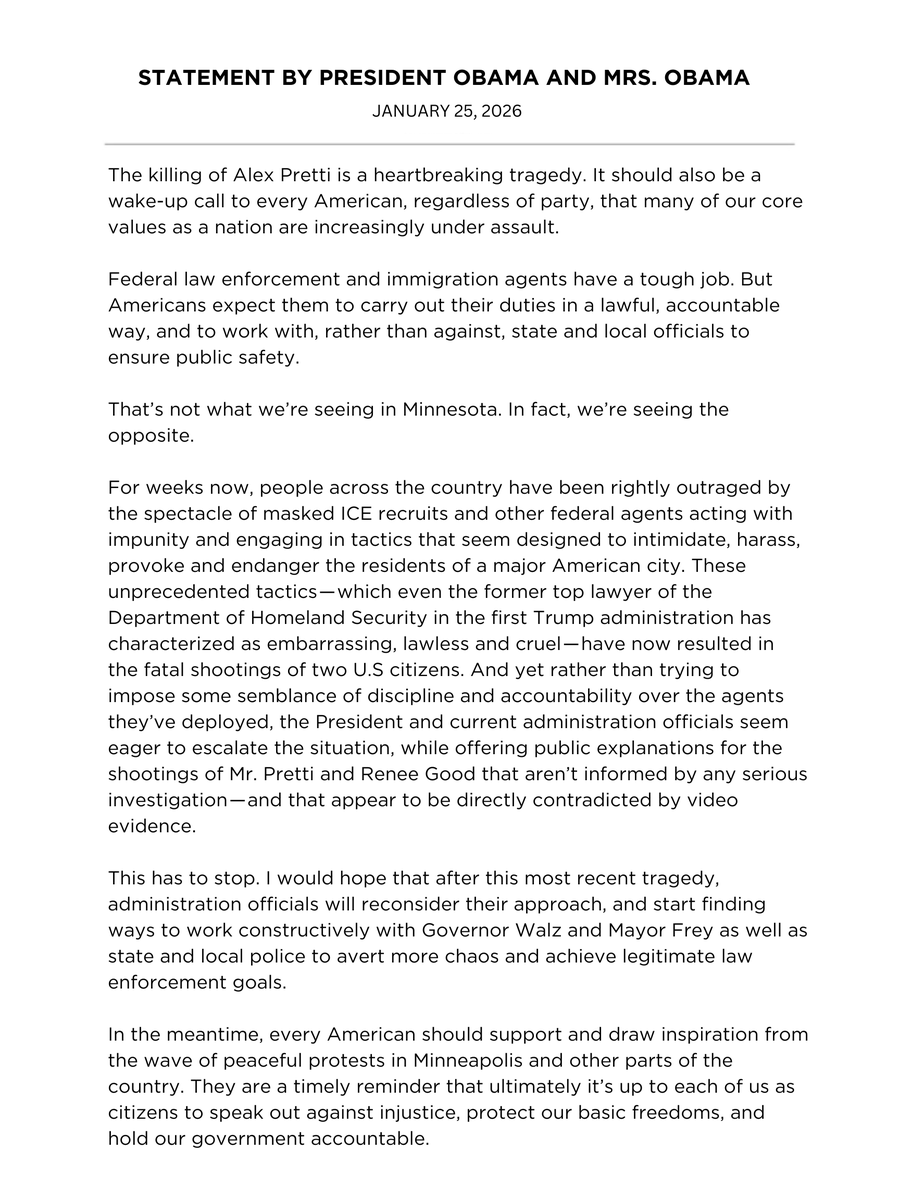
The killing of Alex Pretti is a heartbreaking tragedy. It should also be a wake-up call to every American, regardless of party, that many of our core values as a nation are increasingly under assault.
Heartbroken to hear of Tatiana Schlossberg’s passing after her courageous fight with leukemia. A powerful voice for cancer and medical research, let’s honor her legacy by continuing her fight.
https://t.co/dI4AQBlkqY