Big release that got under the radar 📡📟: last week @ml6team released Fondant-25M: dataset of image-text pairs with a @creativecommons license
And that's just the tip: they are working on a 500M one 🤯
Blog: https://t.co/HgJ9BbHOLa
Dataset on 🤗 https://t.co/fgdcm888dx
Data preparation is going to be the #1 differentiator when it comes to Foundation Models.
Hence I've been involved in a new open-source project aimed at building & sharing reusable components for data preprocessing: https://t.co/9I7qqnLrz5
1/2
building a company on large ML models is humorously closer to biotech than traditional software
- niche, shallow talent market
- long iteration times
- material capital requirements
- likely need an incumbent partner for distribution
Discover how #ApacheBeam's multi-language pipelines allow you to utilize various I/O connectors and transforms without needing to reinvent the wheel to your language of choice in this post from @ml6team
https://t.co/E3EUCP7pWB
#datapipelines#python#java#expansionservice
Still haven't found the perfect valentine gift? Send your loved one a unique (free) love meme with your face embedded and remain in their heart always!
Link to the meme swap by Gener8 👉 https://t.co/jAmU5enPXb
#gener8#generativeai#ml6#ml6team
Today, the #Connexion framework got a new community-owned home! 🏠 Proud to continue the work of @ZalandoTech and take over the regular maintenance of the project as part of the spec-first organization. #opensource#Engineering#github
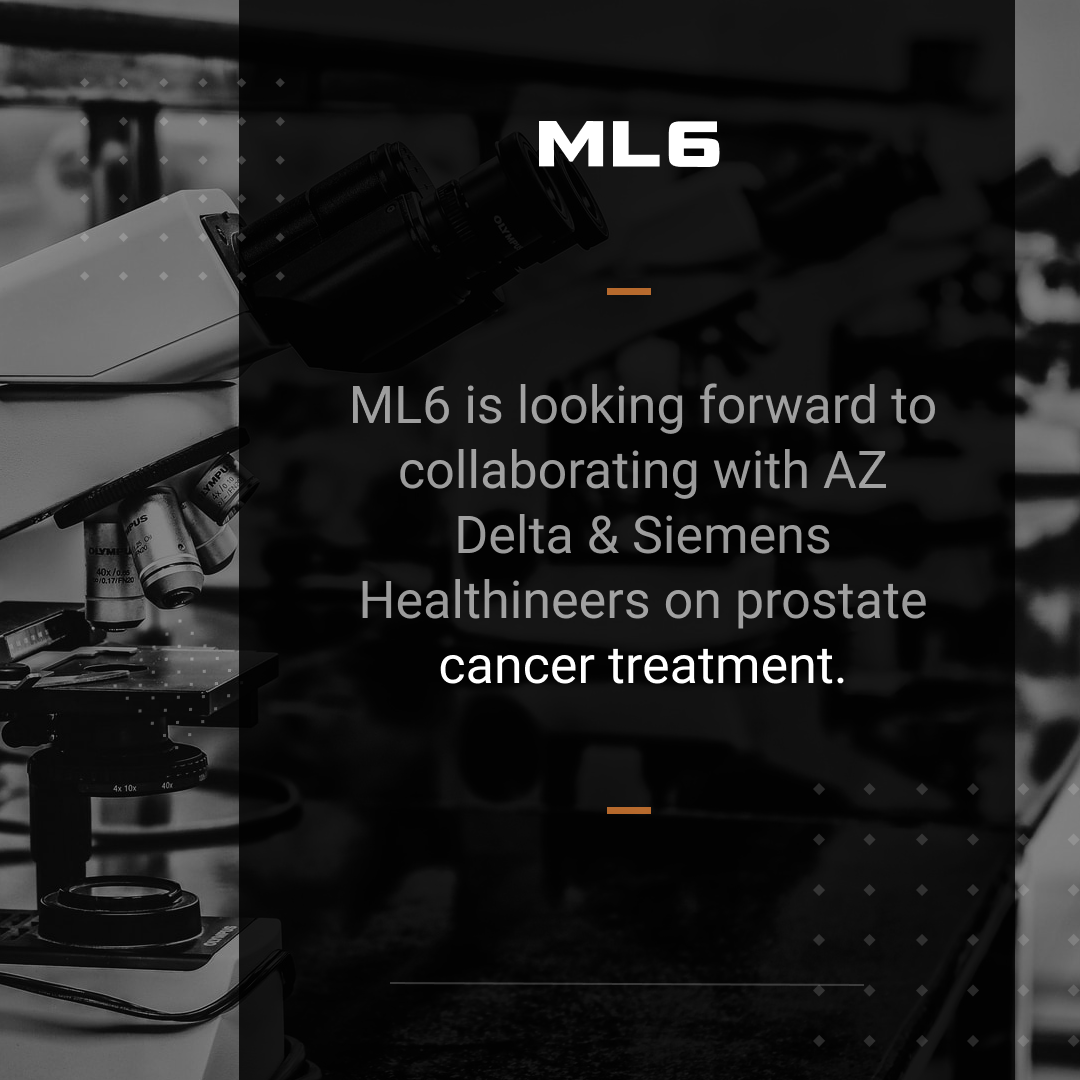
Today is marked as #WorldCancerDay#ML6 always looks for projects that bring social value. Thanks to the support of @VLAIO_be & flanders.healthTech we will push the current technical capabilities of leveraging data & #ML to improve and personalize prostate cancer treatment plans
Security doesn't have to look boring! 😴
Check out this blogpost on how we visualise our Cloud Armor logs and protect our #GoogleCloud infrastructure! 🛡️
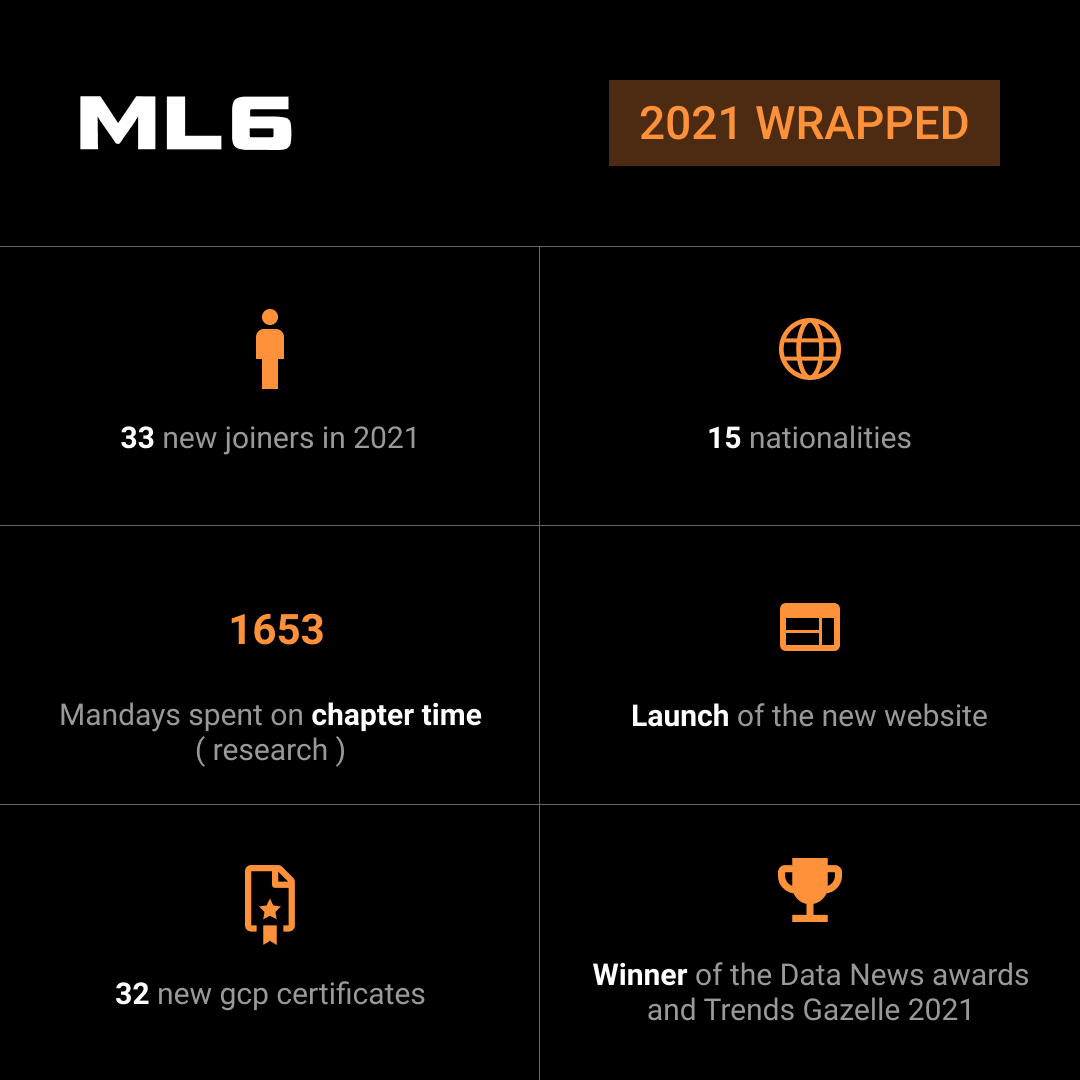
#2021wrapped ✨ We are happy to have grown our team with 33 new joiners, and are now set to serve even more customers with great technology across our 5 international markets. Thankful for what 2021 brought us, and hopeful that 2022 will bring us much more of that. #ml6
Explainability as key enabler for more impactfull AI projects. Why & how illustrated with use case examples: https://t.co/qdU1Fd0LC3
Based on the work by @DhruvBatraDB
#xai#explainability
ByT5 by @GoogleAI opens a lot of cool doors 🚪, such as correcting common #OCR mistakes 💡. Check out our finetuned model and a demo on @huggingface spaces: https://t.co/d5RoIzSeFa
#OCR errors are a common side-effect when processing scanned documents 🔍🖨️. In our latest #NLProc blogpost, @simon_de_gheselle investigates the use of @GoogleAI’s #ByT5 to correct these errors 💡👆!
Full blogpost: https://t.co/49eXe2zYHw #ml6#transformers#huggingface
@peeterskris For most projects we deploy, we can work with a serverless alternative such as Vertex AI, still using the same concepts & framework, but cheaper to run & easier to maintain. So the biggest downside is indeed the heavy architecture which isn't always needed.[2]
@peeterskris Kubeflow is still mainly Google sponsored & both David Aronchick & Jeremy Lewi (~creators) left Google, so this certainly has an impact. Otherwise the serverless options are getting much more popular & cheaper! [1]
I noticed a weird thing about writing that if you’re trying to prove a point and use too many arguments (beyond 2-3) then it ends up coming off as weaker in aggregate. Is this a real thing?
To make an existing model more robust at test time: augment a single test image in many ways, finetune model so that predictions on augmented images "agree", minimizing marginal entropy. This is the idea behind MEMO (w/ Marvin Zhang & @chelseabfinn): https://t.co/UjO6oJIXs8
🧵>