Portfolio-Optimierer & Growth-Jäger 🎯 | AI is the engine, quality is the fuel ⚡️ | Swiss roots, global mindset 🇨🇭 | Analyzing the noise to find the trend.
Wenn die oberste Führungsetage eines Unternehmens gleichzeitig die eigenen Aktien kauft, ist das ein unmissverständliches Signal.📈
Bei Celsius Holdings ($CELH) haben der CEO John Fieldly, der Direktor Hal Kravitz und der President und COO Eric Hanson massiv zugeschlagen und insgesamt fast 25.000 Aktien erworben.
Das entspricht einem Gesamtwert von fast 750.000 US-Dollar. 💰
Insider verkaufen Aktien aus den unterschiedlichsten persönlichen Gründen, aber sie kaufen sie aus nur einem einzigen Grund ‼️ Weil sie von steigenden Kursen überzeugt sind und an das zukünftige Wachstum glauben.
Das ist ein extrem bullisches Zeichen für die Aktie von Celsius Holdings.
Hier geht es zu meinem X-Artikel👇
Woah what is going on with $VST ?
First Pelosi and Thiel load up on 13Fs...
Now the CEO just bought another $600K of the stock on the open market. That's $1M+ in two weeks?
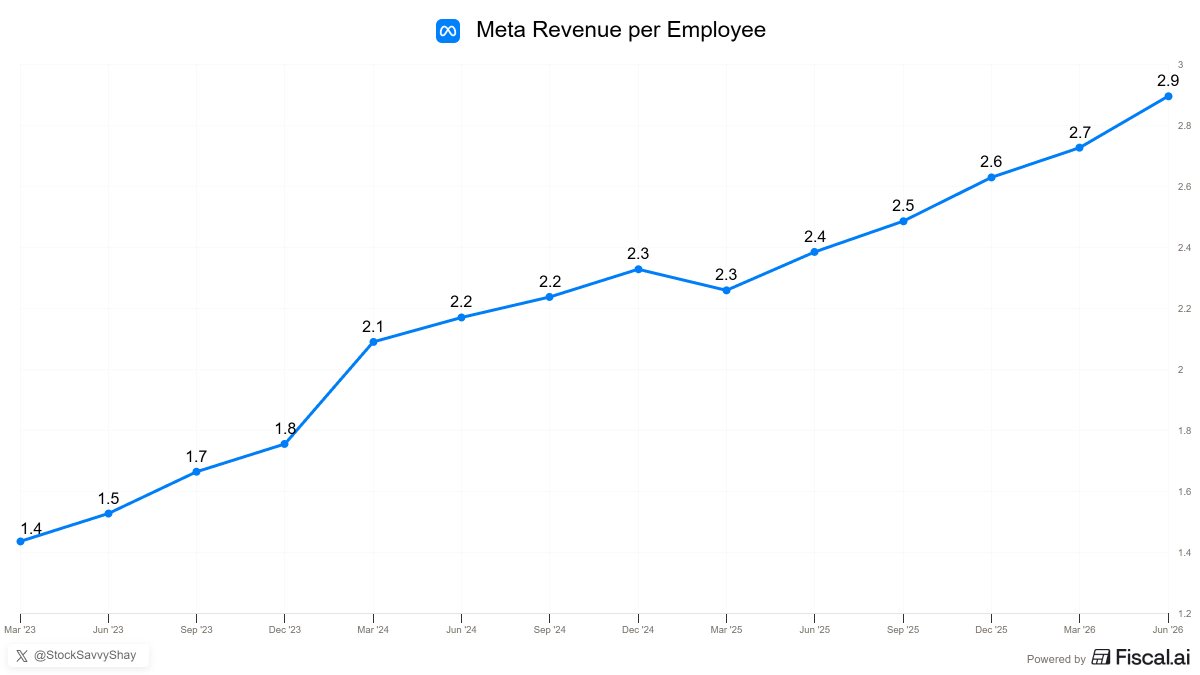
$META is rolling out Muse Spark 1.3 with what Zuckerberg calls “frontier performance almost too cheap to meter.”
Meta is making coding and agentic workloads dramatically cheaper to run at scale.
THIS IS ABSOLUTELY CRAZY
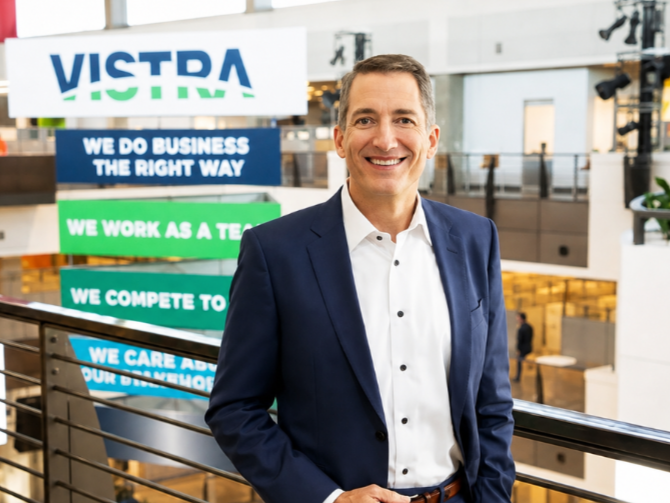
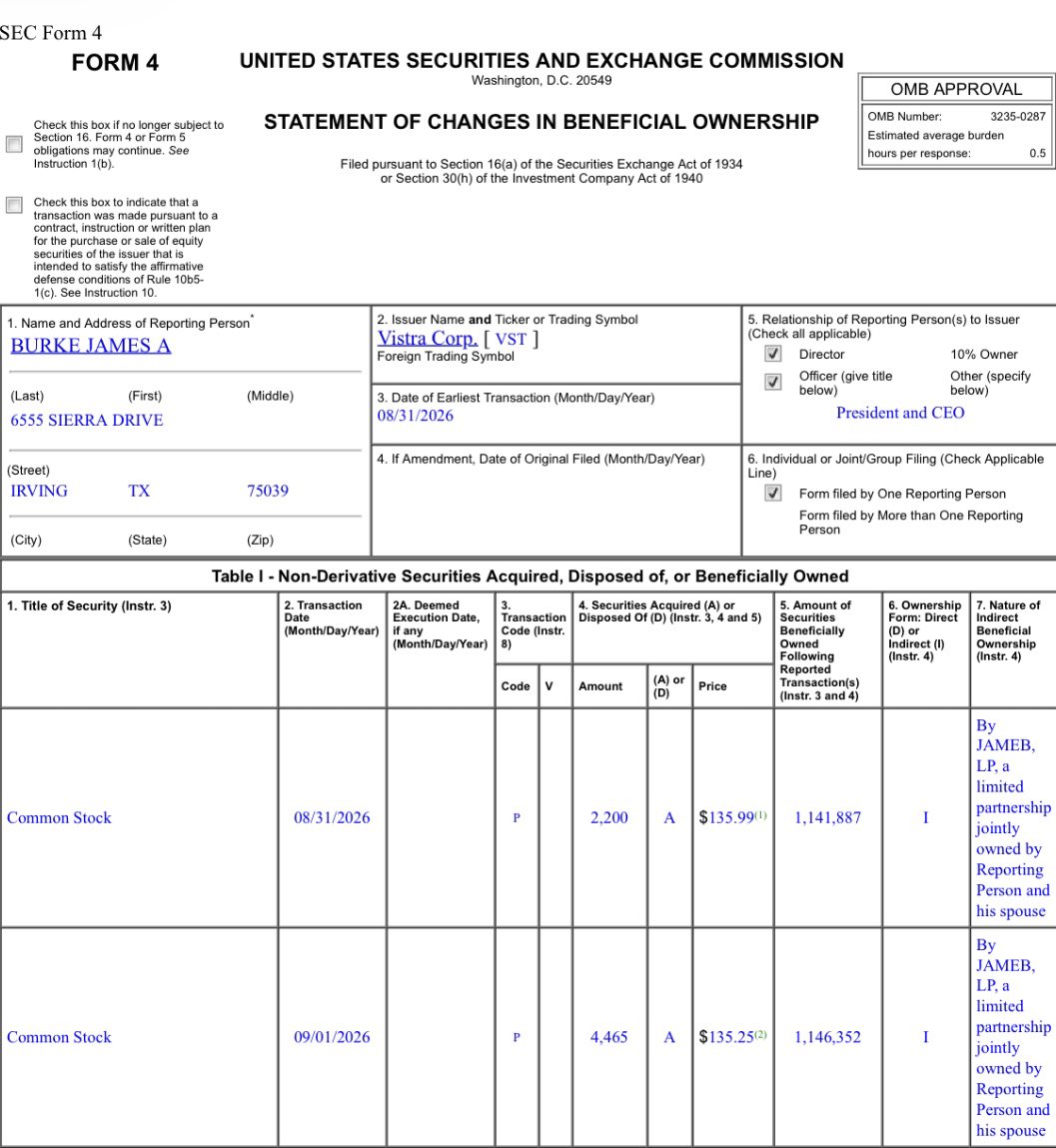
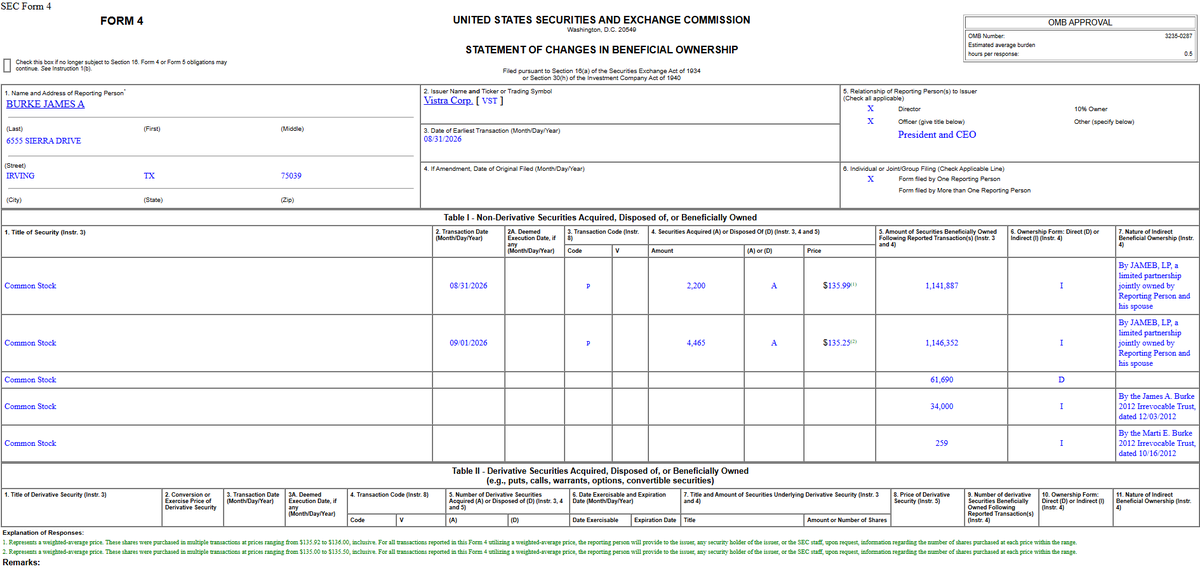
$VST CEO James Burke has bought 3 TIMES in the last 2 weeks!
Aug. 24 — 2,000 @ $135 — $270K
Aug. 31 — 2,200 @ $135.99 — $299K
Sept. 1 — 4,465 @ $135.25 — $604K
Total: 8,665 shares → ~$1.17M
And it gets better…
$VST is sitting near major support at just ~8.7–9x FWD EV/EBITDA and ~14x FWD earnings.
Not to mention:
• Nancy Pelosi
• David Tepper
• Peter Thiel
All have exposure to $VST. 👀
Riding one of the largest power booms in U.S. history. ⚡️
High Upside, Low Downside Setup.
~35% below its highs.
This is a STRONG BUY.
$VST ⚡️
Ich kenne wirklich keinen Gamer, der sich GTA 6 nicht kauft. Genau deswegen ist $TTWO die spannendsten Hype Story für das Jahr 2026.
Der Grund dafür ist ziemlich simpel: #GTA6.
Die Aktien von Publishern laufen in den sechs Monaten vor einem riesigen Release meistens extrem stark und legen im Schnitt um die 18 Prozent zu. Diesmal ist das Setup aber noch mal eine ganz andere Hausnummer, weil GTA 6 für Take Two der fetteste Entertainment Launch aller Zeiten werden könnte.
Das sagen die Analysten🔭
Morgan Stanley: Overweight, 280 USD
UBS: Buy, 300 USD
Benchmark: Buy, 300 USD
DA Davidson: Buy, 300 USD
BofA: Buy, 320 USD
Wells Fargo: Overweight, 287 USD
KAUFEN‼️‼️‼️
Die grosse Diskussion🧐
Ist die Prognose von Take Two für das Geschäftsjahr 2027 viel zu tief angesetzt? Das Management stapelt aktuell tief und erwartet für das Geschäftsjahr Bookings zwischen 8.0 und 8.2 Milliarden USD.
Einige Analysten glauben aber, dass da noch deutlich mehr geht.
BMO nennt die Prognose extrem konservativ und rechnet stattdessen mit 10.5 Milliarden USD an Bookings für das Geschäftsjahr 2027. Das wären locker 30 Prozent mehr als das obere Ende der offiziellen Prognose.
Die BofA sieht das ähnlich. Das Ziel von 8.2 Milliarden USD sei viel zu vorsichtig, weil das restliche Portfolio von Take Two auch ohne GTA 6 schon grösser ist als im Geschäftsjahr 2025. Und damals lag die erste Prognose bereits über der Marke von 8 Milliarden USD.
Meiner Meinung sind die Analysten Einschätzung sogar zu tief da diese den Hype nicht einschätzen können, was auch negative Auswirkung haben kann falls ein Szenario wie bei CD Red Projekt passiert (Wird es meiner Meinung nicht💪)
Was wird von GTA 6 erwartet?
Fixer Launch Termin: 19. November 2026
Morgan Stanley rechnet mit 40 Millionen verkauften Einheiten im Geschäftsjahr 2027
Die Bullen Story
🟢GTA 6 legt den grössten Gaming Launch der Geschichte hin
🟢GTA Online 2 sichert die Kohle und bringt eine dicke Monetarisierung über Jahre hinweg
🟢FiveM und User Generated Content ziehen die ganze Creator Economy mit rein
Morgan Stanley sieht im Basis Szenario bis zum Geschäftsjahr 2027 ein jährliches Wachstum von 18 Prozent beim Umsatz und satten 45 Prozent beim Gewinn je Aktie.
Das entscheidende Signal🚥
Benchmark bringt ein gutes Argument: Take Two hat das kritische Fenster für eine Verschiebung wahrscheinlich hinter sich gelassen.
Normalerweise hat Rockstar eine Verzögerung bei GTA 6 ungefähr 201 Tage vor dem geplanten Termin angekündigt.
Jetzt sind es nur noch rund 182 Tage bis zum Launch im November, und bei den letzten Earnings kam kein Wort von einer Verschiebung. Das ist ein verdammt gutes Zeichen.
Das Fazit: Kaufen📈
Bei $TTWO geht es aktuell nur um eine Frage: Schafft es GTA 6, die EPS für die nächsten Jahre komplett auf ein neues Level zu heben?
Die nächsten wichtigen Signale werden die Zahlen zum Start der Werbekampagne und den ersten Vorbestellungen, fallen diese positiv ausfallen wird die Aktie🚀🚀🚀
‼️Disclaimer‼️
Keine Anlageberatung. Die Infos dienen nur der Unterhaltung. Investieren birgt Risiken bis zum Totalverlust. Dyor
#TakeTwo #TTWO #GTA6 #Aktien #Investieren
$CRDO is becoming extremely interesting again now.
The earnings print was strong, and guidance did not disappoint.
Revenue and earnings will continue to grow extremely fast over the next years.
Stock price is now down 34% in just 3 weeks.
And I think we will see even lower prices over the next weeks.
Valuation is finally becoming attractive again.
$154 is the level where this stock get's hard to ignore.
$CRDO remains my highest conviction AI-Connectivity play, and I'm looking to buy back in on this pullback.
We sold into resistance with patreon members at $250 for a 43% gain, and will re enter when price finds support.
Patreon members will be the first to know when I buy ino this stock again.
An open letter to the Federal Reserve
Chair Warsh and members of the Committee @federalreserve@stlouisfed@philadelphiafed@SecScottBessent,
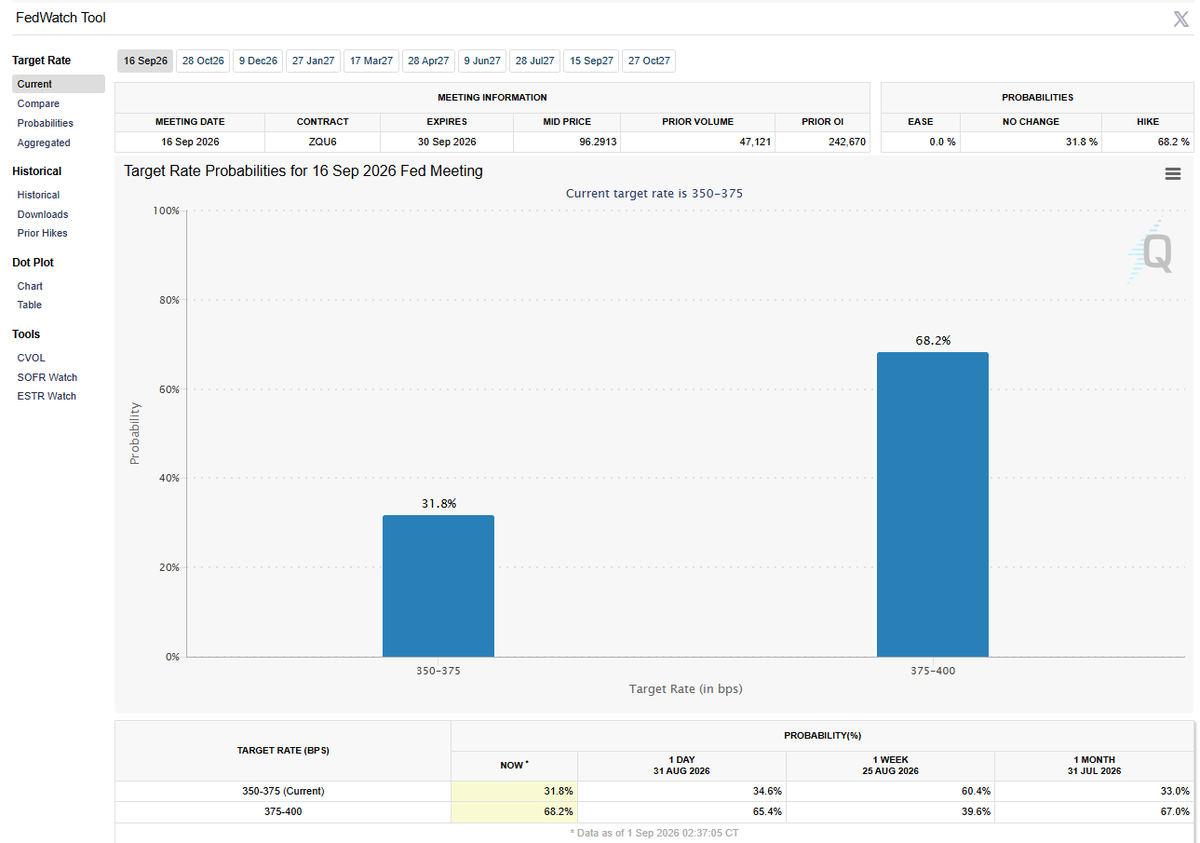
Americans are paying $4.04 a gallon for gas because of a war in the Persian Gulf. In two weeks the Committee is likely to raise the interest rate on their credit cards because of it. The odds of a hike at the September 15th and 16th meeting sit at 68.2% after Chair Warsh said at Jackson Hole that the Fed has “work to do” unless underlying inflation is moving to target clearly and at sufficient speed. Three members already dissented in favor of a hike in July so this isn’t hypothetical.
I have written about markets for the better part of the last decade. I’ve spent most of 2026 looking at the same handful of numbers every morning which include the oil balance, the CPI breakdown, card delinquencies and the 30-year mortgage rate. None of them say demand is running hot. All of them say a war took barrels off the market and the bill landed on the people least able to pay it. My concern is that the majority of the Committee is looking at this economy the way the Fed looked at the economy in the early 1980s and the two have almost nothing in common. I’m asking the Committee to hold on September 16th and to say why. Here’s the case.
The inflation is oil
The July Consumer Price Index ((CPI)) increased 3.4% YoY which was down from 3.5% in June and 4.2% in May while core CPI increased 2.5% YoY which is half a point above your target. So the gap between headline and core is 90 basis points ((bps)) and almost all of it is energy. Energy increased 14.7% YoY in July which included gasoline up 24.6% YoY, fuel oil up 39.1% YoY and airline fares up 25.5% YoY. The national average was $4.04 a gallon in the middle of August compared to $3.14 a year earlier. Strip out a war and you get a 2.5% inflation economy and I don’t think anyone would be talking about hiking into a 2.5% inflation economy with payrolls going negative.
I know the Committee targets core PCE and not core CPI and that core PCE printed 3.3% in July. Three things about that number. It’s off its high. It peaked at 3.4% in May and has printed 3.3% in both months since. It’s also exactly what you forecast. Your June projections put core PCE at 3.3% for the end of 2026 so nothing on the inflation side has surprised the Committee since it last wrote down its dots. What surprised you since June was payrolls going negative and real spending going flat and both of those argue the other way. The last piece is the gap itself. Core CPI has run above core PCE about 80% of the time since 1960 and today core PCE sits 87 bps above core CPI which almost never happens. That gap comes from weights. Software prices tied to the AI buildout carry more weight in PCE and airline fares sit inside both. A 25 bps hike doesn’t lower the price of a software license any more than it lowers the price of diesel.
The Chair pointed at breadth instead. At Jackson Hole he noted that 49% of the PCE basket ran above 3% over the last six months. Freight runs on diesel and every item that ships got more expensive to ship. Breadth is what an oil shock looks like six months in.
The war with Iran started at the end of February and the Strait of Hormuz has been choked off in one form or another ever since. Brent was in the low $70s before the first strikes, ran above $110 in April and finished last week around $90. Fighting resumed on August 31st after a month of relative calm and a tanker hit two mines in the strait. The part that matters for policy is the balance. The world is producing 98.3 million barrels a day against 104.4 million barrels a day of consumptionwhich leaves a 6.14 million barrel a day deficit that gets pulled out of inventories every day the strait stays choked. Saudi production fell 30.3% MoM and 19.4% YoY in the latest reported month. The UAE is down 27% YoY. Iran is down 9.8% YoY. The Strategic Petroleum Reserve ((SPR)) is at 290 million barrels which is 60% below its peak so the emergency lever has mostly been pulled already. The Energy Information Administration ((EIA)) doesn’t expect Middle East production to get back to pre-conflict levels until early 2027 and it’s carrying about 600,000 barrels a day of ongoing disruption through the end of next year in its base case.
I’d also push back on treating oil as one line in the index that can be looked through. Diesel is in every freight mile. Fertilizer runs on natural gas and diesel. Packaging, plastics, asphalt and the input cost on every manufacturing floor in the country move with crude. Airline fares are up 25.5% YoY and they sit inside core so some of the stickiness you’re seeing in services is jet fuel. When Brent is up about 24% from where it sat before the war those costs work their way into food and goods and services over a few quarters. A higher fed funds rate doesn’t lower the price of diesel.
A hike is supposed to cool demand so look at demand. Real consumer spending was flat in July after growing 0.4% in June and spending on goods fell $49.9 billion in the month. Retail sales fell 0.6% in July with auto dealers down 1.8% and online sales down 2.2% and the control group fell 0.4% which is the piece that feeds into GDP. There isn’t excess demand here for a hike to take out. The consumer already did that part of the Committee’s job on his own.
Rate hikes don’t produce barrels
A rate hike works on demand. It makes borrowing more expensive so households and businesses spend less and eventually prices cool off. I understand the mechanism. What I don’t understand is how it applies to 6.14 million barrels a day that aren’t being produced. A 25 bps hike doesn’t reopen Hormuz and it doesn’t put Saudi capacity back online. US producers are already pumping close to 14 million barrels a day and the deficit is still sitting there. The only channel through which higher rates lower the price of oil is by slowing the economy enough that Americans drive less and manufacturers order less and I’d like someone on the Committee to say out loud that this is the plan if it’s the plan.
Chair Warsh has said inflation is a choice. That was true in 1980 when the inflation was in wages and in expectations and the only way out was to break the spiral with rates. Nothing in today’s data looks like that. Average hourly earnings grew 3.2% YoY in July which was the slowest pace since May 2021. Your own July meeting minutes say longer-term inflation compensation stayed stable and consistent with the 2% objective. Headline CPI fell 0.4% in June when oil sold off during the ceasefire and then rose 0.1% in July when oil came back. The price level is following the barrel with a lag of a few weeks which is exactly what a supply shock looks like and nothing like what a wage-price spiral looks like.
The expectations data says the same thing. The 5-year, 5-year forward breakeven finished August at 2.31% which is the market’s read on inflation from 2031 through 2036 and the market isn’t pricing a regime change. The New York Fed’s own survey had the five-year expectation at 3.0% in July which was unchanged from June and Michigan’s five to ten year number has been 3.3% for three straight months. Six months of war and $4 gas didn’t move any of them. Chair Warsh said at Jackson Hole that medium-term inflation expectations look stable and that the swaps market sends the same message. Philadelphia Fed President Paulson said in August that expectations remain well-anchored. The case for a hike rests on expectations coming loose and the measures you watch closest are all flat.
Cleveland Fed President Hammack was one of the three dissenters in July and she said herself that a quarter point doesn’t do much. I agree with her on that. If a quarter point doesn’t do much then the real plan is two or three of them and I haven’t heard anyone explain what three hikes do to a labor market that just printed a negative payroll number.
I’d also point out where the rate already is. The target range has been 3.50% to 3.75% since the start of the year. Your own June projections put the longer-run fed funds rate at 3.1% so the policy rate already sits about 50 bps above where the Committee itself says neutral is. Against core CPI the real fed funds rate is roughly 110 bps and against core PCE it’s about 30 bps. Either way it’s above zero. The median path in those same projections had one hike this year and then the rate coming back down to 3.6% in 2027 and 3.4% in 2028 so even the members who penciled in a hike expect to take it back within a year. The Chair said at Jackson Hole that he’d be hard pressed to call broad financial conditions restrictive. Broad conditions are set by the largest borrowers with fixed coupons and by the stock market. The borrowers I describe below at 20.94% on a card, 7.9% on a small business line and 6.66% on a mortgage aren’t living under loose conditions. Rates are above neutral for the people who feel them and a hike moves policy further from where the Committee says it wants to end up.
The precedent that matches
The Committee is measuring this against the early 1980s so I’d offer the cases that look like 2026. In July 2008 the European Central Bank raised its policy rate 25 bps to 4.25% with crude above $140 and it was cutting by October 8th. The Fed held at 2% through that same spike. Chair Warsh sat on that Committee. He voted to hold in June 2008 with crude above $130 and again in August 2008 with crude just off its $147 peak. Richard Fisher dissented in favor of a hike both times. Fisher’s argument then is the argument the three July dissenters are making now and the majority the Chair voted with was right to look through it. In 1990 Iraq took more than 4 million barrels a day off the market which is a smaller hole than the one the market is in today. Greenspan held through September and then cut and the funds rate went from 8.25% to 4% by the end of 1991.
The 1980s inflation was in wages and expectations and it needed rates. The 1990 and 2008 inflation was in the barrel. The central banks that held were proven right within a year and the one that hiked was reversing inside of four months. Wage growth today is 3.2% and the inflation is in the barrel.
Who pays for a hike
The people who pay for a rate hike are the ones carrying a balance. Credit card balances rose to $1.26 trillion in Q2 which is just short of the record set at the end of last year and roughly 60% of the 175 million Americans with a card carry a balance from month to month. The average card annual percentage rate ((APR)) is 20.94%. Card rates are priced off prime and prime moves with fed funds so every 25 bps you add shows up on those statements within a billing cycle or two. The personal saving rate is 3% which is down 33.3% YoY so there’s nothing to absorb it with. The New York Fed’s own researchers used the phrase K-shaped economy in this quarter’s report and said a lot of households live paycheck to paycheck. Inflation has been running ahead of wage growth for four straight months so those households are already going backward before the Fed does anything.
Cards aren’t the only prime-based debt in that report either. Home equity lines are at $459 billion and up more than a third since early 2022 and they reprice with prime the same way a card does. Auto loans hit a record $1.71 trillion and every new loan written after a hike carries the higher rate. Meanwhile the thing that cut purchasing power this year doesn’t move at all. Gas is still $4 and real hourly earnings are already down 0.2% YoY. A hike doesn’t touch the gas price so the only line on that household’s ledger it changes is the interest line and it changes it in the wrong direction.
The response I usually get is that higher rates reward savers. Look at who the savers are and how much of a hike they see. The FDIC’s deposit-weighted national average savings rate is 0.38%. The Fed raised rates 525 bps in 2022 and 2023 and that average started near zero and peaked at 0.47% because the big banks that hold most of the deposits barely moved. Card rates went up at least as fast as fed funds over the same stretch. So a hike passes through to the borrower at close to 100% and to the typical saver at close to nothing and the saver pays income tax on the interest while the borrower gets no deduction on theirs.
I keep coming back to who this actually lands on. A household with no revolving debt, a mortgage at 3% and cash in a money market fund does fine. A household with a few thousand dollars on a card at 21% gets a bigger minimum payment. That’s a regressive tax by any definition and it’s being levied on people whose gas bill already went up because of a war they had nothing to do with. Higher carrying costs on revolving debt don’t bring down the 6.97% of balances that rolled into delinquency over the last year. They add to it.
Small business pays first
Small businesses employ 62.3 million people which is 45.9% of the private sector workforce according to the SBA’s own 2026 fact sheet. They don’t issue bonds. They borrow on lines of credit priced off prime and on SBA 7(a) loans that are mostly variable rate at prime plus a spread and reset quarterly. Prime is 6.75% today which is fed funds plus 3 and it moves the day you move. NFIB’s July survey had the average rate small businesses paid on short-term loans at 7.9% which was up half a point in a month. One owner in that survey described the cost of interest, insurance, power, supplies and vehicle gas as drowning the business. NFIB’s chief economist made the point in May that small businesses can’t pass fuel costs on the way their larger competitors can. A hike hands those same businesses a higher rate on the line of credit they’re using to cover the fuel.
The middle of the market isn’t much better protected. Your own staff published a note on August 11th that puts private credit at about $1.4 trillion and leveraged loans at about $1 trillion for privately held companies. Nearly all of it floats over SOFR and resets monthly or quarterly. So the mid-size company owned by a private equity sponsor doesn’t wait for a maturity wall. It gets the hike on its next interest payment. The businesses that are insulated are the largest ones in the country that locked in 2% and 3% fixed coupons in 2021 and won’t see a new rate until they refinance. A hike is regressive across companies the same way it’s regressive across households. The biggest balance sheets feel it last and the corner contractor with a prime-based line feels it first.
The refi wall is where the jobs go
The fixed-rate debt gets there eventually too. Corporate America termed out its debt in 2020 and 2021 at the lowest coupons anyone had ever seen and that debt is coming due now. S&P Global (SPGI) projected global rated maturities going from nearly $2 trillion in 2024 to nearly $3 trillion in 2026 and US rated maturities peak at roughly $1.5 trillion in 2028. A company that issued five-year paper at 2.5% in 2021 is refinancing at roughly double that depending on the rating. That gap comes straight out of margin. Management has two ways to get it back and the first one is price. The consumer I just described can’t pay more so the second one is headcount. I’ve sat through enough earnings calls this year to know that “efficiency” is the word they use for it.
The labor data already shows the direction. Payrolls fell by 23,000 in July and the prior two months were revised down by a combined 103,000. Unemployment fell to 4.1% but only because people left the labor force and participation dropped to 61.4% which is the lowest level in more than five years. Wage growth is at a five-year low. Companies aren’t hiring into a refinancing cycle with oil near $90 and a consumer who’s tapped out and a hike raises the cost of every one of those refinancings. I don’t see how the margin math ends anywhere other than layoffs.
Housing is already frozen
The 30-year fixed averaged 6.66% in the latest Freddie Mac (FMCC) survey and daily conforming locks were 6.68% on August 27th. That same series bottomed at 2.65% in January 2021. Millions of people bought or refinanced at rates around 3% in 2020 and 2021 and none of them are trading that for 6.68% to move across town. Mortgage balances grew 1.4% YoY in Q2 which is the smallest gain since 2016 because the market isn’t turning over. The freeze doesn’t stay in housing either. A house that doesn’t change hands is a kitchen that doesn’t get redone, a roof that doesn’t get replaced and a lot that doesn’t get built and all of that is construction and contractor employment. A hike pushes the 10-year and mortgage rates the wrong way and freezes it further.
I know the argument on the other side is that a hike buys credibility and brings the long end in. The long end sold off earlier this month and Treasury responded by expanding its buybacks of longer-dated bonds. The 10-year is trading fiscal supply and oil right now. I don’t think it’s waiting on 25 bps from the Fed and if it is then the credibility problem is bigger than one hike can fix.
The Chair’s own case for patience
Chair Warsh made this argument before I did. In November he wrote in the Wall Street Journal that AI “will be a significant disinflationary force” and in the same piece called for lower interest rates to support households and small and medium-size businesses. This week he laid out the three variables the Fed will use to judge what the AI buildout does to the economy. I agree with him on the direction. We’re at the front end of the biggest productivity shift since the internet and AI and robotics are going to take real jobs out of logistics, customer service, back offices and factory floors over the next several years. The only thing that absorbs those workers is growth and growth runs through the debt markets. Companies need to be able to borrow at a cost that makes a new plant or a new product line pencil out. If the Fed’s answer to a supply shock and a productivity shock arriving at the same time is to make capital more expensive then we get the job losses from AI without the growth that’s supposed to replace them. The Chair’s own framework says the productivity is coming. A hike now says he doesn’t believe it.
What I’d ask for on September 16th
The Committee should hold rates where they are. It should also say plainly that it separates energy inflation caused by a war from demand inflation caused by an economy running hot and that it’s anchoring on core CPI at 2.5% and a core PCE that has stopped rising. The August CPI comes out on September 11th and the EIA’s own path has Brent at $64 and the market in a 4.7 million barrel a day surplus by the end of 2027. If that plays out the inflation you’re worried about resolves itself. If it doesn’t and the strait stays choked then the price of oil is being set by mines in a shipping lane and a hike can’t touch it. Either way a hike now means you tightened into a slowing labor market to fight a war premium that rates don’t reach.
Timing cuts against a hike too. Your own colleagues put the lag between a rate move and its effect on inflation at 18 months to two years. A hike on September 16th does its work in the spring of 2028 which is after the EIA already has the market back in surplus. The hike lands after the shock leaves and the only thing left for it to hit is the labor market.
Holding is also the reversible choice. If the August or September wage data shows a second round the Committee can hike on October 28th and it will have lost six weeks. It can’t rehire the people a September hike costs and it can’t reopen the small business that lost its line of credit. Waiting costs one meeting. Hiking into a supply shock costs a cycle.
The mandate is stable prices and maximum employment. I don’t think a hike gets you the first and I’m fairly sure it costs you the second. A hike is a regressive tax on the households carrying a balance and a margin cut for every company refinancing 2021 debt at double the coupon. Those companies get the margin back through headcount. Americans are paying $4 gas because of a war. They shouldn’t also pay a higher card rate and lose their job because the Fed reached for the only tool it has and used it on the wrong problem.
Respectfully,
Steven Fiorillo
BTW, @BillAckman I would love to know your thoughts
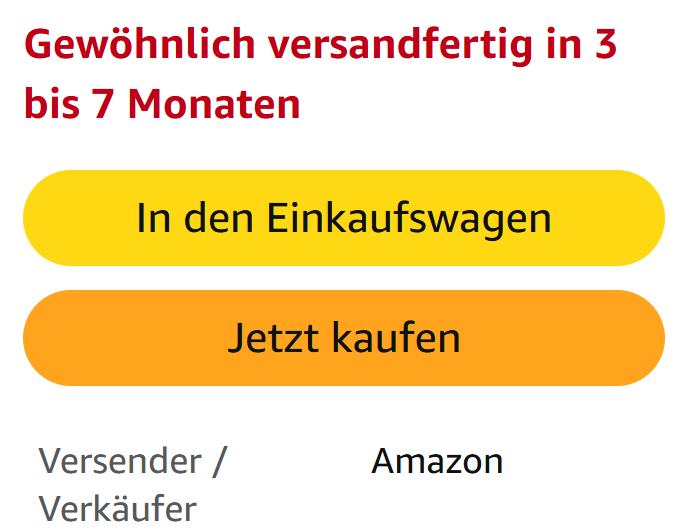
Wegen GTA 6 ist die Playstation 5 Pro bereits bis Weihnachten ausverkauft bei Amazon Deutschland. Der Hype ist real: https://t.co/LnLYyfPLpR
(Werbung)
$TTWO $SONY