Recordatorio gentil de que darle más dinero a un gobierno que tiene sus prioridades de gasto bien horrendas, como despilfarrar en obras insignia mientras lo básico no está cubierto, NO VA A SOLUCIONAR NADA. Creer que más impuestos va a solucionar nuestros pedos es no entender.
💥 ZAZ 💥
Nunca se imaginaron quiénes hicieron este video que la situación en México se pondría peor cuando MORENA llegó al poder.
No le den RT ni FAV porque la secta de Morena y sus fanáticos se van a enojar mucho.
👇
🆘#URGENTE l No sé quién sea este joven, no lo sé, pero este coraje y sus gritos, hoy son el rostro y la desesperación de muchos mexicanos.
Vía @NelSanMar
🇲🇽 | HISTÓRICO: El pueblo de México acaba de tomar el Senado de la República mientras adentro los políticos corruptos negociaban el fin de la división de poderes en el país a cambio de favores.
LA DEMOCRACIA SE DEFIENDE HASTA LAS ÚLTIMAS CONSECUENCIAS.
No uses ChatGPT para la investigación académica ❌
Tiende a alucinar, inventando artículos falsos que ni siquiera existen.
En su lugar, usa estas 6 IA para obtener información de artículos publicados:
🗳️📌SHEINBAUM SI PROPUSO ELIMINAR EL INE Y ÓRGANOS AUTÓNOMOS
Así está considerado en las propuestas de campaña, porque luego dicen que no era verdad.
En el caso del INE, será sustituido por otro que centralizará las elecciones (si, se eliminan institutos locales).
En el caso de órganos autónomos, sus funciones serán absorbidas por Secretarías de Estado.
1. Cofece: Se integrará a la Secretaría de Economía.
2. IFT: Pasará a la Secretaría de Infraestructura, Comunicaciones y Transportes.
3. CONEVAL: Sus funciones serán asumidas por el INEGI.
4. INAI: Será absorbido principalmente por la Secretaría de la Función Pública.
5. Comisión Nacional de Hidrocarburos y Comisión Reguladora de Energía: Absorbidas por la Secretaría de Energía.
6. Sistema Nacional de Mejora Continua de la Educación: Funciones asumidas por la Secretaría de Educación.
¿Hay margen de diálogo en esto?
¡Atención, investigadores!
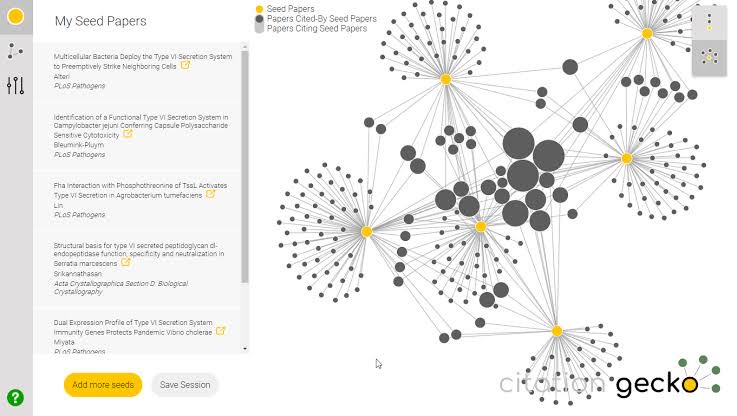
🦎 Gecko es una herramienta de código abierto que te ayuda a encontrar los artículos más relevantes para tu investigación. 📚🔍
¡Despídete de las búsquedas eternas! 🚀 #Ciencia#Investigación
https://t.co/N1h6NRZQ6W
Ya casi 6 años de la cancelación del NAIM y de la recuperación del Lago de Texcoco, no hubo mas seguimiento.
Pero hay mucha actividad.
Desde asentamientos irregulares en terrenos federales, cuerpos de agua secos, terraplenes en el ex-Naim y obras de material petreo.
Correlation is the skill that has singlehandedly benefitted me the most in my career. In 3 minutes I'll compress what I learned in 10 years of using correlation to solve business problems.
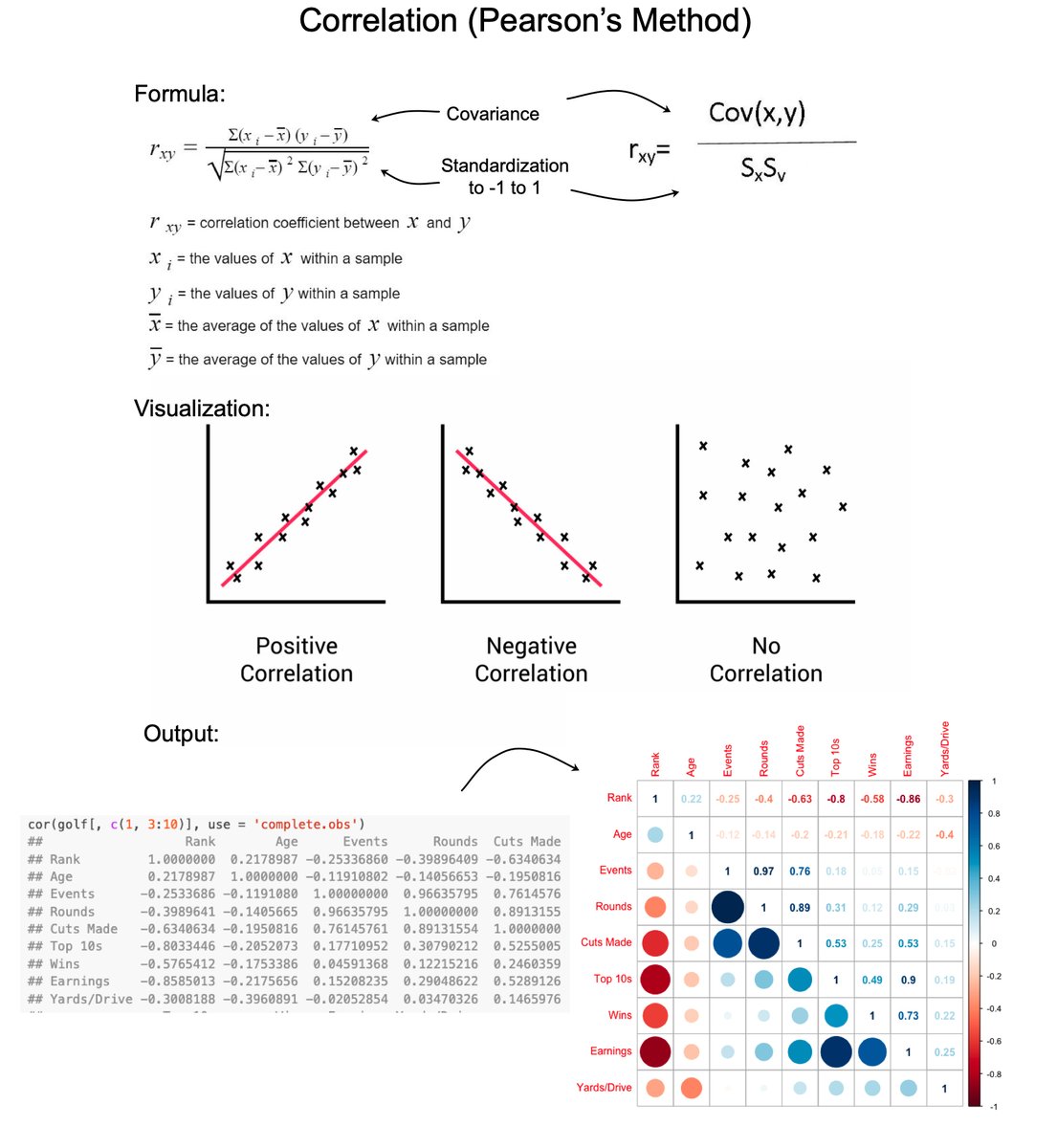
1. Correlation: Correlation is a statistical measure that describes the extent to which two variables change together. It can indicate whether and how strongly pairs of variables are related.
2. Types of correlation: There are several types of correlation used in statistics to measure the strength and direction of the relationship between variables. The three most common types are: Pearson, Spearman Rank, and Kendall's Tau. We'll focus on Pearson since that is 95% of the time what I use.
3. Pearson Correlation: Measures the linear relationship between two continuous variables. The coefficient value ranges from -1 (perfect negative linear correlation) to +1 (perfect positive linear correlation), with 0 indicating no linear correlation.
4. Interpretation: Positive Correlation: This occurs when two variables move in the same direction. A positive correlation coefficient (closer to +1) indicates a strong positive correlation. Negative Correlation: This is observed when two variables move in opposite directions. A negative correlation coefficient (closer to -1) indicates a strong negative correlation. No Correlation: If there is no apparent relationship between two variables, this is referred to as no correlation or zero correlation.
5. Assumptions: Pearson correlation assumes that the variables are normally distributed and the relationship between the variables is linear.
6. Strengths: Pearson correlation is widely understood, easy to calculate, and easy to interpret. I use it as a preliminary step in every data analysis.
7. Weaknesses: Only detects linear relationships. Non-linear relationships, even strong ones, might go undetected or be poorly represented by the Pearson coefficient. Affected by Outliers: Pearson's correlation is sensitive to outliers, which can significantly distort the correlation coefficient, leading to misleading conclusions. Only works with numeric data.
8. How I Correct for Weaknesses: Non-linearity and lack of support for categorical data were big issues that led me to create an R package called Correlation Funnel. This corrects for non-linearity by binning numeric data and corrects for categorical data by one-hot encoding categorical data.
===
Ready to learn Data Science for Business?
I put together a free on-demand workshop that covers the 10 skills that helped me make the transition to Data Scientist: https://t.co/LR39RJ5XKB
And if you'd like to speed it up, I have a live workshop next week where I'll share how to use ChatGPT for Data Science: https://t.co/EaMpKrJiqX
If you like this post, please reshare ♻️ it so others can get value.