Yes, a psychic channel can indeed be sabotaged. In fact, mine appears to be under the influence of sabotage, orchestrated by Nobuhojimichaan and Intrepidbodies.
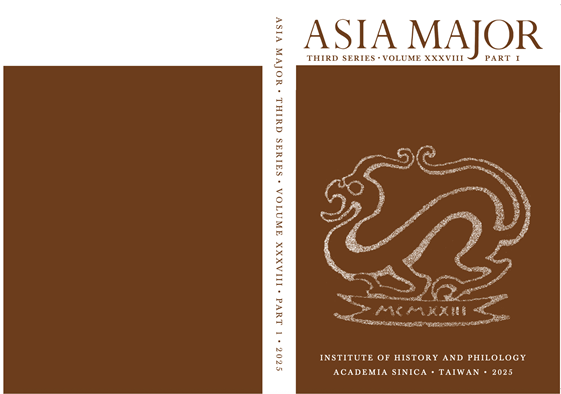
📖Asia Major Volume 38, Part 1 is now available online. This issue features 3 research articles on Western Zhou sage–ruler discourse, the early Chinese lyric "I," and lecturing and reading in Song and Yuan China. #Sinology#ChineseStudies https://t.co/DNhoyYTAzN
As someone initated into a Sufi order, some of my favorite conversations have been with my Tibetan Buddhist friends...seeing across our traditions has been so cool and enriching.
On China’s major e-commerce platforms, a bouquet of fresh-cut roses from the southwestern Yunnan province sells for just 14 yuan ($2), with free delivery to most parts of the country.
For consumers, this is an ordinary online purchase: tap to pay on a phone screen, then wait for the flowers to arrive at the door. But behind that simple transaction is a complex logistical challenge. Cut flowers are highly perishable. They lose moisture quickly and must travel more than 2,000 kilometers from Yunnan to major cities like Shanghai. Harvesting, sorting, packing, transportation, and last-mile delivery all have to happen within a narrow window.
How can a product worth less than 20 yuan cover the costs of packaging and inter-provincial delivery while remaining affordable as an everyday online purchase? The answer lies in how far China’s supply chain has evolved.
Read more: https://t.co/XZzHZwT45C
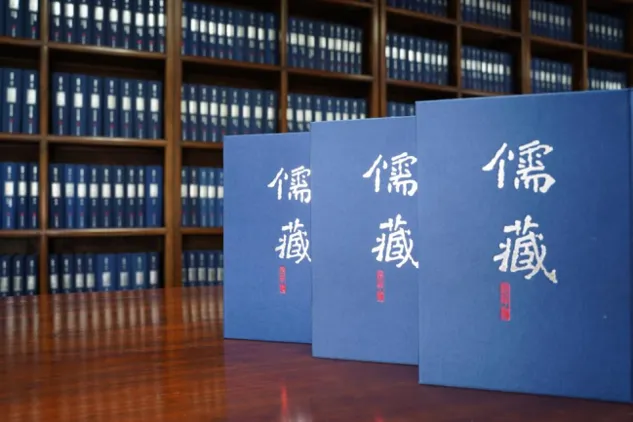
More than 200 million characters of Confucian classics, now just a click away!🖱️
The Editorial Research Center of Confucian Canon, PKU, and the Peking University Press have launched a digital platform for the Confucian Canon (Ruzang, Essential Edition). Featuring over 200 million Chinese characters across 510 classical texts, the platform offers authoritative editions alongside advanced search, annotation, and analytical tools, making one of the world's most comprehensive collections of Confucian literature more accessible for research, teaching, and reading.
Click the link to explore more: https://t.co/UImLMTY49r
According to this road guide to India dated 890–910 CE, counting only the days mentioned (excluding distances in li), the journey takes 97 days from Dunhuang to North India and 681 days from North to South India. A truly long trip! 👇Or.8210/S.383 #SouthAsianHeritageMonth
The fact that we got woodblock prints of the Buddhist and Daoist canons made digitization a breeze in the 2000s. I sometimes read handwritten manuscripts that have never been critically edited or typeset, but the majority of what I use in my research is Unicode-searchable.
It's day 28 of our Xinjiang RV roadtrip and today we're visiting one of Kashgar's hidden secrets: the former Russian consulate, now transformed into a (very!) hard to find and extremely charming Uyghur guesthouse.
This place, as far as we could see, is listed nowhere: you can't find it on hotel booking sites, it's not even listed on Chinese maps!
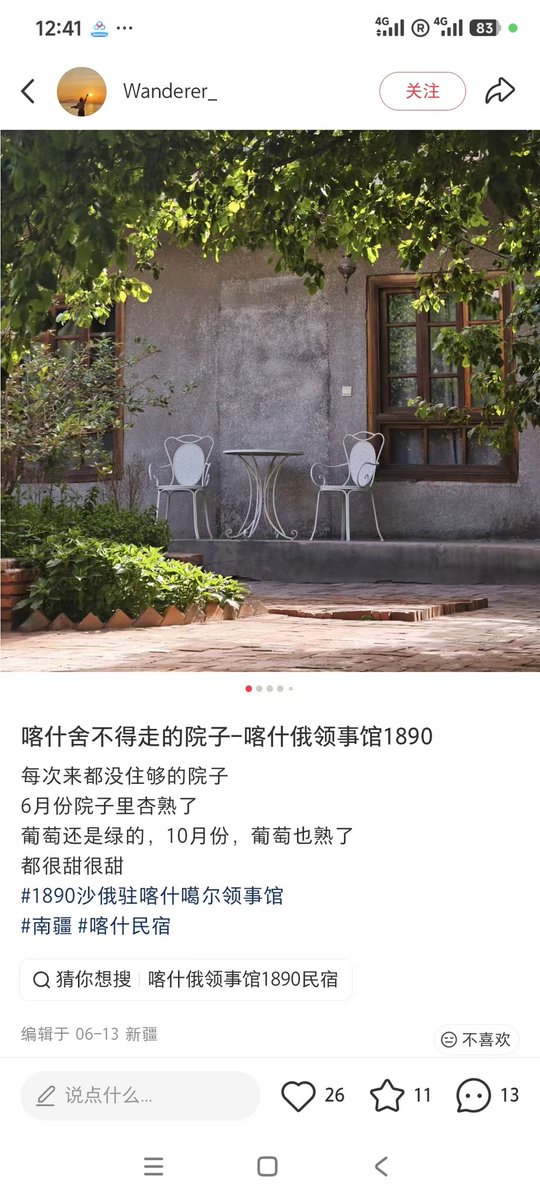
We only heard about it from an obscure Xiaohongshu post about it in June with just 26 likes and 13 comments (see screenshot 👇), just saying this place has a nice garden (and it does!). The owners of this place are world-class in interior design, but truly suck at marketing 😅
Which is a real shame because it's got to be one of the most beautiful houses in Kashgar, if not Xinjiang: an absolutely unique mix of Russian imperial and Uyghur design.
All the better for us: we're all alone here, and the very kind Uyghur family who now runs this place allowed us to pick fresh grapes from their climbing vines that cover their entire beautiful garden. And the grapes are out-of-this-world delicious!
If you ever pass by Kashgar and want to visit this place, here is how you find it (learned the hard way): don't look for the guesthouse name ("喀什俄领事馆1890名宿") because it's listed nowhere but instead search for "年原沙俄领事馆" (Former Russian Consulate) --> that's actually listed on Amap and Baidu maps.