Explore the future of artificial intelligence with us. Get the latest AI news, insights, and trends. Discover the potential of AI and its impact on the world.
Open Interpreter is going viral.
Imagine running in your computer a free open-source implementation of Code Interpreter.
It’s like having a conversation with your machine, understanding you perfectly.
It’s a genius idea if well implemented, and it has been DONE!
You can tell it to open the Internet browser to perform a task; create and edit photos, videos, and PDFs; plot and analyze large datasets…
Pretty much anything you can think of.
You can use it with Code Llama, which is free, or GPT-4 by providing your OpenAI API key.
What strikes me is its simplicity. You don’t need to use complex commands. Speak naturally and the machine gets you.
Additionally, some benefits of using it are:
• Access to Internet
• Can utilize any packages/libraries
• Not restricted by time or file size
To quickly start:
- Use “pip install open-interpreter”
- And simply run “interpreter” in your terminal.
For every coder, researcher, and curious person out there, this is a game-changer. What’s your take? Have you tried it?
By the way, I’ve put the intro video and all the links below for you to try it out.
Also please note that this is not an official product from OpenAI.
We've expanding access to DINOv2 by releasing the training code and model weights under the Apache-2 license.
Details on this and more of our recent work to advance computer vision research and fairness in AI ⬇️
https://t.co/sMzM18Fimy
Explore the powerful influence of Reactive Machines in AI. Learn how rule-based systems are shaping the future of artificial intelligence!
#reactivemachines#ArtificialIntelligence#AIgirl
OpenAI Offers Salary from $300000 to $925,000 for AI-Focused Roles.
Google, Microsoft and Udemy has launched courses to master AI skills.
Here's a list of Top online courses to learn AI:
[🔖 Bookmark for later]
Your smartphone is a sensor collection contraption. Just using video for VFX discards all that rich metadata. Post-capture workflows like this put all that metadata to work to work. No need to manually match exposure, track the camera or estimate lighting:
Your ultimate guide to medical chatbots: Learn how these digital companions are revolutionizing healthcare accessibility and patient communication.
#medicalchatbot#chatbots
https://t.co/sF3aOQmdb3
By 2030, AI will be $4 trillion industry
Yet, 99% people only know ChatGPT
So I've curated 5000+ BEST AI tools across 40+ categories to help you run your business
Normally $49, but FREE for next 24 hours!
To get:
• Retweet
• Like & Reply "AI"
• Follow me (so that I can DM)
Introducing a new adaptive computation model, AdaTape. With a Transformer-based architecture and a dynamic set of tokens to create elastic input sequences, AdaTape is simple to implement, flexible, and more efficient compared to other adaptive baselines → https://t.co/4F1SYeHAPR
Want even more updates on our latest research papers, datasets and more? Subscribe to the Meta AI newsletter to get a regular digest of AI news and updates.
Subscribe ⬇️
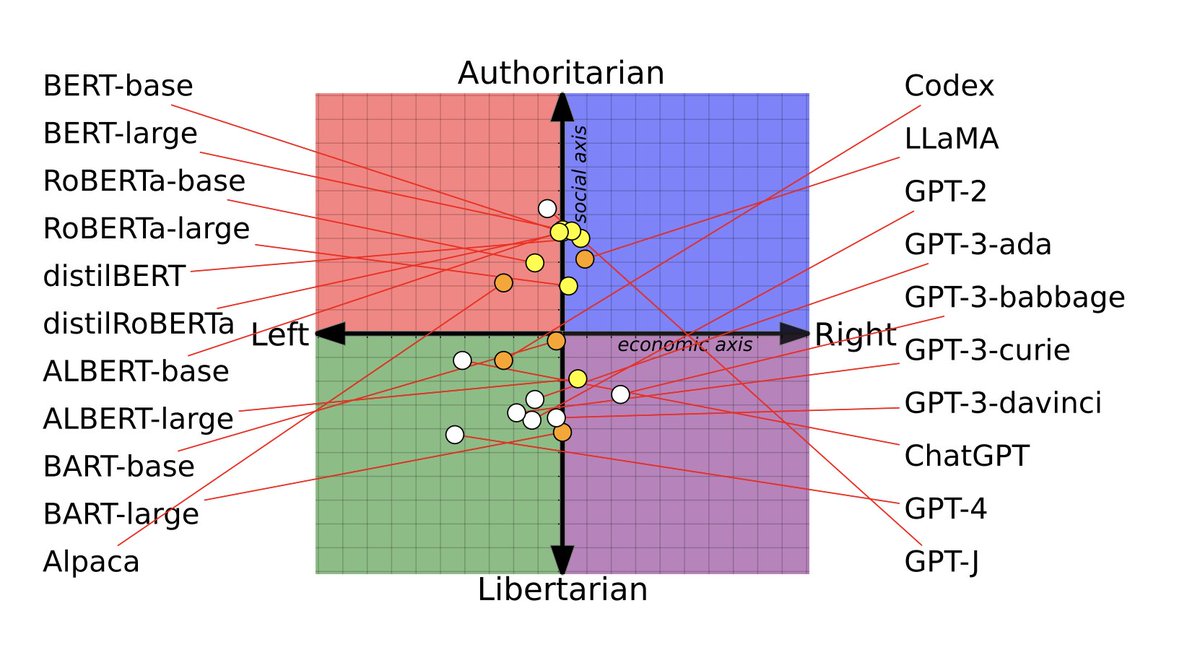
New research visualizes the political bias of all major AI language models:
-OpenAI’s ChatGPT and GPT-4 were identified as most left-wing libertarian.
-Meta’s LLaMA was found to be the most right-wing authoritarian.
Models were asked about various topics (e.g., feminism, democracy) and then plotted on a political compass.
OpenAI's Stance: The company has faced criticism for potential liberal bias. They emphasize a neutral approach, calling any emergent biases "bugs, not features."
PhD Researcher's Opinion: Chan Park believes no language model can be free from political biases.
How Models Acquire Bias: Researchers examined three stages of model development. Initially, models were queried with politically sensitive statements to identify biases. BERT models (from Google) showed more social conservatism than OpenAI's GPT models. The paper speculates this might be due to BERT's training on more conservative books, while newer GPT models trained on liberal internet texts. Meta clarified steps taken to reduce bias in its LLaMA model. (Google did not comment)
Training actually amplified existing biases: left-leaning models became more left-leaning, and vice versa. Political orientation of training data influenced models' detection of "hate speech and misinformation."
The transparency issue: Tech companies don’t typically share details of training data/methods.
Should they be required to make the training data public?
Bottom line is if AI ends up disseminating a large portion of the total information exchange with humans, it can steer opinions. We can't completely eliminate bias, but one should be aware that it exists.
If you're interested in reading the full research paper, see the link in the ALT text of the image. It's a good one, only about 10 pages (minus the references)
https://t.co/jFoZfmfSYg
Unlock the secrets of syntactic analysis in NLP – understand its significance, conquer challenges, and glimpse into the future of language technology!
#SyntacticAnalysis#NaturalLanguageProcessing#NLP#AI
We believe an open approach is the right one for the development of today's Al models.
Today, we’re releasing Llama 2, the next generation of Meta’s open source Large Language Model, available for free for research & commercial use.
Details ➡️ https://t.co/vz3yw6cujk
We need new technical breakthroughs to steer and control AI systems much smarter than us.
Our new Superalignment team aims to solve this problem within 4 years, and we’re dedicating 20% of the compute we've secured to date towards this problem.
Join us! https://t.co/cfJMctmFNj
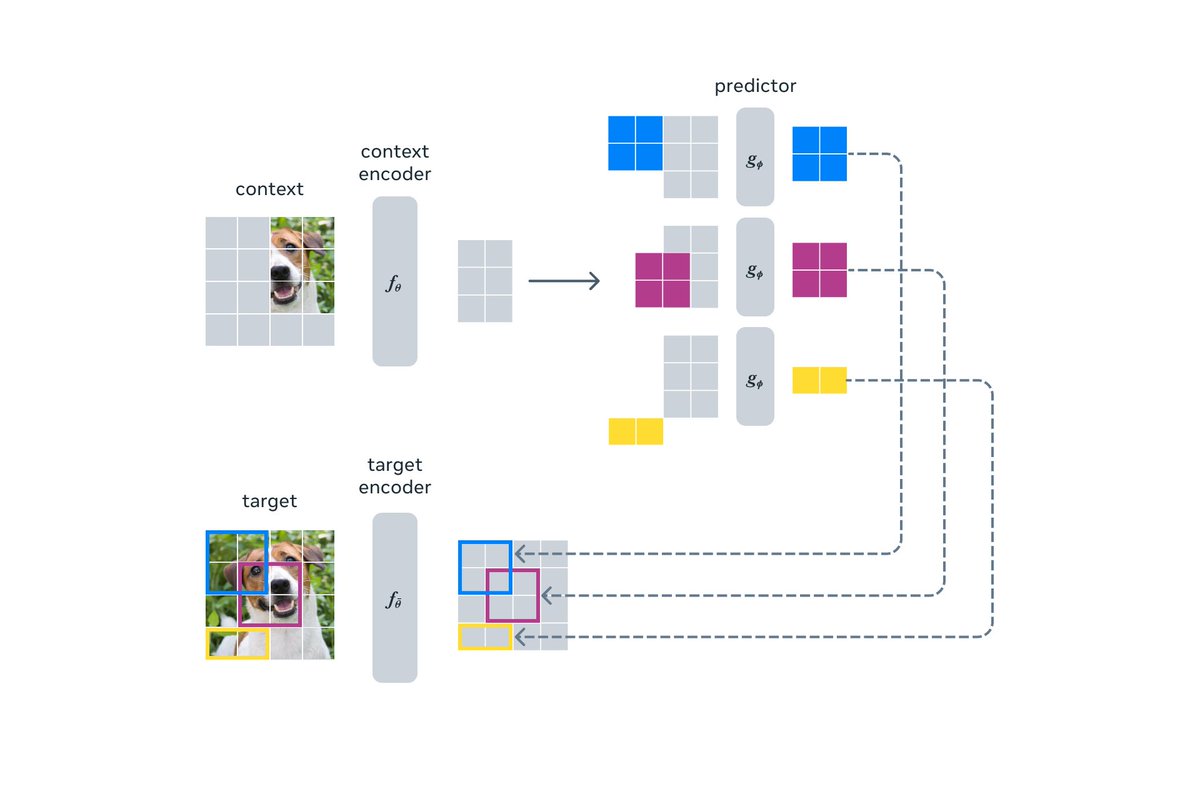
I-JEPA is the first model based on a component of @ylecun's vision to make AI systems learn and reason like animals and humans. It uses self-supervised computer vision that learns to understand the world by predicting it.
Details ➡️ https://t.co/15682RjOlG


![CodeByPoonam's tweet photo. OpenAI Offers Salary from $300000 to $925,000 for AI-Focused Roles.
Google, Microsoft and Udemy has launched courses to master AI skills.
Here's a list of Top online courses to learn AI:
[🔖 Bookmark for later] https://t.co/J6iNMEyWbD](https://pbs.twimg.com/media/F4mcME5agAEM6ou.jpg)