Hunger and the Insensitivity of Mr. President
I watched with deep concern the statement made by President Bola Tinubu to the Catholic Bishops who visited his office, that there has always been hunger in Nigeria, even before he was born.
While it is true that hunger has been a part of human life and has existed in our country for decades, such a statement appears insensitive to the plight of the millions of Nigerians who face worsening economic hardship today. More importantly, we must focus on the facts and the measurable outcomes of governance.
Before the present administration assumed office in 2023, an estimated 17 million Nigerians were facing acute food insecurity, primarily caused by insecurity, armed conflict, widespread banditry, and devastating floods. Today, less than three years later, that number has risen to about 35 million Nigerians. Instead of improving the situation, the crisis has worsened significantly under the current administration.
The same trend is evident in poverty. Before this government took office in 2023, Nigeria’s extreme poverty was estimated at 87 million people. Current projections suggest that this number is approaching 140 million people, making Nigeria home to the largest population of people living in extreme poverty anywhere in the world.
No one disputes that this administration inherited serious challenges. However, leadership is measured not by the challenges inherited but by the results achieved. The government must honestly acknowledge that its response has fallen far short of what the situation demanded, with millions more Nigerians pushed deeper into poverty and hunger.
The combination of persistent insecurity, poor economic management, fiscal indiscipline, wasteful public expenditure, and inadequate investment in productive sectors has compounded the suffering of ordinary Nigerians.
A responsible government must prioritise investment in education, healthcare, agriculture, security, and small businesses while pursuing policies that create jobs, expand production, and lift people out of poverty. That remains my commitment to the Nigerian people.
A New Nigeria is Possible. PO
I want to be fair to @PeterPsquare . He is not wrong that French opens doors Igbo does not. He is not wrong that parents get to decide how they raise their own children. But I guess he underestimates the fact that he is not just any parent. P-Square is a name millions of Igbo people grew up admiring, their success made them proud to be who they are. People all over the world sang their songs using Igbo words. So when a voice like that says Igbo is not worth passing on, it does not land like one man’s private choice. It gives permission for a belief a lot of people were already quietly carrying, that English and French, in short anything foreign, sits above Igbo, that their native language is something to graduate out of rather than something to hold onto.
I am not Igbo. I am Swiss. But my husband made it clear from the beginning that our children would speak Igbo, and I have never once seen that as a burden or a complication. Our children speak Swiss German, English, and Igbo at home, German at school, and now French as well, since that is part of their school curriculum too. Five languages, and none of them fighting each other for space. That is the part people forget when they frame this as a choice. Children do not need to pick one language to be strong in. They can navigate several at once, easily.
It is adults who turn language into a competition. Children just absorb what is spoken to them and grow fluent in all of it.
A language is not only a tool for getting ahead. It is also a rooting tool, the place where love, memory, and belonging live. It is the specific way a grandmother scolds you and forgives you in the same breath. It is a joke that only works in the original. Lose the language, and you do not just lose a skill. You lose a room in your own house, one you can still visit as a guest but never quite live in again. That is what worries me most in this conversation. A child who cannot speak their father’s or mother’s language will, at some point, stand in that homeland and feel like a stranger. Not unwelcome, not unloved, just outside something that was supposed to be theirs by birth.
One day, my sons will be handed a kola nut, and in that moment, no one should have to do it for them. They should know how to receive it, how to speak over it, how to break it themselves, not pass it along to someone else because they never learned the words or the meaning behind them. That is such a small moment, and yet it says everything. It is the difference between being someone’s guest and being someone’s own.
So when I hear “Igbo is useless,” what I actually hear is a wound that has not healed.
From the outside, I have watched how often English or French get treated as the languages worth keeping, while Igbo gets treated as the one you can afford to let go of. That preference did not come from nowhere. It is a colonial hierarchy that convinced generations of people that closeness to their own culture was a limitation rather than a foundation. I don’t say this to shame anyone, least of all a man raising his own family the best way he knows how. I say it because the people who shape how we see ourselves carry a weight beyond their own households, whether they asked for it or not.
My hope is simple. That we stop treating our children’s languages as a competition with only one winner. That we let them have both the world and their roots, and trust that they are capable of holding both without ever having to choose.
One thing that deeply worries me about Nigeria is this:
Some dreams are almost impossible to achieve if you're born, raised, and educated here.
Want to become an astronaut? There is virtually no pathway.
Want to become a world-class professional footballer? For most talented children, the route is far harder than it should be because the development ecosystem is weak.
And there are many other careers where your biggest obstacle isn't your talent, it's your geography.
This is why some Nigerians have to leave the country, not because they hate Nigeria, but because that's the only way to fully pursue their dreams.
That should concern all of us.
A child's future should be determined by their ability and hard work, not by the accident of where they were born.
Nigeria has no shortage of talent.
What we're missing is a system that allows talent to become greatness.
I need your honest opinion on this.
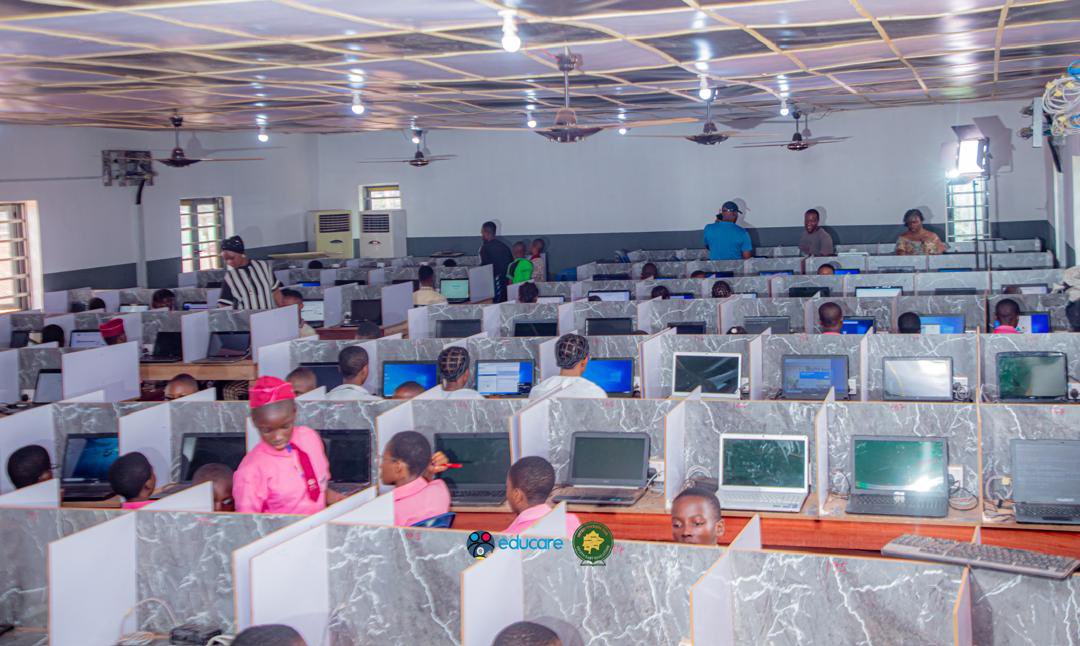
I think it's time we introduce the South East STEM Olympiad alongside the South East Maths Olympiad. One registration covers both competitions.
Our children have significant gaps in science, and we need to fix that as soon as possible.
I'm thinking we should split the prize money between Mathematics and Science.
We can hold both competitions on the same day but at different times.
I've been studying several world-class science curricula that are built on higher-order thinking and real-world application. We can develop our own curriculum specifically for the competition and share it with schools across the South East so they can prepare their students effectively.
What do you think?
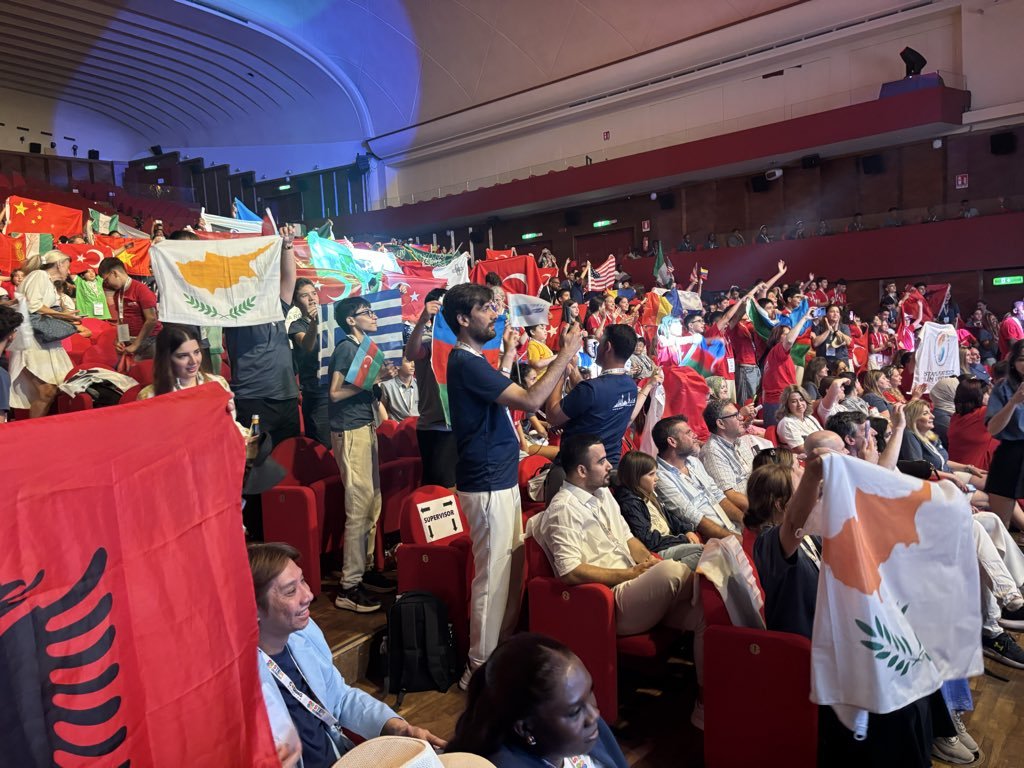
Nigeria has won 3 Gold medals at the International STEM Olympiad in Rome, Italy.
Onyedikachi Egejurum won a Gold medal in Mathematics in the World Primary Category.
Don Anele Munachimso won a Gold medal in Science (Grade 11).
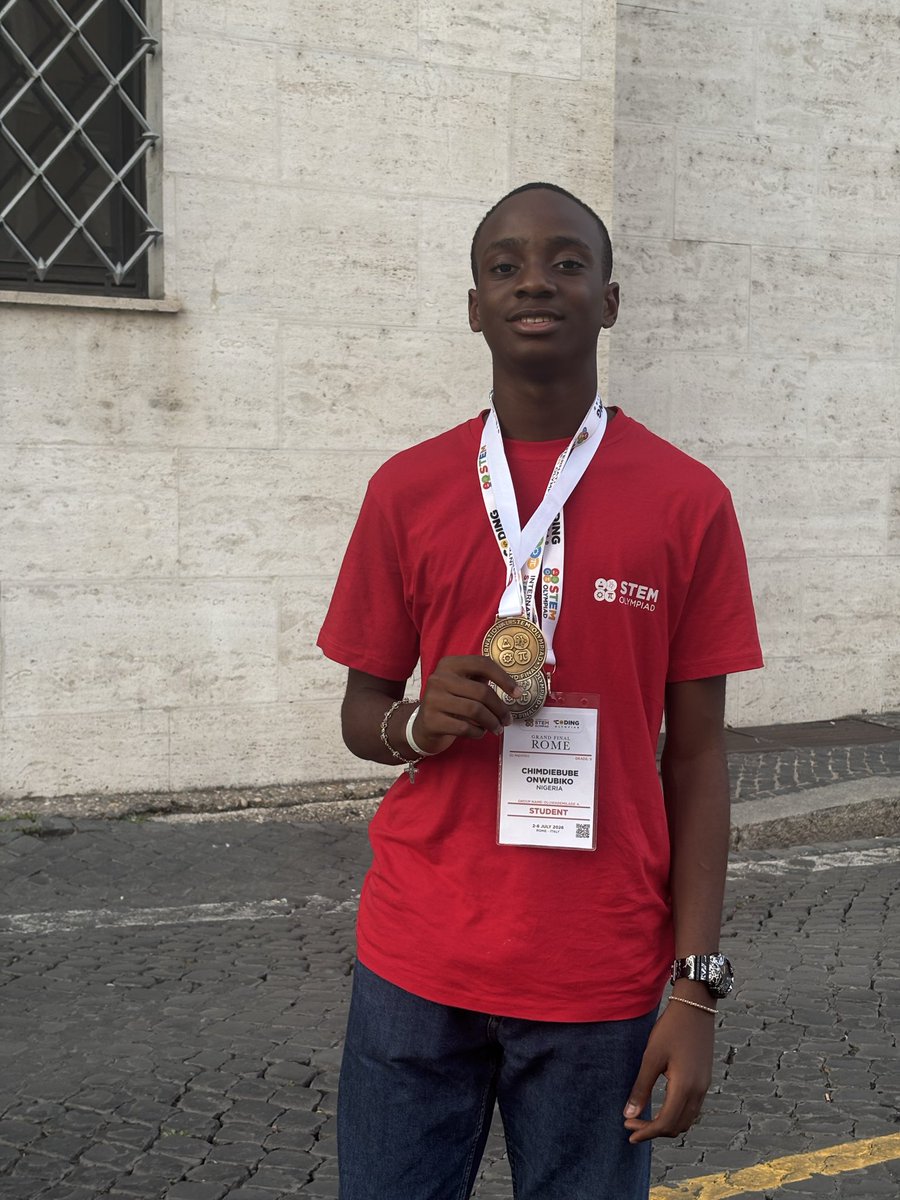
Chimdiebube Onwubiko won a Gold medal in Grade 9.
Chimdiebube Onwubiko won a gold medal at the International STEM Olympiad.
He is just 13 years old and currently in JSS3. He has finished _Engineering Mathematics_ by K.A. Stroud.
He has now proven himself on the world stage.
@winexviv I remembered when I came first in mathematics junior watch, my maths teacher was so happy that I proved her critics wrong cox they are reporting that she doesn't know how to teach us
The wait is over.
We have 2 golds: Chimdiebube Onwubiko and Don Anele Munachimso.
We are the best in the world!
Egejurum Onyedikachi’s name was omitted. He should have a gold.
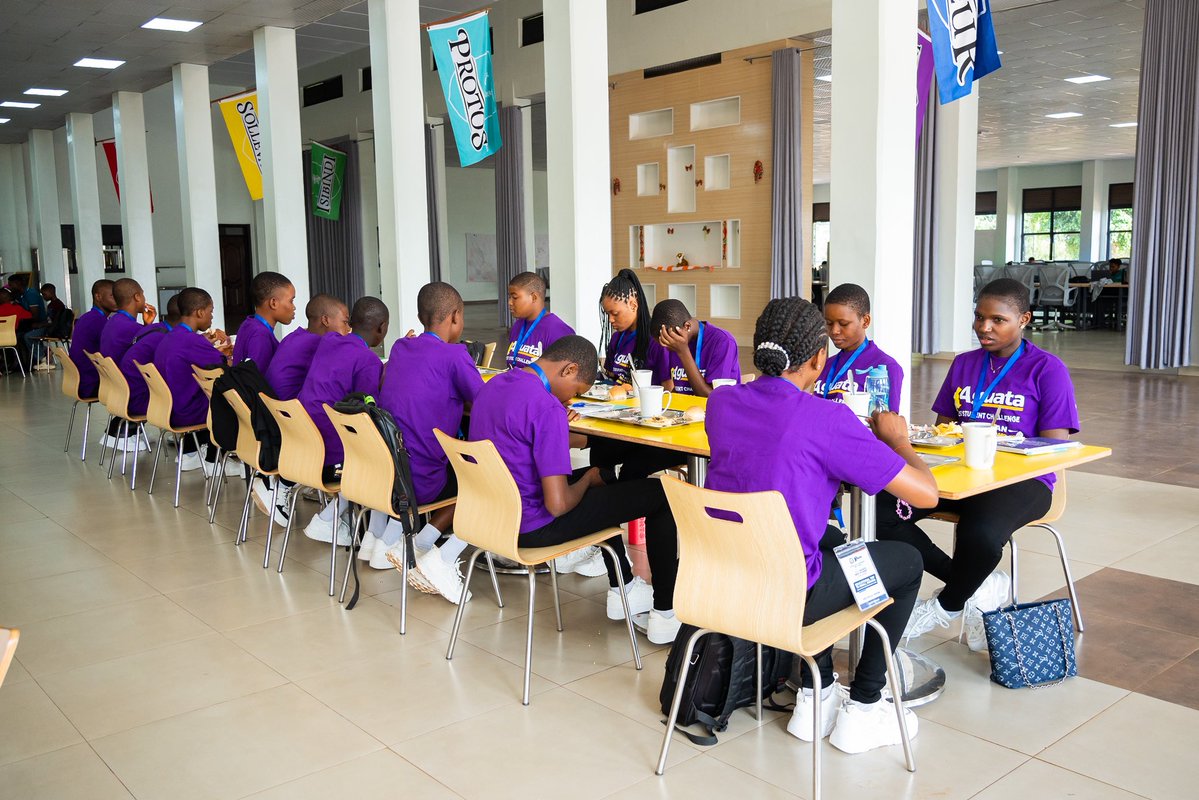
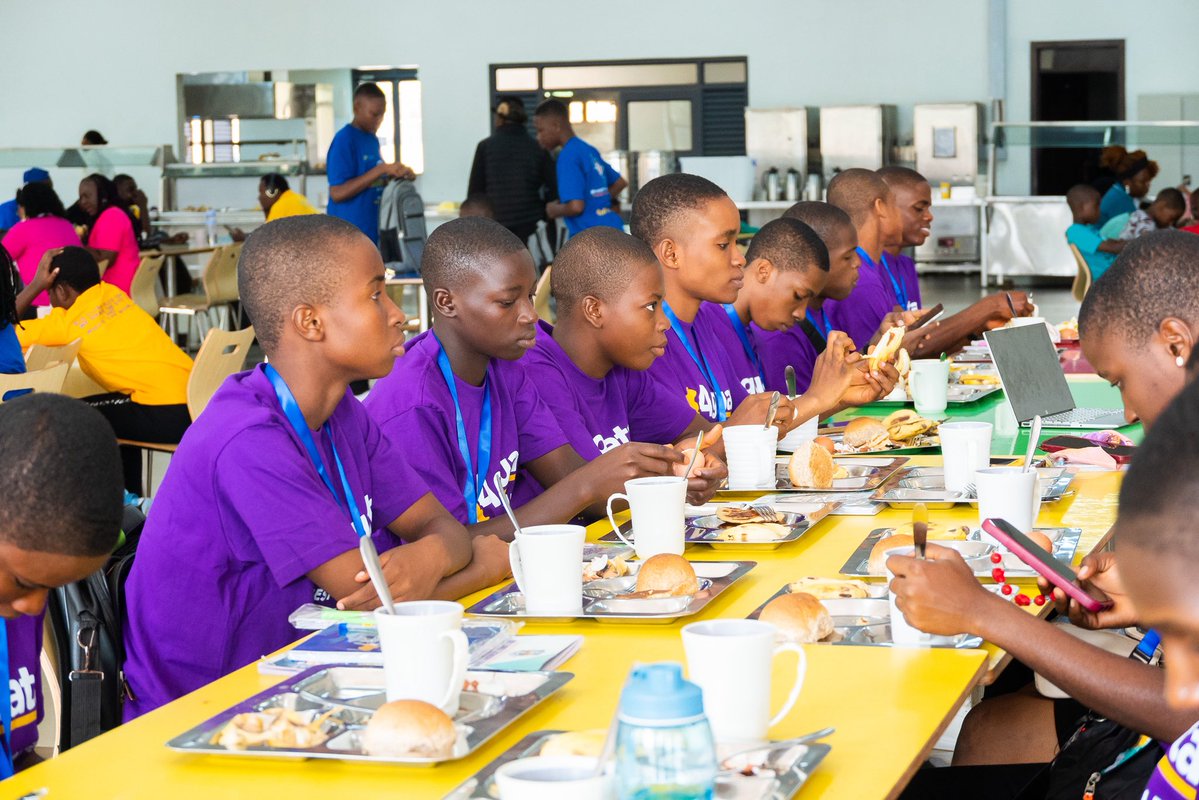
After long hours of travel, from Aguata to Lagos, and then to Kigali, Rwanda, our Aguata Champions have rested, recharged, and ready for a week-long of transformational activities.
When I look at them, I see possibilities.
Already at the Boot Camp are students from the United States of America, Cameroon, South Africa, Burundi, Uganda, Brazil, etc.
“The mind, once stretched by a new idea, never returns to its original dimensions." — Ralph Waldo Emerson
Our Champions will return to Aguata with the newness of mind and ready to conquer their worlds.
❤️💡
We made the South East Maths Olympiad open for every child irrespective of nationality or tribe to participate.
Living or schooling in the South East is the only qualification.
Registration is free to give every child opportunity to participate and experience greatness.
Just look at Master Chisom Unachukwu.
It’s rewarding to be a teacher.
He said the dream he couldn’t achieve as a student, he is now achieving it as a teacher.
Look at America, Europe and Canada today.
Indians are leading top companies, building global technology, running hospitals, teaching in world-class universities and occupying important positions across the world.
Look at China.
They moved hundreds of millions from poverty to global power by taking education, science, engineering, manufacturing and national planning seriously.
None of this happened by accident.
Nations that invest in human capital eventually export influence.
That is the path we must take.
We are not grooming children just to survive Nigeria.
We are grooming a generation that will compete with the best minds on earth.
Our education must move from survival to global domination.
The Disturbing Reports from Osun State University
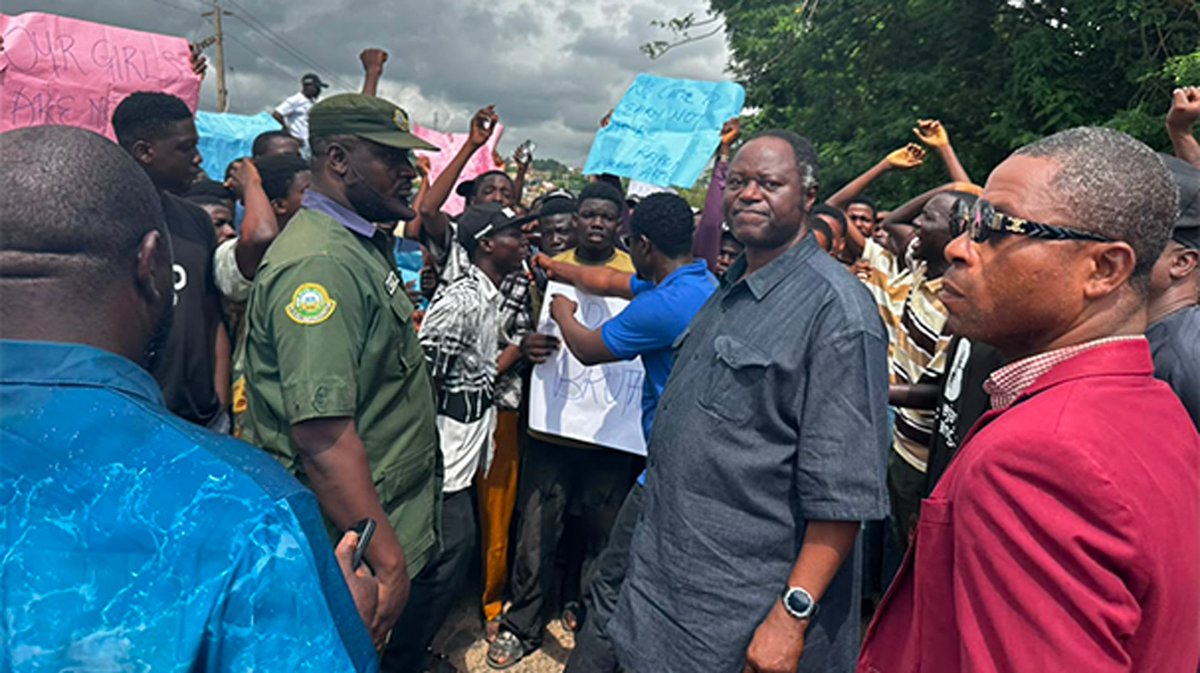
I have read with deep concern the troubling reports of soldiers invading students’ hostels at Osun State University, Osogbo, during which students were allegedly assaulted, humiliated, dispossessed of their personal belongings, and female students subjected to degrading treatment, including rape.
Every Nigerian deserves to be treated with dignity and respect. Our Armed Forces are renowned for their courage, discipline, and sacrifice in defending our nation. They are not known for such barbarity against the very citizens they are sworn to protect.
I therefore urge the military high command to conduct a thorough, transparent, and impartial investigation into these allegations. Anyone found culpable should be brought to justice. Holding offending personnel accountable will not only ensure justice for the victims but also preserve the honour and integrity of our Armed Forces while serving as a deterrent against future abuses.
A nation that respects human dignity builds confidence in its institutions. We must never tolerate impunity or the abuse of power.
A New Nigeria is POssible. -PO