🔖 | Eugen Rosenstock-Huessy, Out of Revolution
...the historical responsibility of revolutions for the universal past is not a trick. The sceptic who thinks he has freed himself from a necessary property of the human mind whenever he discovers and understands the special function of this property, overlooks the contribution made by the past to the future. The sceptic who loves to strip man of his historical garb is mistaken. To answer this disrobing scepticism, we must analyze the situation better. Revolution runs the risk of chaos. Revolution feels that an old order has died. When the spirit has left the body of an institution, the revolution breaks out. In this hour no language exists, or can exist, to lead people on. All the words and concepts that might be used are overloaded with associations rooted in the past state of affairs. All the words are dead, too! This complete destruction of the values connected with traditional words characterizes total revolution in contradistinction to the petty revolts, the Putsch, or the coup d’état.
🔖 | Peter L. Bernstein, Against the Gods
Without numbers, there are no odds and no probabilities; without odds and probabilities, the only way to deal with risk is to appeal to the gods and the fates. Without numbers, risk is wholly a matter of gut.
🔖 | Max Planck, Scientific Autobiography and Other Papers
A new scientific truth does not triumph by convincing its opponents and making them see the light, but rather because its opponents eventually die, and a new generation grows up that is familiar with it.
🔖 | Paul Tillich, Systematic Theology, Volume One
In gaining ordinary knowledge it is necessary to open one's eyes in order to grasp the object and to open one's mouth in order to communicate with other persons and to have one's insights tested. A genuine mystery, however, is experienced in an attitude which contradicts the attitude of ordinary cognition. The eyes are "closed" because the genuine mystery transcends the act of seeing, of confronting objects whose structures and relations present themselves to a subject for his knowledge. Mystery characterizes a dimension which "precedes" the subject-object relationship. The same dimension is indicated in the "closing of the mouth." It is impossible to express the experience of mystery in ordinary Ianguage, because this language has grown out of, and is bound to, the subject-object scheme. If mystery is expressed in ordinary language, it necessarily is misunderstood, reduced to another dimension, desecrated.
🔖 | Wassily Kandinsky, Concerning the Spiritual in Art
A first encounter with any new phenomenon exercises immediately an impression on the soul. This is the experience of the child discovering the world, to whom every object is new. He sees a light, wishes to take hold of it, burns his finger and feels henceforward a proper respect for flame. But later he learns that light has a friendly as well as an unfriendly side, that it drives away the darkness, makes the day longer, is essential to warmth, cooking, play-acting. From the mass of these discoveries is composed a knowledge of light, which is indelibly fixed in his mind. The strong, intensive interest disappears and the various properties of flame are balanced against each other. In this way the whole world becomes gradually disenchanted. It is realized that trees give shade, that horses run fast and motor-cars still faster, that dogs bite, that the figure seen in a mirror is not a real human being.
🔖| David Morgan, The Sacred Gaze
In order to understand the visual nature of religious experience and the cultural work it performs, we must recognize how seeing is intermingled with other forms of activity, such as reading, meditating, suffering, eating, dreaming, singing, and praying. Images shape religious meaning by working in tandem with other artifacts, documents, and forms of representation, such as texts, buildings, clothing, food, and all manner of ritual. Seeing is not an isolated or "pure" biological or cultural activity. It is part of the entire human sensorium, interwoven with all manner of behaviors and cultural routines.
🔖 | Gyorgy Kepes, The Language of Vision
The limitations of our nervous system define not only the number and extension of the individual optical units which can be perceived as a whole, that is, the space-span, but also the life-span of the visual experience. One cannot look at a static relationship long without losing interest any more than one can survive for long in a sealed room where supply of oxygen is soon exhausted. The image as a living experience cannot long exist in a frozen structure. For the image to remain a living organism, relationships without it must be constantly changing. The eye and the mind must be fed with changing visual relationships. Only this changing variety can provide the stimulation necessary for holding attention upon the picture surface….The ultimate range of a created image is defined by the available energies of attention.
📽️ | Alain Badiou, The Question of Love
Love as adventure and reinvention—a quest that draws us toward otherness and difference, away from the modern obsession with self.
https://t.co/R8qXcwujaB
🔖 | Douglas T. Kenrick, A Dynamical Evolutionary View of Love
The dynamic evolutionary model of love presumes that powerful bonds serve several distinct functions for human beings. The bonds with lovers, friends, long-term mates, and family members are consequently associated with very different evolved decision biases. The effects of those decision biases unfold in a dynamic way because the other players possess decision biases of their own. Consequently, there are different social dynamics and social geometries associated with the various kinds of love objects. Because those decision biases are flexibly calibrated to recurrent ecological factors, there will be biologically meaningful variations within and across societies that are linked to features of the prevailing social and physical environment. From this perspective, the key question is what the different forms of love do, not what they feel like.
🔖 | Ortega Y Gasset, On Love: Aspects of a Single Theme
Desire enjoys that which is desired, derives satisfaction from it, but it offers nothing, it gives nothing, it has nothing to contribute… Love, on the other hand, reaches out to the object in a visual expansion and is involved in an invisible but divine task, the most active kind that there is: it is involved in the affirmation of its object.
[…]
Loving is perennial vivification, creation and intentional preservation of what is loved… a centrifugal act of the soul in constant flux that goes toward the object and envelops it in warm corroboration, uniting us with it and positively affirming its being.
🔖 | Thomas Merton, Love and Living
But the price of a mathematical, quantitative concept of man (for instance in a positivistic and sociological approach) is that in reducing each individual to his own number it reduces him to nothing: and in making the mass of men simply a total of individual units, it makes of it an enormous statistical void—in which numbers simply proliferate without aim, without value, without meaning, without love.
The peril of this massive, numerical, technical concept of man is, then, that it destroys love by substituting the individual for the person. And what is the person? Precisely, he is one in the unity which is love. He is undivided in himself because he is open to all. He is open to all because the one love that is the source of all, the form of all, and the end of all is one in him and in all. He is truly alone who is wide open to heaven and earth and closed to no one.
Love is not a problem, not an answer to a question. Love knows no question. It is the ground of all, and questions arise only insofar as we are divided, absent, estranged, alienated from that ground.
Edward O. Wilson, The Origins of Creativity
🔖| Creativity is the unique and defining trait of our species; and its ultimate goal, self-understanding: What we are, how we came to be, and what destiny, if any, will determine our future historical trajectory.
What, then, is creativity? It is the innate quest for originality. The driving force is humanity’s instinctive love of novelty—the discovery of new entities and processes, the solving of old challenges and disclosure of new ones, the aesthetic surprise of unanticipated facts and theories, the pleasure of new faces, the thrill of new worlds. We judge creativity by the magnitude of the emotional response it evokes. We follow it inward, toward the greatest depths of our shared minds, and outward, to imagine reality across the universe. Goals achieved lead to further goals, and the quest never ends.
Elaine Scarry, On Beauty and Being Just
🔖| First, beauty is sacred…Second, beauty is unprecedented.…for to say that something is “sacred” is also to say either “it has no precedent” or “it has as its only precedent that which is itself unprecedented.” But there is also a third feature: beauty is lifesaving. …Augustine described it as “a plank amid the waves of the sea.” Beauty quickens. It adrenalizes. It makes the heart beat faster. It makes life more vivid, animated, living, worth living.
David Gelernter, Machine Beauty
🔖| How do the pieces add up? Great technology is beautiful technology. If we care about technology excellence, we are foolish not to train our young scientists and engineers in aesthetics, elegance, and beauty. The idea of such a thing happening is so far-fetched it’s funny—but, yes, good technology is terribly important to our modern economy and living standards and comfort levels, the “software crisis” is real, we do get from our fancy computers a tiny fraction of the value they are capable of delivering: we are a nation of Ferrari drivers tooling around with kinked fuel lines at fifteen miles per hour. We ought to start teaching Velazquez, Degas, and Matisse to young technologists right now on an emergency basis. Every technologist ought to study drawing, design, and art history. Ugly soft-ware—hence weak, late, broken, or obnoxious software—would still get built even if we did. Art education is no magic wand. But I can guarantee that such a course of action would make things better: our technology would improve, our technologists would improve, and we would never regret it.
Esther Sternberg, M.D., Healing Spaces: The Science of Place and Well-Being
🔖| It's like walking up a down escalator. You must keep taking a step up in order to remain in the same spot. Health is that spot, and healing is the perpetual march you must make to stay there.
But there is nothing which that nature teaches me more expressly [or more sensibly] than that I have a body which is ill affected when I feel pain, and stands in need of food and drink when I experience the sensations of hunger and thirst, etc. And therefore I ought not to doubt but that there is some truth in these informations.
Nature likewise teaches me by these sensations of pain, hunger, thirst, etc., that I am not only lodged in my body as a pilot in a vessel, but that I am besides so intimately conjoined, and as it were intermixed with it, that my mind and body compose a certain unity. For if this were not the case, I should not feel pain when my body is hurt, seeing I am merely a thinking thing, but should perceive the wound by the understanding alone, just as a pilot perceives by sight when any part of his vessel is damaged; and when my body has need of food or drink, I should have a clear knowledge of this, and not be made aware of it by the confused sensations of hunger and thirst: for, in truth, all these sensations of hunger, thirst, pain, etc., are nothing more than certain confused modes of thinking, arising from the union and apparent fusion of mind and body.
-Rene Descartes, Meditation VI
#healing





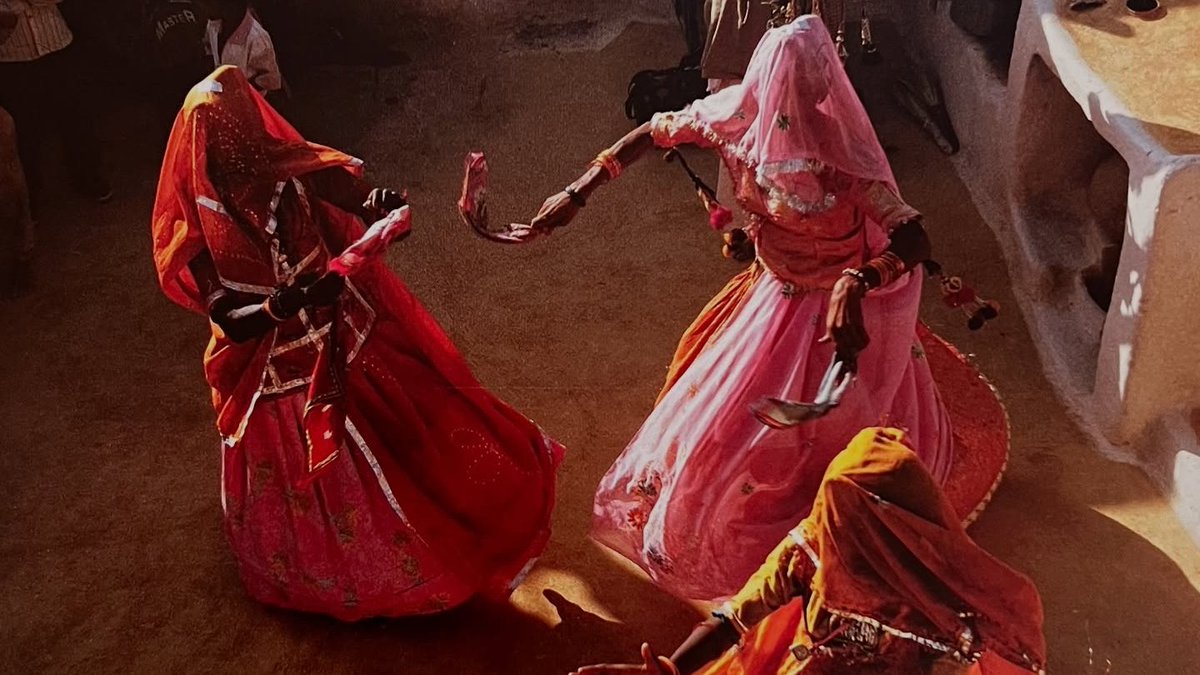
![future_remember's tweet photo. 🔖 | Ortega Y Gasset, On Love: Aspects of a Single Theme
Desire enjoys that which is desired, derives satisfaction from it, but it offers nothing, it gives nothing, it has nothing to contribute… Love, on the other hand, reaches out to the object in a visual expansion and is involved in an invisible but divine task, the most active kind that there is: it is involved in the affirmation of its object.
[…]
Loving is perennial vivification, creation and intentional preservation of what is loved… a centrifugal act of the soul in constant flux that goes toward the object and envelops it in warm corroboration, uniting us with it and positively affirming its being.](https://pbs.twimg.com/media/G-j685JXsAATvy5.jpg)


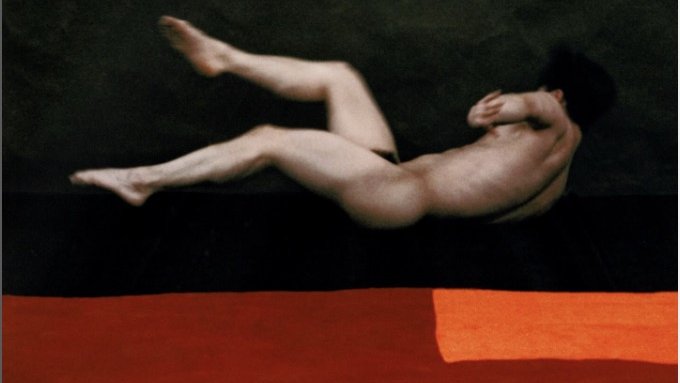
![future_remember's tweet photo. But there is nothing which that nature teaches me more expressly [or more sensibly] than that I have a body which is ill affected when I feel pain, and stands in need of food and drink when I experience the sensations of hunger and thirst, etc. And therefore I ought not to doubt but that there is some truth in these informations.
Nature likewise teaches me by these sensations of pain, hunger, thirst, etc., that I am not only lodged in my body as a pilot in a vessel, but that I am besides so intimately conjoined, and as it were intermixed with it, that my mind and body compose a certain unity. For if this were not the case, I should not feel pain when my body is hurt, seeing I am merely a thinking thing, but should perceive the wound by the understanding alone, just as a pilot perceives by sight when any part of his vessel is damaged; and when my body has need of food or drink, I should have a clear knowledge of this, and not be made aware of it by the confused sensations of hunger and thirst: for, in truth, all these sensations of hunger, thirst, pain, etc., are nothing more than certain confused modes of thinking, arising from the union and apparent fusion of mind and body.
-Rene Descartes, Meditation VI
#healing](https://pbs.twimg.com/media/Gyzlv75acAA2Tj2.jpg)


