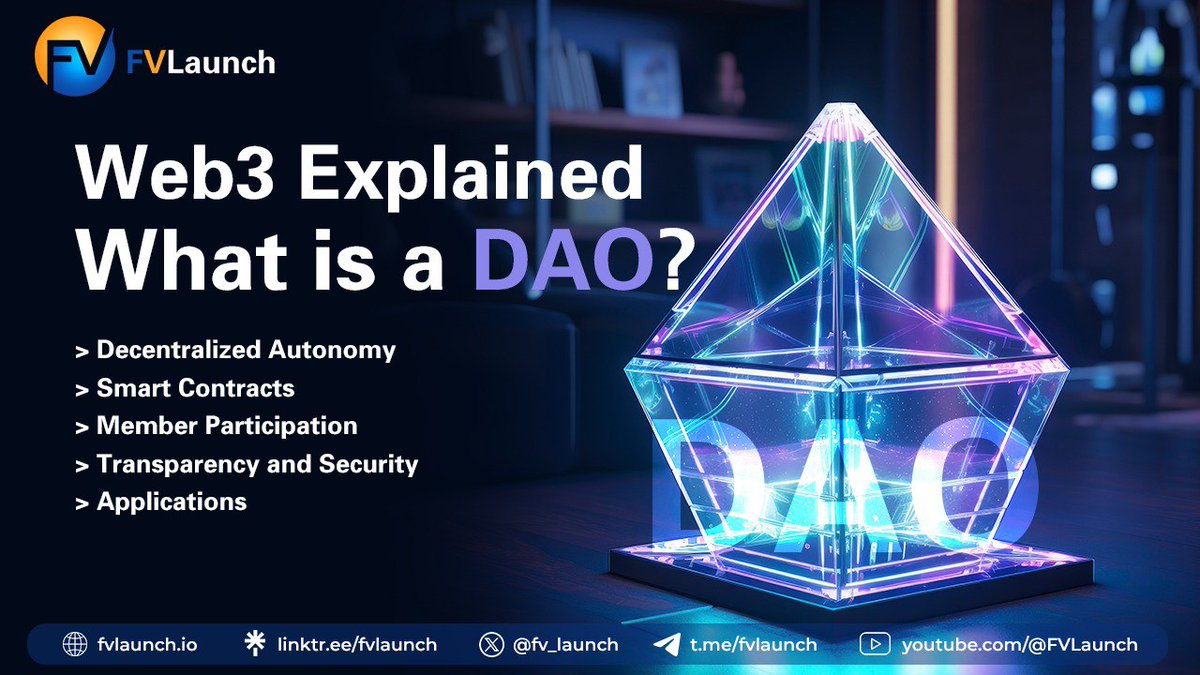
What is a DAO?
DAO stands for Decentralized Autonomous Organization. It is an organizational structure based on blockchain technology and smart contracts, designed to enable autonomous governance among its members without the need for a centralized management system
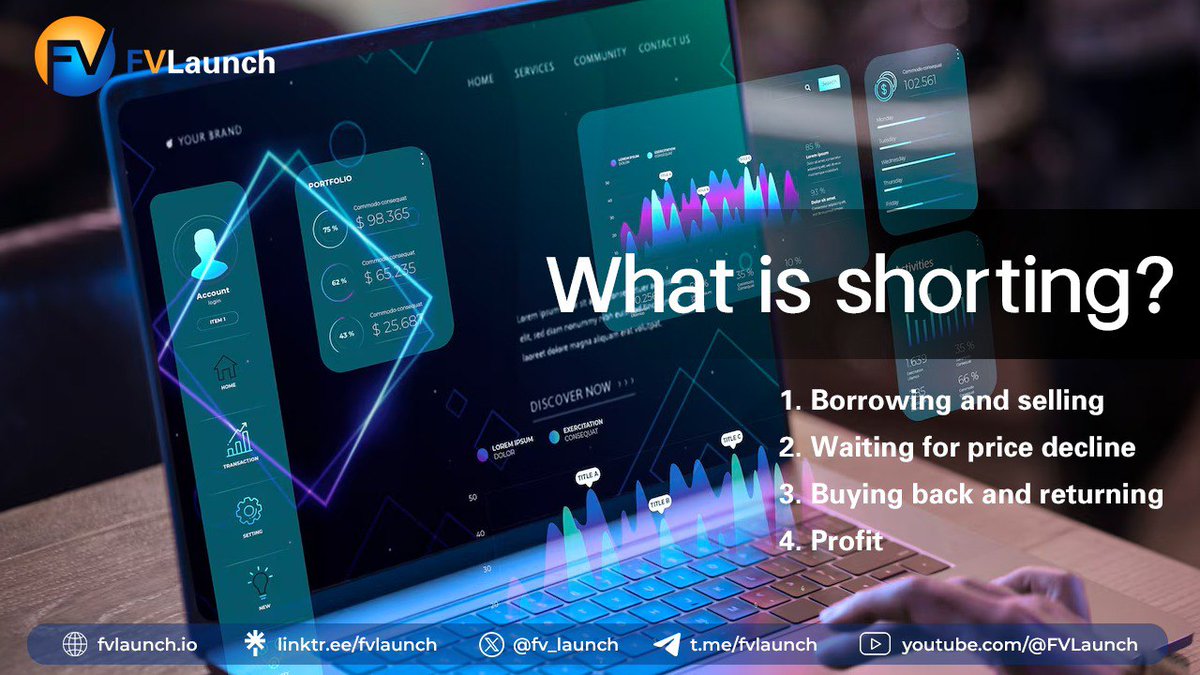
What is shorting❓
In the realm of cryptocurrency, "shorting" (Shorting) refers to a strategy employed by investors when they anticipate that the price of a particular cryptocurrency will decrease. Specifically, shorting cryptocurrency involves the following steps:
1️⃣ **Borrowing and selling:** Investors borrow a certain amount of the target cryptocurrency, typically through a platform or exchange, and immediately sell these cryptocurrencies.
2️⃣ **Waiting for price decline:** Investors expect the market price of the cryptocurrency to decrease, enabling them to buy back the same amount of cryptocurrency at a lower price.
3️⃣ **Buying back and returning:** When the market price drops to the anticipated level, investors purchase the same amount of cryptocurrency to return what they borrowed.
4️⃣ **Profit:** The difference between the selling price and the buying price (spread) represents the investor's profit. If the price drops significantly, investors can potentially earn substantial profits.
Shorting cryptocurrency requires investors to possess a deep understanding of and predictive ability in the market. It typically involves operations on exchanges or platforms that support short selling.
What is an ETF❓How does it differ from the actively managed funds we discussed earlier❓
ETF stands for Exchange-Traded Fund, which is an investment tool similar to stocks that can be traded on stock exchanges. ETFs typically track specific indices such as the S&P 500 or a particular industry index, and some are managed based on specific strategies. They are characterized by high portfolio transparency, flexibility in trading, and relatively low costs.
Compared to actively managed funds, ETFs differ primarily in their operational methods and management strategies:
1️⃣Operational methods: ETFs trade like stocks on stock exchanges, allowing investors to buy and sell shares on the market. Actively managed funds, on the other hand, have their shares typically bought or redeemed directly through the fund company.
2️⃣Management strategies: Most ETFs passively track a specific index, aiming to replicate its performance. The composition of their portfolios matches that of the index they track. In contrast, actively managed funds involve fund managers actively selecting investments based on market forecasts, individual stock analysis, etc., in an effort to outperform the market.
Introduction and Science Popularization: Blockchain, Cryptocurrency, and Bitcoin💡
Do you know Mona Lisa? It is currently the most famous, most frequently imitated, and reinterpreted painting in the world.
Bitcoin is the "Mona Lisa" of the cryptocurrency gallery. It is the highest valued and market capitalized token among all cryptocurrencies. It disrupts the central position of national central banks in the traditional financial system, giving the power of transaction and issuance to everyone. As of 2022, the Bitcoin system has been running for fifteen years. It has evolved from being unnoticed to having numerous transactions and being recognized by the laws of some countries, gradually proving its completeness and reliability. Now, let's take a look at blockchain.
Remember we mentioned earlier that cryptocurrency is like artwork in a gallery? This magical "paint" can create the Mona Lisa, and of course, it can also create other impressive works.
The technology and name of "blockchain" are derived from Bitcoin, but "blockchain" is not equal to "Bitcoin." From a development perspective, blockchain technology originated from Bitcoin and is the original core technology of Bitcoin. Bitcoin and cryptocurrency are an application form of blockchain technology, but blockchain technology can also have other application forms.
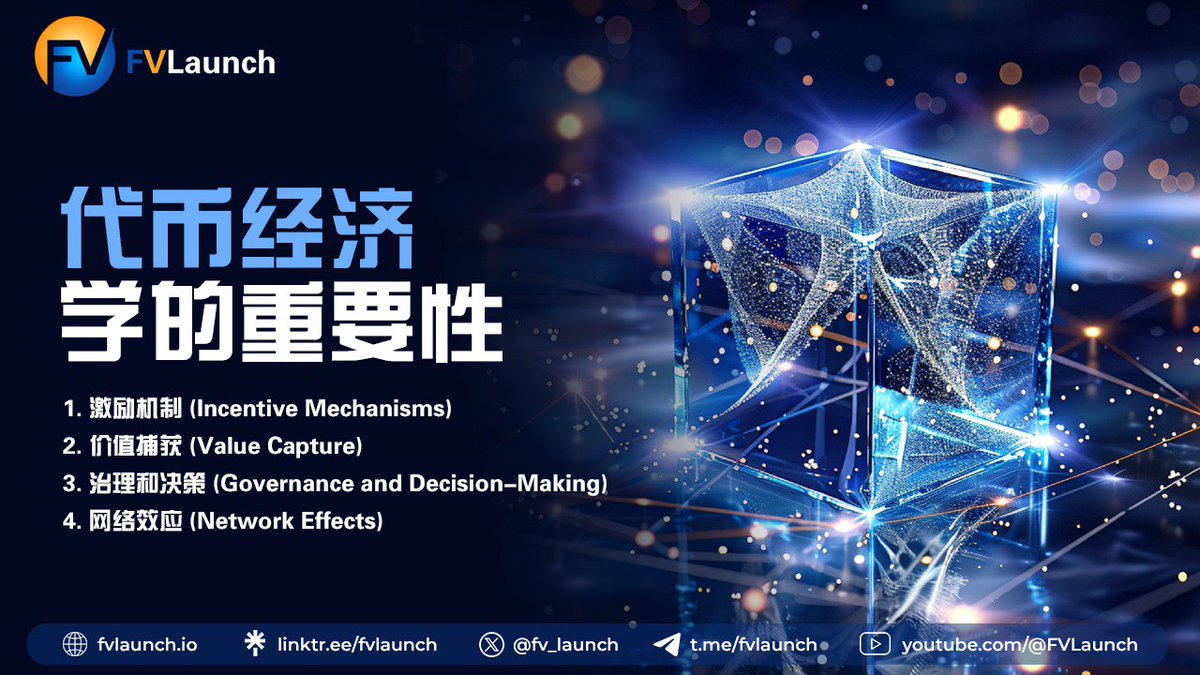
The Importance of Tokenomics💡
1️⃣Incentive Mechanisms: Well-designed tokenomics can incentivize users to participate in the network by providing computing power or other resources, ensuring the healthy development of the network.
2️⃣Value Capture: Through tokenomics design, a project can capture and distribute value, enhancing the project's sustainability and attractiveness.
3️⃣Governance and Decision-Making: Tokenomics can grant governance rights to token holders, making the project's decision-making process more decentralized and democratic.
4️⃣Network Effects: Good tokenomics design can promote network effects, attracting more users and developers to participate, thereby increasing the overall value of the network.
Key Aspects of Tokenomics💡
1️⃣Token Issuance:
Initial Distribution: Deciding how tokens will be initially distributed to users, for example, through ICO (Initial Coin Offering), IEO (Initial Exchange Offering), or IDO (Initial DEX Offering).
Total Supply: Determining if the total number of tokens is limited. If there is a limit, it is usually referred to as a fixed supply, such as Bitcoin's total supply being capped at 21 million coins.
2️⃣Token Allocation:
Founders and Developers: The project team usually retains a portion of the tokens as incentives.
Investors: Early investors may receive a certain percentage of tokens in the initial phase.
Community and Ecosystem: Allocated to community members, partners, and other ecosystem participants to promote project development.
3️⃣Token Utility:
Payment and Transactions: Tokens can be used as a means of payment or a medium of exchange.
Access: Holding tokens may be a prerequisite for using certain services or features.
Governance: Token holders can participate in project governance, such as voting on the project's future direction.
4️⃣Economic Incentives:
Mining and Validation Rewards: Tokens can be used to incentivize miners or validators to maintain network security.
Staking and Yield: Earning rewards or yield by staking tokens.
What is Tokenomics❓
Tokenomics is the study and management of the design, distribution, and administration of tokens within blockchain projects.
It combines the concepts of "Token" and "Economics" to explore how to design and manage tokens to incentivize user participation, ensure network security, and achieve long-term project development.🤝
Tokenomics in Web 3.0 Projects❓
Exploring the Role of Tokenomics in Web 3.0 Projects
With the development of blockchain technology, the number of Web 3.0 projects and decentralized applications (DApps) is increasing, and tokenomics plays a crucial role in them. 🆒
This article will explore how tokenomics models impact the sustainability and success of Web 3.0 projects and analyze the practical application effects of this model through successful case studies.👍
Web 3.0项目中的Tokenomics❓
Web 3.0项目中的Tokenomics(代币经济学)作用探究
随着区块链技术的发展,Web 3.0项目和去中心化应用(DApps)日益增多,代币经济学(Tokenomics)在其中扮演了至关重要的角色。🆒
本文将探讨Tokenomics模型如何影响Web 3.0项目的可持续性与成功,并通过成功案例分析这一模型的实际应用效果。👍
Different Types of Mining💡
In addition to proof-of-work (PoW), there are several other mining mechanisms, such as:
1️⃣Proof of Stake (PoS): In the PoS mechanism, nodes (called validators) are chosen to create new blocks based on the amount and duration of the cryptocurrency they hold. PoS requires less computational power, making it more energy-efficient.
2️⃣Delegated Proof of Stake (DPoS): DPoS is a variant of PoS where holders vote to elect a certain number of representatives (called supernodes) to verify transactions and create blocks.
3️⃣Leased Proof of Stake (LPoS): LPoS is a variant of PoS where holders can lease their coins to other nodes to increase their chances of validating transactions.