Fifteen years ago, @Coursera and online courses changed education. It worked better than almost anyone expected, expanding access by opening up where you can learn. But how you learn remains largely the same as it has for centuries: it is still one-size-fits-all, taught the same way to each person who shows up.
We now have an opportunity to change how learning happens. With advances in AI, we can now build a custom learning guide for each person. We will turn learning from one‑to‑many to one‑to‑one. I'm starting LearnVector to invent this next generation of learning. We are starting with a $100M investment from Coursera, and plan to collaborate closely with Coursera and Udemy.
Good learning needs much more than just a chatbot. Research shows that chatbots without guardrails harm learning. They help complete tasks and enable students to do better on homework. But cognitive offloading to a chatbot results in them being less skilled. And, you cannot always trust what a chatbot tells you.
In contrast, LearnVector will plan a path with you, adapt to how you learn, and patiently stay with you until you’ve mastered new skills.
One thing has not changed in all this time. People want learning they can trust: material that is accurate, relevant, and worth the effort you put into it. Anything less wastes the most valuable thing a learner has: time. Coursera has a trusted library of materials from authoritative sources. LearnVector plans to work with Coursera to bring this trustworthy learning to everyone. I'm grateful to Greg Hart and the entire Coursera team for supporting LearnVector.
I look forward to working with our talented team to change how we learn, and accelerate human development.
https://t.co/TqFUDFd1hb
Announcing OpenWorker! An open-source agent that doesn't just chat with you, but delivers finished work -- like hand you a polished document, send a slack message, or update a calendar entry.
Ask it to prepare a customer brief, untangle your calendar, draft a report, or triage a Slack alert. It works across your files and everyday tools, produces the deliverable, and checks in before doing anything consequential.
OpenWorker runs on your Mac, with Windows support coming soon. It does not lock you into any one model. Bring your own API key and run it with GPT 5.6 Sol, Claude Fable, Gemini 3.6, an open weight model (like Kimi, GLM, DeepSeek, Inkling), or Ollama to keep your data local. Your data does not leave your machine except through an LLM provider and integrations that you choose.
@rohitcprasad and I are building OpenWorker because AI coworkers are an important way to get work done, and we want there to be an open, privacy-preserving, model-independent option. Check it out and let us know what you think!
Try it out: https://t.co/P0mGnI1o31 (requires your own API key)
Source code: https://t.co/NYCiTD6hSq
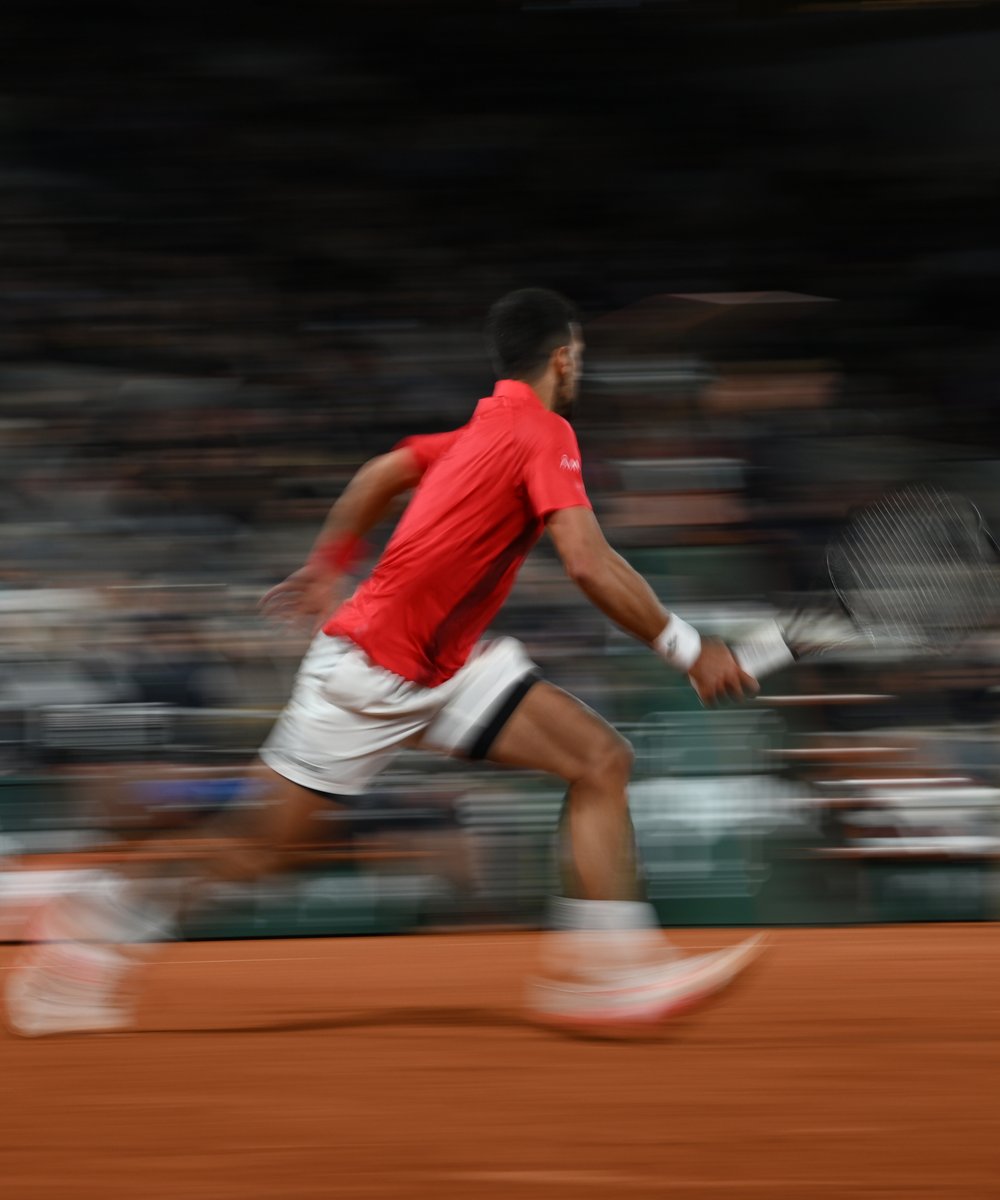
Está históricamente comprobado que un niño que creció en búnkeres, rodeado de guerras y misiles no puede convertirse en el tenista más grande de todos los tiempos. Solo que él no lo sabe.
Tennis superstar Novak Djokovic can speak 11 languages:
Serbian
Spanish
English
French
German
Italian
Arabic
Russian
Portuguese
Japanese
Mandarin
A champion beyond tennis.
Even though I’m a much better Python than JavaScript developer, with AI assistance, I’ve been writing a lot of JavaScript code recently. AI-assisted coding, including vibe coding, is making specific programming languages less important, even though learning one is still helpful to make sure you understand the key concepts. This is helping many developers write code in languages we’re not familiar with, which lets us get code working in many more contexts!
My background is in machine learning engineering and back-end development, but AI-assisted coding is making it easy for me to build front-end systems (the part of a website or app that users interact with) using JavaScript (JS) or TypeScript (TS), languages that I am weak in. Generative AI is making syntax less important, so we can all simultaneously be Python, JS, TS, C++, Java, and even Cobol developers. Perhaps one day, instead of being “Python developers" or “C++ developers,” many more of us will just be “developers”!
But understanding the concepts behind different languages is still important. That’s why learning at least one language like Python still offers a great foundation for prompting LLMs to generate code in Python and other languages. If you move from one programming language to another that carries out similar tasks but with different syntax — say, from JS to TS, or C++ to Java, or Rust to Go — once you’ve learned the first set of concepts, you’ll know a lot of the concepts needed to prompt an LLM to code in the second language. (Although TensorFlow and PyTorch are not programming languages, learning the concepts of deep learning behind TensorFlow will also make it much easier to get an LLM to write PyTorch code for you, and vice versa!) In addition, you’ll be able to understand much of the generated code (perhaps with a little LLM assistance).
Different programming languages reflect different views of how to organize computation, and understanding the concepts is still important. For example, someone who does not understand arrays, dictionaries, caches, and memory will be less effective at getting an LLM to write code in most languages.
Similarly, a Python developer who moves toward doing more front-end programming with JS would benefit from learning the concepts behind front-end systems. For example, if you want an LLM to build a front end using the React framework, it will benefit you to understand how React breaks front ends into reusable UI components, and how it updates the DOM data structure that determines what web pages look like. This lets you prompt the LLM much more precisely, and helps you understand how to fix issues if something goes wrong. Similarly, if you want an LLM to help you write code in CUDA or ROCm, it helps to understand how GPUs organize compute and memory.
Just as people who are fluent in multiple human languages can communicate more easily with other people, LLMs are making it easier for developers to build systems in multiple contexts. If you haven’t already done so, I encourage you to try having an LLM write some code in a language you’d like to learn but perhaps haven’t yet gotten around to, and see if it helps you get some new applications to work.
[Original text: https://t.co/NdjaPgwwuk ]
No hay estadística global en el mundo del tenis que no lidere Novak Djokovic.
El serbio se pasó el tenis al 100% el día que ganó el oro Olímpico.
El mejor de la historia, sin duda.
Reilly Opelka on Novak Djokovic:
"People like criticizing Novak. He has applied those concepts that he has in life like him having the courage to take a stand, not play both sides of the coin like how his peers do and face things head on is the reason why he's the undisputed greatest tennis player that has ever lived."
Djokovic, a lo largo de estos años...
-Ha donado MILLONES de € para inversión de Hospitales en Serbia
-Ha ayudado para que los niños enfermos puedan tener mejor acceso a recursos
-Ha financiado carreras a tenistas que no podían pagárselo
-Donó los 200.000€ que ganó en los JJOO a actos benéficos de su país
Y decenas y decenas de más cosas que no cabrían en un tuit. Cosas que, de haberlo hecho otro, habría abierto informativos. Pero claro, es Novak. Eso no vende.
Para gran parte de la prensa, se vendió como el 'villano'. Se necesitaba una figura como la suya, y se le pegó de manera indiscriminada por todo lo que hacía. Sí, se ha equivocado y ha cometido errores, como todos. Es un ser humano imperfecto, como somos todos, pero no merece ese trato. Se le ha estigmatizado al límite.
Déjenme decir una cosa, ojalá que antes de retirarse, Djokovic reciba el premio al tenista más querido. Porque se lo merece. No puede ser que el tenista más grande de todos los tiempos se vaya sin ese cariño de la gente. Federer y Nadal lo recibieron. Él también debería.
Desde gran parte de la prensa se le ha vendido como algo que no es. Sus actos permanecerán. Su nombre quedará escrito en la historia con letras de oro. Dentro de 100 años se hablará aún de ese tal Novak Djokovic. De aquellos que vertieron mierda sobre él no se hablará nada.
Ojalá que se valore la figura de Novak como merece antes de retirarse y estando en activo. Que no ocurra dentro de 30 años. El momento es ahora. Estoy seguro que muchos de los que ahora lo critican, lo hacen influenciados por lo que han leído o escuchado en prensa, y que un día entenderán lo que pasaba.
Porque sí, habrá un día que todos echen de menos a Djokovic y que reconocerán que se fue injusto con él. Aún estamos a tiempo de solucionarlo.