3️⃣ GQTY: A No-GraphQL client for TypeScript.
If writing GraphQL operations and configuring codegen for TypeScript is slowing you down, consider replacing your GraphQL client with no GraphQL client and using @g_qty instead.
https://t.co/P0ecJjjEAf
Stoked to share some announcement highlights from our first day of talks at the 2023 @appjsconf . You can re-watch them all (and catch day 2, which starts in ~8 hrs) on @swmansion's YouTube channel!
@bronifty @Jeansse It wasn't really decided until now. "Gee, cutie" sounds so funny, I added the pronunciation next to our logo in https://t.co/4ikY8WWnKf!
I think it’s smart to pay attention to what makes RPC popular - simplicity. It’s why Garph and others look interesting as well. Combined with @g_qty i think you get even better DX than any RPC, but also get amazing performance.
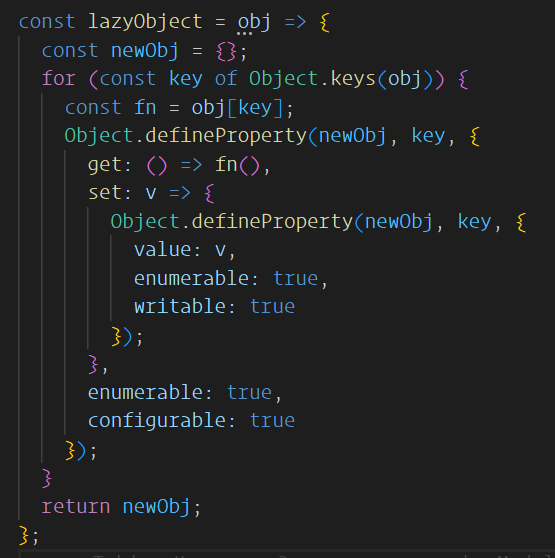
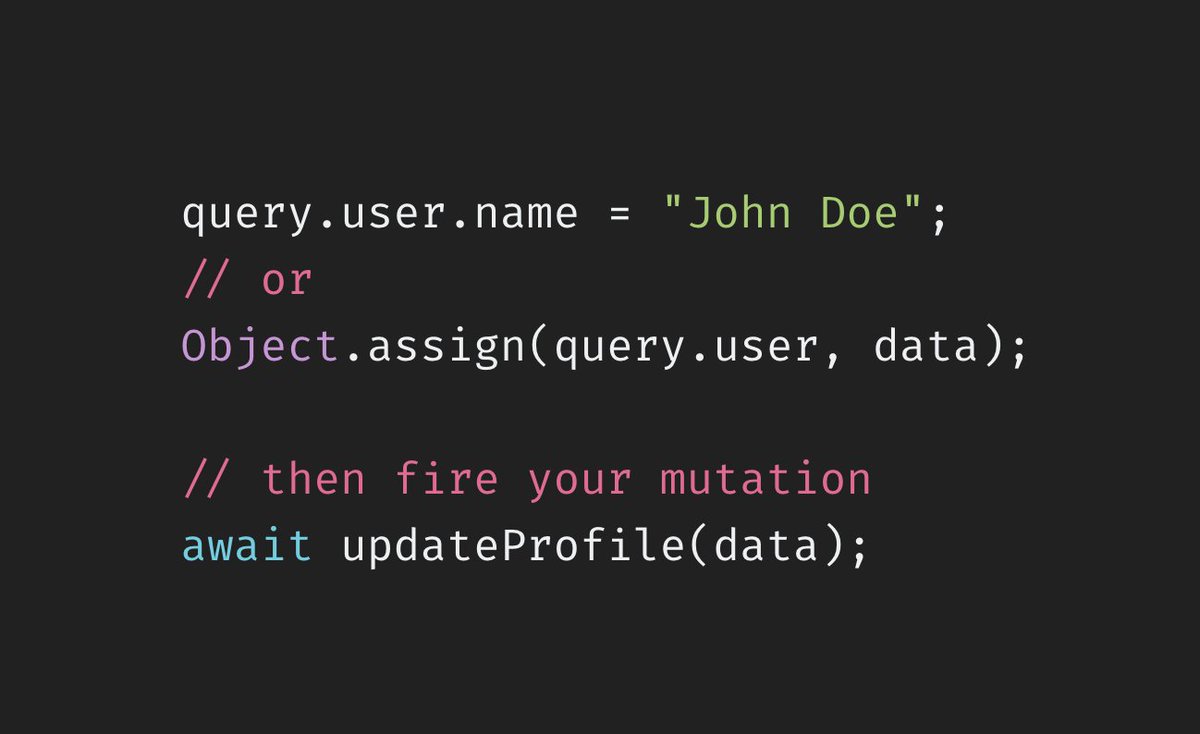
In the original now defunct @gqlessdev they had mutations where you just mutate the object directly which is beautiful.
That level of DX will win long term imo. Just needs more investment. The gqty site is being remade as it needs it desperately
Inspired by the amazing refetches in TanStack Query, our new major also gives you soft refetches that skips network on a fresh cache, on window focus, on interval and on each render.
You can literally start trying GQty in 10 secs, greenfield or brownfield.
Imagine rendering off the cache like the data is already there. Whenever you reach a scalar, we mark that in our pending query, and we combine and fetch all of them in the next tick.
So you have data colocation, query batching and fragments in one go.
Minus the learning curve.
A lot of devs these days are drawn towards RPC frameworks. When you ask them about their opinion on GraphQL, they usually think it's too complicated and too much overhead. When you ask them about Fragments, decoupled Components, Data masking, they usually don't even know what these concepts are.
So here's my prediction for the future. We will drive further into the RPC direction for a while until this cohort understands the drawbacks of RPC and REST compared to GraphQL.
Meanwhile more and more tooling will make the adoption of GraphQL, Relay and co easier and the whole ecosystem even more powerful.
At some point, this cohort will come back to GraphQL, realizing that the "overhead" is the price for making your frontend scalable.
This whole RPC story is super strong when all you have is a single NextJS app and you can keep everything in one single repository. But even at this stage, you'll already run into the limitations of not having "Fragments".
Once you scale beyond that one NextJS app, you really want to have a query style API with a client like Relay.