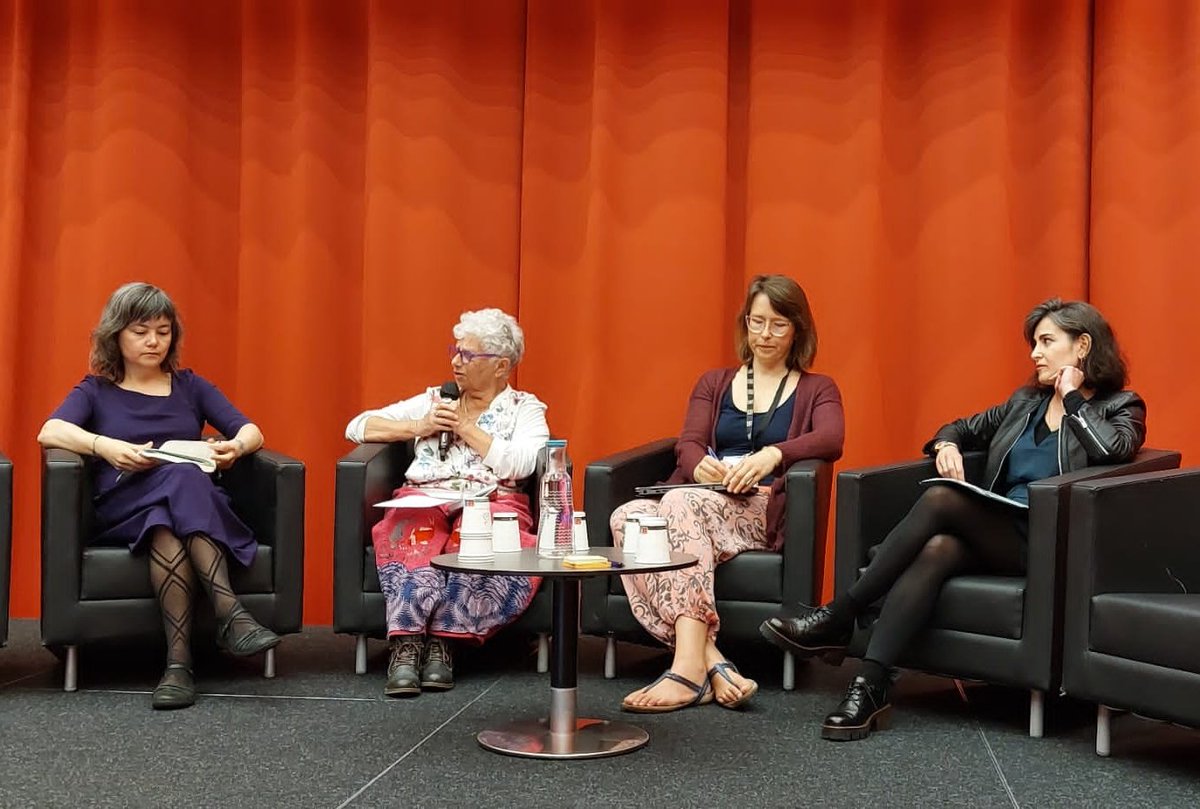
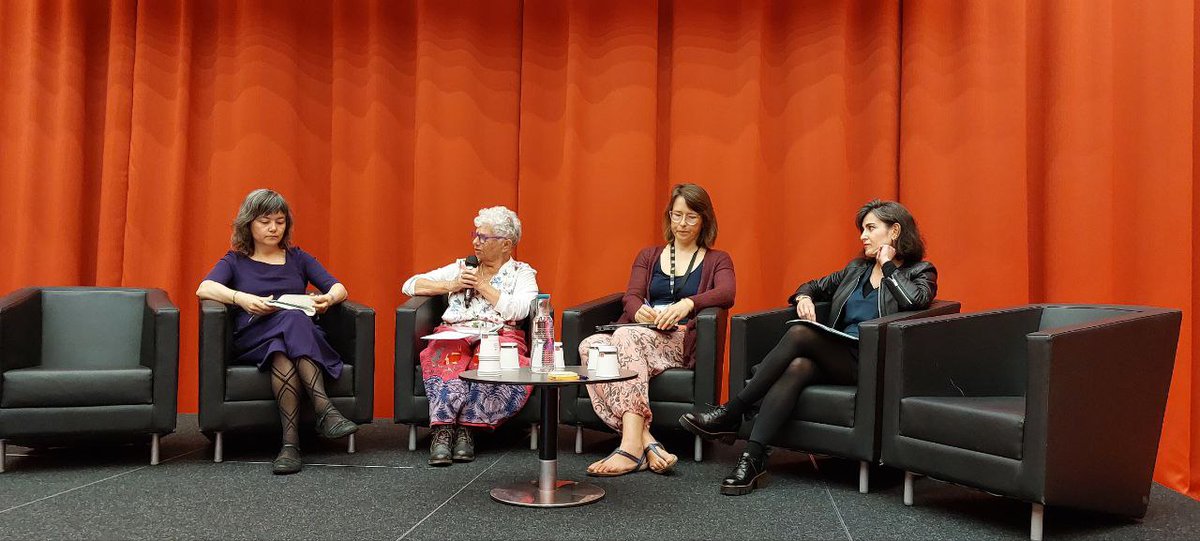
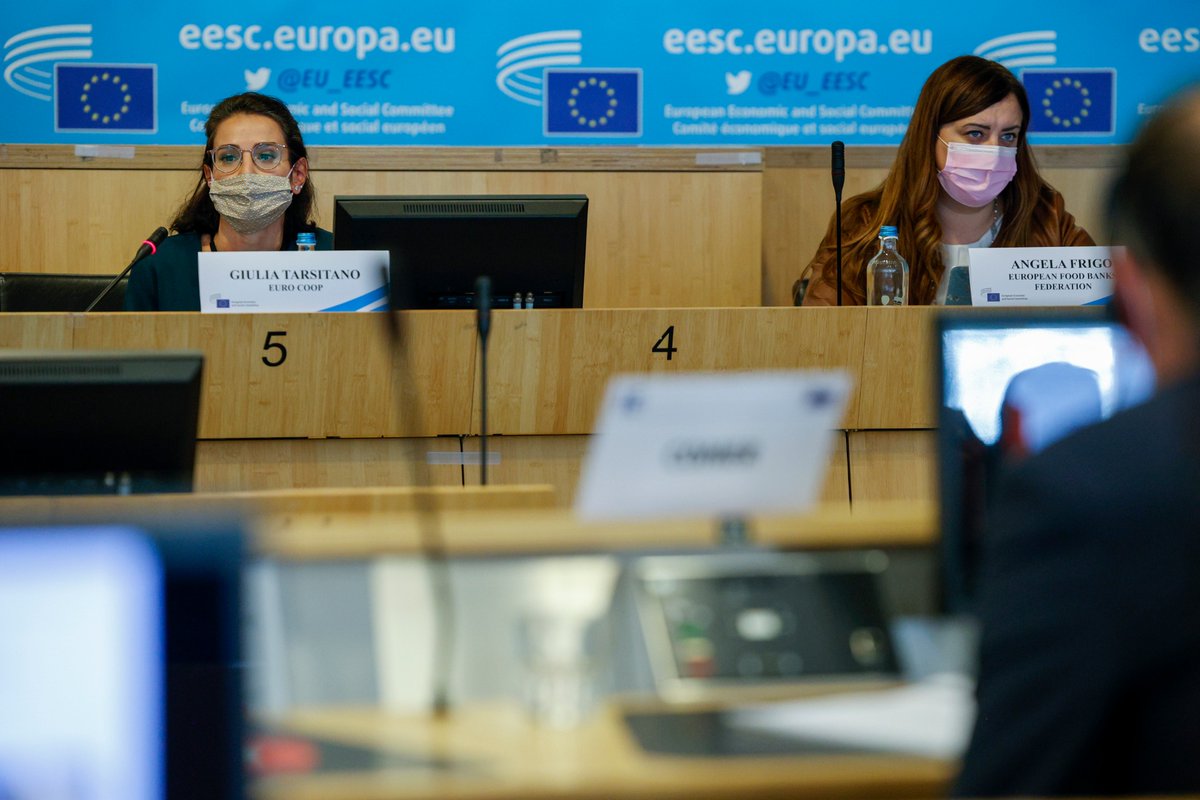
Wrapping up! How #social & solidarity #economy could lead the way in building the future #society?🤝Local #cooperation
🧘♂️Mental & physical health
🏘Fair housing
📚Modernise the educational system
📑Ambitious taxonomy & legislation
🏋♀️Empowering people
#Time2ScaleUp
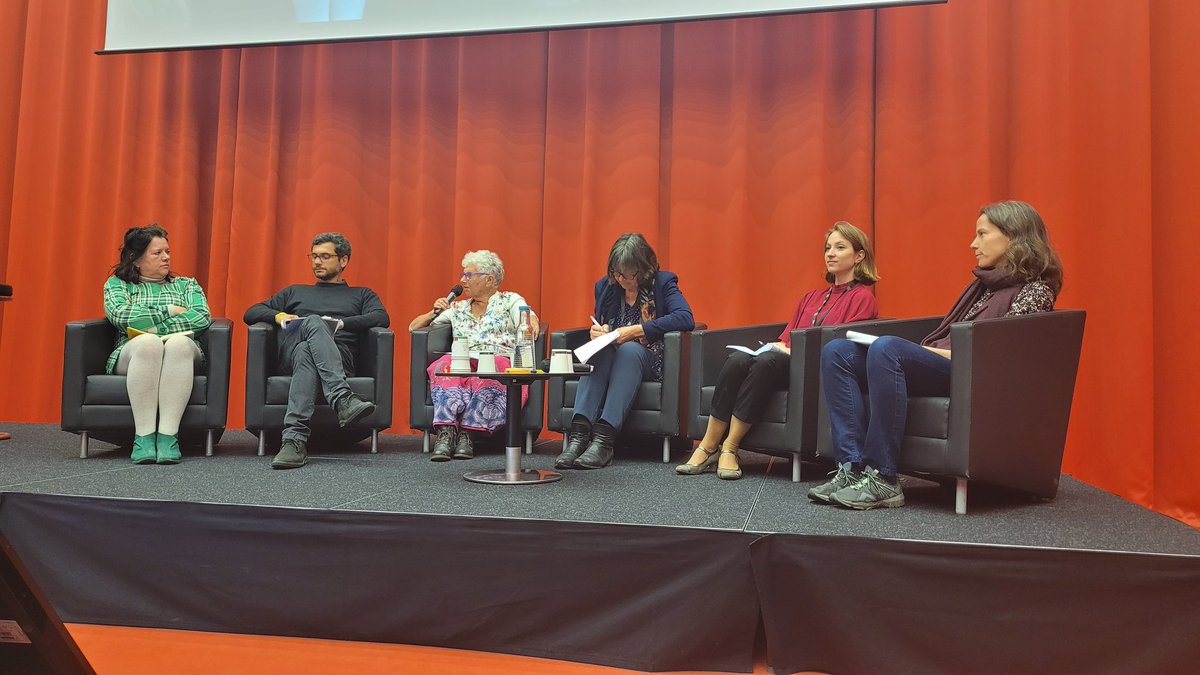
"How to strengthen the engagement and cooperation of #F2F and deck-to-dish actors for a co-creation of alternative and agroecological food systems in the EU"
The first roundtable has just started!
#𝗦𝗼𝗰𝗶𝗮𝗹𝗘𝗰𝗼𝗻𝗼𝗺𝘆, 𝘁𝗵𝗲 𝗳𝘂𝘁𝘂𝗿𝗲 𝗼𝗳 #𝗘𝘂𝗿𝗼𝗽𝗲 🇪🇺 ht
The second roundtable addresses the role of #research and #policy in supporting the food transition and the importance of civil society participation
#Time2ScaleUp
"Co-ops should be recognized by #EU policymakers as key economic actors for the twin transition and their participative model should be promoted among the youths and in the education sector"
Our intervention at #𝗦𝗼𝗰𝗶𝗮𝗹𝗘𝗰𝗼𝗻𝗼𝗺𝘆, 𝘁𝗵𝗲 𝗳𝘂𝘁𝘂𝗿𝗲 𝗼𝗳 #𝗘𝘂𝗿𝗼𝗽𝗲🇪🇺 htt
Let's not delay the #EUsustainability agenda but rather make progress even more rapidly!🤝
Let's focus on the REAL solutions for LONG-TERM benefits to us all #EUFarm2Fork 👀👉
"Considering all criticality factors, it is clear the food system would benefit from “rethinking”, rather than “optimising” where social values replace pure financial benefits at the core."
Our new #Sustainability🌱 article is out!👉 https://t.co/LYPSv8PHky
"Education and understanding of the #foodsystem are important but even more so it is ensuring that #consumers have sufficient and adequate ways to contribute"
Our Food Policy Manager intervention in the DISH Cluster event live now 👉https://t.co/Vu73ibD1DG
61% of EU’s cereals go to animals, according to the feed industry. Only 23% is used directly as food. So a drop in cereal imports would mainly affect animal feed. What we face in the EU is not a food crisis but a meat production crisis
But take cereals, one of the key commodities at stake: The EU is a NET EXPORTER of cereals & has a self-sufficiency rate of 112%. Last year, the EU exported 44.8m tonnes & imported only 19.7m tonnes. Source: EU data.
#Sustainability#labelling is a🔑step towards reaching #EUFarm2Fork & #EUBiodiversity🎯. We share our concern over substantiating green claims based on #PEF, a methodology designed for industrial goods, ill-suited for complex agri-food systems. Read our 📩 https://t.co/F8KU3tPjJs
What should be the key elements to take into account for an accurate #sustainable labelling methodology?
🔸Clear visual labelling
🔸Positive and negative impacts
🔸#Social sustainability
Get a quick insight! 👇
#Sustainable labels help thinking about products in a new, #ecofriendly way. Their main objectives focus on guiding consumers, giving products new marketability and, above all, establishing a shared #food system vision
👇Get an insight here!
🟦We asked the @EuropeanCommission to review the #NGTs legislation🧬as they use the same basic #GMOs techniques.
👉We believe the right for consumers to choose whether to use them should be always defended!
🇮🇹 Dear Italian friends, if you are interested in extraordinary stories of training, information and cooperation, you can't miss this podcast 👉 https://t.co/8IkdrAckE5
Discover more about Scuola Coop activities 👉 https://t.co/cvNlvENxI8
We wrote to @TimmermansEU urging him to ensure the @EU_Commission’s plan for #CarbonFarming drives a just, holistic, and ambitious agenda for ecosystem restoration, climate mitigation and adaptation in EU agriculture
Check out our 5 key demands: https://t.co/XvyX1D0E9b
How to build enabling food environments for #consumers?
📍Find out more about 7️⃣ entry points for action in the @EU_FPC policy brief 📄👉https://t.co/T3q3wtJZl4 #EUFarm2Fork