@EPoe187 “The most fundamental problem of politics,” Kissinger wrote in his dissertation, “is not the control of wickedness but the limitation of righteousness.”
A very climactic showdown between a bobcat and a rattlesnake. The epic battle, filmed in the Angeles National Forest, shows once again how felines' reflexes can overwhelm snakes' ones
[📹 Robert Martinez]
I love when you tell people you’ve been reading a number of books on pagan and Anglo-Saxon Britain, medieval and early modern folklore and customs, etc. and they ask, “Are you writing a dissertation?” No, I just like to learn. I have to know.
I had not realised before that the Bronze Age Collapse was literally *caused* by iron.
Bronze age powers like the Egyptians, Hittites and Babylonians used bronze weapons, made by combining copper and tin. Tin was so scarce that only the richest and most powerful groups could access it and the bronze weapons it allowed. (Tin was so rare that it was being transported from Cornwall to the Middle East more than 1000 years BC.) The scarcity of tin gave these empires a near-monopoly on violence.
Iron weapons are not actually any better than bronze ones – they're not stronger or easier to work with, as I'd assumed. They're just much, much easier to mass produce once you have bloomeries, which are the first furnaces that were hot enough to melt iron in a way that made them useable for weapons.
Bloomeries meant that iron ore, which was widespread, could be used to make weapons anywhere. That led to warlords, bandits and city-states rising in a massive decentralization of military power, which the Bronze Age empires were unable to resist.
After the invention of the bloomery, skeletons show a measurable increase in weapon-inflicted injuries. 'Destruction layers' with bones and signs of burning have been found from this time at archaeological sites including Troy. Ancient writers – including Herodotus, Ovid, and the writers of the Old Testament – believed the invention of iron had unleashed a new age of violence.
New at Works in Progress, WEAPONS OF MASS DECENTRALIZATION: how iron itself brought about the Bronze Age Collapse. And what technologies could do the same today?
https://t.co/Ni4DfPYBhr
Exclusive: The UK is exploring strengthening ties with Mauritius including helping it access more aid money, in a bid to manage relations after Trump vetoed the Chagos deal for the foreseeable
In a meeting at the UN this week, Foreign Secretary Ed Miliband told Mauritius’ Foreign Minister Dhananjau Ramful that Britain could support it in a range of areas, from trade to accessing climate financing and backing economic and development projects, sources say
Ramful says Miliband pledged “total collaboration” in identifying areas where Britain could provide support to Mauritius
Officials confirm they want to strengthen bilateral ties with Mauritius but stress they are not reopening negotiations over the deal nor offering it new British taxpayer money
One official says it’s essential to keep Mauritius onside given the Chagos deal now won’t proceed until Trump leaves the White House
UK officials are very concerned that in the longer-term, Mauritius could sue Britain or move closer to China, increasing the risk of Beijing interfering with the Diego Garcia base. They still think the sovereignty deal is the best option to secure the base post-Trump
In the meantime the UK needs to keep relations with Mauritius going. The island nation faces a budget deficit and needed the £165 million a year it would have got from Britain over the next three years if the deal had gone through
Even if the UK does not directly offer Mauritius more money, there are ways it could help it access financing such as through British International Investment, a development finance institution controlled by the government, and other international climate financing schemes
With @KB2803@EllenAMilligan: https://t.co/4rElMT2sed
🚨BREAKING: A Portsmouth father of two has been jailed for two years after throwing a plastic bottle towards a police line and swearing at police at illegal migrant protest in Portsmouth.
• Del Somerville, 42, is the first person jailed over the 6 September demonstration. He admitted violent disorder at Portsmouth Crown Court. About 120 migrants had been brought ashore by the RNLI after a Channel pickup.
• Judge Daniel Sawyer (right pic) called him a “thug” and said the sentence was meant to deter others after later protests. Body-worn video showed him throwing a small bottle at a police line on Ferry Road just before 23:30.
• Four other men charged with violent disorder from the same protest are awaiting sentence.
• For comparison, Judge Sawyer spared Bradley Tolfrey jail in May after he threw three knives at police officers, threw glass at the officers, threatened to slit their throats, spat at an officer, racially abused an officer, pretended to have a gun, covered himself in petrol and threatened to set himself on fire.
• Tolfrey, who had 21 previous convictions for 44 offences, and who committed the offences a month after a 26-week suspended sentence expired, was made subject of a 24-month community order.
• Judge Sawyer was recently investigated for harassment of a female barrister using an anonymous social media account after she complained about how rape victims are failed by the UK justice system.
I didn’t think I would post this again so soon, but one of the stop the boats protesters at Portsmouth has been jailed for two years for throwing a plastic bottle. The clown world has gone full circus.
Two years in prison for throwing a plastic bottle and swearing at police. Unacceptable behaviour, sure. But when far more violent criminals routinely receive much less punitive sentences - and sometimes avoid jail completely - how can this be justified?
A 16th-century Renaissance piece titled Stag with Herb Branch Mounted as a Ring...
According to museum records, smetime in the 16th century, a German man gave a woman this ring, maybe as a memento before leaving on a long journey. It features a stag holding leaves in its mouth, set in a pretty mount embellished with opals, pearls and enamel.
Rooted in medieval bestiaries, the motif refers to the belief that a stag struck by a hunter's arrow would seek out and eat dittany, a wild herb believed to make embedded arrowheads fall out by themselves.
Hence, many Renaissance love tokens and romantic allegories bear this image, with the stag's wound, represented here by the ruby, recalling the pain caused by Cupid’s arrow, and the herb carrying the promise that the hurts and sorrows caused by that very love would eventually heal.
(Material: Gold, white and green enamel, a ruby set into the stag's side, opals, and pearls)
Art Institute of Chicago
#drthehistories
While touristing in Canterbury I saw this lovely statue.
Checking who it was I saw that she was a writer, poet and SPY.
So I had to look her up and as far as we can know in 1666 Aphra Behn was our first woman spy ✊😎
https://t.co/qZGzV0YO0n
1/ Russian soldiers are telling their relatives that they are being forcibly tattooed on their chests with "death numbers" – their military ID numbers – before going on assault missions, presumably to make their bodies more easily identifiable if and when they are recovered. ⬇️
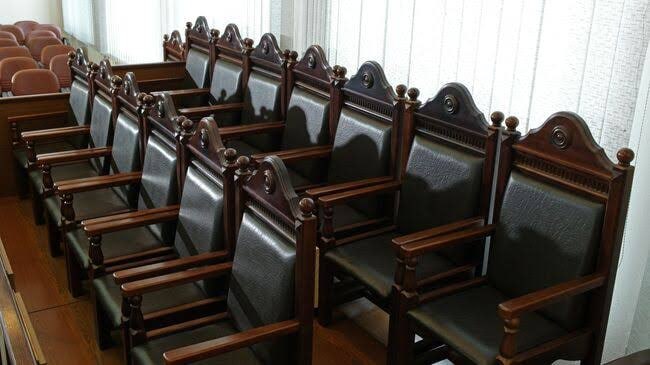
1/ Russian courts currently acquit 0.24% of defendants. The Russian government evidently believes this is too high, and is planning to effectively eliminate jury trials, which provide most of the acquittals. Lawyers are calling it "the death of the jury system." ⬇️
This is how Russia "strives for peace". In Staria Hnylytsia, Kharkiv region, the Russians killed six people at a vegetable warehouse - two men and four women. At the moment of the attack, they were sorting vegetables.
Another glorious victory for the Russian army.