From today, Works in Progress is now in stock at Barnes & Nobles nationwide across America.
We're in 570 stores in 49 states*, including the flagship stores at Union Square & Fifth Avenue in NYC; Georgetown, DC; State Street, Chicago; and The Grove, Los Angeles.
We're also now in Hudson News outlets across most major US airports, and the B&Ns at San Francisco Airport.
If you tweet (or LinkedIn/Insta post) a photo of a copy of Works in Progress outside any of these stores, share the post with me or @WorksInProgMag via DM and we'll send you a free tote bag as a thank you. If you're a subscriber already, feel free to do it with own copy!
You can see a full map of Barnes & Noble stockists here, and enter your Zip code to find your nearest store.
*Sorry, Wyoming, we'll get to you!
https://t.co/a22LtQP2HW
Government imposed policy costs make up 57% of the clearing price of a new flat in London and 42% of a new home in the Home Counties.
Despite a big housing shortage and positive planning reforms, new home starts in England are declining from 182,000 in 2022 to under 125,000 last year.
While the macroeconomic context has worsened with build cost inflation and high interest rates, the Government is imposing more burdens on new homes, not fewer.
Taxes, levies, planning, and mandates add over £440,000 to the cost of delivering a home in London and nearly £225,000 nearby, with several of these imposed recently like the Second Staircase, Future Homes Standard, Building Safety Levy, Biodiversity Net Gain and Residential Property Developer Tax.
Individually these may be justified, but together they are making new homes unviable.
As a result, large developers are buying less land and small builders are going out of business; nearly 4,000 construction firms went bust just last year.
If we want to build more homes, we should be easing the burdens on them, not adding more.
Making housebuilding viable again is the most important issue in housing policy and my co-author, Edward Donovan, has completed excellent modelling showing how big the challenge is.
Read the full report: https://t.co/NWS58oqbTx
And simulate what changing the policies does with Edward's modelling here: https://t.co/IVrLBax2pz
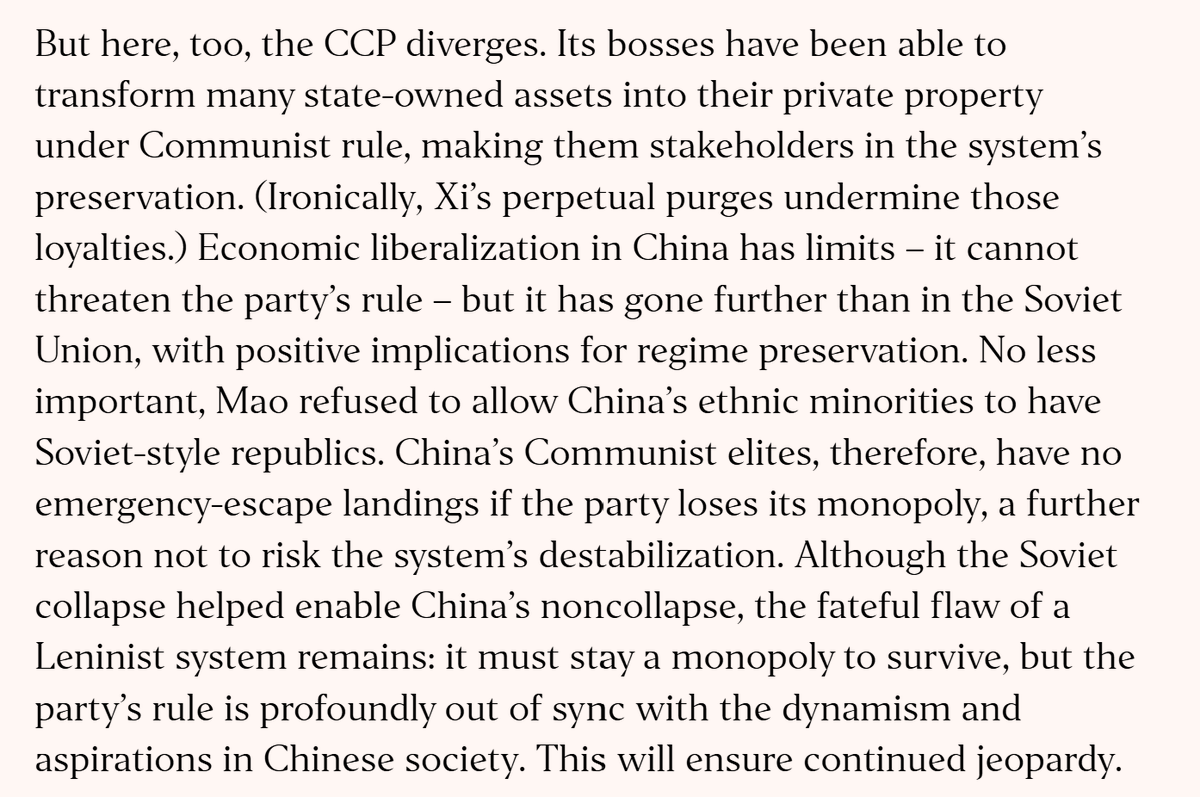
Insightful analysis by Kotkin on why Russia collapsed (hint: not "pope, nationalism, dissidents, economic collapse, Afghanistan, the military-industrial complex, or Reagan) and what China's CCP has done to avoid the fate of the Soviet Union.
What a pleasure it is going to be to read him every month at @wip_mag . https://t.co/CI1XMCuwe1
Stephen Kotkin is one of the great historians of Eurasia. In a new series for Works in Progress, he tackles the biggest question of them all: what went wrong between America and China? In the first part, he explains why we shouldn’t expect China to go the way of the Soviet Union. Beijing’s leaders have internalized the obvious lesson from Moscow: No Gorbachev. But they have also done something subtler: fix the incentives that made Soviet elites think that they had something to gain from ending communism.
https://t.co/dYAySlxKVy
We're looking for business writers!
Works in Progress is expanding into coverage of business and finance, and we're looking for freelance authors for extended feature-length pieces of 2,000-6,000 words. We will eventually be hiring full-time employees on this beat.
Find the most interesting company in the world, a brilliant financial model, or a telling and relevant piece of business history. Tell us why we should be fascinated by it too.
It could be the geography of an industry, like how Morocco grew to become an massive exporter of cars, or why Bangladesh can do in electronics what it has done with its massive textiles industry. It might be a piece on a new kind of business, like the firms trying to perfect proof of personhood in a world of super-powerful AI. You could write about unsung but vital pieces of hardware, like compressed air and industrial gas, which keep the most advanced manufacturing sites in the world going.
The subject can be lighthearted or momentous, but the piece should cover something you haven't seen everywhere else, which advances an argument and marshals strong evidence. It should be relevant to a broad group of intelligent readers, and enduring rather than short-lived. And we're absolutely definitely not looking for traditional PR pitches. A sense that you've read and understand something about WIP's output goes a long way.
If this sounds like your kind of thing, please send us 1-3 short paragraphs summing up your idea. If we're intrigued by your idea we may ask you for an outline over a page or two. We pay competitive rates to authors.
Email us at [email protected] and [email protected].
This is my favourite way to roast a chicken. I can’t stand greasy chicken thighs and this recipe gives them a lot of direct heat before you start roasting. Delicious.
https://t.co/1KxYWm51Vo
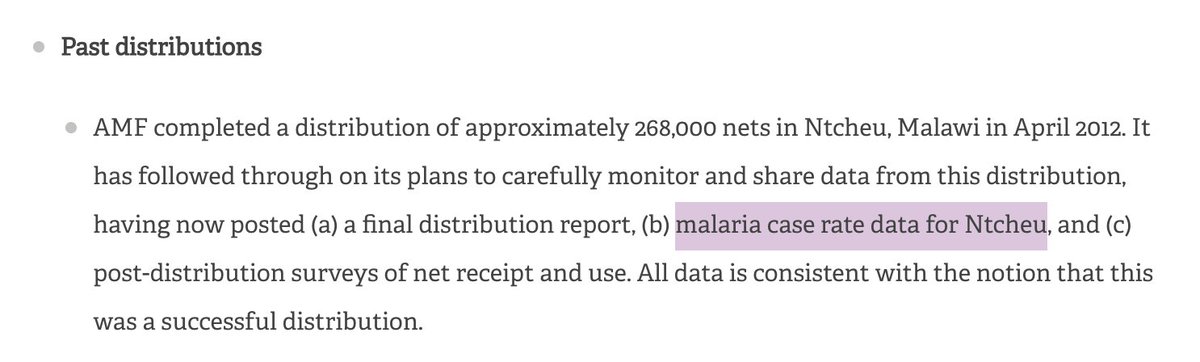
@arctotherium42 There have been lots of studies of whether malaria net distribution reduces malaria (it does and by a lot).
https://t.co/CjDVT9sDfl
https://t.co/h7SaxEBJhJ
https://t.co/NjDe6vTTSN
https://t.co/U3YG2zMxUZ
https://t.co/RIt0v2I9zs
@TaylorLorenz@cernlaboratory Oh god, I’m very sorry. That’s my fault - I saw the reply, after sending you a reply with screenshots, and assumed the worst. That’s a lesson for me in not tweeting in haste.
@TaylorLorenz@cernlaboratory What a strange and rude way to engage with me, assuming maximal bad faith when I’ve done nothing at all to warrant that. I haven’t mentioned you or your opinions at all!
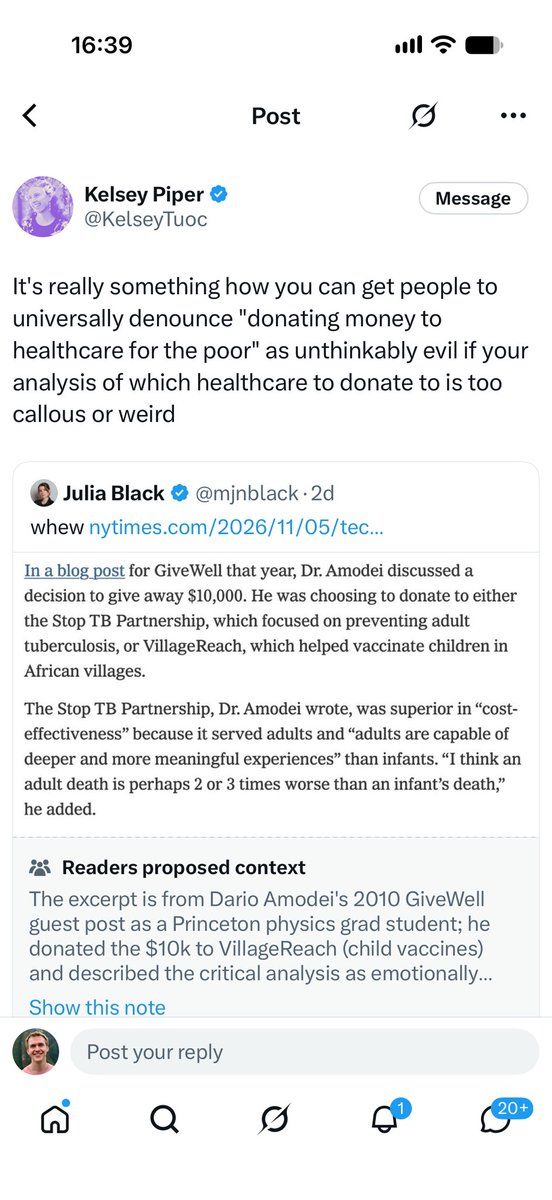
No, Gebru’s comments barely relate to the Dario anecdote at all. Here is the conversation:
Kelsey (defending Dario): it’s stupid to criticise someone for giving money to the poor on the basis that they have a weird or callous justification for doing so.
Gebru: EAs use giving money to Africans as a shield to cover up their racism / whatever, and this is like colonialism.
Kelsey: Giving money to poor Africans is good and not like colonialism.
Gebru: You aren’t helping Africans.
Kelsey: Yes I am.