Works in Progress is a magazine of new and underrated ideas to improve the world. Subscribe to our new print edition now. We are proud to be part of @Stripe.
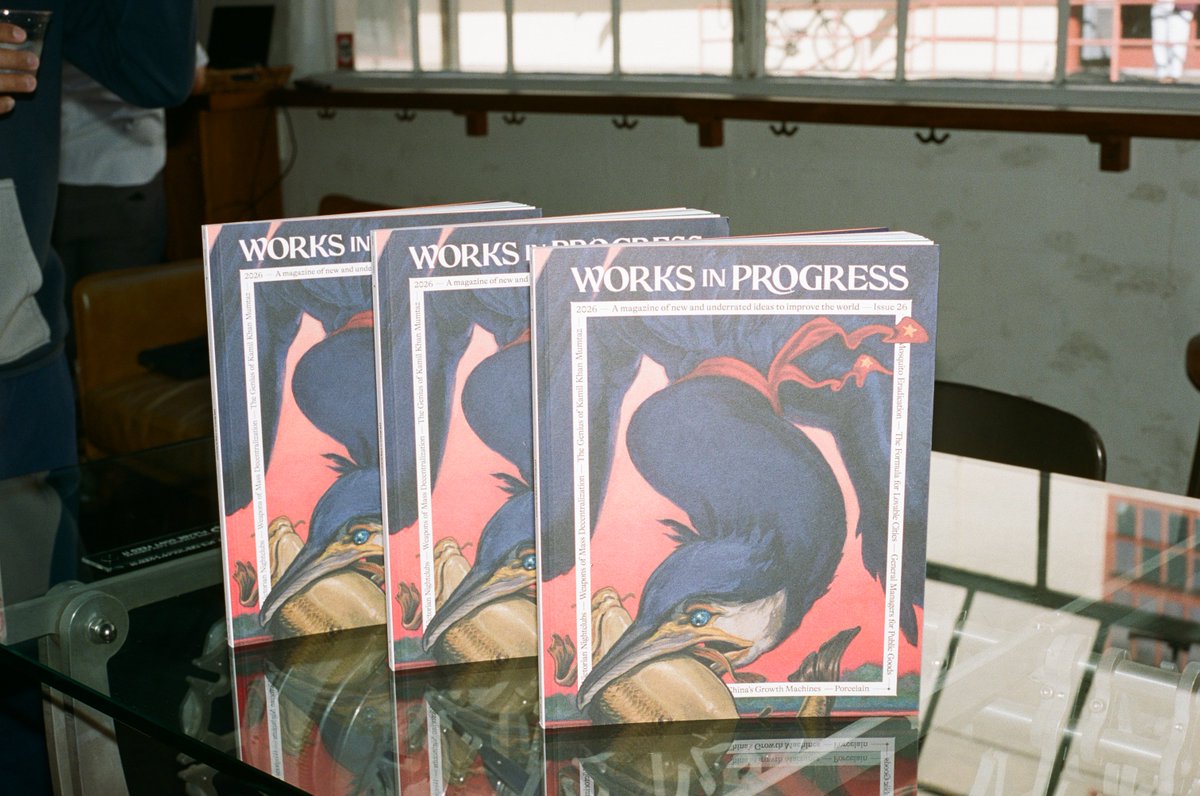
The new issue of Works in Progress, arriving with subscribers this week, is our best ever and packed with must-read pieces.
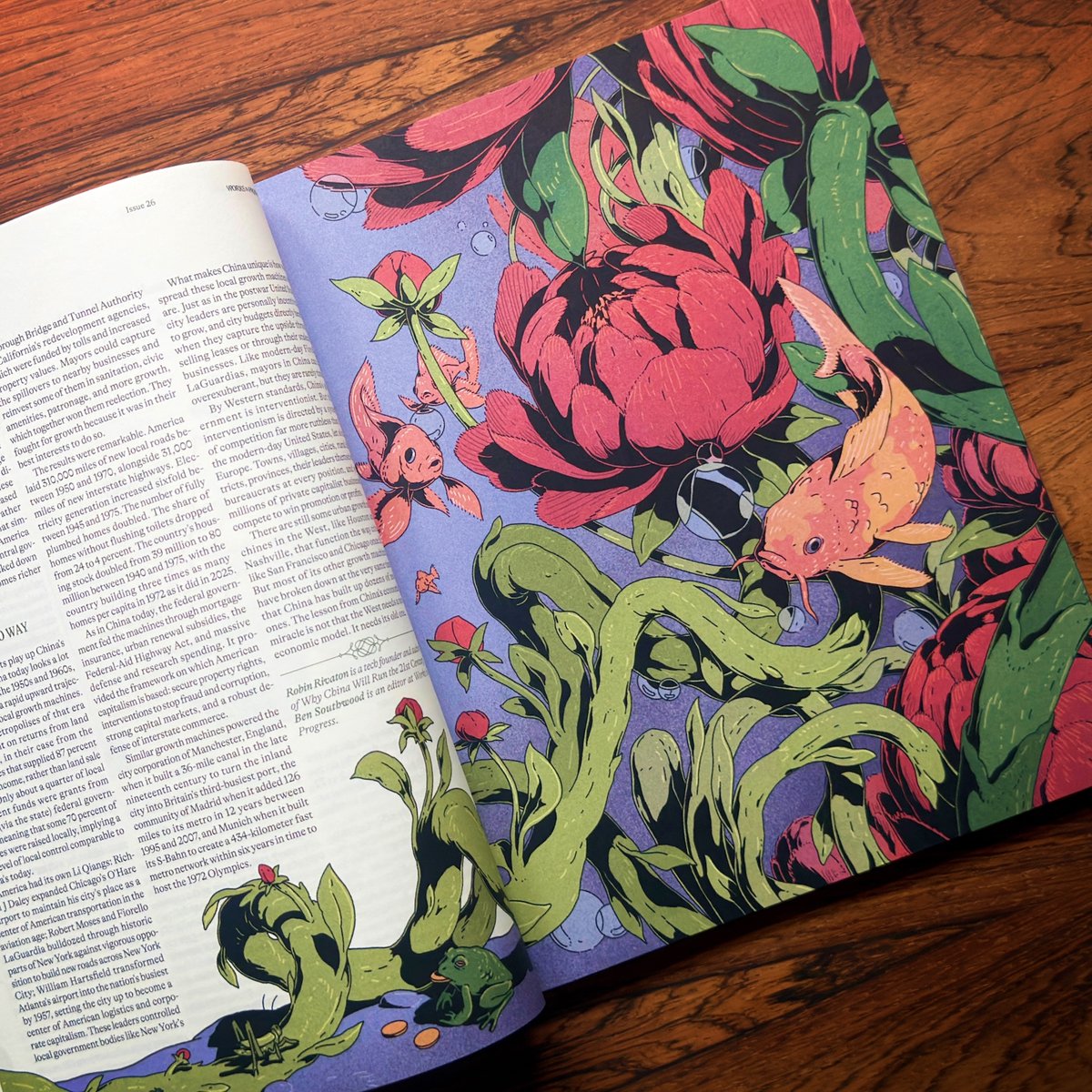
Our lead essay is @RobinRivaton and @bswud on how China's cities, and the competition between them, have driven its rise to techno-industrial preeminence.
It also includes:
- @danwwang on Chinese and American second-tier cities,
- @tylercowen on the food of Brazil,
- @vpostrel on the invention of supermarkets,
- @CharlesCMann on the discovery of porcelain,
- @salonium on the myth of accidental scientific discovery,
- Stephen Kotkin on Leninism's fatal flaw,
- @owl_posting on biomedical hedge funds,
- @PMArslanagic on the formula for lovable cities,
- @pietergaricano on Ukraine as the future of war,
- @PatRubenFitz on the Bronze Age Collapse, and
- @SCP_Hughes on the social lives of hard-partying Victorian elites.
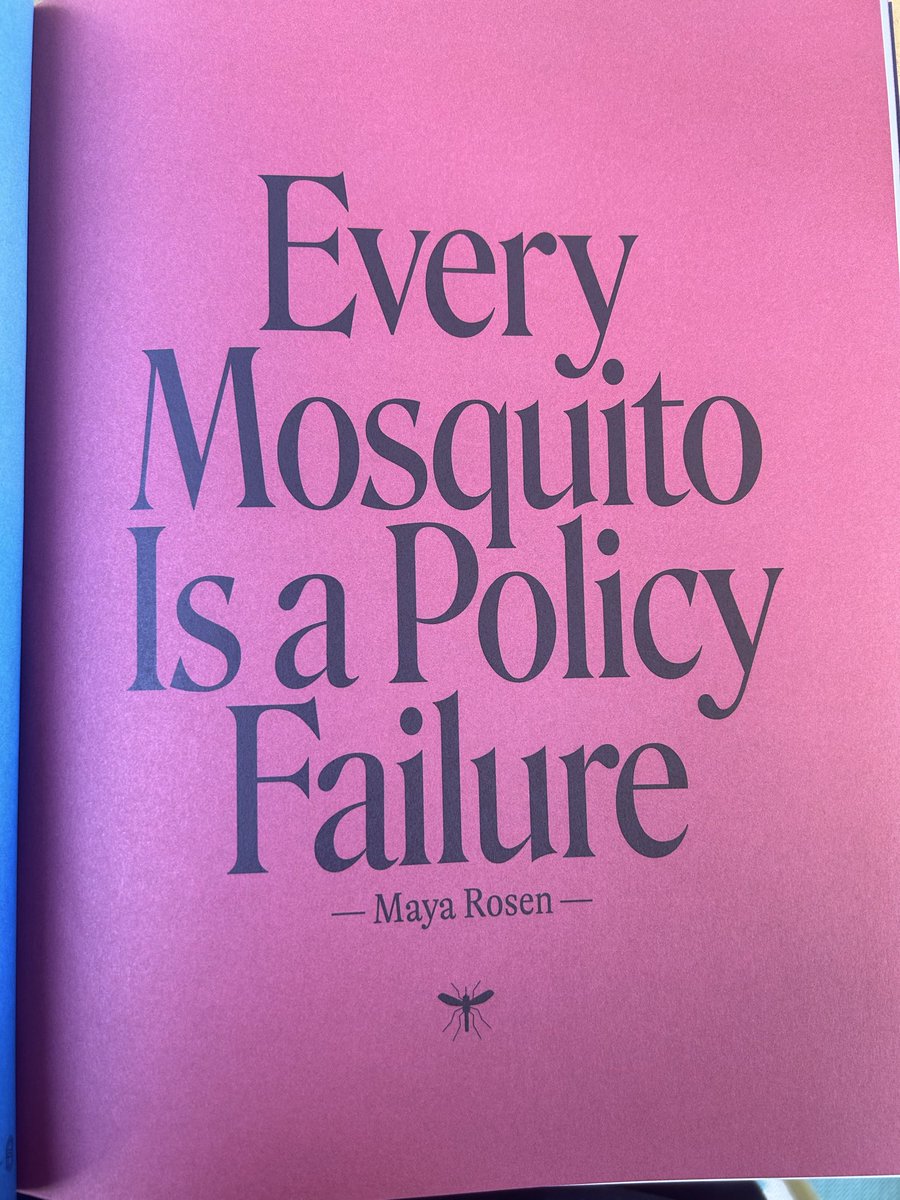
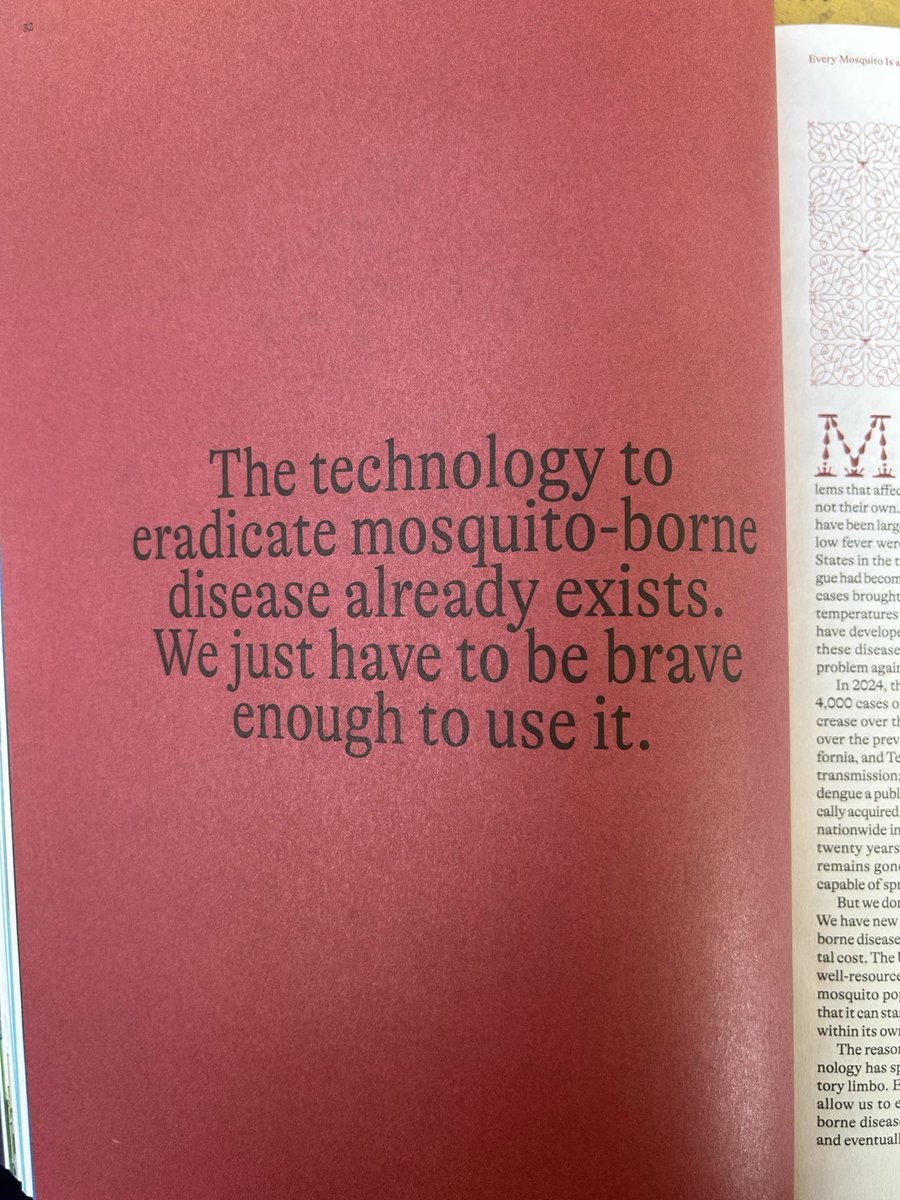
Plus: love and shame in Ancient Rome, making mosquitoes extinct, the return of 1930s dating norms, and why Pakistan is home to the world's best architect. And our new crossword, our cocktail column, classifieds, and more!
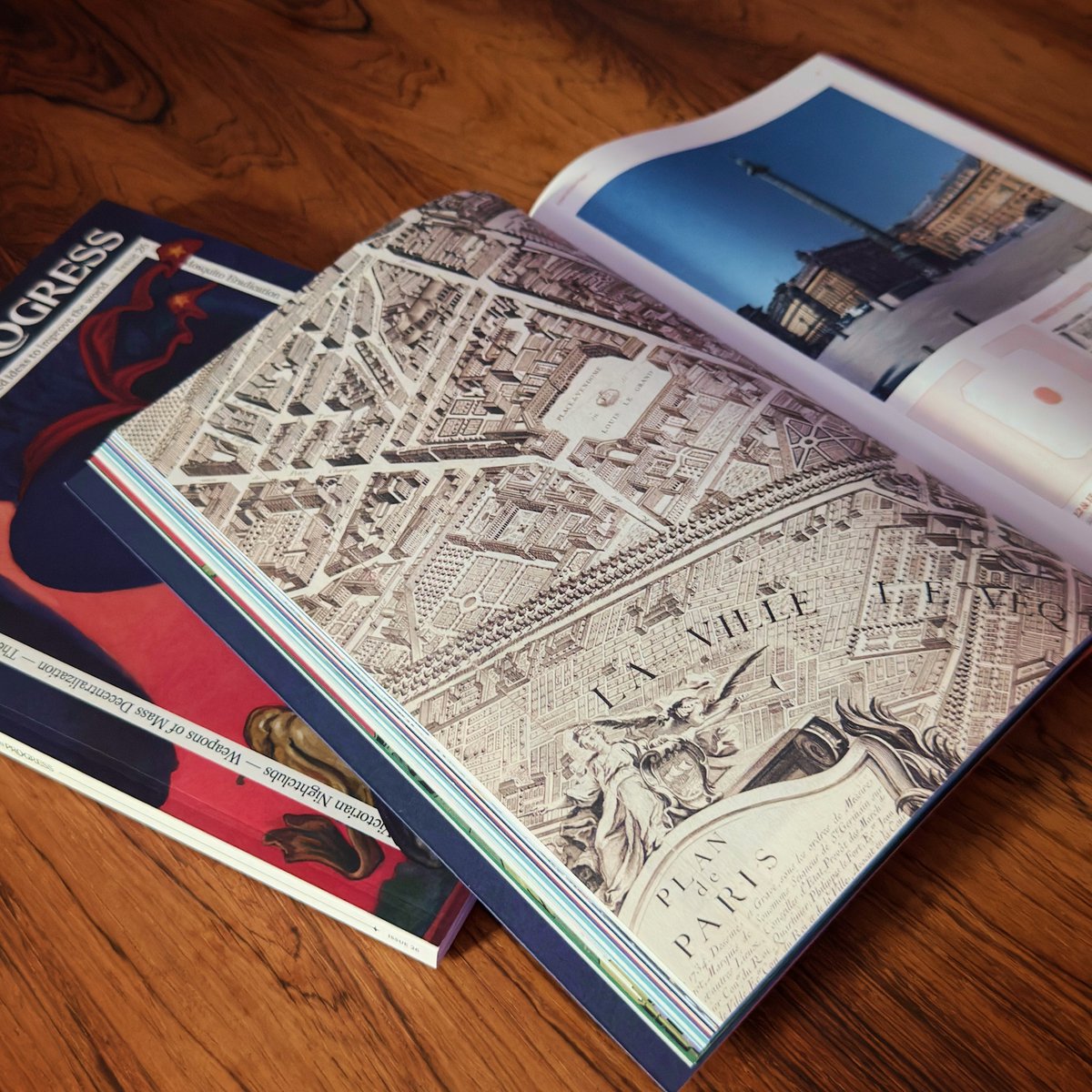
The new edition has had a massive design upgrade with beautiful, premium matte paper, a larger form factor, and bigger, clearer and more elegant typeography. It is a joy to read.
Copies arrive with subscribers this week: subscribe now or by October 16th to get yours.
https://t.co/hfTpdnnVjF
Some big personal news: I'm moving to join Works in Progress as executive editor, starting next month. I have been hoping for an opportunity to work with @bswud and @s8mb for more than a decade, and I'm incredibly excited to finally have one.
WIP is expanding on every front right now. We'll soon begin coverage of business and finance, as well as putting out more reported features. To that end, we'll be hiring more writers and reporters in the year to come. I'm planning to remain based in the US to help build out our presence here.
The print edition of WIP has existed for less than 12 months, but sometime in the next week or so we will reach our 10,000th paying print subscriber. It's a group that now includes people who've been at the highest echelons of government and who run the world's biggest public companies. We’re already on track to 3x that number next year. We'll be in store at Barnes & Noble, Hudson News and independent newsagents next week too.
I think WIP is providing something that people are craving from physical media right now: fewer, extremely well-crafted pieces in a beautifully designed form. Issues now feature an amazing group of columnists, including Tyler Cowen, Dan Wang and Stephen Kotkin. Each edition is better than the last.
You'll see us in more and more places next year too. In January, our new weekly documentary films will launch on YouTube. We're expanding into the events space, with a new series in North America. The sky is the limit from here on out.
Our editors are busy improving the world, when they are not writing articles. Today, Saloni Dattani, known as @salonium, gave a talk about the importance of making clinical trials more efficient for @wellcometrust.
She also presented her bottlenecks game, showing how the clinical trials constraint can limit an entire system’s performance and why addressing this crucial bottleneck is key to improving the efficiency of medical innovation.
Tyler Cowen (@tylercowen) is the reason Works in Progress exists: without the Emergent Ventures grant he gave us way back in 2019, we would not have been able to get it off the ground. So I'm especially proud to have him join us as a regular contributor this month.
We've always wanted Tyler to write for us, but the question has always been about what. He can and does already write (and podcast!) for the biggest publications, and Marginal Revolution and Conversations With Tyler are already gigantic platforms themselves. But there is one thing I always want to hear about from Tyler that he doesn't regularly write about for someone else: food.
So we asked him to be our semi-regular food columnist, and to our delight, he agreed. Nobody has shown how much amazing food there is on one's own doorstep better than Tyler himself, but for this month's piece, Tyler writes about the home of the world's third-best Italian food: Brazil.
We’re delighted to announce that the one and only @tylercowen, our internet writing sensei, is joining Works in Progress as a regular contributor.
https://t.co/NuvOFqfPin
His first column is about Brazilian food, and like everything Tyler writes, it’s packed with hidden gems that make it much more than a food story.
Some of the nicest tidbits: on her first trip to Brazil, his daughter declared she had “never had a banana before” – this is how good Brazilian bananas are, apparently.
And Tyler and a well-traveled friend from Modena (of all places) agreed that Brazil is the third-best country in the world for Italian food, behind only Italy and Japan. If an Italian says that, we’d better trust him!
But as always with Tyler, he manages to draw larger lessons from apparently mundane and object-level stories. So, in a short read, we learn much more than just the fact that Brazilian food is really good.
First, food can be seen as a progress story. Brazil’s agricultural yields rival, and sometimes beat, those of the US, even though Brazil is a much poorer country. Abundant fertile land, high productivity, and short supply chains make ingredients plentiful and fresh. Tyler’s regret is that the rest of Brazil’s economy hasn’t embraced technology the way its food sector has.
We also learn how immigration shapes Brazilian cuisine. Brazil has roughly 2 million citizens of Japanese descent, which makes it arguably the best place outside Japan for Japanese food. Tyler had a 15-course omakase at a Michelin-starred São Paulo restaurant for $110, booked just half an hour ahead. Brazil is also home to about 30 million people of Italian descent, the largest Italian diaspora in the world, which goes a long way to explain why his Italian friend was so satisfied with the food.
The whole column is a delight, so do read it in full!
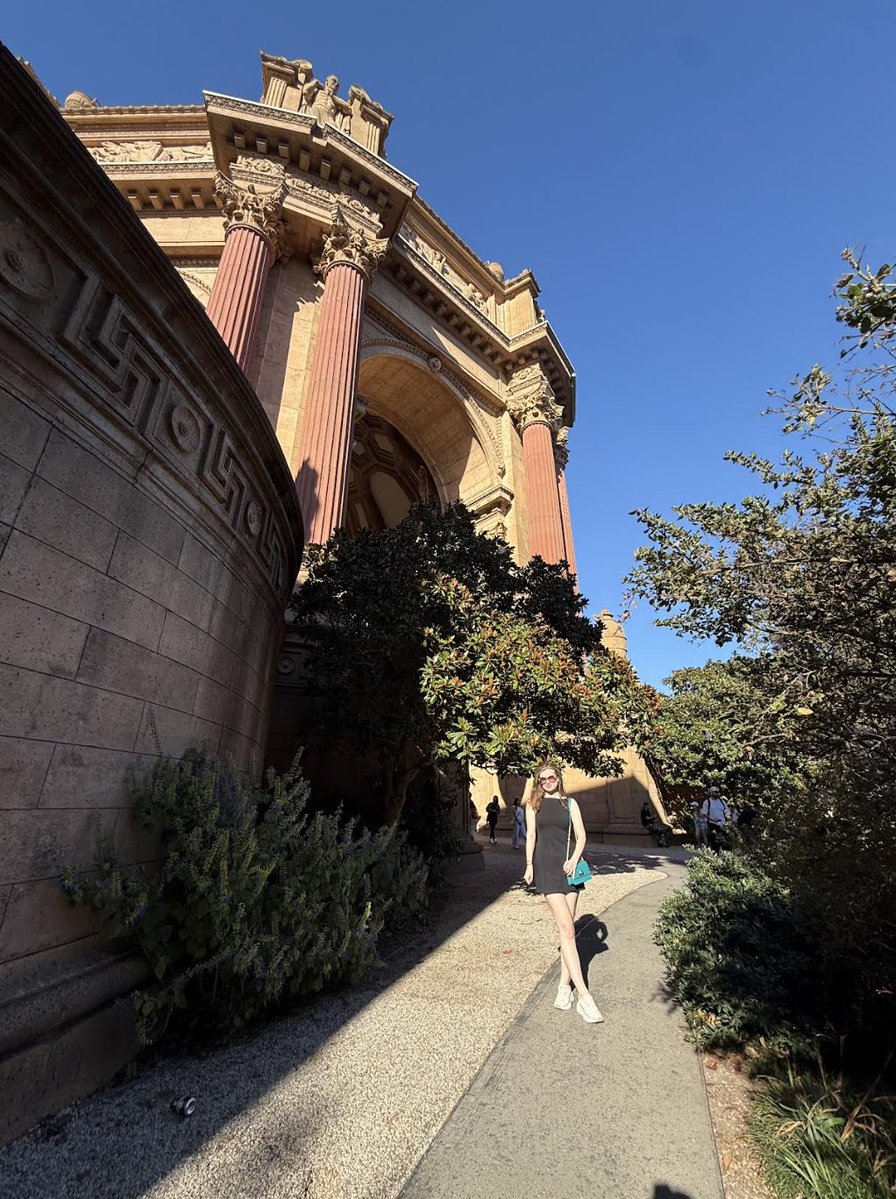
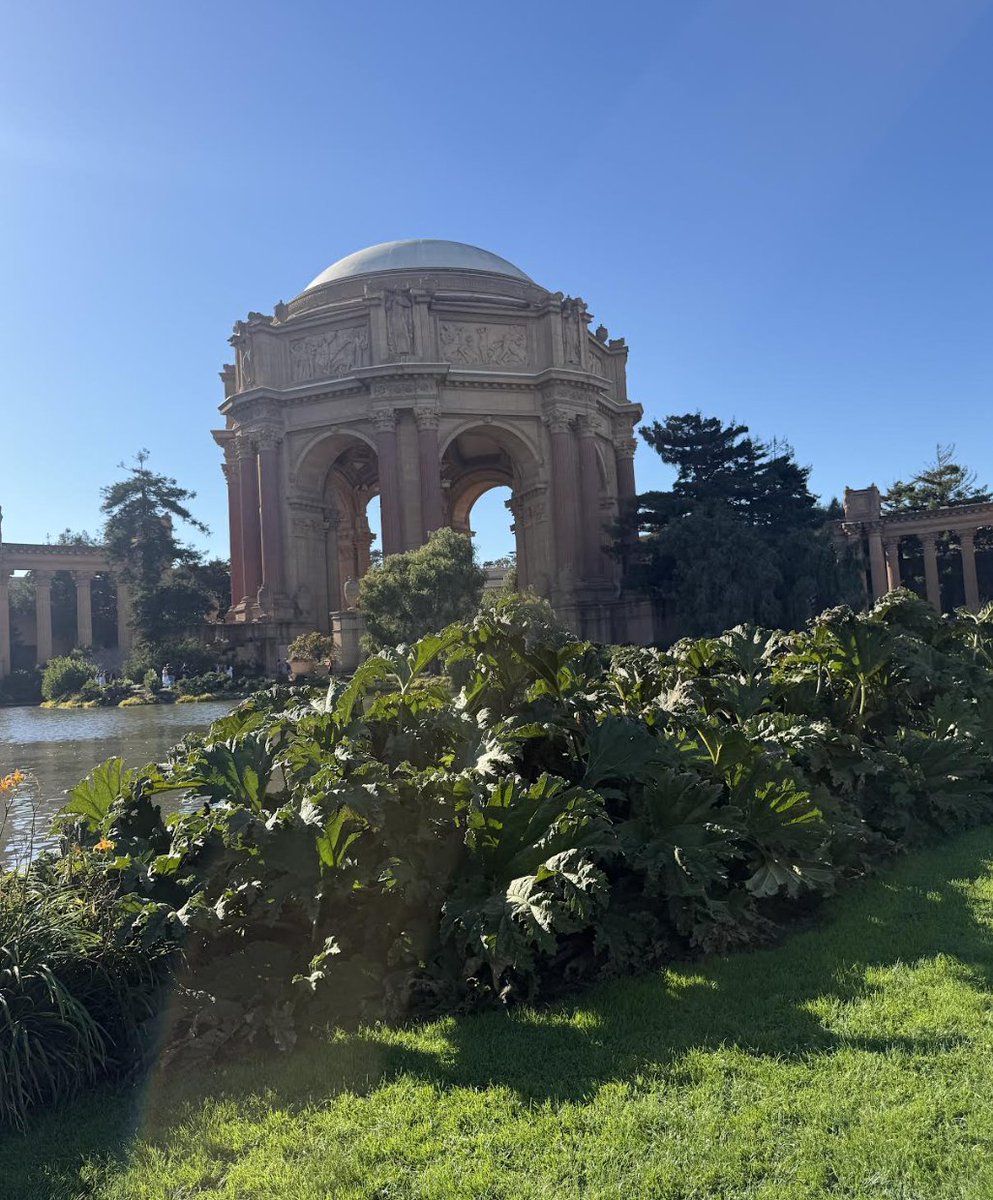
Our art director @AtalantaArdenM and our editor @RuxandraTeslo paired up to visit the Palace of Fine Arts in San Francisco, on an exceedingly fine Saturday afternoon.
In the soft October light, the building looked exquisitely beautiful, and it brought to mind lessons from some of our favorite Works in Progress pieces on architecture. Its story is also relevant to some debates happening now in San Francisco around whether today's rich are funding enough beautiful buildings that delight the human eye.
Concrete and modern materials can give rise to beautiful buildings, as our editor @SCP_Hughes highlighted in his piece "The Beauty of Concrete"!
A common misconception is that modern buildings are ugly because of the intrinsic features of the materials they are built from. But the Palace of Fine Arts is entirely made of concrete and steel, perfectly illustrating that is not the case.
The key is that the concrete and steel building (funded by a rich philantropist and made in the 60s), was following entirely the design of an earlier replica of this building, from the beginning of the 20th century.
Bernard Maybeck first designed the palace for the 1915 Panama-Pacific International Exposition. Like most of the fair’s buildings, it was meant to be temporary, so the materials it was made of were not meant for long term endurance. It was made of a wood frame covered in “staff,” a mix of plaster and burlap fiber that was shaped to look like stone. But those materials crumbled over the following decades.
In the 1960s, funded largely by philanthropist Walter Johnson, it was torn down and rebuilt in concrete and steel, following Maybeck’s design almost exactly, with ornament cast from the original.
The lesson is that materials or "modernity" itself were never the problem. We could have kept building beautiful things after the 1960s, but we chose not to, as we fell under the thrall of minimalist designs lacking ornament (among many other bad aesthetic choices.)
Armed with this knowledge, the philantropists of today can make a conscious choice to fund that which delights the human eye and soul. Aesthetic decline is a choice!
China has become the most important manufacturing economy in the world because it is a continent-sized Silicon Valley.
https://t.co/QGdeeqmsEi
Every Chinese city govt acts as a VC firm trying to create clusters in its region, because it has both the means and incentive to do so.
Local govts generate their revenues, nearly all of which they keep, from selling leases on land and from stakes they have taken in local companies, which together allow them to capture economic spillovers.
Chinese officials have their entire careers graded and determined by how much growth they have been able to create in the areas they run. Career progression is determined according to a great tournament that pits official against official and gives promotions to whoever has grown their region the most. If they don’t reach a certain stage by a certain age they are blocked from promotion forever.
This is why so many economic clusters have centred on Chinese cities, for high- and low-tech products alike. Shaodong makes 70% of the entire world's cigarette lighters; Danyang makes half of the world's spectacle lenses; Zheng'an makes 1/7 of the world's guitars; Datang a third of its socks.
Whereas many of the West’s most important city governments capture only a small amount of the spillovers from successful clusters, and thus have very little reason to foster them, in China, they get a huge amount of the upside and can re-invest it in further growth. This also gives them a great incentive to solve problems for companies, like when Shanghai's govt got Tesla's factory there built even faster than Elon himself had expected (and twice as fast as his Fremont, CA factory).
But this is not some exotic 'oriental' innovation – this is how America used to do things when it grew fastest, in the 1950s, 1960s, and early 1970s. Catching up with China on advanced manufacturing does not require a wise and strategic approach, let alone authoritarianism or the end of democracy. It may just mean fixing city government.
This is why I care so much about local in Britain and America: if we give our own local governments the same incentives and means to grow, the crazily dysfunctional entities we have become used to may be transformed into corporation-like bodies that are ruthlessly focused on making their cities rich, safe and prosperous.
Read more in Works in Progress https://t.co/QGdeeqmsEi
Gosh the paper quality of @WorksInProgMag has really levelled up. And whoever's on design and layout over there, take a bow. It's the small design details that you notice as you read that makes the experience so joyful. ❤️
Really excited to announce I am moving to San Francisco to write for Works In Progress ✈️🇺🇸💫🌁
Will continue writing about biotech, but also increasingly focus on topics related to institutional history and societal impacts of artificial intelligence.
Keen to meet and discuss this!
@suleiman_hayek@EvanRiggss@cosmos_raj We didn't do one for issue 26, but London subscribers should keep an eye out for an invitation to an issue 27 party in December 👀👀👀
Lots is happening in the world of clinical trial reform!
I decided to put together a list - all of this was announced since June - and shared some thoughts:
https://t.co/LalrOhwFP5
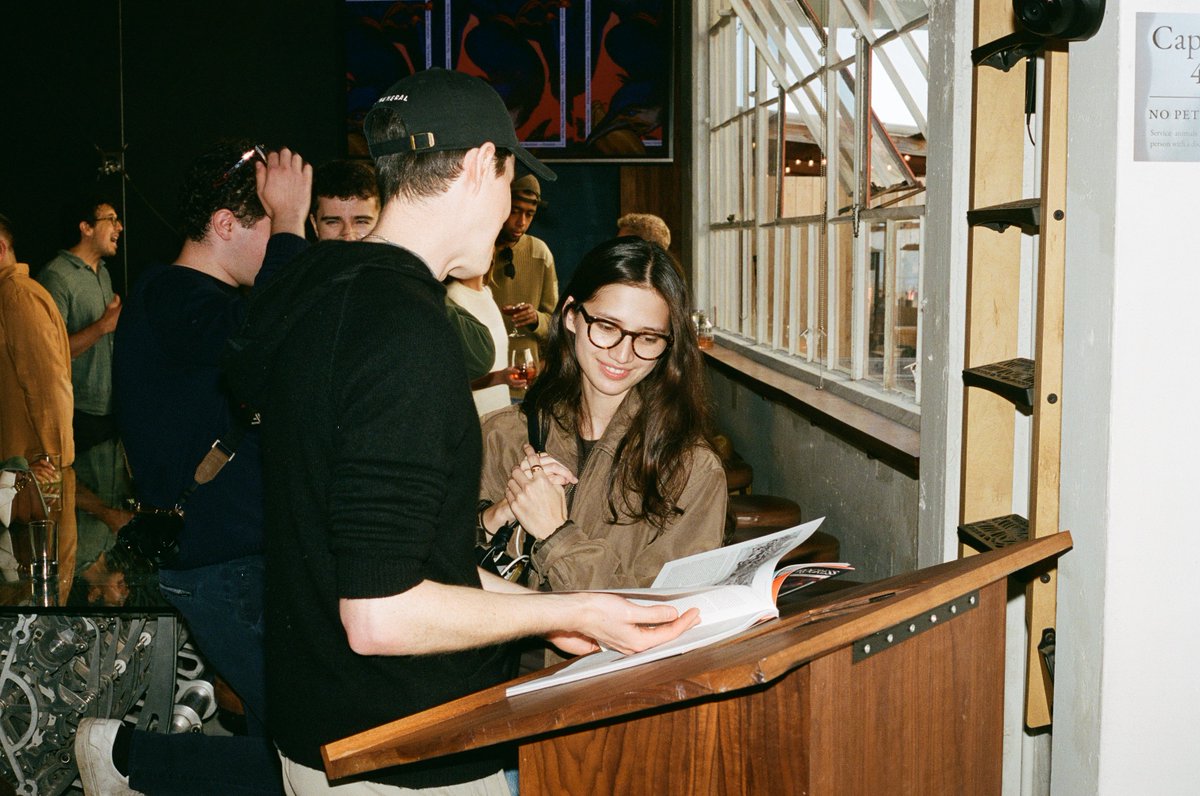
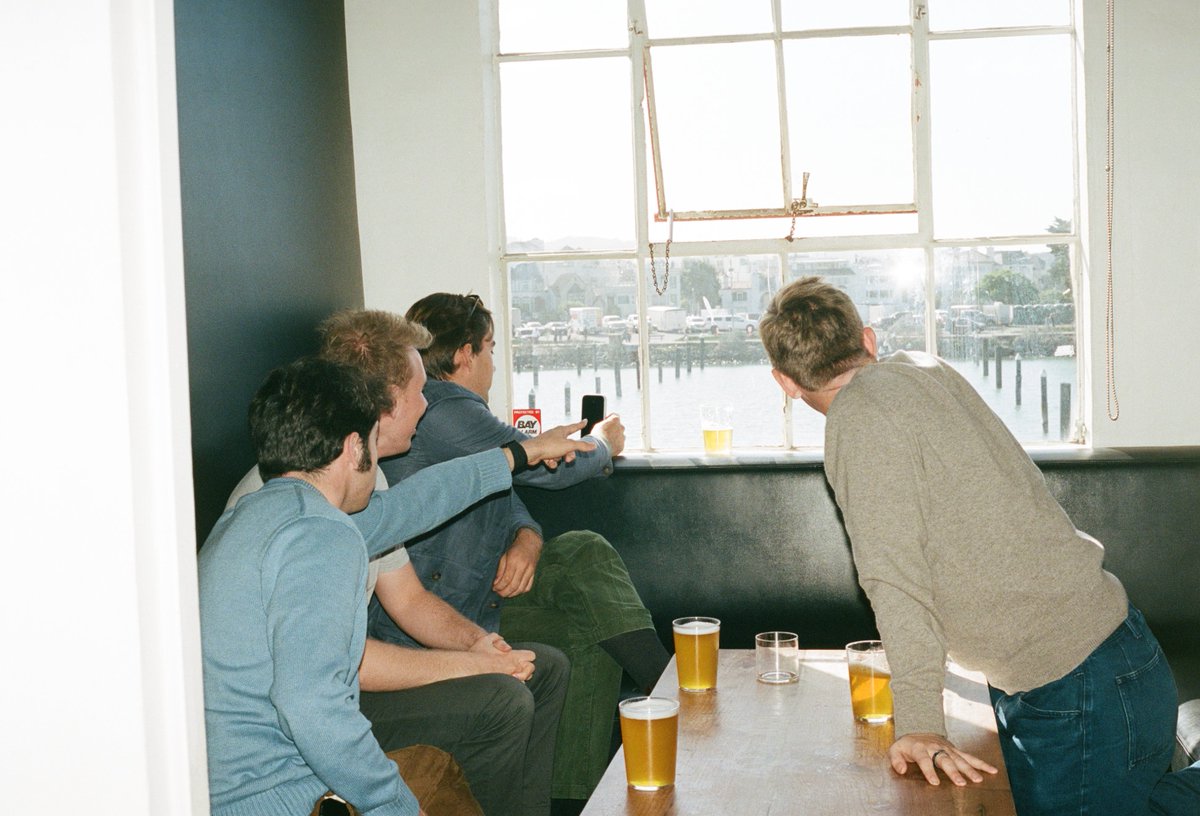
Throwing a Works in Progress launch party that coincided with an air show over San Francisco Bay was really fun!
There is basically no hedonic adjustment to fighter jets soaring past your window.