This is the best postdoc fellowship in theoretical physics you can get in Oxford (and therefore obviously, the world). They have a great time, these LP Fellows, do apply! (or tell a friend/colleague/disciple) https://t.co/62hZ4Uwg25
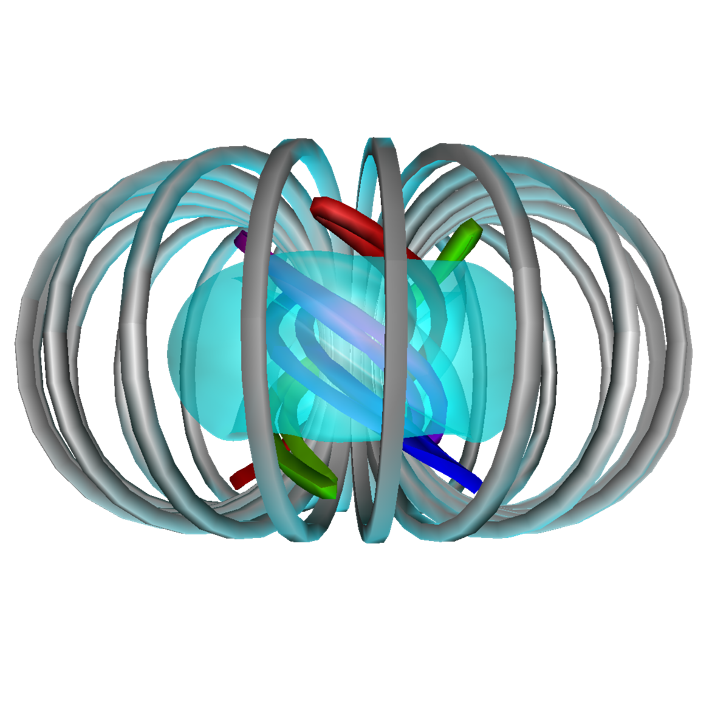
Authors of a new study find ways to improve upon Wendelstein 7-X — the most advanced #stellarator#FusionEnergy device in the world — by using a shaped magnetic field to enhance the stability and confinement of plasma fuel.
Read the paper: https://t.co/8pFEetKxrc
An annular eclipse in a tree's shade.
The tiny gaps between leaves act as pinhole lenses, projecting crescent shaped images of the eclipsed sun onto the world below
[📹 gottigreen]
https://t.co/7GXyW3EQa6
Quasi-isodynamic stellarators have many attractive features, but here is another to add to the list: They have the largest undamped “residual flow” among all optimized stellarators, with implications for turbulence suppression and enhanced confinement.
While most snail eyes generally only detect light, the eyes of the conch snail have complex retinas and can actually produce an image
This is what they look like.
[📹John Gilbert Dumrique]
Helicity of the magnetic axes of quasi-isodynamic stellarators | Journal of Plasma Physics | Cambridge Core - https://t.co/gZZicvmTZG
Check it out folks!
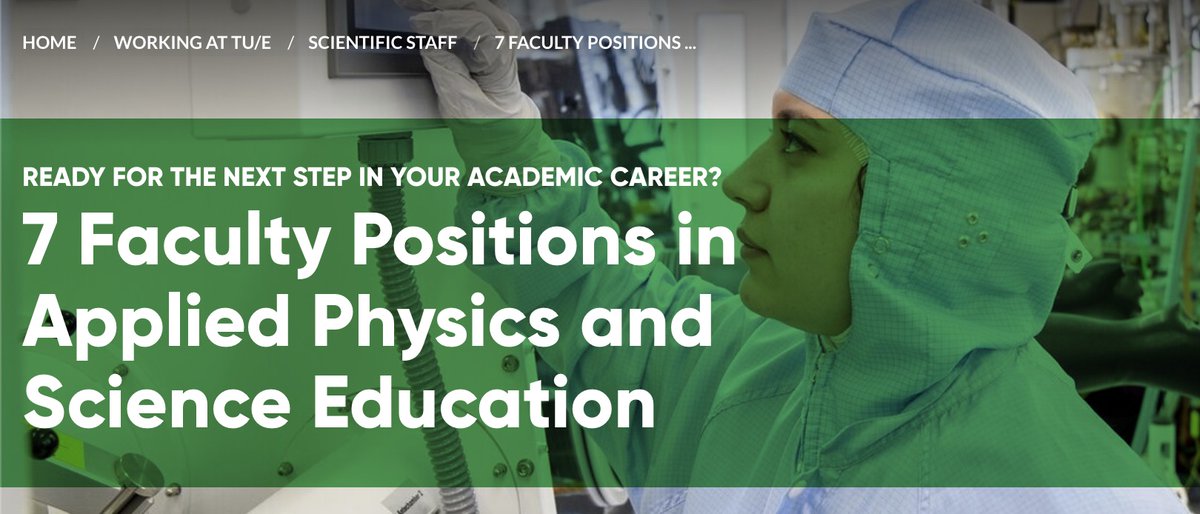
📣We are #hiring! 7 faculty positions (open rank, with the possibility of immediate tenure) at @TUeindhoven. We'd love to tell you more about what your life and research could look like in our vibrant high-tech region. Details: https://t.co/NU6Ps9LpVS #physics#jobs. Sharing=🙏!
Featured in #PlasmaPhysics:
Eduardo Rodriguez and Gabriel Plunk (Max Planck IPP Griefswald) derive the higher order theory of quasi-isodynamicity near the magnetic axis of stellarators by imposing "omnigenity": the cancelation of net radial particle drif…https://t.co/VRpAKDPMKU
Mathematicians are wrapping their heads around the new "Einstein" hat tile discovered by a retired print technician and jigsaw puzzler. A feel good story on a strange news day by @EricaKlarreich in @QuantaMagazine: https://t.co/BUidSs5R4D
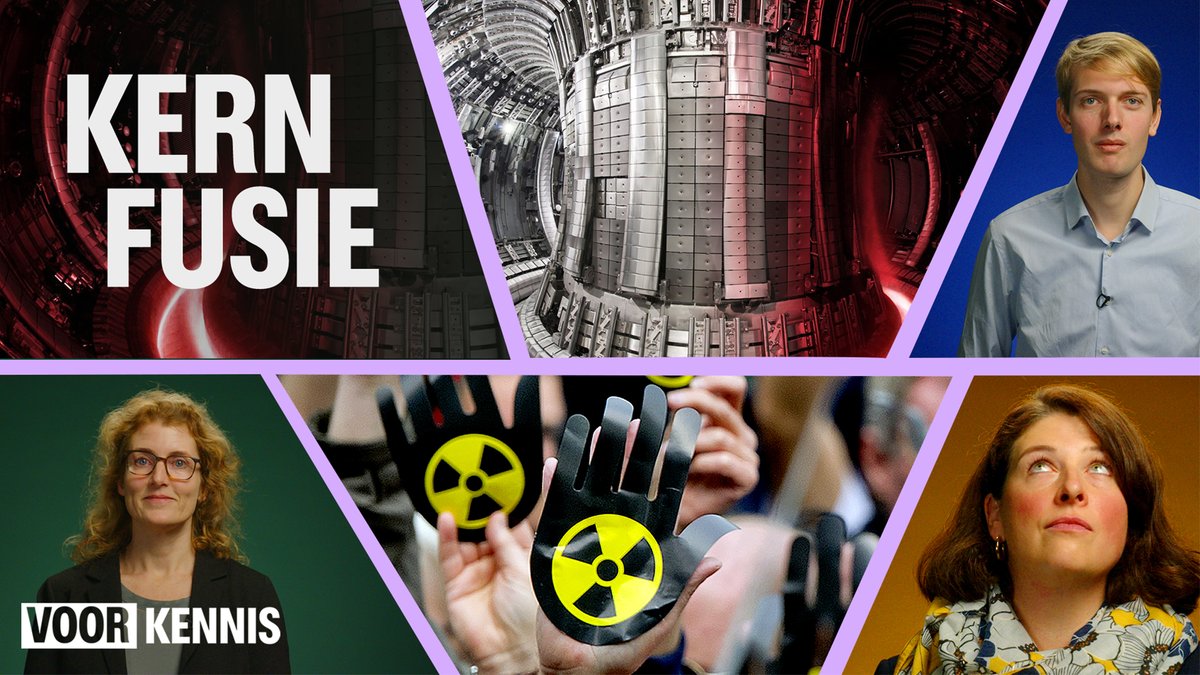
A few months ago I had the chance to talk about my favourite topic, #nuclearfusion, for a video by @UniversiteitNL - have a look! Also, an excellent chance to hear me speak Dutch with a very thick German accent 😁
https://t.co/psssuzW6Cd
Here we plot toroidal cross sections of QSTK, producing a flower-like pattern, which shows another view on QSTK's magnetic geometry. By varying the position where the cross sections are made, we create a cyclical animation. 4/4
A hot topic for stellarators is "turbulence optimization" -- can we design a stellarator to overcome the spontaneously generated micro-flows that limit the heat needed for fusion? We have been working on this actively in recent years and are happy to announce progress. 1/4
Our approach, called "critical gradient optimization", sidesteps the problem of modeling turbulence itself, and instead focuses on improving the plasma conditions under which significant turbulence arises. 3/4