I am absolutely entranced by this swirling plasma left behind after the flare blasts through. The way they swirl reminds me of like a vortex dipole, or maybe even a smoke ring. Very aesthetic eruption
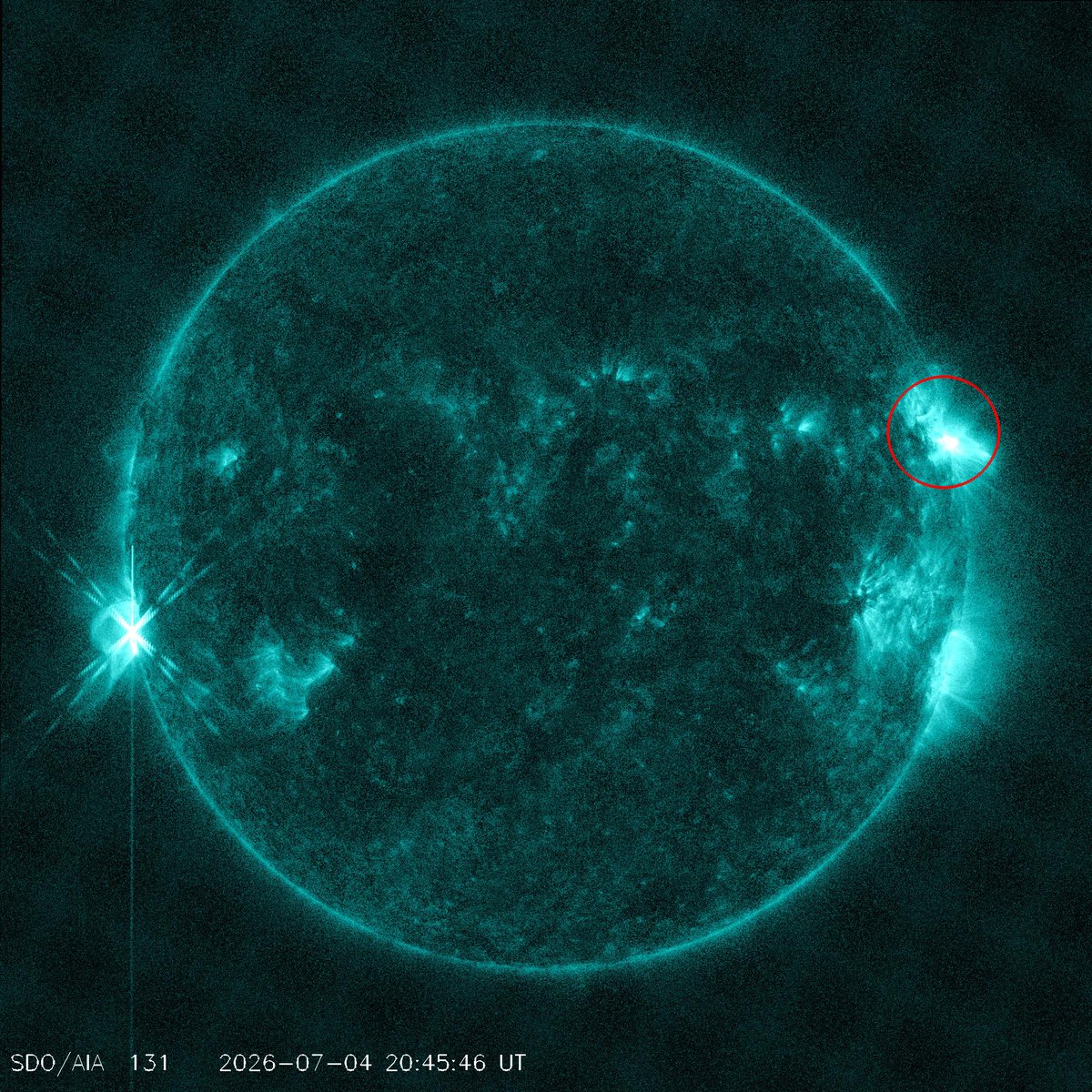
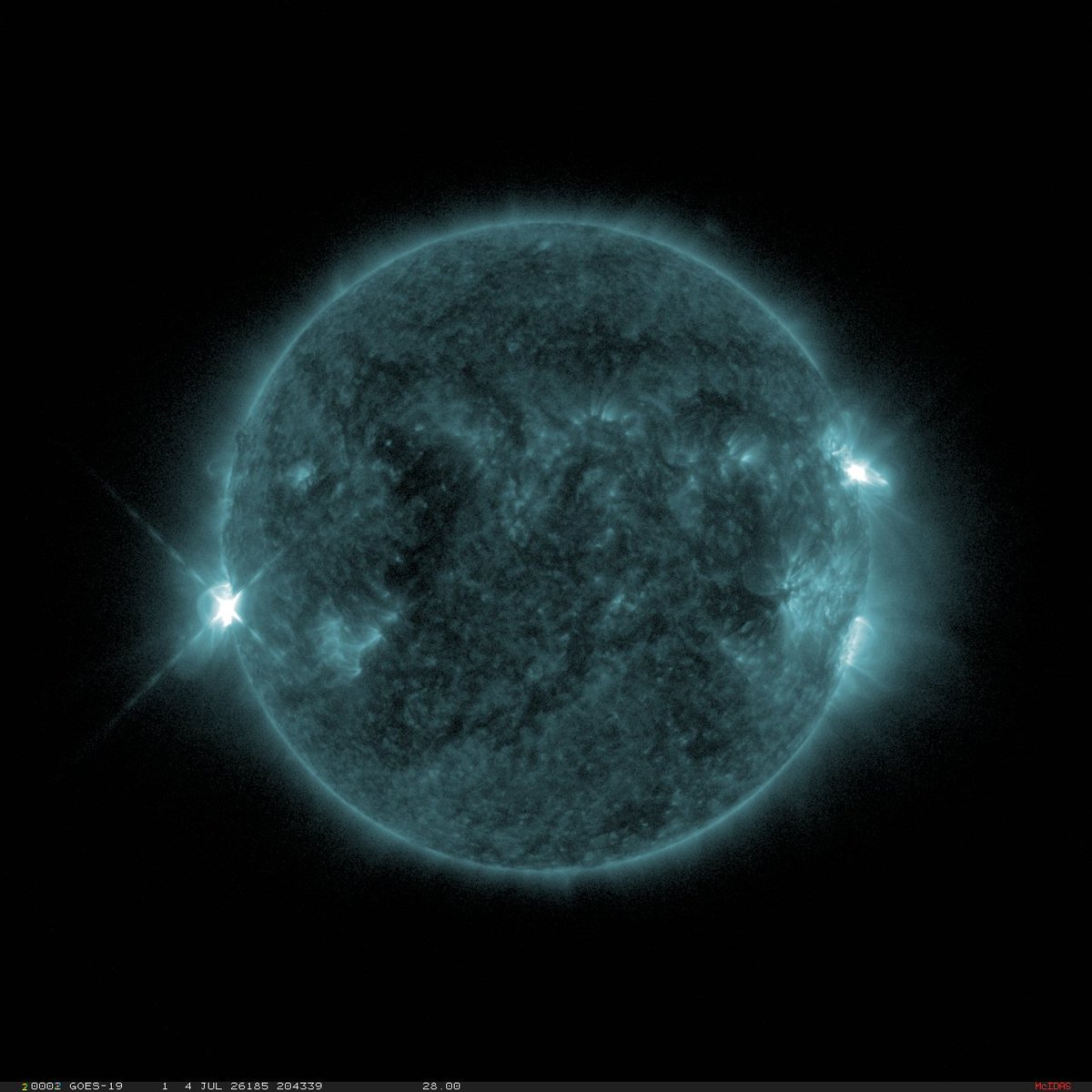
BOOM 1.31 X-Flare just blasted off from our new active sunspot rotating in! While our crop of super-active sunspots is rotating out, it appears the big solar flares aren't coming to an end any time soon...
BOOM! The X1.3 flare on the E limb (from the newly numbered AR 4482) is eruptive, with the lifting CME clearly visible in GOES SUVI 284A data. More soon!
The X1.3 flare that peaked today at 20:41 UTC came from newly numbered Sunspot Region 4482. Not 4479 as our automated detection wants you to believe. Could this be the next sunspot region that will produce high solar activity in the next 2 weeks?
Massive thanks to SpaceWeatherLive forum user ColaSun for this awesome compilation of SDO imagery of the eruption.
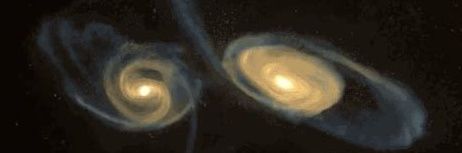
Some 190 million light-years away, far beyond the bright stars and nebulae of the Milky Way, these three galaxies are drawn together by gravity in a mesmerizing cosmic dance.
Clearly distorted by galactic-scale gravitational interactions, large spiral galaxies NGC 6769 and NGC 6770 are seen face-on, with luminous galactic disks scarred by obscuring interstellar dust lanes.
Their young blue star clusters along drawn out spiral arms are spawned in star forming regions that resulted from collisions of massive molecular clouds. Below, spiral NGC 6771 presents a more edge-on perspective, its boxy central bulge due to tidal star streams. Of course, in the distant future a merger of the three galaxies is inevitable.
At the estimated distance of this galaxy trio, known to some as the Devil's Mask, the sharp telescopic frame spans over 300 thousand light-years within the boundaries of the far southern constellation Pavo.
Image Credit & Copyright: Mike Selby
Double M flare earlier on the limb! The second one looks to have fired something off. Not even close to Earth-directed, just a cool loop I really enjoyed seeing!
Just 1.4 billion years after the Big Bang, a massive galaxy may be losing the gas that makes stars, with more than half its cold gas pulled into a long, calm tail. @arxiv https://t.co/MlfOxvZ0tb
Here's the uncropped image from the video I shared yesterday, showing this massive wave of energy traveling through interstellar space after a supernova.
This is a 65 hour exposure captured entirely from my backyard.
Load in 4k full screen on your device for best viewing :)
Two strong eruptive M-class flares: M6.7 from AR4479 and M6.3 from AR4478. The resulting CMEs are mainly west-directed and are unlikely to have an Earth-directed component.
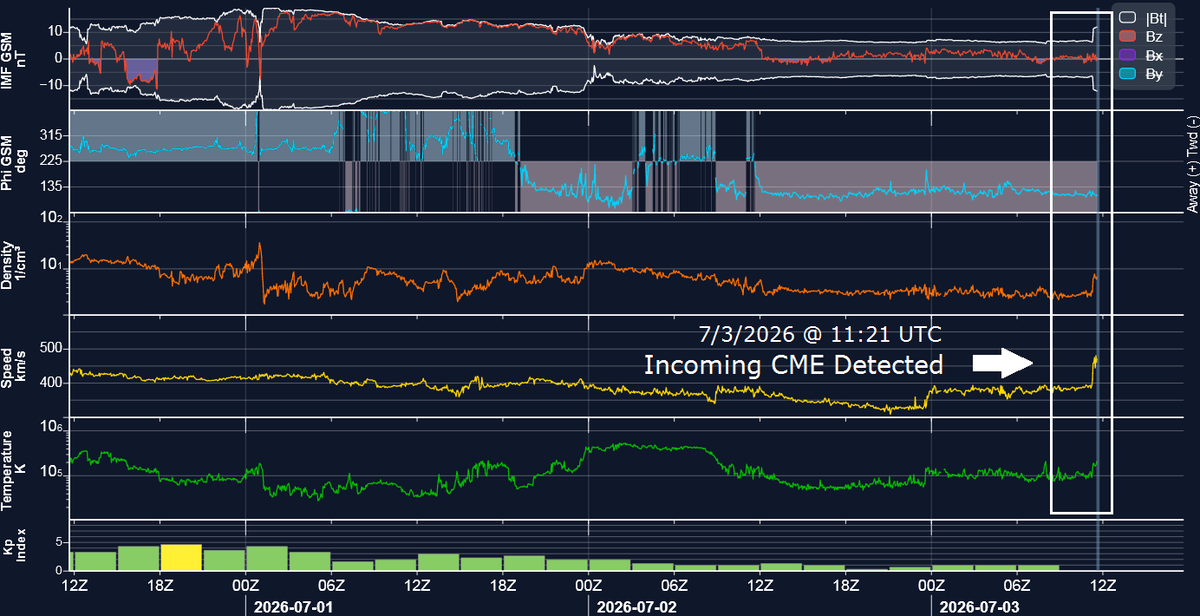
The X1.1-flare CME from AR4479 on 30 Jun has likely recently arrived at L1, as of 03/1119 UTC. This was a partial halo CME with an Earth-directed component, arriving a little later than previously expected. Solar winds are now Slightly Elevated, around 450km/s.
🌐 https://t.co/Ha7vBilq0l
👇
Impact! A CME leading edge has just passed L1 (11:16 UTC). Solar wind speed rapidly increased from ~400 km/s to ~500 km/s, Bt jumped nearly 15 nT. This is likely the CME from the X1.1 flare in AR 4479 on Wednesday. Expecting the CME to reach the Earth about 50 minutes after L1, so around 12:05 UTC. Let's keep an eye on the solar wind and how the CME evolves - don't forget, there is a G2 (moderate) storm watch in effect today!
🚀A core stage, an upper stage and four of the most powerful boosters ever produced in Europe: liftoff!
Timelapse showing how Ariane 6 was assembled @EuropeSpacePort to launch 36 @AmazonLeo satellites in June.
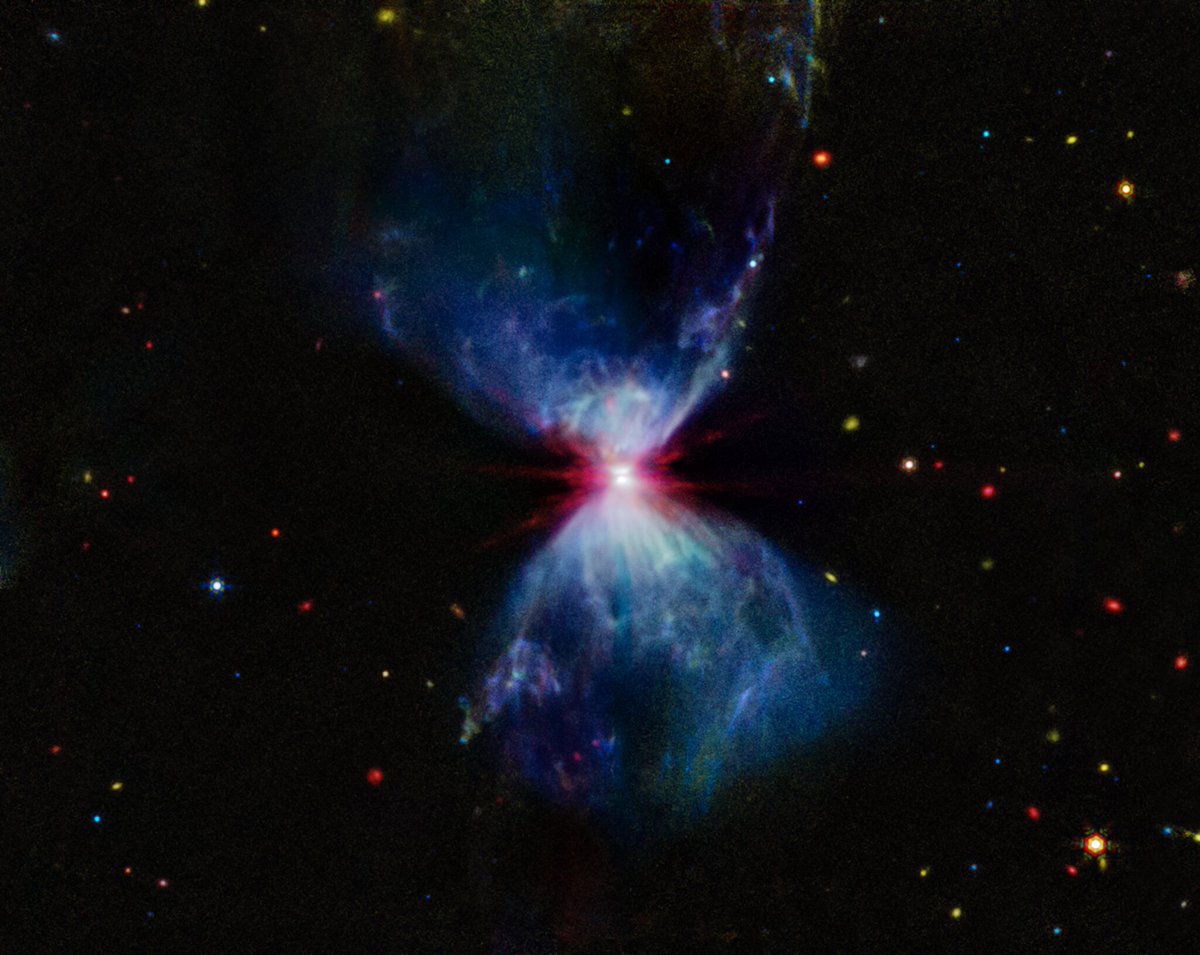
Located roughly 460 light-years away in Taurus, the molecular cloud L1527 hosts a protostar and shows a faint blue haze plus filamentary PAH (polycyclic aromatic hydrocarbon) emission.
(Credit: NASA, ESA, CSA, STScI)