Our British disease of selecting our key people for reasons of ideology rather than competence threatens our civilisation. It creates a pool of resentful competent people AND we suffer fools in most aspects of life.
This is the woman David Lammy wants to choose our judges.
She says merit alone should NOT determine judicial appointments.
“Merit is crucial but so is a focus on diversity."
I need the government to lock up criminals, defend the nation, build infrastructure, collect the bins, and a few other services - basic research etc. I’m not an anarchist or anything.
What I don’t need from the government is moral instruction. I don’t need them to tell me how to raise my kids. I don’t need them to nudge me into better dietary choices. I certainly don’t need them hamfistedly backdooring my devices to check I’m not doing anything they don’t like.
GTFO of my life, thank you. You’re not smarter than me, you aren’t qualified to manage me, please leave me alone.
Here's something many people don't know about me -
Before I publicly dissected the long list of problems in the 1619 Project, I contacted the New York Times through their official channels to request a series of corrections to unambiguous factual errors in its content. The editor - Jake Silverstein - brushed me off and refused any correction - a pattern he also exhibited toward other critics from across the spectrum.
Before I publicly broke the story about Kevin Kruse's plagiarism in Reason, I contacted Princeton's academic integrity officer and alerted him to the problems I had found, giving them a chance to respond and address it internally. They ignored my email and later claimed to have lost my email after I went public.
Before I published my findings on Quinn Slobodian's habitual manipulation of source materials to alter its plain meaning through misquotation, I submitted an article to Contemporary European History (the journal where the worst examples appeared), highlighting the problems with the passages and asking for a correction through their official process. They desk-rejected it, brushed me off, and falsely claimed that Slobodian's piece had been thoroughly vetted in peer review. In fact, one of their own referees had flagged the same problems over a year earlier and recommended rejection of the article.
Before I published an expose on Nancy MacLean & Sandy Darity's similar manipulation of W.H. Hutt quotations in their article for History of Economics Review, I (along with 2 coauthors) submitted a response comment to this journal asking for a correction through its official processes. The editor gave us a complete runaround where he imposed an arbitrary length limit requiring us to cut the content, sent the trimmed version to a referee, then rejected the piece because the referee said we didn't sufficiently address the very same things we were forced by the editor to cut. When I then asked the editor to issue a simple corrigendum to the most egregious misquotation (one that transformed Hutt's explicit attack on the racism of white Afrikaners into a defense of Apartheid), he refused and tried to pass it off as a difference of "interpretation."
Before I published an expose of a leading covid masking model in the Wall Street Journal, I sent a comment to the medical journal that published it alerting them to a math error that changed their entire set of results. The journal acknowledged the error was real but refused to publish my piece on the grounds that the "next release" of the model would be updated to reflect it - even as politicians up to and including Joe Biden were trumpeting the erroneous results all over the news.
For every young British person hired since 2020, *27* young migrants from outside of Europe have entered the workforce.
It's completely mad to have so many people coming from abroad, while young people in Britain struggle to find opportunity.
The system is totally broken.
The beginning of AJP Taylor’s ‘English History 1914–1945’ famously ‘goes hard’, as the internet puts it, but part of its brilliance is surely that it was written (or rather edited) to fit a single page.
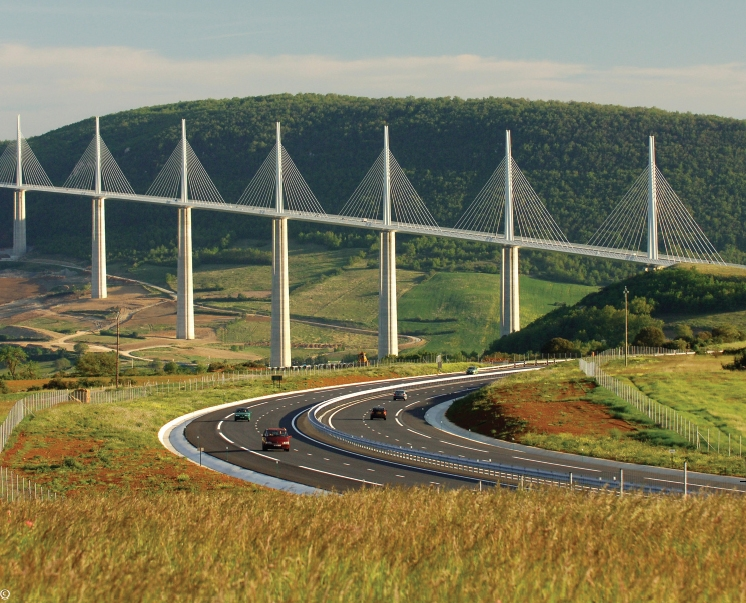
But who will build the roads... in France?
While French politicians debate infrastructure spending, private highways consistently outperform their state-managed counterparts in every metric that matters. The contrast hits you immediately: smooth private motorways carry you swiftly from Paris to Lyon, then dump you onto crumbling state asphalt where orange cones and half-finished repairs create endless bottlenecks.
Private highway operators like Vinci Autoroutes maintain 8,000 kilometers of French motorways through direct user fees. No political interference. No budget committees deciding whether pothole repair can wait another fiscal year. When your revenue depends entirely on drivers choosing your roads, maintenance becomes urgent business rather than a bureaucratic afterthought.
State highways rely on tax funding filtered through layers of political calculation. Politicians prefer ribbon cuttings for new projects over unglamorous repair work. Bureaucrats face no immediate consequences when roads deteriorate because drivers have no alternative. The incentive structure guarantees inferior outcomes.
Private operators face immediate market discipline. Poor road conditions mean drivers seek alternate routes, killing revenue instantly. Customer complaints reach decision makers within hours, not election cycles. Quality maintenance protects profit margins while political highways drain budgets regardless of performance.
The French model proves what free market economists have argued for decades: property rights and profit motives solve coordination problems that democratic processes cannot. When you own something, you maintain it. When everyone owns something, no one does. Private road quality reflects ownership and accountability. Public road deterioration reflects diffused responsibility and political time horizons.
How much has US shale gas saved American consumers? According to a news study, between $164 and $227 Billion annually. That's at least $1000 per household each year.
Countries that banned shale production, like the UK, are costing their citizens a great deal.
1/2
Watched Marty Supreme, which was better than I was expecting, quite entertaining, funny, visually interesting, frenetic and uncomfortable in the way Safdie movies are. But it really leans into this sociological tic you often see in movies/books about successful people that the true artists, true geniuses, people at the highest levels of their field, must give themselves over to narcissism/sociopathy/cruel often self-sabotaging obsession. All of the main characters are some version of this. Possessed like heroin addicts by their pet passion, however trivial (like ping pong), and willing to destroy themselves and everyone around them in its singular pursuit.
Some highly successful people are like of this course, possessed by their goals in this self-destructive way, but this trope is mostly cope in my experience. The idea that to become truly successful one must become evil, one must make some kind of Faustian bargain, one must commit himself to misery in all other things, is a way for non-successful people, the less motivated or talented, to tell themselves their shortcomings are in fact an expression of their virtue and moral superiority over the guy who has made it to the top of the mountain.
In fact, the most successful people I know, rich, powerful, highly accomplished across a number of domains, while unique in their own ways, often weird, and even unusually obsessive, are not sociopathic or self-sabotaging at all and seem to be as satisfied and well-adjusted to the world as anyone else, and usually more so. The malignant narcissist, on the other hand, tends to flame out and self-implode well short of the summit.
If people want to know why they feel poor, well Net Zero is a major contributor. High energy costs mean fewer jobs, less investment, lower exports, lower tax generation and worse national finances. Virtue signalling is a very expensive folly.
As a young socialist, Hayek read Ludwig von Mises’ 1920 paper “Economic Calculation in the Socialist Commonwealth.”
Mises showed that socialist central planning isn’t merely inefficient, it’s impossible.
Without private property and genuine market prices, planners lack any rational way to allocate scarce resources or determine real costs and needs.
Even Oskar Lange, a leading socialist in the calculation debate, effectively conceded the point.
While he promoted “market socialism” with trial-and-error pricing by a central board, real-world socialist planners in Eastern Europe quietly relied on world capitalist market prices as a guide.
Without external free-market price signals, pure socialism would be economically blind and coordination would collapse.
Mises went further, arguing that interventionism, the “middle way” of government meddling, is inherently unstable.
Each intervention creates problems that invite more interventions, eventually leading to full socialization.
Price controls cause shortages, subsidies distort production, and the cycle continues until the economy is fully planned.
The lesson is clear.
Rational economics requires genuine market prices emerging from voluntary exchange and private property.
Half-measures don’t stabilize the system. They accelerate the drift into central planning.
The Austrian School understood this decades before the collapse of the Soviet bloc proved it in practice.
Hong Kong became the world's greatest economic miracle through the radical absence of government interference in trade, not through government planning.
From 1960 to 1997, Hong Kong's GDP per capita grew from $428 to over $27,000 — a 63-fold increase that dwarfed every other economy on earth. The secret? Zero tariffs on imports, zero export taxes, zero quotas, zero trade licenses. You could dock a ship full of Swedish steel in Victoria Harbor, unload it, process it into electronics, and ship those electronics to California without paying a single cent to bureaucrats. Free market economists call this "comparative advantage in action." Normal people call it common sense.
The results speak louder than any central planner's fantasies. Hong Kong handled more container traffic than any port in the world by the 1990s despite having virtually no natural resources. Manufacturers from around the globe set up operations there because they could import raw materials and export finished goods without navigating tariff schedules thicker than phone books. Capital flowed in because entrepreneurs faced actual profit signals instead of politically distorted prices created by trade barriers.
Compare this to the economic disasters created by protectionist policies everywhere else. The Smoot-Hawley Tariff Act of 1930 turned a recession into the Great Depression by strangling international trade. Modern America's steel tariffs force domestic manufacturers to pay artificially inflated prices for inputs, making them less competitive globally. Every tariff is a tax on your own citizens masquerading as protection for special interests.
Trade barriers destroy the wealth creation process that makes higher-paying jobs possible in the first place.
INCONVENIENT UNTRUTHS by @BjornLomborg: Two decades ago, Al Gore’s movie An Inconvenient Truth thrust climate change into the spotlight. With dramatic imagery and dire warnings, it transformed a niche concern into a front-page crisis, influencing rich country leaders and elite jet-setters, and inspiring a generation of activists.
Twenty years affords distance to reflect not just on the film’s impact, but also its accuracy. Many of Gore’s most alarming predictions have failed to materialise, while the policy response it helped inspire has proved extraordinarily flawed.
The documentary’s core narrative was that climate change was driving worsening disasters, such as floods, droughts, storms and wildfires.
Yet, over the past century, even as the global population quadrupled, deaths from these climate-related disasters have plummeted. In the 1920s, an average of nearly half a million people died annually from such events. Today, that number is under 10,000 – a decline of over 97 per cent. Richer, smarter societies have made us dramatically safer, proving adaptation and resilience work far better than alarmism suggests.
The film claimed we would see more frequent and stronger hurricanes because of climate change, with the movie poster showing a hurricane coming out of a smokestack. Global data actually show a slight decline in hurricane frequency and their total energy since comprehensive satellite data started in 1980.
Wildfires follow a similar pattern. Globally, annual burned area has decreased by more than 25 per cent over the past quarter century, according to Nasa data. While recent years have seen large US fires because of forest mismanagement, the 1930s Dust Bowl era was five times worse. Fires are down on all other continents.
The film famously highlighted polar bears as a symbol of impending ecological collapse, suggesting they were drowning due to melting ice. In reality, polar bear populations have more than doubled from around 12,000 in the 1960s to over 26,000 today. The primary historical threat was hunting, not climate change, and Gore’s claims, now 20 years later, have simply turned out to be wrong.
Gore’s call to action spurred expensive emissions reductions. Yet, fossil fuel consumption keeps increasing because cheap and reliable power drives growth, and global emissions have set records nearly every year since 2006.
We’re nowhere near a green transition. In 2006, the world generated 82.6 per cent of its total energy (not just electricity) from fossil fuels, according to the International Energy Agency. In 2023, the last year with global data, the share was 81.1 per cent. On this slow trend, it will take over six centuries to get to zero.
Yet, Gore’s message was explicit: climate solutions were already at hand, needing only political will from rich nations to implement them swiftly and decisively.
Wind and solar usage is rising rapidly
China's electricity generation📷Fossil fuelsFossil fuelsWind and solarWind and solarOther clean energyOther clean energy6KTerawatthours4K2K020152020June2025Source: Ember
Although solar and wind technologies have become dramatically cheaper, they remain fundamentally intermittent: they generate power only when the sun shines or the wind blows. Modern societies require reliable, 24/7 electricity, which necessitates substantial backup systems – typically fossil-fuel plants. People think batteries can play a large role, but almost everywhere, we have battery back-up just for less than tens of minutes.
The result is that we end up paying twice: once for renewables and again for reliable backup infrastructure. The film’s wilfully naïve framing ignored these engineering and economic realities.
The cost of climate policies since 2006 has exceeded $16tn globally. In the US alone, the Inflation Reduction Act poured hundreds of billions into green tech. Yet, emissions climb because the rich world’s efforts ignore the reality that developing nations require cheap and reliable energy to reduce poverty.
Global CO2 emissions are still accelerating
Carbon dioxide growth rate in parts per million📷3.5ppm32.521.51.51990200020102020Source: World Meteorological Organization
Rich nations only account for 13 per cent of the remaining 21st-century emissions. Emerging giants such as China, India and Africa drive the rest. Even if all rich countries achieved net zero by mid-century, it would avert less than 0.1°C of warming by 2100, using the UN climate panel’s own model.
Gore’s apocalyptic climate predictions have aged poorly. While climate change is a real problem, the best evidence suggests warming might shave 2-3 per cent off global GDP by 2100. Context matters: the UN estimates that by century’s end, the average person will be 450 per cent as rich as today. With climate impacts, they would “only” be 435 per cent as rich. We’re talking about being vastly better off, just slightly less so.
The film’s biggest blunder was to fail to make the case for smarter approaches. We need to prioritise innovation. Green tech research and development – to achieve better batteries, advanced nuclear, fusion – could slash costs to make clean energy cheaper than fossil fuels. Adaptation saves lives cheaply: sea walls, drought-resistant crops, early warnings. And development lifts billions out of poverty, building resilience.
Two decades on, An Inconvenient Truth reminds us that panic is a terrible policy adviser. Focusing on cost-effective solutions – innovation, adaptation, development – will save trillions and do much more to help both people and the climate.
A farmer dies in April 2026.
His son inherits the farm. The farm has been in the family since 1847.
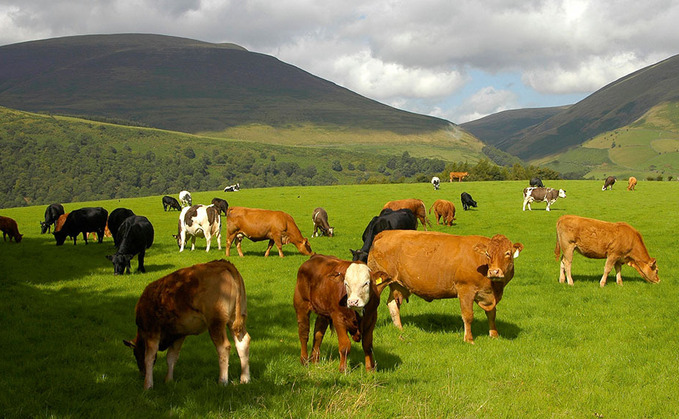
The farm consists of: 300 acres of grazing pasture, a farmhouse built in 1892, a barn, a milking parlour, two tractors of varying ages, a Land Rover that runs about 70% of the time, and a herd of 180 Hereford-cross cattle.
On paper, the farm is worth approximately £3.2 million. This is because land near him has been bought recently by a London hedge fund looking for carbon credits, which has dragged the comparable value of every field within forty miles upward to a number nobody local can justify.
In cash, the farm produces a profit of about £28,000 a year in a good year. In a bad year it loses money. The son also works as a fencing contractor three days a week to keep the operation viable.
The inheritance tax bill on a £3.2 million estate, even at the reduced 20% rate, comes to approximately £140,000 after the increased threshold is applied. The son does not have £140,000. The son has never had £140,000. The son has £4,200 in his current account and an overdraft.
The son sells 60 acres to a developer to pay the tax. The developer puts solar panels on the 60 acres. The remaining herd cannot be sustained on the reduced land. The herd is sold. The barn becomes a holiday let.
A different family eats Brazilian beef this Christmas without knowing why the price went up.
The Treasury collects £140,000.
The land never produces British food again.
“The state has become the enemy of the British people.”
- @RupertLowe10
Back on the show to discuss:
- Why Britain no longer has the rule of law
- Why the private sector is dying
- How Restore will fix the country
Full episode below 👇
The more you read about the energy crisis the more you realise everyone else, every serious country, is going flat out increasing production, more oil/gas, prioritising domestic production where possible,
ripping up policy assumptions, Uniquely, one major country is pressing on in the opposite direction. It would have to be us, wouldn’t it? Banning new oil and gas exploration and fields, by law! It is quite mad. Future historians will be astonished. Like looking back on Tony Benn’s policies in government decades later and thinking how on earth was that allowed to happen?
Tax-payer funded transport for yet more non-taxpayers isn't "good news". It's the highest taxation government in British history splurging on yet another pointless thing whilst failing to do things like maintain roads.
🧵 "Private ownership. State control. It's not socialism. Nobody's seizing anything. But it's not capitalism either. Because the price mechanism is being systematically overridden."
@cjsnowdon on Britain's capitalist command economy. 👇