🏅The #ParisOlympics2024 don't just look INCREDIBLE, they have changed the Olympic Games forever ! No need for long explanations, just look at the next pictures and tell me if I'm wrong. Warning : they go HARD 👇
So this week we had just the 3d SaaS IPO since 2021: OneStream
It's a really good one: $500m ARR, growing 34%, 118% NRR and 20% free-cash flow
It's worth $5 Billion+
And ... it was bootstrapped
5 Interesting Learnings:
It took me a while to fully realize the value of something my company achieved years ago, and continues to savor today. It’s one of our greatest quiet advantages, full stop.
It’s not something you hear much about in business circles. In fact, I can’t remember the last time I heard anyone spend much time on the topic, or even bring it up in conversation, on a conference stage, or behind a podcast mic.
There is, however, lots of discussion about achievement in business. A company can achieve product market fit, operational efficiency, influence, revenue goals, or, ultimately — and hopefully — profitability.
But I’m not taking about those things. Those are the obvious things, the common talking points. And to those you can add the vanity metrics of achievement — social media followers, traffic, views, impressions, open rates, press mentions, gross this or gross that.
All those are what they are, but they aren’t where it’s at.
What I’m talking about is optionality. Achieving optionality is where it’s at.
Optionality is a hearty mix of profit margin, small size, independence, attitude, and freedom. You’ve got to have all of it to have optionality.
If a board is calling the shots, you don’t have much optionality. If your margins are thin, or non-existent, you don’t have much optionality. If the public owns a piece, you don’t have much optionality. If you’re too big to change direction quickly, you don’t have much optionality. And if you’re afraid to speak your mind and stake your point of view, you don’t have much optionality.
Optionality lets you do things no one would give you permission to do. It lets you write excellent software and give it away for free if you choose. It lets you do things that don’t make sense in the current climate, but will long-term. It lets you be early while eventually catches up.
Optionality is ecstasy. It’s making it up as you go, without making excuses. It’s openly changing your mind without having to save face. Optionality is equanimity, the corporate equivalent of enlightenment.
So, entrepreneurs, ditch the bullshit. Abandon growth-at-all-costs. Reject conventional metrics. Scorn hollow acceptance. Instead, hunt for optionality. It's freedom. It's power. It's everything you crave, wrapped in a single, potent package. Chase it relentlessly. And when you get it, don’t let go.
"Perfection is impossible.
In the 1,526 singles matches I played in my career, I won almost 80% of those matches.
But what percentage of points did I win?
54%
In other words, even top ranked tennis players win barely more than half the points they play.
When you lose ever second point on average, you learn not to dwell on every shot.
You teach yourself to think:
'Okay, I double faulted...it's only a point.'
'Okay, I came to the net and I got passed again...it's only a point.'
Even a great shot, an overhead backhand smash that ends up on ESPN's top 10 playlist – that too is just a point.
Here's why I'm telling you this.
When you're playing a point, it has to be the most important thing in the world. And it is.
But when it's behind you, it's behind you.
This mindset is crucial – because it frees you to fully commit to the next point with intensity, clarity, and focus."
–@rogerfederer
1/4
Additional new bits of advice I wished I had known earlier (not in my book), as my gift on my 73 birthday:
• The best way to criticize something is to make something better.
• Admitting that “I don’t know” at least once a day will make you a better person.
• Forget trying to decide what your life’s destiny is. That’s too grand. Instead, just figure out what you should do in the next 2 years.
• Aim to be effective, but unpredictable. That is, you want to act in a way that AIs have trouble modeling or imitating. That makes you irreplaceable.
• Whenever you hug someone, be the last to let go.
• Don’t save up the good stuff (fancy wine, or china) for that rare occasion that will never happen; instead use them whenever you can.
• The best gardening advice: find what you can grow well and grow lots and lots of it.
• Never hesitate to invest in yourself—to pay for a class, a course, a new skill. These modest expenditures pay outsized dividends.
• Try to define yourself by what you love and embrace, rather than what you hate and refuse.
• Read a lot of history so you can understand how weird the past was; that way you will be comfortable with how weird the future will be.
• To make a room luxurious, remove things, rather than add things.
• your parents while they are still alive. Keep asking questions while you record. You’ll learn amazing things. Or hire someone to make their story into an oral history, or documentary, or book. This will be a tremendous gift to them and to your family.
• If you think someone is normal, you don’t know them very well. Normalcy is a fiction. Your job is to discover their weird genius.
• When shopping for anything physical (souvenirs, furniture, books, tools, shoes, equipment), ask yourself: where will this go? Don’t buy it unless there is a place it can live. Something may need to leave in order for something else to come in.
• You owe everyone a second chance, but not a third.
• When someone texts you they are running late, double the time they give you. If they say they’ll be there in 5, make that 10; if 10, it’ll be 20; if 20, count on 40.
• Multitasking is a myth. Don’t text while walking, running, biking or driving. Nobody will miss you if you just stop for a minute.
• You can become the world’s best in something primarily by caring more about it than anyone else.
• Asking “what-if?” about your past is a waste of time; asking “what-if?” about your future is tremendously productive.
• Try to make the kind of art and things that will inspire others to make art and things.
• Once a month take a different route home, enter your house by a different door, and sit in a different chair at dinner. No ruts.
• Where you live—what city, what country—has more impact on your well being than any other factor. Where you live is one of the few things in your life you can choose and change.
• Every now and then throw a memorable party. The price will be steep, but long afterwards you will remember the party, whereas you won’t remember how much is in your checking account.
• Most arguments are not really about the argument, so most arguments can’t be won by arguing.
• The surest way to be successful is to invent your own definition of success. Shoot your arrows first and then paint a bull’s eye around where they land. You’re the winner!
Swimming the Center or the Edge
Imagine a vast swimming pool 25 miles long, 50 miles wide, and 25 feet deep. Swimming this pool is akin to running a business. And how you swim this pool is akin to how you run the business.
Everyone starts at the beginning, but you decide how close to the center or the edge you swim. There’s only one rule: You can’t turn around, there’s no going back.
Where would you start?
Given the dimensions of the pool, here’s how I’d do it: I’d start near the edge. The edge effectively creates multiple “shores”. You can swim all the way to the end, or you can grab the side and stop for a breath, a break, or even decide “that’s enough” and stop there. This is optionality. More points of survival. To me this represents independence.
But not everyone decides to start at the edge. Oftentimes, a key strategic decision pushes them center: Raising money. And the more money they raise, the further center they’re pushed. At some point, there’s only one way to make the business work: To reach the other side. Once you begin, the edges are further away than the end. There’s no optionality, you can’t stop. You either make it across, or you die.
The choice between VC funding and bootstrapping independently depends on an entrepreneur's appetite for risk and personal definition of success. VC funding is typically for those who aim for a singular, large-scale “win”, while bootstrapping appeals to those seeking path with multiple potential outcomes along the way. One wants it all, while the other wants enough.
Realistically, there are other places to start than just the edge or the center. You can start further center but still closer to the edge. But the further center you go, the more risk you take, and the fewer options you have. Every entrepreneur has to figure out what makes sense for them, but for me, optionality is worth more than one big outcome.
What about you?
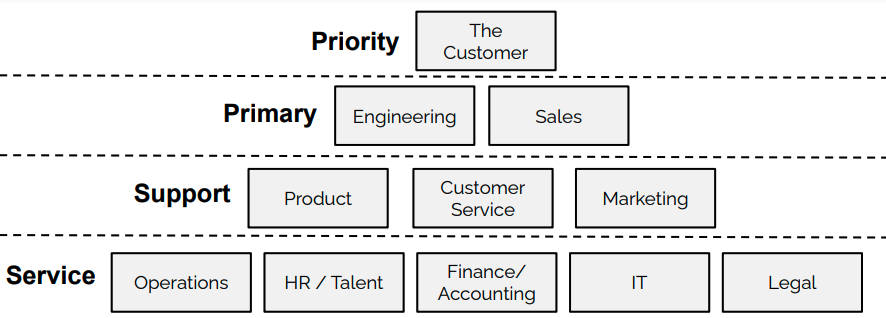
3/ To Start -- Understand Linchpins
1. The Customer is Everyone's Priority
2. Sales and Engineering = Primary Orgs
3. All Other Orgs Exist to Support or Service the Primary Orgs
Later I'll dig into wtf is ops and services, their structure and why they're critical to success
The average public SaaS company spends about 50% of its revenue on sales and marketing and 20% on engineering and product
I know you want that to be the other way around
It just doesn't work that way
And at least for now, AI isn't changing that
In theory, SMB > Enterprise
More customers, much faster sales cycles, faster PLG and viral cycles
But even 100% NRR is tough to hit with SMBs,
While 120%-140% common in Enterprise
Most SMB SaaS goes at least bit enterprise or at least into more “bigger deals” to balance it out
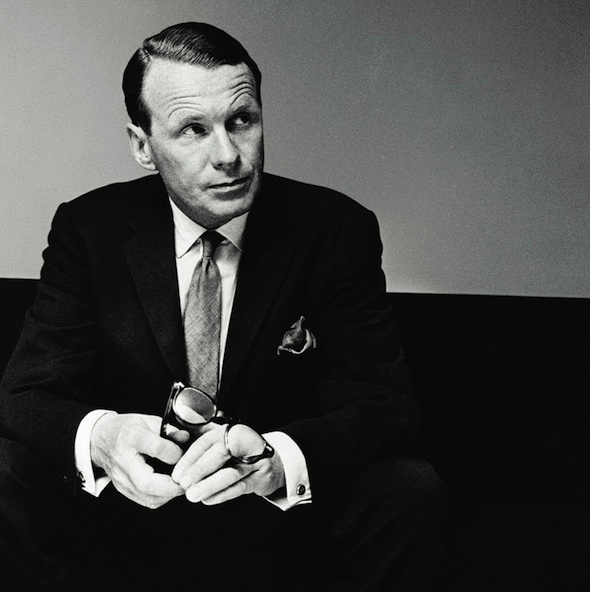
23 lessons from David Ogilvy:
1. Search all the parks in all your cities; you'll find no statues of committees.
2. The best ideas come as jokes. Make your thinking as funny as possible.
3. You are advertising to a moving parade, not a standing army.
4. Do not address your readers as though they were gathered together in a stadium. When people read your copy, they are alone.
5. Remember you are a human being writing to another human being. Neither of you is an institution
6. Tell your prospective client your weakness before they notice them. This will make you more credible when you boast about your strong points.
7. Avoiding excess in all things is a recipe for dullness and mediocrity.
8. A good advertisement is one which sells the product without drawing attention to itself.
9. There is no need for advertisements to look like advertisements. If you make them look like editorial pages, you will attract about 50% more readers
10. Big ideas come from the unconscious. This is true in art, in science, and in advertising. But your unconscious has to be well-informed, or your idea will be irrelevant
11. People who think well, write well
12. The most important word in the vocabulary of advertising is 'test'.
13. On average, five times as many people read the headline as read the body copy.
14. When you have written your headline, you have spent eighty cents out of your dollar.
15. Tell the truth, but make the truth fascinating
16. Advertising is only evil when it advertises evil things.
17. Advertising people who ignore research are as dangerous as generals who ignore decodes of enemy signals.
18. Raise your sights. Blaze new trails. Compete with the immortals.
19. I am a lousy copywriter, but I am a good editor. So I go to work editing my own draft.
20. If you're trying to persuade people to buy something, use the language in which they think.
21. Insist that due dates are kept even if it means working all night. Hard work never killed a man. People die of boredom
22. If you are lucky enough to write a good advertisement, repeat it until it stops selling.
23. At the start of your career in advertising, what you learn is more important than what you earn.
When you ask customers to switch from an existing vendor to you …
Do you offer to do ALL the work?
The migration?
The implementation?
The integrations?
The data mapping?
If not, imagine all the friction you could remove if you did
Lucca vous donne rdv ces 27, 28 et 29 septembre au Congrès de l’Ordre des Experts-Comptables.
Bien gérer la paie est une question de fiabilité des données et de timing. Prenez rdv avec un expert pour en discuter sur le salon (et déguster nos glaces) : https://t.co/UfTosEphdC
Une entreprise plus humaine, ce n'est pas de la science-fiction.
Des robots pour automatiser les tâches qui coûtent ? Misez plutôt sur Lucca, et vous pourrez vous concentrer sur celles qui comptent.
Lucca, l'humain a de la ressource. https://t.co/gNXbSkClGn