I’m starting to push the Spendly AI stack to a public GitHub repo so people can follow the implementation directly instead of guessing from screenshots.
Repo: https://t.co/t3cwLaawDk
And for everyone waiting for the product side , tonight I’ll post a full video walkthrough showing the actual utility end-to-end. Still building.
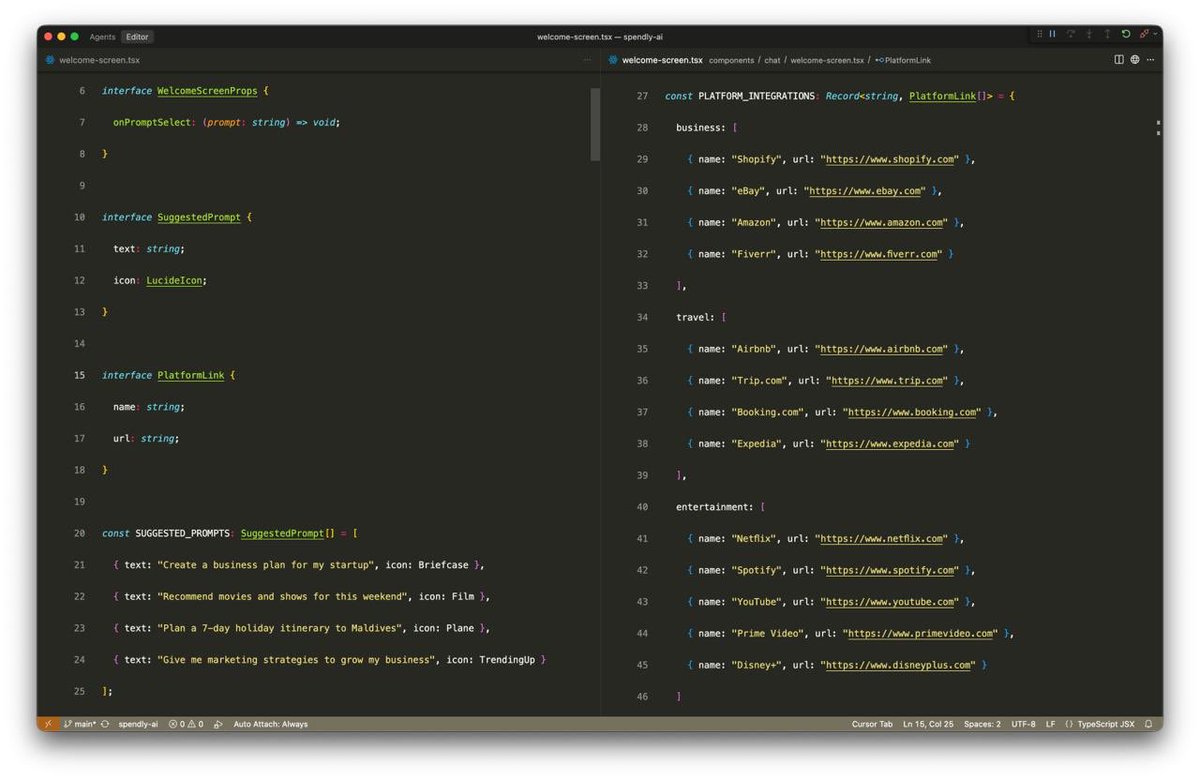
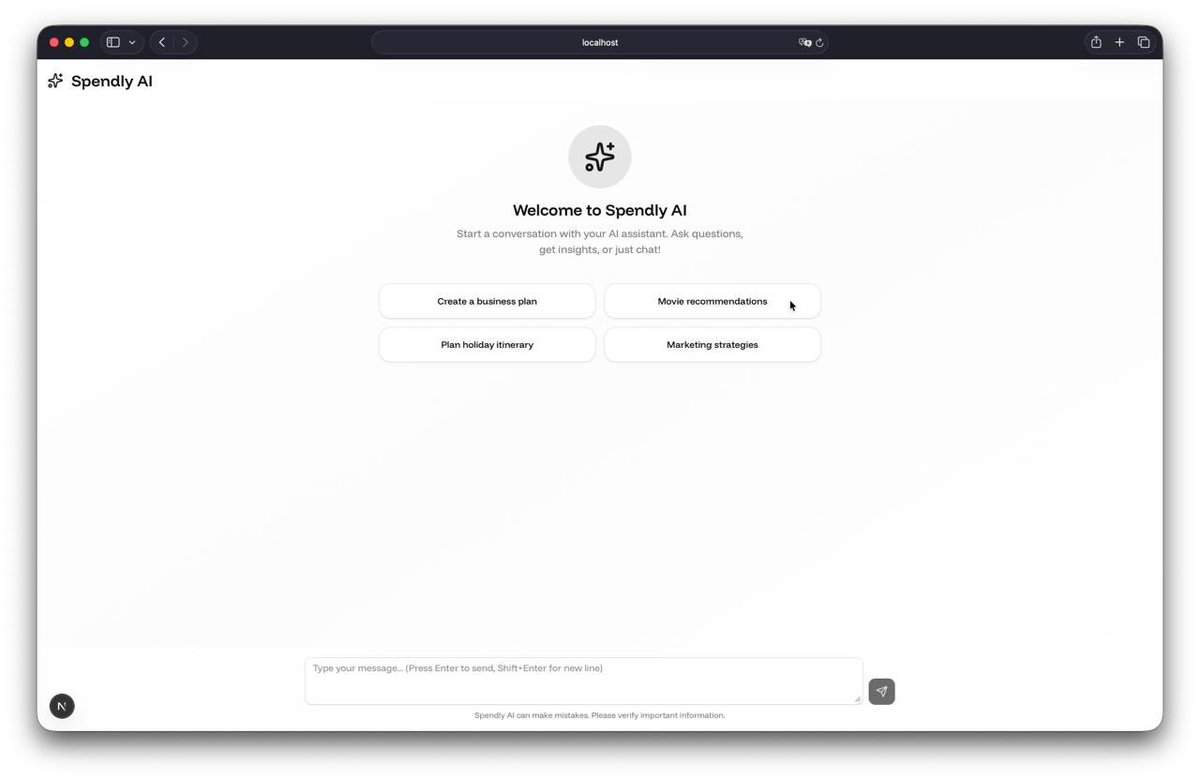
Added welcome suggestions + platform integrations to the Spendly AI onboarding flow today.
Helps new users understand both the “actions” and the “destinations”.
Full usage walkthrough video drops tomorrow.
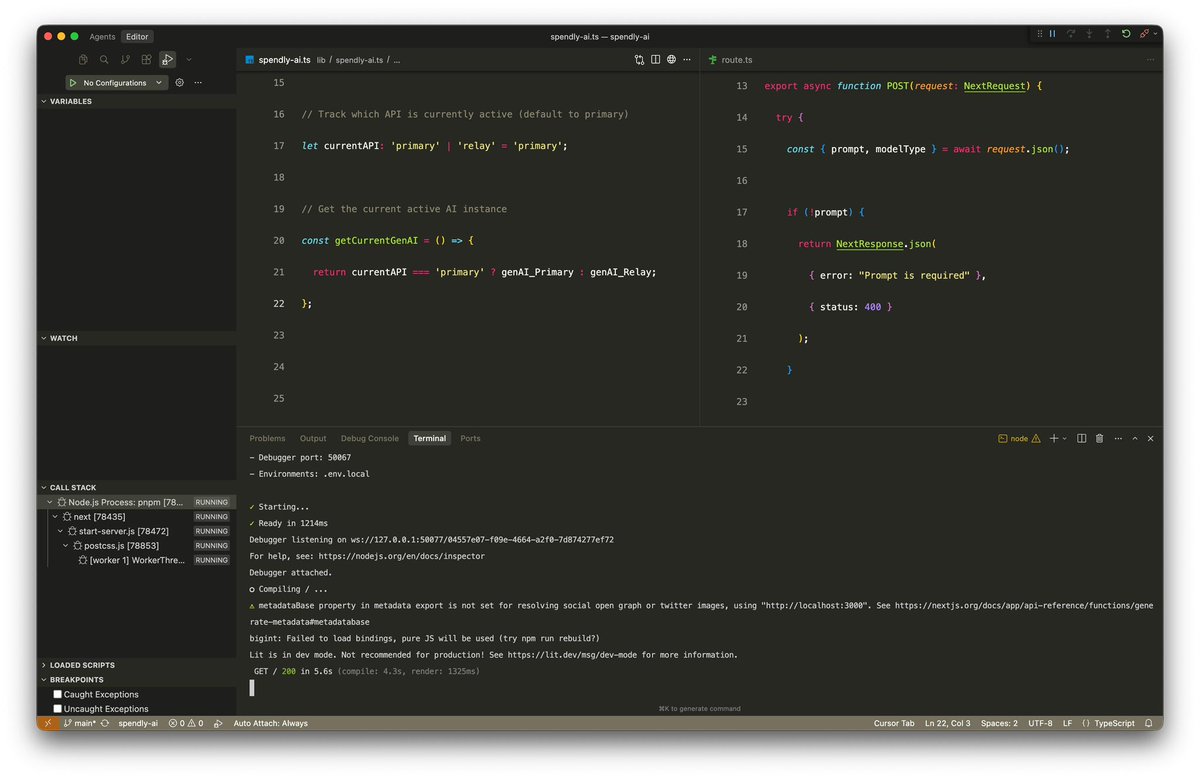
Making sure the AI layer is always available.
I’ve added a simple routing setup with a primary and relay model provider. The app checks which API is active and falls back to the relay instance whenever the primary is unavailable or degraded.
For users this should feel invisible , the conversation keeps flowing even if one provider has issues.
Reliability matters as much as “intelligence”, especially when the agent is sitting in front of real spending decisions.
$SPENDLY already live on @Pumpfun ,now back to building.
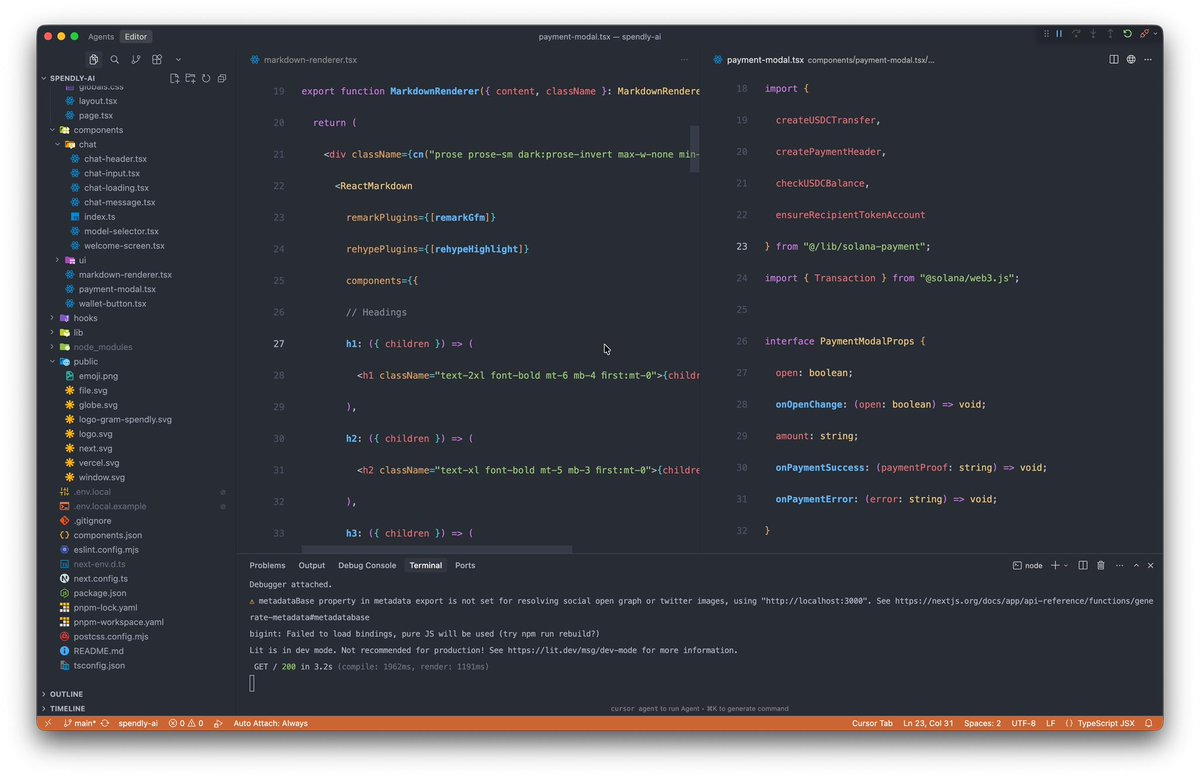
Today’s work: implementing a Markdown rendering layer for agent outputs. Raw LLM text isn’t enough for Spendly , decisions need to be formatted, structured, and readable (lists, headings, links, etc.) for users to evaluate options.
I’ve said this before but I’ll repeat it: I’m treating this as a real product, not a speculative drop. The goal is to finish what I started.
Tomorrow I’ll push updates for the V1 Spendly AI surface with full x402 integration. Still early, still shipping.
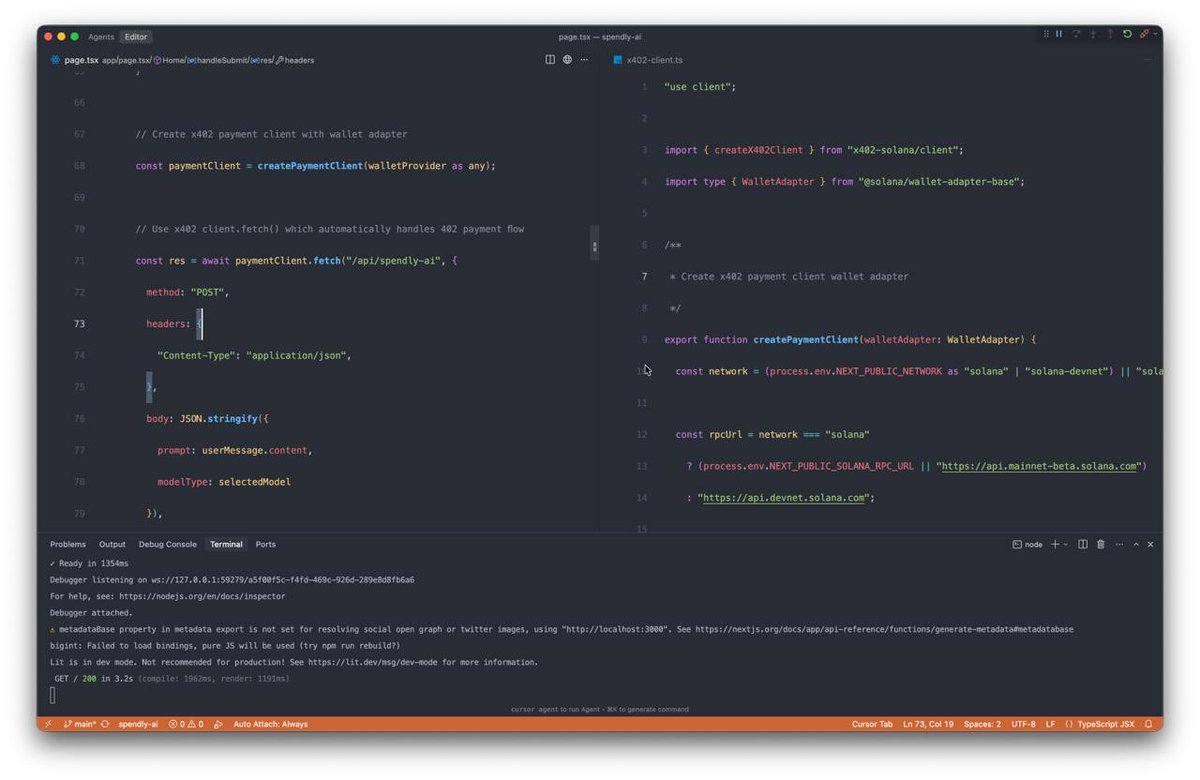
Integrating x402 on the client side.
The idea is simple: each agent interaction is a paid action, so instead of calling the AI endpoint with a plain fetch, the app now uses an x402 client + wallet adapter.
This makes the payment primitive native to the interaction layer. There’s no credits system, no batching, no weird accounting. Just:
Ask → Pay → Receive.
This alignment is what enables Spendly to operate as a proper decision service, not a free inference toy.
#x402 #AIAgent #SOLANA
Once intent → decision works, the next layer is spending.
To spend, you need identity.
We’re adding Solana wallet adapter as the identity + signing layer.
For now it handles:
• wallet connect
• account state
• signing capabilities
We aren’t executing payments yet , just grounding the user in a cryptographic identity before we introduce approvals and on-chain spend flow.
Next steps:
Decision → Spend intent → Approval → Payment
#SPENDLYAI #x402
🎉 Winners Announcement!
Congrats to @igorklose777 and @shopiagracee , each wins $100 for supporting #SPENDLYAI early!
We’ll reach out via DM to collect your Solana address for the payout.
For everyone else who joined early: don’t lose the momentum , being active gives you a bigger chance in future events.
Appreciate the early community 🔥
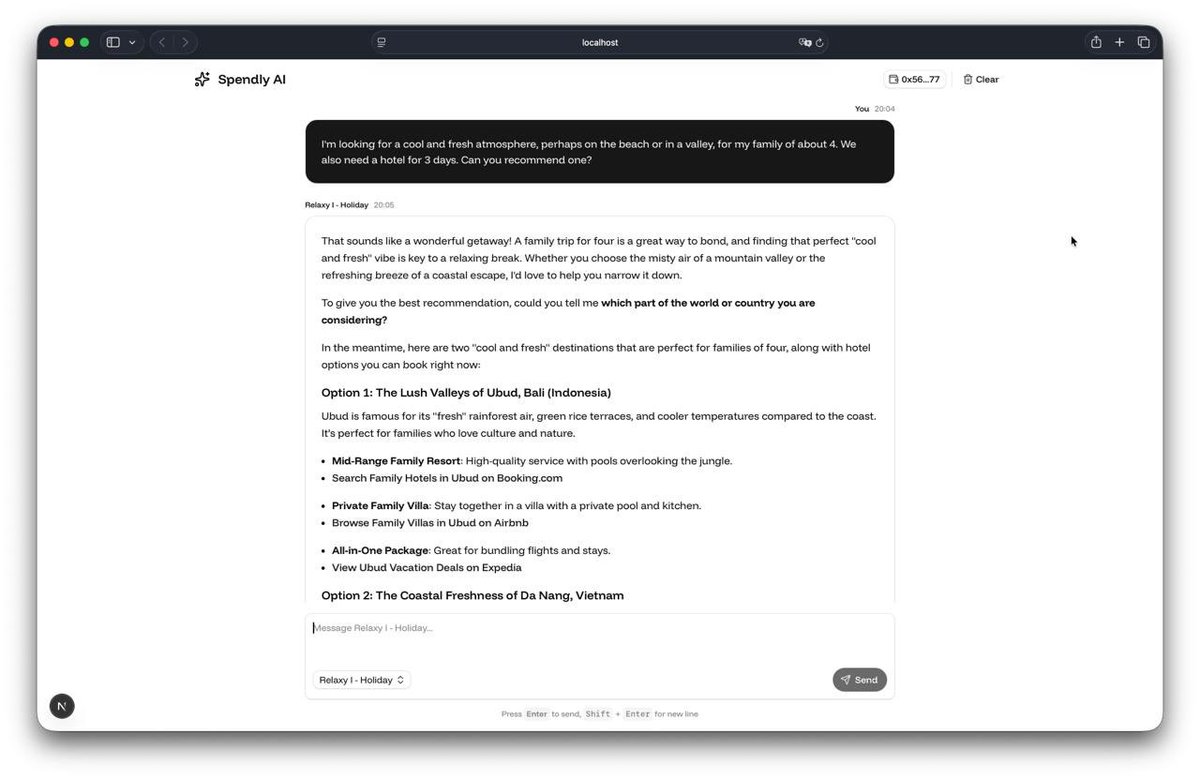
With a UI in place, the next step was to test whether the agent could convert vague human intent into structured recommendations.
Sample test: family travel planning.
Pipeline right now:
User intent → Domain (Holiday) → Clarifying prompt → Options + bookable paths
No budgeting, no pricing, no availability constraints yet ,but the output is already moving beyond “chat” and into actual decisions.
That’s important, because Spendly isn’t built to entertain , it’s built to decide.
So the first thing to build was a minimal UI ,no polish, no payment, just a clean surface where users can express what they want.
The UI currently handles:
• domain starter actions
• prompt entry
• request → response loop
Function first, aesthetics later. The UI is just the shell for the agent layer underneath.
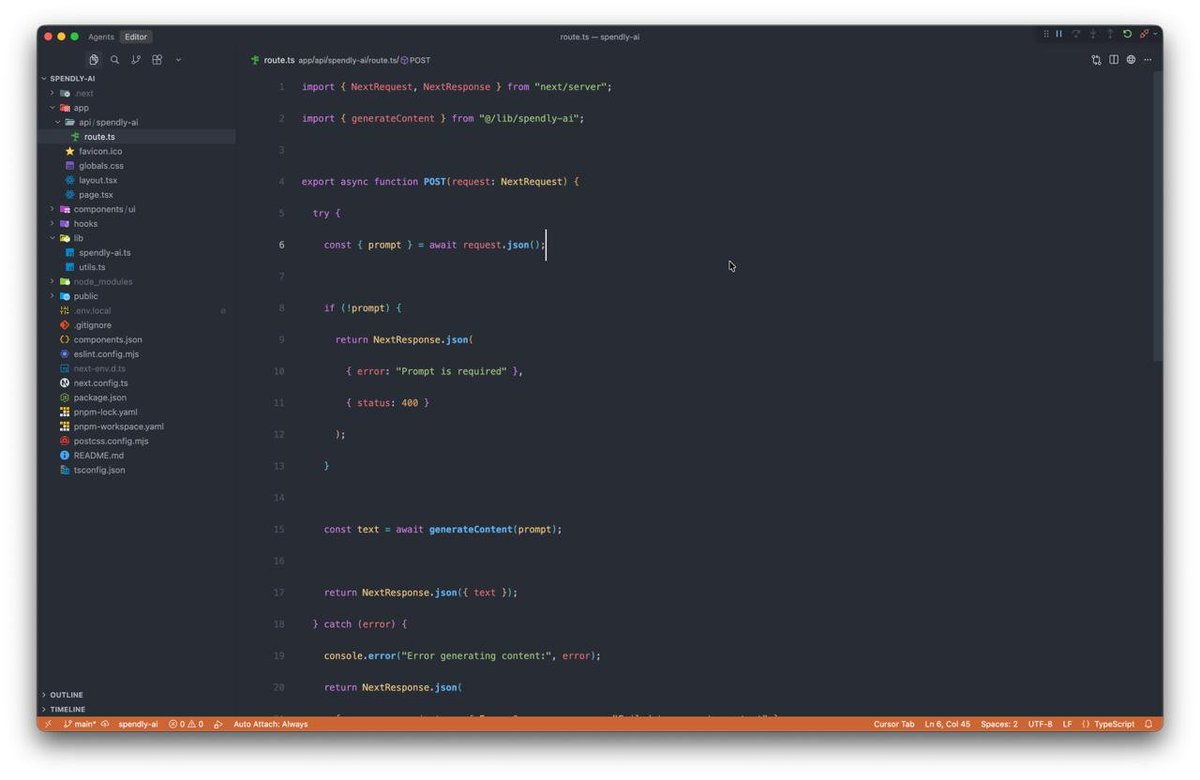
Wiring up the request → response flow for Spendly AI.
Frontend sends a prompt to /api/spendly ai, receives structured JSON back, then turns it into an assistant message in the UI.
just making sure the pipes between the user and the agent are clean before adding all the decision logic on top.
Real products start with boring plumbing.
#SpendlyAI
Wiring up the first request endpoint for Spendly AI.
This is where prompts enter the system and get processed by our agent layer.
It’s small, but every product starts with an entry point.
Decision engines don’t happen overnight , they’re shipped line by line.
I’ll build this in public.
Share the wins, failures, architecture & agents.
Real code, not slide decks.
Follow if you're into AI agents, infra, or real utility.
Use cases:
• Business spending
• Travel & holiday planning
• Personal entertainment & subscriptions
Each consultation is paid (x402).
Paid signals → better decisions.