The Lakers are about to become the first team to blow a 3-0 series lead. It'll be Rockets in 7.
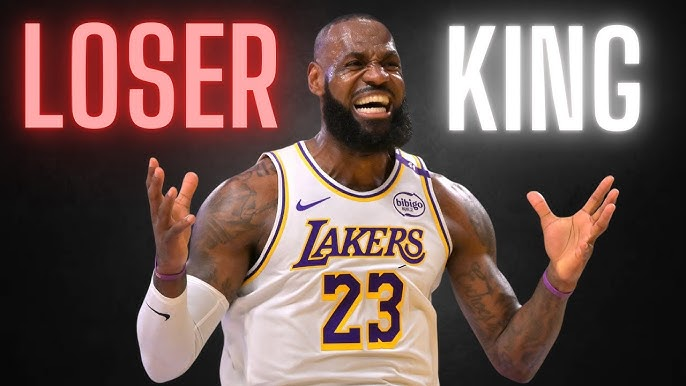
And LeBron James' legacy will be ruined forever.
The Houston Rockets are blowing out the Los Angeles Lakers in Game 4 at Toyota Center, leading by double digits in the fourth quarter with Kevin Durant in street clothes. Durant has not played since spraining his ankle in Game 2. He was not on the bench for Game 3. He has not been a factor in this series since the first half of Game 2, when he scored 23 points before disappearing with three points and nine turnovers in the second half. The Rockets are winning this game without the player who was supposed to be the reason they could compete with anyone in the Western Conference.
And they are not just winning. They are dominating. This is the same Rockets team that the world expected to be swept by the Lakers when the series started. Houston was the fifth seed. They had just watched their best player get exposed in the KD Files during All-Star Weekend. Their locker room was reportedly fractured. And then the Lakers went up 3-0, and it looked like the series was going to end exactly the way everyone predicted, just in the wrong direction.
But the Lakers were always playing on borrowed time. They have not had Luka Doncic for a single minute of this series. Doncic, who was supposed to be their co-star next to LeBron James, has been out with a hamstring injury since before the playoffs started. Austin Reaves has not played either, still recovering from an oblique strain he suffered on April 2. The Lakers' two best perimeter scorers have been unavailable for the entire first round, and the reason Los Angeles went up 3-0 was not because they were the better team. It was because LeBron James is LeBron James, Marcus Smart played out of his mind, and the Rockets kept finding ways to lose games they should have won.
Game 1, the Lakers won 107-98 while Durant sat out with a knee contusion. Game 2, the Lakers won 101-94 after Durant collapsed in the second half. Game 3, the Lakers trailed by six points with 25.4 seconds left in regulation and somehow won in overtime, 112-108, on a LeBron three-pointer and a Marcus Smart takeover in the extra period. None of those wins were comfortable. None of those wins suggested the Lakers were the better team. Every single one of them required something improbable to happen, and improbable things do not keep happening forever.
Now the Rockets are playing the way everyone expected them to play before the series started. They are the team with the deeper roster, the better defense, and the younger legs. They finished the regular season 52-30. They have Alperen Sengun, Jabari Smith Jr., and Amen Thompson, three players who are all 24 or younger and who have all shown they can carry a scoring load in this series. They do not need Kevin Durant to beat a Lakers team that is running on LeBron James, a 41-year-old man who has played every minute of every game like it might be his last, and a supporting cast that was never built to carry a playoff series without its two best wings.
There is a reason the Rockets were favored in this series before it started. There is a reason the betting lines had Houston advancing. The basketball world looked at these two rosters and saw a fifth-seeded team with a top-five scorer and a roster full of young talent on one side, and a fourth-seeded team missing its two best perimeter players on the other. The consensus was clear. Houston was supposed to win this series. The first three games made people forget that. Game 4 is a reminder.
LeBron James is 41 years old. He is in his 23rd NBA season. He has played in more playoff games than any player in history. He carried the Lakers to a 3-0 lead against a team that, on paper, should have been better, and he did it without his two best teammates. That is one of the most impressive stretches of basketball anyone has played at that age. But carrying a team that is not good enough to win without you being superhuman is not sustainable. LeBron was superhuman for three games. He cannot be superhuman for seven.
The Rockets figured that out tonight. They played with the confidence of a team that knows it is more talented, more athletic, and more equipped for a seven-game series than the team across from it. They played like a team that is not afraid of a 3-0 deficit, because they have looked at the Lakers and seen a roster that cannot maintain what it has been doing.
No team in NBA history has ever come back from 3-0 down. It has happened zero times in 156 opportunities. The Lakers are about to hand Houston the chance to be the first, and the Rockets are going to take it. Houston is the better team. Houston has been the better team the entire time. The first three games were an illusion held together by LeBron James' refusal to age and Marcus Smart playing the best basketball of his career at exactly the right time. That illusion broke tonight at Toyota Center, and it is not coming back.
If the Rockets complete this comeback, it will be the most historic collapse in NBA playoff history, and it will be the defining moment of LeBron James' final chapter. Not the championships. Not the scoring record. Not the longevity. The 3-0 lead he could not close. That is what people will remember. That is what will follow him into retirement. And tonight is the night it started.
The Lakers are going down. Houston is the better team. And LeBron James is about to learn what happens when you ask a 41-year-old body to do something it simply cannot do for four more games.
Nikola Jokic and his thug brothers are the biggest examples of white privilege in NBA history.
Just gross, disgusting people who run around starting chaos with no real punishment.
I'm glad someone stole his underwear. The Nuggets lost Game 4 to the Timberwolves on Friday night, 112-96, at Target Center. Denver is now down 3-1 in the series. Jokic finished with 24 points on 8-of-22 shooting, zero threes on three attempts, 15 rebounds, and nine assists. That line looks passable until you remember he is a three-time MVP who is supposed to be the best player in the world, and his team is about to get bounced in the first round for the second time in three years.
But the stat line is not even the story. The story is what happened in the final seconds.
Jaden McDaniels scored a layup with about three seconds left and the Timberwolves already up 16. The game was over. Every player on the floor knew it was over. McDaniels scored anyway. Jokic did not like that. He ran the length of the floor, got in McDaniels' face, grabbed his jersey, and started a confrontation that emptied both benches. Jokic and Julius Randle were both ejected. After the game, Jokic said he did not regret it. "Because he scored after everybody stopped playing," Jokic told reporters.
That is the reigning three-time MVP starting a physical altercation in a game his team was losing by 16 because a 24-year-old forward made a layup. McDaniels' response was simple: "The clock's still running, so I'm about to go score." He was right. The clock was running. Jokic was wrong. And nobody in a position of authority seems interested in saying that out loud.
Then, according to Basketnews, Jokic dealt with a bizarre incident in the visiting locker room after the game, where his underwear was reportedly stolen. On any other night, that would be the strangest story in the NBA. On this night, it was an afterthought, because Jokic had already made a bigger scene on the court.
But this is not just about Game 4. This is about a pattern that has been building for years, and the pattern is not limited to Nikola.
Nikola Jokic has been involved in on-court altercations that would have drawn much harsher consequences for most players. In November 2021, after Markieff Morris committed a hard foul on him in a game against the Miami Heat, Jokic retaliated by shoving Morris from behind with enough force to cause whiplash. Morris missed 58 games. Jokic was suspended one game and fined. Morris was fined $50,000 for the initial foul. The NBA treated it as a mutual exchange. It was not mutual. Morris fouled him. Jokic injured him. One game.
After that incident, Jokic's brothers Strahinja and Nemanja got on social media and threatened Marcus Morris, Markieff's twin brother, writing: "You better stay on this side... we don't play like that." That same postseason, the brothers were seen in the stands at a Nuggets playoff game against the Phoenix Suns, jawing and pointing at opposing players after a hard foul on Nikola.
That behavior has never stopped. It has only escalated.
In April 2024, during a Nuggets playoff game at Ball Arena, Strahinja Jokic punched a fan in the face. Video of the incident went viral on TikTok. The fan suffered cuts and bruising near his left eye and was diagnosed with a concussion. He described it as an unprovoked attack. Strahinja claimed he was defending someone he knew. He was charged, and the case dragged on for over a year before he pleaded guilty to trespassing and disorderly conduct in 2025. A judge sentenced him to one year of probation. One year of probation for punching a man in the face at a basketball game and giving him a concussion.
That was not even the first time Strahinja had been in legal trouble. In 2019, he was arrested for allegedly choking and pushing a woman during a domestic dispute. Police reported he prevented her from calling 911. He pleaded guilty to a lesser misdemeanor count and felony trespassing. The remaining charges were dismissed.
That is the track record. Domestic violence arrest. Social media threats against NBA players. Confrontations with fans from the stands. A fan punched in the face during a playoff game. And a one-year probation sentence that did not interrupt anyone's life in any meaningful way.
Nikola Jokic is a generational talent. He has won three MVPs and a championship. He is the best passing big man the sport has ever produced. Nobody is disputing any of that. But the idea that he and his family operate under a different set of rules than the rest of the league is not a perception problem. It is a documentation problem. The evidence is all there. The shove on Morris that cost a player 58 games and cost Jokic one. The brothers threatening players on social media with no league response. A fan punched in the face at Ball Arena with a sentence that amounted to a slap on the wrist. And now a three-time MVP starting a physical confrontation in a blowout loss because he was upset about a layup, telling reporters afterward he does not regret it, and facing no immediate additional discipline beyond the ejection.
The NBA fined Draymond Green $25,000 for flipping off fans in Memphis. The NBA suspended Ja Morant for 25 games for displaying firearms on social media. The NBA has shown repeatedly that it will act quickly and decisively when it wants to protect its image. When it comes to Nikola Jokic and the people around him, the league has been strikingly lenient, and at some point that leniency stops looking like discretion and starts looking like a choice.
Jokic is 31 years old. He has a $50-million-a-year contract. He is one of the most marketable players in the sport. None of that should matter when it comes to accountability. If a role player on a lottery team had charged an opponent after a blowout loss and started a confrontation in front of both benches, the conversation would already be about a suspension. When Jokic does it, the conversation is about whether McDaniels broke an unwritten rule.
His brothers sit in the stands at games and have a documented history of threatening players and assaulting fans. That is not a family being passionate. That is a pattern of behavior that the league has chosen not to address. And every time the consequences are light or nonexistent, the pattern continues.
I am tired of watching it. The NBA should be tired of it too. Nikola Jokic is one of the greatest basketball players alive, and the circus that surrounds him and his family has become impossible to ignore. At some point, the league has to decide whether the rules apply to everyone, or whether there is a separate standard for three-time MVPs and the people who sit behind their bench.
Right now, the answer to that question is obvious. And that is the problem.
Nikola Jokic and his thug brothers are the biggest examples of white privilege in NBA history.
Just gross, disgusting people who run around starting chaos with no real punishment.
I'm glad someone stole his underwear. The Nuggets lost Game 4 to the Timberwolves on Friday night, 112-96, at Target Center. Denver is now down 3-1 in the series. Jokic finished with 24 points on 8-of-22 shooting, zero threes on three attempts, 15 rebounds, and nine assists. That line looks passable until you remember he is a three-time MVP who is supposed to be the best player in the world, and his team is about to get bounced in the first round for the second time in three years.
But the stat line is not even the story. The story is what happened in the final seconds.
Jaden McDaniels scored a layup with about three seconds left and the Timberwolves already up 16. The game was over. Every player on the floor knew it was over. McDaniels scored anyway. Jokic did not like that. He ran the length of the floor, got in McDaniels' face, grabbed his jersey, and started a confrontation that emptied both benches. Jokic and Julius Randle were both ejected. After the game, Jokic said he did not regret it. "Because he scored after everybody stopped playing," Jokic told reporters.
That is the reigning three-time MVP starting a physical altercation in a game his team was losing by 16 because a 24-year-old forward made a layup. McDaniels' response was simple: "The clock's still running, so I'm about to go score." He was right. The clock was running. Jokic was wrong. And nobody in a position of authority seems interested in saying that out loud.
Then, according to Basketnews, Jokic dealt with a bizarre incident in the visiting locker room after the game, where his underwear was reportedly stolen. On any other night, that would be the strangest story in the NBA. On this night, it was an afterthought, because Jokic had already made a bigger scene on the court.
But this is not just about Game 4. This is about a pattern that has been building for years, and the pattern is not limited to Nikola.
Nikola Jokic has been involved in on-court altercations that would have drawn much harsher consequences for most players. In November 2021, after Markieff Morris committed a hard foul on him in a game against the Miami Heat, Jokic retaliated by shoving Morris from behind with enough force to cause whiplash. Morris missed 58 games. Jokic was suspended one game and fined. Morris was fined $50,000 for the initial foul. The NBA treated it as a mutual exchange. It was not mutual. Morris fouled him. Jokic injured him. One game.
After that incident, Jokic's brothers Strahinja and Nemanja got on social media and threatened Marcus Morris, Markieff's twin brother, writing: "You better stay on this side... we don't play like that." That same postseason, the brothers were seen in the stands at a Nuggets playoff game against the Phoenix Suns, jawing and pointing at opposing players after a hard foul on Nikola.
That behavior has never stopped. It has only escalated.
In April 2024, during a Nuggets playoff game at Ball Arena, Strahinja Jokic punched a fan in the face. Video of the incident went viral on TikTok. The fan suffered cuts and bruising near his left eye and was diagnosed with a concussion. He described it as an unprovoked attack. Strahinja claimed he was defending someone he knew. He was charged, and the case dragged on for over a year before he pleaded guilty to trespassing and disorderly conduct in 2025. A judge sentenced him to one year of probation. One year of probation for punching a man in the face at a basketball game and giving him a concussion.
That was not even the first time Strahinja had been in legal trouble. In 2019, he was arrested for allegedly choking and pushing a woman during a domestic dispute. Police reported he prevented her from calling 911. He pleaded guilty to a lesser misdemeanor count and felony trespassing. The remaining charges were dismissed.
That is the track record. Domestic violence arrest. Social media threats against NBA players. Confrontations with fans from the stands. A fan punched in the face during a playoff game. And a one-year probation sentence that did not interrupt anyone's life in any meaningful way.
Nikola Jokic is a generational talent. He has won three MVPs and a championship. He is the best passing big man the sport has ever produced. Nobody is disputing any of that. But the idea that he and his family operate under a different set of rules than the rest of the league is not a perception problem. It is a documentation problem. The evidence is all there. The shove on Morris that cost a player 58 games and cost Jokic one. The brothers threatening players on social media with no league response. A fan punched in the face at Ball Arena with a sentence that amounted to a slap on the wrist. And now a three-time MVP starting a physical confrontation in a blowout loss because he was upset about a layup, telling reporters afterward he does not regret it, and facing no immediate additional discipline beyond the ejection.
The NBA fined Draymond Green $25,000 for flipping off fans in Memphis. The NBA suspended Ja Morant for 25 games for displaying firearms on social media. The NBA has shown repeatedly that it will act quickly and decisively when it wants to protect its image. When it comes to Nikola Jokic and the people around him, the league has been strikingly lenient, and at some point that leniency stops looking like discretion and starts looking like a choice.
Jokic is 31 years old. He has a $50-million-a-year contract. He is one of the most marketable players in the sport. None of that should matter when it comes to accountability. If a role player on a lottery team had charged an opponent after a blowout loss and started a confrontation in front of both benches, the conversation would already be about a suspension. When Jokic does it, the conversation is about whether McDaniels broke an unwritten rule.
His brothers sit in the stands at games and have a documented history of threatening players and assaulting fans. That is not a family being passionate. That is a pattern of behavior that the league has chosen not to address. And every time the consequences are light or nonexistent, the pattern continues.
I am tired of watching it. The NBA should be tired of it too. Nikola Jokic is one of the greatest basketball players alive, and the circus that surrounds him and his family has become impossible to ignore. At some point, the league has to decide whether the rules apply to everyone, or whether there is a separate standard for three-time MVPs and the people who sit behind their bench.
Right now, the answer to that question is obvious. And that is the problem.
Kevin Durant is such a pathetic weirdo now.
He was once a candidate to be the GOAT and instead he decided to be some sort of annoying incel on social media.
The Houston Rockets are down 0-3 to a Lakers team that has played this entire series without Luka Doncic and Austin Reaves. Last night, the Lakers came back from six points down in the final 25.4 seconds of regulation and won Game 3 in overtime, 112-108, at Toyota Center. LeBron James had 29 points, 13 rebounds, and six assists. Marcus Smart scored eight of the Lakers' 11 overtime points and finished with 21 points, 10 assists, and five steals. The Rockets got at least 24 points from Alperen Sengun, Jabari Smith Jr., and Amen Thompson. It was not enough.
(The problem with KD: https://t.co/jBgBXm6tWz)
Kevin Durant was not on the floor. He was ruled out with a left ankle sprain he suffered in Game 2. But he was not on the bench, either. Durant was in the building but chose not to sit with his teammates during a must-win playoff game. Head coach Ime Udoka said afterward that Durant was "receiving treatment." Whatever he was doing, he was not doing it next to the teammates who were fighting to keep their season alive.
That is Kevin Durant in 2026. His team is getting eliminated from the playoffs, and he cannot even be bothered to sit on the bench.
The Lakers won Game 1 by nine while Durant sat out with a knee contusion he picked up in practice. Durant came back for Game 2, scored 23 points in the first half, then disappeared with just three points and nine turnovers in the second half as the Lakers won 101-94. His own teammate Jabari Smith Jr. publicly said it is "on him to find ways to get himself involved" and that the team still needs him to "be KD." Then Game 3 came, and Durant was not even in the building as far as his teammates were concerned.
The Rockets are the fifth seed in the Western Conference with one of the greatest scorers in NBA history on their roster, and they are down 0-3 to a team whose two best scorers have not played a single minute in this series.
This is what Kevin Durant's career has become. And this series is a perfect reminder of why Kevin Durant is the biggest weirdo in NBA history.
Durant had the talent to be the greatest player who ever lived. That is not an exaggeration. He is a 6-foot-11 scoring machine with a handle like a guard, a jumper that is functionally unguardable, career averages of 27.2 points, 7.0 rebounds, and 4.4 assists, four scoring titles, an MVP, two Finals MVPs, and four Olympic gold medals. He is the all-time leading scorer in USA Basketball Olympic history. At his peak, there was a real argument that Kevin Durant was the most talented offensive player the sport had ever produced. He had the frame, the skill set, and the resume to chase Michael Jordan. Instead, he became the most online athlete in the history of professional sports, and he chose trolling teenagers on Twitter over building a legacy anyone will remember with respect.
The team-hopping tells the story by itself. Durant spent nine seasons in Oklahoma City, where he won an MVP in 2014, made the Finals in 2012, and built something real with Russell Westbrook. Then he blew a 3-1 lead to the Golden State Warriors in the 2016 Western Conference Finals and responded by joining them. He signed with the team that had just beaten him. The team that won 73 games. The team that already had Stephen Curry, Klay Thompson, and Draymond Green. He called it pursuing greatness. The rest of the basketball world called it the weakest move in NBA history, and they were right.
He won two championships with the Warriors, in 2017 and 2018, and won Finals MVP both times. But those rings come with an asterisk so large you can see it from space, because he joined a team that had already won a championship without him and set the all-time wins record without him. The Warriors did not need Kevin Durant. They wanted him because he made them unfair, and Durant wanted them because they made winning easy. He took the most talented basketball career of his generation and removed all the difficulty from it, and then spent the next decade being furious that people noticed.
After three seasons in Golden State, he left for the Brooklyn Nets in 2019 following an Achilles tear in the Finals. He played three seasons in Brooklyn, requested a trade in the summer of 2022, and was shipped to the Phoenix Suns midseason. The Suns missed the playoffs in 2025, so Durant was traded again, this time to Houston in a seven-team deal last July. Five teams in 19 seasons. He has never stayed anywhere long enough to be the foundational piece of something lasting. LeBron James built legacies in Cleveland, Miami, and Los Angeles. Steph Curry became synonymous with Golden State. Tim Duncan was San Antonio for 19 seasons. Kevin Durant is a tourist. He shows up, puts up numbers, and leaves.
And what has he built in Houston? The Rockets finished 52-30 this season, the same record they had the year before he arrived. They dropped from the second seed to the fifth seed. Fred VanVleet tore his ACL before the season started, and rather than elevating the roster through that adversity, Durant's Rockets slid backward. Durant averaged 26.0 points, 5.5 rebounds, and 4.8 assists on efficient shooting splits of 52 percent from the field, 41.3 percent from three, and 87.4 percent from the line. The individual numbers are pristine. The team results tell a different story. And now, in the first round of the playoffs, the team results are telling that story louder than ever.
Then came the KD Files.
During All-Star Weekend in February 2026, leaked screenshots from an alleged Durant burner account surfaced online. The account, operating under the handle @gethigher77, contained private group chat messages trashing current and former teammates. Alperen Sengun was described as a player who "can't shoot or defend." Jabari Smith Jr. was someone Durant allegedly said he "can't trust to make a shot or get a stop." In one message, the account referred to former teammate Devin Booker and former Suns head coach Frank Vogel as "two dictators." The messages also contained disparaging comments about Russell Westbrook, James Harden, and Kyrie Irving.
When asked about it at Rockets practice, Durant's response was: "I'm not here to get into Twitter nonsense." He did not deny it. He did not confirm it. He just dismissed it as beneath him while refusing to actually clear his name, which is exactly what someone who runs burner accounts would do. NBA analyst Antonio Daniels said the scandal "fractured" the Rockets locker room. Multiple reports indicated the team was split over the revelations.
This is not even the first time. In 2017, Durant was caught using a burner account when he accidentally tweeted from his official account in the third person: "He didn't like the organization or playing for Billy Donovan. His roster wasn't that good, it was just him and Russ." He was defending himself to strangers on the internet and forgot to switch accounts. He later apologized and called the tweet "childish and idiotic." In 2019, he admitted to using burner accounts to "interact with friends."
The pattern is not complicated. Kevin Durant is a 37-year-old man who has made over $400 million playing basketball, won two championships, won an MVP, won four Olympic gold medals, and still cannot stop arguing with anonymous accounts on the internet. He has said publicly that responding to trolls is his "coffee in the morning" and gives him a "dopamine hit." He said this on Netflix's Starting 5 documentary, as though it were charming instead of deeply strange. He vowed to "troll on Twitter til the day I expire." He once stayed up until 5 AM trolling people after an Olympic win over Serbia instead of celebrating with his teammates.
That is not normal behavior for a top-five talent in the history of basketball. That is the behavior of someone who cares more about winning arguments with strangers who have never picked up a basketball than about the actual basketball. LeBron James at 37 was chasing scoring records and willing his team into playoff contention. Michael Jordan at 38 was lacing up his sneakers for the Wizards, but at least he was doing it on a basketball court. Kevin Durant at 37 is on his fifth team, down 0-3 in the first round, and he did not even sit on the bench for Game 3. He was in the arena and chose not to be with his teammates while they fought to stay alive. His own teammate has publicly said it is on him to figure it out, and the internet is still debating whether he was the one trashing his roster from a burner account three months ago.
The talent was never the question. Kevin Durant might have the most purely gifted offensive skill set in the history of the sport. The question was always what he would do with it. And the answer turned out to be: join a 73-win team to avoid having to beat them, leave every organization he has ever been part of, trash his teammates from anonymous accounts, argue with teenagers online for dopamine, and end up on a fifth-seeded Rockets team that is down 0-3 to a Lakers squad missing Luka Doncic and Austin Reaves while he watches from somewhere inside the arena, not even willing to sit on the bench next to the teammates he allegedly trashed from a burner account.
He had the potential to be the greatest of all time. He had the height, the handle, the shot, and the resume to get there. Instead, Kevin Durant became the most talented player in NBA history to completely waste his own legacy, not because of injuries or bad luck, but because he would rather be the most online guy in professional sports than the best basketball player on the planet. He chose being a weird, bitter, terminally online troll over greatness, and the Rockets are paying the price for it right now.
That is Kevin Durant's legacy. Not championships. Not MVPs. Not Olympic gold. The guy who could have been the greatest of all time and instead became the NBA's most famous internet troll. Last night his team lost a heartbreaker in overtime to go down 0-3, and Kevin Durant was not even sitting with them when it happened.
Megan Thee Stallion is such a gross chick.
Klay Thompson literally did nothing wrong EXCEPT support the WNBA and she still found a reason to publicly humiliate him.
Megan Thee Stallion is such a gross girl.
Klay Thompson literally did nothing wrong EXCEPT support the WNBA and she still found a reason to publicly humiliate him.
Meg Thee Stallion posted an Instagram story today accusing Klay Thompson of cheating. She wrote: "Cheating, had me around your whole family playing house... got 'cold feet.' Holding you down through all your HORRIBLE mood swings and treatment towards me during your basketball season now you don't know if you can be 'monogamous'????" She followed that up with a statement to TMZ saying trust and fidelity are "non-negotiable" for her and that there is "no real path forward."
The internet is treating this like a scandal. It is not a scandal. It is a Tuesday for Klay Thompson, and anyone who is surprised by this has not been paying attention for the past decade.
Here's a detailed breakdown of why Meg is wrong and Klay is right:
https://t.co/WWc7M6pxNO
Klay Thompson has been exactly this person since at least 2015, when his then-girlfriend Hannah Stocking tweeted: "When you catch ur man naked in bed with a groupie... lol @KlayThompson." That was not a private allegation. That was a public tweet, seen by millions of people, attached to his real name. It has been on the internet for over a decade. It is the first thing that comes up when you search "Klay Thompson girlfriend." Megan Thee Stallion has access to Google.
After Hannah Stocking, Klay dated actress Laura Harrier, who starred in Spider-Man: Homecoming. She traveled with him. She sat courtside at Warriors games. She was with him through his ACL recovery. Then a viral video surfaced of Klay partying with other women while Harrier was not around, and she ended the relationship. That was also public. That was also on the internet. That was also available to anyone who wanted to know what they were getting into before they started dating Klay Thompson.
This is a man who has been linked to a steady rotation of high-profile women for the better part of a decade. Models, influencers, singers, actresses. He has never been married. He has never been engaged. He has never pretended to be a one-woman guy. He named his boat "SS Stallion" a few months into his relationship with Megan. That is not the behavior of a man who is settling down. That is the behavior of a man who is having a good time, and if you cannot tell the difference, that is a reading comprehension issue, not a Klay Thompson issue.
Klay is 36 years old. He has four championship rings. He is one half of the greatest shooting backcourt in NBA history alongside Steph Curry. He is one of the most beloved players of his generation, and the reason he is so beloved is because he has always been exactly himself. He shows up, he shoots threes, he lives his life on his own terms, and he does not apologize for any of it. The same thing that makes him fun to watch on the court is what makes him who he is off the court. He moves at his own pace, on his own terms, and he has never once pretended otherwise.
Megan Thee Stallion is a grown woman who chose to date a man with a well-documented history of doing exactly what she is now accusing him of doing. She dated him for nine months. They went public at her Pete and Thomas Foundation Gala in July 2025. They spent Thanksgiving together. She cooked for his family. He named a boat after her. And at no point during those nine months did she apparently consider that the man who was caught naked with a groupie in 2015 and who was filmed partying with other women while dating Laura Harrier might not be the person to build a house with.
Nobody forced Megan to date Klay Thompson. Nobody hid his history from her. Nobody misrepresented who he was. Klay Thompson has been Klay Thompson for 36 years, and he has been publicly Klay Thompson for at least the last 12. The information was free and it was everywhere.
Posting an Instagram story accusing him of cheating as if this is some kind of betrayal is treating the situation like she was blindsided. She was not blindsided. She dated one of the most famously single athletes in professional sports, a man whose dating history reads like a who's who of Instagram and Hollywood, and she is now upset that he did exactly what every previous woman in his life has said he does. That is not a Klay Thompson problem. That is a choices problem.
Klay did not change. He did not pretend to be something he was not. He did not fake a persona to trick anyone into a relationship. He has been the same person since he entered the NBA in 2011, and he will be the same person tomorrow. He is a four-time champion, a career 41.1 percent three-point shooter, and a man who has never once in his public life claimed to be anything other than what he is. The rest of the world figured that out a long time ago. Megan Thee Stallion just figured it out nine months late.
Klay Thompson did nothing wrong. He is who he has always been. And if you are going to date someone whose entire dating history is publicly available and documented in detail across every corner of the internet, you do not get to act surprised when the pattern continues.
Meg Thee Stallion posted an Instagram story today accusing Klay Thompson of cheating. She wrote: "Cheating, had me around your whole family playing house... got 'cold feet.' Holding you down through all your HORRIBLE mood swings and treatment towards me during your basketball season now you don't know if you can be 'monogamous'????" She followed that up with a statement to TMZ saying trust and fidelity are "non-negotiable" for her and that there is "no real path forward."
The internet is treating this like a scandal. It is not a scandal. It is a Tuesday for Klay Thompson, and anyone who is surprised by this has not been paying attention for the past decade.
Here's a detailed breakdown of why Meg is wrong and Klay is right:
https://t.co/WWc7M6pxNO
Klay Thompson has been exactly this person since at least 2015, when his then-girlfriend Hannah Stocking tweeted: "When you catch ur man naked in bed with a groupie... lol @KlayThompson." That was not a private allegation. That was a public tweet, seen by millions of people, attached to his real name. It has been on the internet for over a decade. It is the first thing that comes up when you search "Klay Thompson girlfriend." Megan Thee Stallion has access to Google.
After Hannah Stocking, Klay dated actress Laura Harrier, who starred in Spider-Man: Homecoming. She traveled with him. She sat courtside at Warriors games. She was with him through his ACL recovery. Then a viral video surfaced of Klay partying with other women while Harrier was not around, and she ended the relationship. That was also public. That was also on the internet. That was also available to anyone who wanted to know what they were getting into before they started dating Klay Thompson.
This is a man who has been linked to a steady rotation of high-profile women for the better part of a decade. Models, influencers, singers, actresses. He has never been married. He has never been engaged. He has never pretended to be a one-woman guy. He named his boat "SS Stallion" a few months into his relationship with Megan. That is not the behavior of a man who is settling down. That is the behavior of a man who is having a good time, and if you cannot tell the difference, that is a reading comprehension issue, not a Klay Thompson issue.
Klay is 36 years old. He has four championship rings. He is one half of the greatest shooting backcourt in NBA history alongside Steph Curry. He is one of the most beloved players of his generation, and the reason he is so beloved is because he has always been exactly himself. He shows up, he shoots threes, he lives his life on his own terms, and he does not apologize for any of it. The same thing that makes him fun to watch on the court is what makes him who he is off the court. He moves at his own pace, on his own terms, and he has never once pretended otherwise.
Megan Thee Stallion is a grown woman who chose to date a man with a well-documented history of doing exactly what she is now accusing him of doing. She dated him for nine months. They went public at her Pete and Thomas Foundation Gala in July 2025. They spent Thanksgiving together. She cooked for his family. He named a boat after her. And at no point during those nine months did she apparently consider that the man who was caught naked with a groupie in 2015 and who was filmed partying with other women while dating Laura Harrier might not be the person to build a house with.
Nobody forced Megan to date Klay Thompson. Nobody hid his history from her. Nobody misrepresented who he was. Klay Thompson has been Klay Thompson for 36 years, and he has been publicly Klay Thompson for at least the last 12. The information was free and it was everywhere.
Posting an Instagram story accusing him of cheating as if this is some kind of betrayal is treating the situation like she was blindsided. She was not blindsided. She dated one of the most famously single athletes in professional sports, a man whose dating history reads like a who's who of Instagram and Hollywood, and she is now upset that he did exactly what every previous woman in his life has said he does. That is not a Klay Thompson problem. That is a choices problem.
Klay did not change. He did not pretend to be something he was not. He did not fake a persona to trick anyone into a relationship. He has been the same person since he entered the NBA in 2011, and he will be the same person tomorrow. He is a four-time champion, a career 41.1 percent three-point shooter, and a man who has never once in his public life claimed to be anything other than what he is. The rest of the world figured that out a long time ago. Megan Thee Stallion just figured it out nine months late.
Klay Thompson did nothing wrong. He is who he has always been. And if you are going to date someone whose entire dating history is publicly available and documented in detail across every corner of the internet, you do not get to act surprised when the pattern continues.
Kevin Durant is such a pathetic weirdo now.
He was once a candidate to be the GOAT and instead he decided to be some sort of annoying incel on social media.
The Houston Rockets are down 0-3 to a Lakers team that has played this entire series without Luka Doncic and Austin Reaves. Last night, the Lakers came back from six points down in the final 25.4 seconds of regulation and won Game 3 in overtime, 112-108, at Toyota Center. LeBron James had 29 points, 13 rebounds, and six assists. Marcus Smart scored eight of the Lakers' 11 overtime points and finished with 21 points, 10 assists, and five steals. The Rockets got at least 24 points from Alperen Sengun, Jabari Smith Jr., and Amen Thompson. It was not enough.
(The problem with KD: https://t.co/jBgBXm6tWz)
Kevin Durant was not on the floor. He was ruled out with a left ankle sprain he suffered in Game 2. But he was not on the bench, either. Durant was in the building but chose not to sit with his teammates during a must-win playoff game. Head coach Ime Udoka said afterward that Durant was "receiving treatment." Whatever he was doing, he was not doing it next to the teammates who were fighting to keep their season alive.
That is Kevin Durant in 2026. His team is getting eliminated from the playoffs, and he cannot even be bothered to sit on the bench.
The Lakers won Game 1 by nine while Durant sat out with a knee contusion he picked up in practice. Durant came back for Game 2, scored 23 points in the first half, then disappeared with just three points and nine turnovers in the second half as the Lakers won 101-94. His own teammate Jabari Smith Jr. publicly said it is "on him to find ways to get himself involved" and that the team still needs him to "be KD." Then Game 3 came, and Durant was not even in the building as far as his teammates were concerned.
The Rockets are the fifth seed in the Western Conference with one of the greatest scorers in NBA history on their roster, and they are down 0-3 to a team whose two best scorers have not played a single minute in this series.
This is what Kevin Durant's career has become. And this series is a perfect reminder of why Kevin Durant is the biggest weirdo in NBA history.
Durant had the talent to be the greatest player who ever lived. That is not an exaggeration. He is a 6-foot-11 scoring machine with a handle like a guard, a jumper that is functionally unguardable, career averages of 27.2 points, 7.0 rebounds, and 4.4 assists, four scoring titles, an MVP, two Finals MVPs, and four Olympic gold medals. He is the all-time leading scorer in USA Basketball Olympic history. At his peak, there was a real argument that Kevin Durant was the most talented offensive player the sport had ever produced. He had the frame, the skill set, and the resume to chase Michael Jordan. Instead, he became the most online athlete in the history of professional sports, and he chose trolling teenagers on Twitter over building a legacy anyone will remember with respect.
The team-hopping tells the story by itself. Durant spent nine seasons in Oklahoma City, where he won an MVP in 2014, made the Finals in 2012, and built something real with Russell Westbrook. Then he blew a 3-1 lead to the Golden State Warriors in the 2016 Western Conference Finals and responded by joining them. He signed with the team that had just beaten him. The team that won 73 games. The team that already had Stephen Curry, Klay Thompson, and Draymond Green. He called it pursuing greatness. The rest of the basketball world called it the weakest move in NBA history, and they were right.
He won two championships with the Warriors, in 2017 and 2018, and won Finals MVP both times. But those rings come with an asterisk so large you can see it from space, because he joined a team that had already won a championship without him and set the all-time wins record without him. The Warriors did not need Kevin Durant. They wanted him because he made them unfair, and Durant wanted them because they made winning easy. He took the most talented basketball career of his generation and removed all the difficulty from it, and then spent the next decade being furious that people noticed.
After three seasons in Golden State, he left for the Brooklyn Nets in 2019 following an Achilles tear in the Finals. He played three seasons in Brooklyn, requested a trade in the summer of 2022, and was shipped to the Phoenix Suns midseason. The Suns missed the playoffs in 2025, so Durant was traded again, this time to Houston in a seven-team deal last July. Five teams in 19 seasons. He has never stayed anywhere long enough to be the foundational piece of something lasting. LeBron James built legacies in Cleveland, Miami, and Los Angeles. Steph Curry became synonymous with Golden State. Tim Duncan was San Antonio for 19 seasons. Kevin Durant is a tourist. He shows up, puts up numbers, and leaves.
And what has he built in Houston? The Rockets finished 52-30 this season, the same record they had the year before he arrived. They dropped from the second seed to the fifth seed. Fred VanVleet tore his ACL before the season started, and rather than elevating the roster through that adversity, Durant's Rockets slid backward. Durant averaged 26.0 points, 5.5 rebounds, and 4.8 assists on efficient shooting splits of 52 percent from the field, 41.3 percent from three, and 87.4 percent from the line. The individual numbers are pristine. The team results tell a different story. And now, in the first round of the playoffs, the team results are telling that story louder than ever.
Then came the KD Files.
During All-Star Weekend in February 2026, leaked screenshots from an alleged Durant burner account surfaced online. The account, operating under the handle @gethigher77, contained private group chat messages trashing current and former teammates. Alperen Sengun was described as a player who "can't shoot or defend." Jabari Smith Jr. was someone Durant allegedly said he "can't trust to make a shot or get a stop." In one message, the account referred to former teammate Devin Booker and former Suns head coach Frank Vogel as "two dictators." The messages also contained disparaging comments about Russell Westbrook, James Harden, and Kyrie Irving.
When asked about it at Rockets practice, Durant's response was: "I'm not here to get into Twitter nonsense." He did not deny it. He did not confirm it. He just dismissed it as beneath him while refusing to actually clear his name, which is exactly what someone who runs burner accounts would do. NBA analyst Antonio Daniels said the scandal "fractured" the Rockets locker room. Multiple reports indicated the team was split over the revelations.
This is not even the first time. In 2017, Durant was caught using a burner account when he accidentally tweeted from his official account in the third person: "He didn't like the organization or playing for Billy Donovan. His roster wasn't that good, it was just him and Russ." He was defending himself to strangers on the internet and forgot to switch accounts. He later apologized and called the tweet "childish and idiotic." In 2019, he admitted to using burner accounts to "interact with friends."
The pattern is not complicated. Kevin Durant is a 37-year-old man who has made over $400 million playing basketball, won two championships, won an MVP, won four Olympic gold medals, and still cannot stop arguing with anonymous accounts on the internet. He has said publicly that responding to trolls is his "coffee in the morning" and gives him a "dopamine hit." He said this on Netflix's Starting 5 documentary, as though it were charming instead of deeply strange. He vowed to "troll on Twitter til the day I expire." He once stayed up until 5 AM trolling people after an Olympic win over Serbia instead of celebrating with his teammates.
That is not normal behavior for a top-five talent in the history of basketball. That is the behavior of someone who cares more about winning arguments with strangers who have never picked up a basketball than about the actual basketball. LeBron James at 37 was chasing scoring records and willing his team into playoff contention. Michael Jordan at 38 was lacing up his sneakers for the Wizards, but at least he was doing it on a basketball court. Kevin Durant at 37 is on his fifth team, down 0-3 in the first round, and he did not even sit on the bench for Game 3. He was in the arena and chose not to be with his teammates while they fought to stay alive. His own teammate has publicly said it is on him to figure it out, and the internet is still debating whether he was the one trashing his roster from a burner account three months ago.
The talent was never the question. Kevin Durant might have the most purely gifted offensive skill set in the history of the sport. The question was always what he would do with it. And the answer turned out to be: join a 73-win team to avoid having to beat them, leave every organization he has ever been part of, trash his teammates from anonymous accounts, argue with teenagers online for dopamine, and end up on a fifth-seeded Rockets team that is down 0-3 to a Lakers squad missing Luka Doncic and Austin Reaves while he watches from somewhere inside the arena, not even willing to sit on the bench next to the teammates he allegedly trashed from a burner account.
He had the potential to be the greatest of all time. He had the height, the handle, the shot, and the resume to get there. Instead, Kevin Durant became the most talented player in NBA history to completely waste his own legacy, not because of injuries or bad luck, but because he would rather be the most online guy in professional sports than the best basketball player on the planet. He chose being a weird, bitter, terminally online troll over greatness, and the Rockets are paying the price for it right now.
That is Kevin Durant's legacy. Not championships. Not MVPs. Not Olympic gold. The guy who could have been the greatest of all time and instead became the NBA's most famous internet troll. Last night his team lost a heartbreaker in overtime to go down 0-3, and Kevin Durant was not even sitting with them when it happened.
Kevin Durant is such a pathetic weirdo now.
He was once a candidate to be the GOAT and instead he decided to be some sort of annoying incel on social media.
The Houston Rockets are down 0-3 to a Lakers team that has played this entire series without Luka Doncic and Austin Reaves. Last night, the Lakers came back from six points down in the final 25.4 seconds of regulation and won Game 3 in overtime, 112-108, at Toyota Center. LeBron James had 29 points, 13 rebounds, and six assists. Marcus Smart scored eight of the Lakers' 11 overtime points and finished with 21 points, 10 assists, and five steals. The Rockets got at least 24 points from Alperen Sengun, Jabari Smith Jr., and Amen Thompson. It was not enough.
(The problem with KD: https://t.co/jBgBXm6tWz)
Kevin Durant was not on the floor. He was ruled out with a left ankle sprain he suffered in Game 2. But he was not on the bench, either. Durant was in the building but chose not to sit with his teammates during a must-win playoff game. Head coach Ime Udoka said afterward that Durant was "receiving treatment." Whatever he was doing, he was not doing it next to the teammates who were fighting to keep their season alive.
That is Kevin Durant in 2026. His team is getting eliminated from the playoffs, and he cannot even be bothered to sit on the bench.
The Lakers won Game 1 by nine while Durant sat out with a knee contusion he picked up in practice. Durant came back for Game 2, scored 23 points in the first half, then disappeared with just three points and nine turnovers in the second half as the Lakers won 101-94. His own teammate Jabari Smith Jr. publicly said it is "on him to find ways to get himself involved" and that the team still needs him to "be KD." Then Game 3 came, and Durant was not even in the building as far as his teammates were concerned.
The Rockets are the fifth seed in the Western Conference with one of the greatest scorers in NBA history on their roster, and they are down 0-3 to a team whose two best scorers have not played a single minute in this series.
This is what Kevin Durant's career has become. And this series is a perfect reminder of why Kevin Durant is the biggest weirdo in NBA history.
Durant had the talent to be the greatest player who ever lived. That is not an exaggeration. He is a 6-foot-11 scoring machine with a handle like a guard, a jumper that is functionally unguardable, career averages of 27.2 points, 7.0 rebounds, and 4.4 assists, four scoring titles, an MVP, two Finals MVPs, and four Olympic gold medals. He is the all-time leading scorer in USA Basketball Olympic history. At his peak, there was a real argument that Kevin Durant was the most talented offensive player the sport had ever produced. He had the frame, the skill set, and the resume to chase Michael Jordan. Instead, he became the most online athlete in the history of professional sports, and he chose trolling teenagers on Twitter over building a legacy anyone will remember with respect.
The team-hopping tells the story by itself. Durant spent nine seasons in Oklahoma City, where he won an MVP in 2014, made the Finals in 2012, and built something real with Russell Westbrook. Then he blew a 3-1 lead to the Golden State Warriors in the 2016 Western Conference Finals and responded by joining them. He signed with the team that had just beaten him. The team that won 73 games. The team that already had Stephen Curry, Klay Thompson, and Draymond Green. He called it pursuing greatness. The rest of the basketball world called it the weakest move in NBA history, and they were right.
He won two championships with the Warriors, in 2017 and 2018, and won Finals MVP both times. But those rings come with an asterisk so large you can see it from space, because he joined a team that had already won a championship without him and set the all-time wins record without him. The Warriors did not need Kevin Durant. They wanted him because he made them unfair, and Durant wanted them because they made winning easy. He took the most talented basketball career of his generation and removed all the difficulty from it, and then spent the next decade being furious that people noticed.
After three seasons in Golden State, he left for the Brooklyn Nets in 2019 following an Achilles tear in the Finals. He played three seasons in Brooklyn, requested a trade in the summer of 2022, and was shipped to the Phoenix Suns midseason. The Suns missed the playoffs in 2025, so Durant was traded again, this time to Houston in a seven-team deal last July. Five teams in 19 seasons. He has never stayed anywhere long enough to be the foundational piece of something lasting. LeBron James built legacies in Cleveland, Miami, and Los Angeles. Steph Curry became synonymous with Golden State. Tim Duncan was San Antonio for 19 seasons. Kevin Durant is a tourist. He shows up, puts up numbers, and leaves.
And what has he built in Houston? The Rockets finished 52-30 this season, the same record they had the year before he arrived. They dropped from the second seed to the fifth seed. Fred VanVleet tore his ACL before the season started, and rather than elevating the roster through that adversity, Durant's Rockets slid backward. Durant averaged 26.0 points, 5.5 rebounds, and 4.8 assists on efficient shooting splits of 52 percent from the field, 41.3 percent from three, and 87.4 percent from the line. The individual numbers are pristine. The team results tell a different story. And now, in the first round of the playoffs, the team results are telling that story louder than ever.
Then came the KD Files.
During All-Star Weekend in February 2026, leaked screenshots from an alleged Durant burner account surfaced online. The account, operating under the handle @gethigher77, contained private group chat messages trashing current and former teammates. Alperen Sengun was described as a player who "can't shoot or defend." Jabari Smith Jr. was someone Durant allegedly said he "can't trust to make a shot or get a stop." In one message, the account referred to former teammate Devin Booker and former Suns head coach Frank Vogel as "two dictators." The messages also contained disparaging comments about Russell Westbrook, James Harden, and Kyrie Irving.
When asked about it at Rockets practice, Durant's response was: "I'm not here to get into Twitter nonsense." He did not deny it. He did not confirm it. He just dismissed it as beneath him while refusing to actually clear his name, which is exactly what someone who runs burner accounts would do. NBA analyst Antonio Daniels said the scandal "fractured" the Rockets locker room. Multiple reports indicated the team was split over the revelations.
This is not even the first time. In 2017, Durant was caught using a burner account when he accidentally tweeted from his official account in the third person: "He didn't like the organization or playing for Billy Donovan. His roster wasn't that good, it was just him and Russ." He was defending himself to strangers on the internet and forgot to switch accounts. He later apologized and called the tweet "childish and idiotic." In 2019, he admitted to using burner accounts to "interact with friends."
The pattern is not complicated. Kevin Durant is a 37-year-old man who has made over $400 million playing basketball, won two championships, won an MVP, won four Olympic gold medals, and still cannot stop arguing with anonymous accounts on the internet. He has said publicly that responding to trolls is his "coffee in the morning" and gives him a "dopamine hit." He said this on Netflix's Starting 5 documentary, as though it were charming instead of deeply strange. He vowed to "troll on Twitter til the day I expire." He once stayed up until 5 AM trolling people after an Olympic win over Serbia instead of celebrating with his teammates.
That is not normal behavior for a top-five talent in the history of basketball. That is the behavior of someone who cares more about winning arguments with strangers who have never picked up a basketball than about the actual basketball. LeBron James at 37 was chasing scoring records and willing his team into playoff contention. Michael Jordan at 38 was lacing up his sneakers for the Wizards, but at least he was doing it on a basketball court. Kevin Durant at 37 is on his fifth team, down 0-3 in the first round, and he did not even sit on the bench for Game 3. He was in the arena and chose not to be with his teammates while they fought to stay alive. His own teammate has publicly said it is on him to figure it out, and the internet is still debating whether he was the one trashing his roster from a burner account three months ago.
The talent was never the question. Kevin Durant might have the most purely gifted offensive skill set in the history of the sport. The question was always what he would do with it. And the answer turned out to be: join a 73-win team to avoid having to beat them, leave every organization he has ever been part of, trash his teammates from anonymous accounts, argue with teenagers online for dopamine, and end up on a fifth-seeded Rockets team that is down 0-3 to a Lakers squad missing Luka Doncic and Austin Reaves while he watches from somewhere inside the arena, not even willing to sit on the bench next to the teammates he allegedly trashed from a burner account.
He had the potential to be the greatest of all time. He had the height, the handle, the shot, and the resume to get there. Instead, Kevin Durant became the most talented player in NBA history to completely waste his own legacy, not because of injuries or bad luck, but because he would rather be the most online guy in professional sports than the best basketball player on the planet. He chose being a weird, bitter, terminally online troll over greatness, and the Rockets are paying the price for it right now.
That is Kevin Durant's legacy. Not championships. Not MVPs. Not Olympic gold. The guy who could have been the greatest of all time and instead became the NBA's most famous internet troll. Last night his team lost a heartbreaker in overtime to go down 0-3, and Kevin Durant was not even sitting with them when it happened.
Paige Shiver literally did nothing wrong.
Sherrone Moore should never work in college sports again.
The University of Michigan is disgusting and deserves to be strongly penalized.
Michigan wants you to believe it acted quickly. Its official statement after firing head football coach Sherrone Moore on December 10, 2025, said the university "terminated Sherrone Moore promptly upon discovering his undisclosed workplace relationship with a direct report." The word "promptly" is doing a lot of heavy lifting in that sentence, because according to the woman on the other side of that relationship, there was nothing to discover. Everyone already knew.
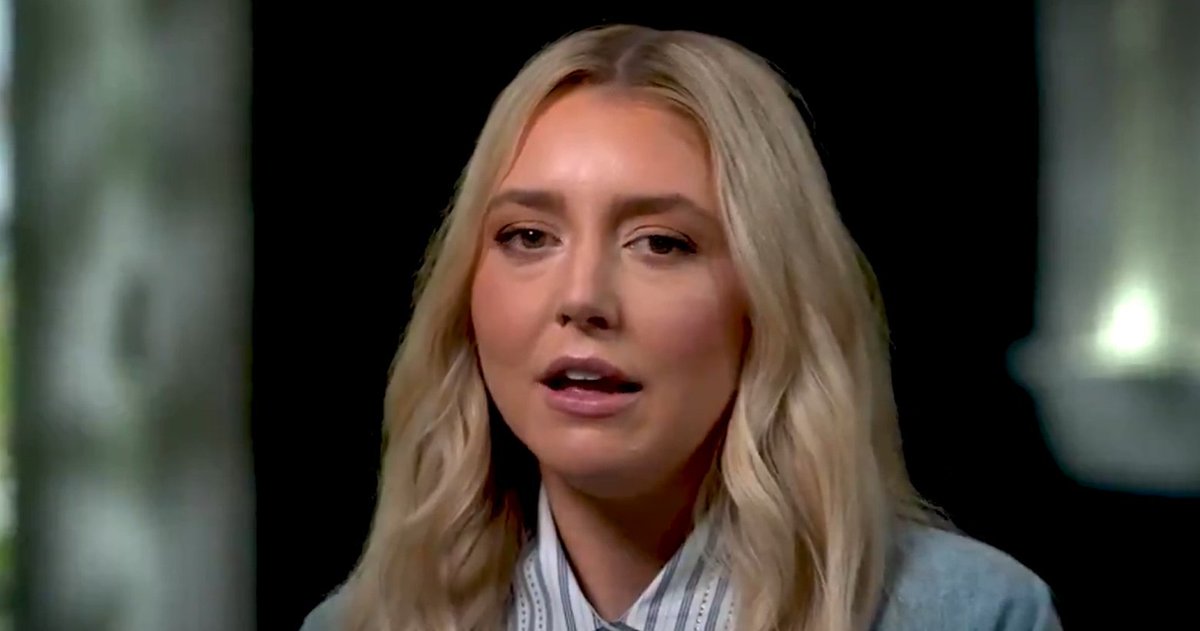
Paige Shiver sat down with ABC News for her first television interview since Moore's sentencing, and the picture she painted on Good Morning America is one of a young woman who was failed at every level by the institution that employed her. Shiver, who is 32 years old, has Pompe disease, a rare and progressive disorder that weakens muscles and affects the heart and respiratory system. She joined the Michigan football program in late 2021, starting as an intern before moving into a recruiting and football operations coordinator role. By January 2022, according to Shiver, her relationship with Moore had become romantic. By February 2024, she had been promoted to executive assistant to the head coach, with her salary jumping from $58,025 to $90,000. And throughout that entire stretch, she says, the people around her knew exactly what was happening.
"They knew the things that he was doing to me and no one did anything about it because they cared more about winning football games, not having another scandal, and trying to protect the head coach," Shiver told ABC News.
That is not the statement of someone who was hiding. That is the statement of someone who was visible the entire time and watched the institution around her choose football over her safety.
Shiver described the relationship as one that started consensually but became something she could not escape. She told GMA that Moore "had complete control over me, over my emotions, over my career, and he knew that, and he used it against me." She said Moore would threaten suicide every time she tried to end the relationship. She said senior coaches on staff told her to console Moore "to calm him down" when he was upset, sometimes during game halftimes. She was not just in a relationship with a coach who would eventually run the entire program. She was being used as an emotional management tool by the coaching staff, and nobody in a position of authority at Michigan thought that was a problem worth addressing.
In May 2022, Shiver became pregnant. Her doctors told her that carrying the pregnancy to term would not be safe because of her Pompe disease. She has said she wanted to keep the baby. Moore, according to Shiver, encouraged the abortion. She had the procedure in July 2022. That was nearly three and a half years before Michigan claims it "discovered" the relationship.
Michigan received a warning about Moore's behavior with women in the fall of 2024, during his first season as head coach. Reports indicate that university officials were alerted to concerning social media interactions Moore had with women. The university reportedly determined those interactions were not criminal and did not constitute sexual harassment, but acknowledged they showed poor judgment. That was the moment to look harder. That was the moment to ask whether the head coach who was displaying poor judgment with women online might also be displaying poor judgment with the woman who sat outside his office every day. Michigan chose not to ask that question.
By October 2025, the university's human resources department did interview Shiver about the relationship. Shiver has acknowledged that she denied it during that interview. That denial does not absolve Michigan. It confirms that the university had enough information to conduct an HR investigation but chose to rely on a single interview with a subordinate who was, by her own account, under the complete control of the man she was being asked about. If the relationship was the "open secret" Shiver describes, and if senior coaches were actively involving her in Moore's emotional management, then the university had access to corroborating witnesses it apparently never spoke to, or spoke to and ignored.
Michigan eventually fired Moore on December 10, 2025. What happened next tells you everything about who was protected and who was not. On the same day he was fired, Moore went to Shiver's apartment. According to police, he forced his way inside, grabbed butter knives and scissors, and threatened to kill himself. Shiver told ABC News she feared for her life and asked him repeatedly to leave. He blamed her for his firing. He was arrested that evening and charged with third-degree home invasion, stalking, and breaking and entering.
Those charges were later reduced through a plea deal. In March 2026, Moore pleaded no contest to two misdemeanors: malicious use of a telecommunications device in a domestic context and trespassing. On April 14, 2026, he was sentenced to 18 months of probation and a $1,000 fine. The judge barred him from using drugs or alcohol, possessing firearms, or having any contact with Shiver, and ordered him to continue counseling. Eighteen months of probation. A thousand-dollar fine. For a man who, according to police, forced his way into a woman's home and threatened violence on the same day he was fired. The felony home invasion charge was dropped. The stalking charge was dropped. The breaking and entering charge was dropped. What remained were two misdemeanors and a sentence that will not interrupt Moore's life in any meaningful way. Judge Cedric Simpson told Moore during sentencing: "The person, quite frankly, Mr. Moore, that is saving you from the full wrath of this court is the one you betrayed," referring to Moore's wife Kelli, whose impact letter the judge said "certainly had the biggest impact" on his decision. Even the sentencing was about Moore's wife. Not about the woman he allegedly terrorized in her own apartment.
Now look at what happened to Paige Shiver. She lost her job. She lost her privacy. Her name was dragged through every sports media outlet in the country. She has a progressive disease that affects her ability to work and live independently. She had an abortion she did not want because her body could not safely carry a pregnancy. She was used as an emotional handler by a coaching staff that knew about her relationship with the head coach. And the institution that employed her, the one that claims it acted "promptly," did not protect her at any point during the nearly four years this was happening.
Michigan's statement said Moore's "conduct violated university policy, and we expect more from our leaders." That sentence is written as though the university had no role in what happened. As though it was a passive observer. As though the head coach of the football program having a years-long relationship with his direct report, a relationship that multiple staff members allegedly knew about, is something that just happened to the university rather than something the university allowed to happen.
Shiver's attorneys have described what happened as a "systemic failure" that "created and enabled a hostile environment." That language is strong, but the facts support it. A head coach entered a relationship with a subordinate. That subordinate became pregnant and had an abortion. Senior coaches used her to manage the head coach's emotions. The university was warned about the coach's behavior with women. The university conducted an HR investigation and accepted a denial from the subordinate without apparently pursuing other witnesses. And when the coach was finally fired, he went to her home and police had to be called.
At no point in that sequence did the University of Michigan protect Paige Shiver. At no point did anyone in a position of authority intervene on behalf of a 32-year-old woman with a serious medical condition who was, by her account, trapped in a relationship with one of the most powerful people in her workplace, a man who became the most powerful when he was named head coach in January 2024. The university protected its football program. It protected its brand. And when the situation became impossible to ignore, it fired the coach, issued a statement, and moved on.
Paige Shiver did not move on. She is the one sitting in front of a camera on Good Morning America, telling the country what happened to her. She is the one whose medical history is now public. She is the one whose name will be permanently attached to this story. And she is the one who, according to every account that has been made public, was the person with the least power in every room she walked into during her time at Michigan.
Moore had the title and the power. Michigan had the resources and the responsibility to intervene. Shiver was the subordinate with a rare disease who was told to go calm down her boss during halftime. The people with power chose not to act until it was too late, and the person without power is the one still paying for it.
Michigan wants credit for firing Moore promptly. It does not deserve credit for anything. It deserves scrutiny for every month between January 2022 and December 2025 when Paige Shiver was inside that building, and the institution that was supposed to protect its employees chose to look the other way.
Paige Shiver literally did nothing wrong.
Sherrone Moore should never work in college sports again.
The University of Michigan is disgusting and deserves to be strongly penalized.
Michigan wants you to believe it acted quickly. Its official statement after firing head football coach Sherrone Moore on December 10, 2025, said the university "terminated Sherrone Moore promptly upon discovering his undisclosed workplace relationship with a direct report." The word "promptly" is doing a lot of heavy lifting in that sentence, because according to the woman on the other side of that relationship, there was nothing to discover. Everyone already knew.
Paige Shiver sat down with ABC News for her first television interview since Moore's sentencing, and the picture she painted on Good Morning America is one of a young woman who was failed at every level by the institution that employed her. Shiver, who is 32 years old, has Pompe disease, a rare and progressive disorder that weakens muscles and affects the heart and respiratory system. She joined the Michigan football program in late 2021, starting as an intern before moving into a recruiting and football operations coordinator role. By January 2022, according to Shiver, her relationship with Moore had become romantic. By February 2024, she had been promoted to executive assistant to the head coach, with her salary jumping from $58,025 to $90,000. And throughout that entire stretch, she says, the people around her knew exactly what was happening.
"They knew the things that he was doing to me and no one did anything about it because they cared more about winning football games, not having another scandal, and trying to protect the head coach," Shiver told ABC News.
That is not the statement of someone who was hiding. That is the statement of someone who was visible the entire time and watched the institution around her choose football over her safety.
Shiver described the relationship as one that started consensually but became something she could not escape. She told GMA that Moore "had complete control over me, over my emotions, over my career, and he knew that, and he used it against me." She said Moore would threaten suicide every time she tried to end the relationship. She said senior coaches on staff told her to console Moore "to calm him down" when he was upset, sometimes during game halftimes. She was not just in a relationship with a coach who would eventually run the entire program. She was being used as an emotional management tool by the coaching staff, and nobody in a position of authority at Michigan thought that was a problem worth addressing.
In May 2022, Shiver became pregnant. Her doctors told her that carrying the pregnancy to term would not be safe because of her Pompe disease. She has said she wanted to keep the baby. Moore, according to Shiver, encouraged the abortion. She had the procedure in July 2022. That was nearly three and a half years before Michigan claims it "discovered" the relationship.
Michigan received a warning about Moore's behavior with women in the fall of 2024, during his first season as head coach. Reports indicate that university officials were alerted to concerning social media interactions Moore had with women. The university reportedly determined those interactions were not criminal and did not constitute sexual harassment, but acknowledged they showed poor judgment. That was the moment to look harder. That was the moment to ask whether the head coach who was displaying poor judgment with women online might also be displaying poor judgment with the woman who sat outside his office every day. Michigan chose not to ask that question.
By October 2025, the university's human resources department did interview Shiver about the relationship. Shiver has acknowledged that she denied it during that interview. That denial does not absolve Michigan. It confirms that the university had enough information to conduct an HR investigation but chose to rely on a single interview with a subordinate who was, by her own account, under the complete control of the man she was being asked about. If the relationship was the "open secret" Shiver describes, and if senior coaches were actively involving her in Moore's emotional management, then the university had access to corroborating witnesses it apparently never spoke to, or spoke to and ignored.
Michigan eventually fired Moore on December 10, 2025. What happened next tells you everything about who was protected and who was not. On the same day he was fired, Moore went to Shiver's apartment. According to police, he forced his way inside, grabbed butter knives and scissors, and threatened to kill himself. Shiver told ABC News she feared for her life and asked him repeatedly to leave. He blamed her for his firing. He was arrested that evening and charged with third-degree home invasion, stalking, and breaking and entering.
Those charges were later reduced through a plea deal. In March 2026, Moore pleaded no contest to two misdemeanors: malicious use of a telecommunications device in a domestic context and trespassing. On April 14, 2026, he was sentenced to 18 months of probation and a $1,000 fine. The judge barred him from using drugs or alcohol, possessing firearms, or having any contact with Shiver, and ordered him to continue counseling. Eighteen months of probation. A thousand-dollar fine. For a man who, according to police, forced his way into a woman's home and threatened violence on the same day he was fired. The felony home invasion charge was dropped. The stalking charge was dropped. The breaking and entering charge was dropped. What remained were two misdemeanors and a sentence that will not interrupt Moore's life in any meaningful way. Judge Cedric Simpson told Moore during sentencing: "The person, quite frankly, Mr. Moore, that is saving you from the full wrath of this court is the one you betrayed," referring to Moore's wife Kelli, whose impact letter the judge said "certainly had the biggest impact" on his decision. Even the sentencing was about Moore's wife. Not about the woman he allegedly terrorized in her own apartment.
Now look at what happened to Paige Shiver. She lost her job. She lost her privacy. Her name was dragged through every sports media outlet in the country. She has a progressive disease that affects her ability to work and live independently. She had an abortion she did not want because her body could not safely carry a pregnancy. She was used as an emotional handler by a coaching staff that knew about her relationship with the head coach. And the institution that employed her, the one that claims it acted "promptly," did not protect her at any point during the nearly four years this was happening.
Michigan's statement said Moore's "conduct violated university policy, and we expect more from our leaders." That sentence is written as though the university had no role in what happened. As though it was a passive observer. As though the head coach of the football program having a years-long relationship with his direct report, a relationship that multiple staff members allegedly knew about, is something that just happened to the university rather than something the university allowed to happen.
Shiver's attorneys have described what happened as a "systemic failure" that "created and enabled a hostile environment." That language is strong, but the facts support it. A head coach entered a relationship with a subordinate. That subordinate became pregnant and had an abortion. Senior coaches used her to manage the head coach's emotions. The university was warned about the coach's behavior with women. The university conducted an HR investigation and accepted a denial from the subordinate without apparently pursuing other witnesses. And when the coach was finally fired, he went to her home and police had to be called.
At no point in that sequence did the University of Michigan protect Paige Shiver. At no point did anyone in a position of authority intervene on behalf of a 32-year-old woman with a serious medical condition who was, by her account, trapped in a relationship with one of the most powerful people in her workplace, a man who became the most powerful when he was named head coach in January 2024. The university protected its football program. It protected its brand. And when the situation became impossible to ignore, it fired the coach, issued a statement, and moved on.
Paige Shiver did not move on. She is the one sitting in front of a camera on Good Morning America, telling the country what happened to her. She is the one whose medical history is now public. She is the one whose name will be permanently attached to this story. And she is the one who, according to every account that has been made public, was the person with the least power in every room she walked into during her time at Michigan.
Moore had the title and the power. Michigan had the resources and the responsibility to intervene. Shiver was the subordinate with a rare disease who was told to go calm down her boss during halftime. The people with power chose not to act until it was too late, and the person without power is the one still paying for it.
Michigan wants credit for firing Moore promptly. It does not deserve credit for anything. It deserves scrutiny for every month between January 2022 and December 2025 when Paige Shiver was inside that building, and the institution that was supposed to protect its employees chose to look the other way.
So gross that Mike Vrabel has to miss the NFL Draft while Dianna Russini skips away with no punishment.
Very typical though.
Page Six just published photographs of Mike Vrabel and Dianna Russini kissing at a bar in New York City in March 2020. The photos, taken in the early hours of March 11, 2020, show the two of them sitting close together at a dimly lit bar, leaning into each other, and appearing to share a kiss. An eyewitness told Page Six: "They were kissing and they were all over each other." The witness also noted: "He had a ring on." A second eyewitness described the scene: "They were having a glorious time. They were giving each other pecks, a bunch of pecks constantly."
At the time of those photos, Vrabel was head coach of the Tennessee Titans and had been married to his wife Jen since 1999. Russini was covering the NFL for ESPN and was not yet married. She married Kevin Goldschmidt approximately six months later, in September 2020.
These photos change everything about this story.
When the Arizona resort photos were published on April 7, Vrabel called the interaction "completely innocent" and said "any suggestion otherwise is laughable." Russini said the photos "don't represent the group of six people who were hanging out during the day." Both framed the Sedona meeting as an isolated, innocent encounter between a reporter and a source that happened to get photographed in an unflattering way.
The 2020 kissing photos make that framing unsustainable. These are not photos of a journalist and a source meeting professionally. These are photos of two people kissing in a bar six years before the resort photos, while one of them was married and the other was covering his team for a national sports network. Whatever this relationship was, it was not new in March 2026. It dates back at least six years.
The timing of these photos also raises questions about Vrabel's decision to seek counseling. Page Six reportedly contacted Vrabel on Wednesday afternoon seeking comment on the 2020 photos. He did not respond to the Post. Hours later, he announced through ESPN that he would miss Day 3 of the NFL Draft to seek counseling. Whether those events are connected is something only Vrabel knows, but the timing has not gone unnoticed.
Russini's silence, which was already conspicuous, is now deafening. She resigned from The Athletic on April 14 after an investigation was launched into the nature of her relationship with Vrabel and whether she had been honest with her employer about it. Her resignation letter, posted on X, contained no apology and no acknowledgment of wrongdoing. She wrote that she "stands behind every story I have ever published." She described the scrutiny as "self-feeding speculation that is simply unmoored from the facts."
The 2020 photos suggest the speculation was not unmoored from anything. The speculation was pointing in exactly the right direction.
Russini covered the Tennessee Titans for ESPN during Vrabel's entire six-season tenure as head coach from 2018 to 2023. The kissing photos are from March 2020, which places them squarely in the middle of that coverage window. Every story Russini filed about the Titans during that period, every piece of insider information she reported, every source she cited now exists under a shadow that cannot be explained away. The question that hung over her reporting after the Arizona photos is now louder than ever: was her access to Vrabel's teams the product of professional journalism, or was it the product of a personal relationship with the head coach?
The "group of six" defense is gone. The "completely innocent" defense is gone. The framing of the Sedona trip as a one-time meeting between a reporter and a source is gone. What remains are photos of two people kissing in a bar in 2020, photos of the same two people holding hands, hugging, and sitting in a hot tub at a resort in 2026, new photos of them having breakfast alone at that resort, three eyewitnesses who said they did not see anyone else with them in Sedona, and a journalist who resigned before her employer could finish investigating her.
Some on social media have noted that Russini's first son, born in August 2021, is named Michael, and have attempted to connect that to the 2020 photos. That speculation is baseless. The timeline alone debunks it. March 2020 to August 2021 is approximately 17 months, far longer than a pregnancy. The name Michael is one of the most common names in the country, and drawing conclusions from a first name is irresponsible. Russini's children are private citizens who had no say in any of this, and they should be left out of it entirely.
What is part of this story is the professional conduct of a journalist who was photographed kissing the head coach she was covering two years into her beat assignment, who then continued covering him for three more years, who ended up covering his new team after he was hired by the Patriots, who was photographed with him again at a luxury resort, who could not produce evidence for her explanation, who resigned before an investigation could conclude, and who has said nothing publicly beyond a resignation letter that blamed the media for covering a story the media had every right to cover.
Vrabel has taken accountability at every step. He addressed his family. He addressed his team. He addressed the media. He committed to counseling. He is missing the NFL Draft. He has done more than any football coach has ever been asked to do in response to a personal situation, and he may not have done anything wrong.
Russini has taken none. And with each new set of photos that surfaces, the gap between the accountability Vrabel has shown and the accountability Russini has refused to show gets wider.
The 2020 photos are the story now. Not because they prove wrongdoing. Not because they confirm anything about anyone's personal life. But because they prove that the relationship between Vrabel and Russini was not what either of them described it as when the Arizona photos were published. They both had a chance to be honest about the nature of their relationship. Vrabel called it "completely innocent." Russini called it a "group of six" hangout. The photos from a New York City bar six years earlier tell a different story.
So gross that Mike Vrabel has to miss the NFL Draft while Dianna Russini skips away with no punishment.
Very typical though.
Page Six just published photographs of Mike Vrabel and Dianna Russini kissing at a bar in New York City in March 2020. The photos, taken in the early hours of March 11, 2020, show the two of them sitting close together at a dimly lit bar, leaning into each other, and appearing to share a kiss. An eyewitness told Page Six: "They were kissing and they were all over each other." The witness also noted: "He had a ring on." A second eyewitness described the scene: "They were having a glorious time. They were giving each other pecks, a bunch of pecks constantly."
At the time of those photos, Vrabel was head coach of the Tennessee Titans and had been married to his wife Jen since 1999. Russini was covering the NFL for ESPN and was not yet married. She married Kevin Goldschmidt approximately six months later, in September 2020.
These photos change everything about this story.
When the Arizona resort photos were published on April 7, Vrabel called the interaction "completely innocent" and said "any suggestion otherwise is laughable." Russini said the photos "don't represent the group of six people who were hanging out during the day." Both framed the Sedona meeting as an isolated, innocent encounter between a reporter and a source that happened to get photographed in an unflattering way.
The 2020 kissing photos make that framing unsustainable. These are not photos of a journalist and a source meeting professionally. These are photos of two people kissing in a bar six years before the resort photos, while one of them was married and the other was covering his team for a national sports network. Whatever this relationship was, it was not new in March 2026. It dates back at least six years.
The timing of these photos also raises questions about Vrabel's decision to seek counseling. Page Six reportedly contacted Vrabel on Wednesday afternoon seeking comment on the 2020 photos. He did not respond to the Post. Hours later, he announced through ESPN that he would miss Day 3 of the NFL Draft to seek counseling. Whether those events are connected is something only Vrabel knows, but the timing has not gone unnoticed.
Russini's silence, which was already conspicuous, is now deafening. She resigned from The Athletic on April 14 after an investigation was launched into the nature of her relationship with Vrabel and whether she had been honest with her employer about it. Her resignation letter, posted on X, contained no apology and no acknowledgment of wrongdoing. She wrote that she "stands behind every story I have ever published." She described the scrutiny as "self-feeding speculation that is simply unmoored from the facts."
The 2020 photos suggest the speculation was not unmoored from anything. The speculation was pointing in exactly the right direction.
Russini covered the Tennessee Titans for ESPN during Vrabel's entire six-season tenure as head coach from 2018 to 2023. The kissing photos are from March 2020, which places them squarely in the middle of that coverage window. Every story Russini filed about the Titans during that period, every piece of insider information she reported, every source she cited now exists under a shadow that cannot be explained away. The question that hung over her reporting after the Arizona photos is now louder than ever: was her access to Vrabel's teams the product of professional journalism, or was it the product of a personal relationship with the head coach?
The "group of six" defense is gone. The "completely innocent" defense is gone. The framing of the Sedona trip as a one-time meeting between a reporter and a source is gone. What remains are photos of two people kissing in a bar in 2020, photos of the same two people holding hands, hugging, and sitting in a hot tub at a resort in 2026, new photos of them having breakfast alone at that resort, three eyewitnesses who said they did not see anyone else with them in Sedona, and a journalist who resigned before her employer could finish investigating her.
Some on social media have noted that Russini's first son, born in August 2021, is named Michael, and have attempted to connect that to the 2020 photos. That speculation is baseless. The timeline alone debunks it. March 2020 to August 2021 is approximately 17 months, far longer than a pregnancy. The name Michael is one of the most common names in the country, and drawing conclusions from a first name is irresponsible. Russini's children are private citizens who had no say in any of this, and they should be left out of it entirely.
What is part of this story is the professional conduct of a journalist who was photographed kissing the head coach she was covering two years into her beat assignment, who then continued covering him for three more years, who ended up covering his new team after he was hired by the Patriots, who was photographed with him again at a luxury resort, who could not produce evidence for her explanation, who resigned before an investigation could conclude, and who has said nothing publicly beyond a resignation letter that blamed the media for covering a story the media had every right to cover.
Vrabel has taken accountability at every step. He addressed his family. He addressed his team. He addressed the media. He committed to counseling. He is missing the NFL Draft. He has done more than any football coach has ever been asked to do in response to a personal situation, and he may not have done anything wrong.
Russini has taken none. And with each new set of photos that surfaces, the gap between the accountability Vrabel has shown and the accountability Russini has refused to show gets wider.
The 2020 photos are the story now. Not because they prove wrongdoing. Not because they confirm anything about anyone's personal life. But because they prove that the relationship between Vrabel and Russini was not what either of them described it as when the Arizona photos were published. They both had a chance to be honest about the nature of their relationship. Vrabel called it "completely innocent." Russini called it a "group of six" hangout. The photos from a New York City bar six years earlier tell a different story.
Doris Burke is the worst broadcaster in sports.
So biased. So incompetent. Literally awful.
Burke is calling the Thunder and Suns first-round playoff series right now, and the fact that she is anywhere near a microphone during a game involving the Oklahoma City Thunder is proof that ESPN either does not care about its audience or does not understand why people keep turning the volume down.
Burke has spent the better part of two years turning every Thunder broadcast she touches into a personal referendum on Shai Gilgeous-Alexander. She called him a "free-throw merchant" on air during the 2025 Western Conference Finals against the Timberwolves. She did not offer it as analysis. She framed it as a popular opinion she was comfortable endorsing, telling Mike Breen: "There's a reason NBA Twitter likes to call him the free throw merchant." She then doubled down in a later game, saying the way SGA draws foul calls is "why he's called the free throw merchant." When 19,000 fans in Minnesota started chanting "free-throw merchant" at SGA during Game 3, that was partly because a national broadcaster had legitimized the taunt on live television.
In March 2026, during a Nuggets-Timberwolves game that SGA was not even playing in, Burke watched Anthony Edwards get called for an offensive foul and used the moment to take a shot at SGA. She prefaced it with: "I'm gonna be honest with you, and Oklahoma City fans are going to start hating on me right now. And feel free." Then she asked: "How many times does Shai Gilgeous-Alexander get away with that exact kind of play, and other players in the league?" She brought up the reigning Finals MVP, on a broadcast he was not part of, to criticize him for fouls she believed he should have been called for in other games. That is not analysis. That is an agenda.
She did the same thing during Game 4 of the Western Conference Finals when she decided the broadcast needed a history lesson. After Rudy Gobert dunked on Isaiah Hartenstein, Burke said: "And I don't know much about history, but I know the French and German don't like one another. And Rudy says, 'Bonjour, Mr. Hartenstein!' Have a little bit of that left-handed dunk!" Breen's response was: "What are you trying to start here?" That was not color commentary. That was a broadcaster free-associating about World War II during a playoff game.
The 2025 playoffs were full of it. During the Celtics-Knicks second-round series, Burke commented that Kristaps Porzingis "looks like a guy who hasn't had consistent minutes in a while" and called him "a step slow," seemingly unaware that Porzingis had missed 11 of his previous 14 games due to an upper respiratory illness. A broadcaster's job is to provide context. Burke was providing the opposite of context.
The Finals made it worse. The Thunder defeated the Indiana Pacers in seven games to win the franchise's first championship, and Burke's commentary throughout the series was so widely criticized that it became one of the dominant storylines of the postseason. Fans called her "insufferable." Social media was flooded with complaints about her timing, her tone, and her inability to match the energy of the moment. During one broadcast, she and Richard Jefferson got tangled in an awkward, confusing exchange about the gather step and traveling rules that left viewers wondering if either of them understood the rule they were trying to explain.
Draymond Green, who has been one of the most outspoken players in the league about media coverage, publicly called Burke out for what he described as a pattern of bias against him. After a February 2026 game against the Spurs in which Green scored 17 points while defending Victor Wembanyama, Green said Burke "will always ignore things happening to me and only half-mention the good. And take shots when they are available. Been that way for a while." Green pointed to a specific sequence in which Wembanyama had his arm wrapped around Green, and Burke ignored it while praising Wembanyama's resilience. During the 2025 playoffs, Burke questioned whether Green deserved the "leash" officials gave him, asking on air: "How many guys get this kind of leash, in the league, to get a Flagrant 1 and continue the discussion?" That is an opinion dressed up as a question, and it is the kind of commentary that shapes narratives rather than reporting on them.
ESPN's own decision-making confirmed what the audience already knew. In August 2025, ESPN demoted Burke from its top broadcast team and replaced her with Tim Legler alongside Mike Breen and Richard Jefferson. Burke was moved to the No. 2 team with play-by-play voice Dave Pasch. ESPN executive Burke Magnus defended the decision publicly. Burke signed a multiyear extension with ESPN despite the demotion, but the move sent a clear message: the network heard the criticism and agreed with enough of it to act.
And now she is calling the Thunder-Suns first-round series. The Thunder are the No. 1 seed and the defending champions. The Suns are the No. 8 seed who had to win a play-in game just to get here. Oklahoma City won Game 1 by 35 points, 119-84. SGA scored 25. And Doris Burke, the broadcaster who spent the last two years taking shots at SGA on national television, is the one ESPN assigned to call this series. That is either a tone-deaf scheduling decision or ESPN does not have enough people on staff who can call a basketball game without making it about themselves.
The problem with Burke is not that she is a woman calling NBA games. That framing has been used to deflect legitimate criticism for years. The problem is that she is a broadcaster who inserts herself into stories instead of covering them, who uses the platform to push personal opinions about players rather than describing what is happening on the court, and who has demonstrated a pattern of bias that is visible enough for both fans and active players to call out publicly. Richard Jefferson wore a shirt that said "my favorite broadcaster is Doris Burke" after the demotion, and Indiana Pacers coach Rick Carlisle criticized the timing of the announcement. Burke has supporters. But support from colleagues does not erase the on-air track record that led ESPN to move her off its top team in the first place.
A good broadcaster makes you forget they are there. A good broadcaster enhances the game. A good broadcaster provides context, energy, and insight without becoming the story. Burke does none of that. She makes herself the center of attention with hot takes disguised as analysis, random historical tangents that derail the broadcast, and a fixation on certain players that goes beyond commentary and into something that looks a lot like personal bias.
ESPN demoted her for a reason. The audience complained for a reason. Draymond Green called her out for a reason. And Thunder fans who have to listen to her call this playoff series already know why.
Doris Burke is the worst broadcaster in sports.
So biased. So incompetent. Literally awful.
Burke is calling the Thunder and Suns first-round playoff series right now, and the fact that she is anywhere near a microphone during a game involving the Oklahoma City Thunder is proof that ESPN either does not care about its audience or does not understand why people keep turning the volume down.
Burke has spent the better part of two years turning every Thunder broadcast she touches into a personal referendum on Shai Gilgeous-Alexander. She called him a "free-throw merchant" on air during the 2025 Western Conference Finals against the Timberwolves. She did not offer it as analysis. She framed it as a popular opinion she was comfortable endorsing, telling Mike Breen: "There's a reason NBA Twitter likes to call him the free throw merchant." She then doubled down in a later game, saying the way SGA draws foul calls is "why he's called the free throw merchant." When 19,000 fans in Minnesota started chanting "free-throw merchant" at SGA during Game 3, that was partly because a national broadcaster had legitimized the taunt on live television.
In March 2026, during a Nuggets-Timberwolves game that SGA was not even playing in, Burke watched Anthony Edwards get called for an offensive foul and used the moment to take a shot at SGA. She prefaced it with: "I'm gonna be honest with you, and Oklahoma City fans are going to start hating on me right now. And feel free." Then she asked: "How many times does Shai Gilgeous-Alexander get away with that exact kind of play, and other players in the league?" She brought up the reigning Finals MVP, on a broadcast he was not part of, to criticize him for fouls she believed he should have been called for in other games. That is not analysis. That is an agenda.
She did the same thing during Game 4 of the Western Conference Finals when she decided the broadcast needed a history lesson. After Rudy Gobert dunked on Isaiah Hartenstein, Burke said: "And I don't know much about history, but I know the French and German don't like one another. And Rudy says, 'Bonjour, Mr. Hartenstein!' Have a little bit of that left-handed dunk!" Breen's response was: "What are you trying to start here?" That was not color commentary. That was a broadcaster free-associating about World War II during a playoff game.
The 2025 playoffs were full of it. During the Celtics-Knicks second-round series, Burke commented that Kristaps Porzingis "looks like a guy who hasn't had consistent minutes in a while" and called him "a step slow," seemingly unaware that Porzingis had missed 11 of his previous 14 games due to an upper respiratory illness. A broadcaster's job is to provide context. Burke was providing the opposite of context.
The Finals made it worse. The Thunder defeated the Indiana Pacers in seven games to win the franchise's first championship, and Burke's commentary throughout the series was so widely criticized that it became one of the dominant storylines of the postseason. Fans called her "insufferable." Social media was flooded with complaints about her timing, her tone, and her inability to match the energy of the moment. During one broadcast, she and Richard Jefferson got tangled in an awkward, confusing exchange about the gather step and traveling rules that left viewers wondering if either of them understood the rule they were trying to explain.
Draymond Green, who has been one of the most outspoken players in the league about media coverage, publicly called Burke out for what he described as a pattern of bias against him. After a February 2026 game against the Spurs in which Green scored 17 points while defending Victor Wembanyama, Green said Burke "will always ignore things happening to me and only half-mention the good. And take shots when they are available. Been that way for a while." Green pointed to a specific sequence in which Wembanyama had his arm wrapped around Green, and Burke ignored it while praising Wembanyama's resilience. During the 2025 playoffs, Burke questioned whether Green deserved the "leash" officials gave him, asking on air: "How many guys get this kind of leash, in the league, to get a Flagrant 1 and continue the discussion?" That is an opinion dressed up as a question, and it is the kind of commentary that shapes narratives rather than reporting on them.
ESPN's own decision-making confirmed what the audience already knew. In August 2025, ESPN demoted Burke from its top broadcast team and replaced her with Tim Legler alongside Mike Breen and Richard Jefferson. Burke was moved to the No. 2 team with play-by-play voice Dave Pasch. ESPN executive Burke Magnus defended the decision publicly. Burke signed a multiyear extension with ESPN despite the demotion, but the move sent a clear message: the network heard the criticism and agreed with enough of it to act.
And now she is calling the Thunder-Suns first-round series. The Thunder are the No. 1 seed and the defending champions. The Suns are the No. 8 seed who had to win a play-in game just to get here. Oklahoma City won Game 1 by 35 points, 119-84. SGA scored 25. And Doris Burke, the broadcaster who spent the last two years taking shots at SGA on national television, is the one ESPN assigned to call this series. That is either a tone-deaf scheduling decision or ESPN does not have enough people on staff who can call a basketball game without making it about themselves.
The problem with Burke is not that she is a woman calling NBA games. That framing has been used to deflect legitimate criticism for years. The problem is that she is a broadcaster who inserts herself into stories instead of covering them, who uses the platform to push personal opinions about players rather than describing what is happening on the court, and who has demonstrated a pattern of bias that is visible enough for both fans and active players to call out publicly. Richard Jefferson wore a shirt that said "my favorite broadcaster is Doris Burke" after the demotion, and Indiana Pacers coach Rick Carlisle criticized the timing of the announcement. Burke has supporters. But support from colleagues does not erase the on-air track record that led ESPN to move her off its top team in the first place.
A good broadcaster makes you forget they are there. A good broadcaster enhances the game. A good broadcaster provides context, energy, and insight without becoming the story. Burke does none of that. She makes herself the center of attention with hot takes disguised as analysis, random historical tangents that derail the broadcast, and a fixation on certain players that goes beyond commentary and into something that looks a lot like personal bias.
ESPN demoted her for a reason. The audience complained for a reason. Draymond Green called her out for a reason. And Thunder fans who have to listen to her call this playoff series already know why.
Day 15 of no apology from Dianna Russini.
That's legit crazy. Meanwhile, the story just keeps getting worse and worse.
It has been 2 weeks since Page Six published photographs of Dianna Russini and Mike Vrabel at a luxury resort in Sedona, Arizona. In that time, Vrabel has addressed his team, spoken to his coaching staff, had what he described as "difficult conversations" with his family, and stood at a podium at the Patriots facility in Foxborough to address the media. He promised the organization would get "the best version of me going forward." He did not hide. He did not deflect. He did not blame the media for covering a story that the media had every right to cover. He showed up, stood in front of reporters, and took ownership like an adult.
Dianna Russini has not apologized for anything. She has not taken ownership of anything. She has not directly addressed the readers who trusted her reporting. She has not addressed the profession she spent more than 15 years building a career in. What she has done is resign before The Athletic could finish investigating her, post a resignation letter on X in which she described herself as a victim of "self-feeding speculation that is simply unmoored from the facts," and declared that she "stands behind every story I have ever published." That is not accountability. That is reputation management.
And now, on Day 15, the New York Post has published new photos. These photos show Russini and Vrabel having breakfast alone at the Arizona resort. Just the two of them. At a table. No group. No friends. No hiking buddies. No mystery fourth, fifth, or sixth person from the "group of six" that Russini claimed was hanging out with them that day.
This matters because Russini's entire defense was built on the idea that the original photos were misleading. Her statement to Page Six was: "The photos don't represent the group of six people who were hanging out during the day." A source described as close to Russini told Page Six she was on "a hiking trip with two female pals." The implication was clear: the photos only captured part of a larger, innocent gathering, and the framing made it look like something it was not.
That explanation had problems from the start. Three eyewitnesses at the resort told Page Six they did not see anyone else with Russini and Vrabel. One witness, when asked if Vrabel was with a group of friends, responded: "No, he was with a girl." When the New York Post gave both Russini and Vrabel the opportunity to provide evidence supporting the "group of six" claim before publication, neither could produce anything. No text messages about planning the trip. No screenshots of coordinating arrivals. No photos from a group hike. Nothing. The Athletic reportedly asked Russini for the same kind of evidence internally, and she could not provide it there either.
Now there are photos of the two of them eating breakfast alone at the resort. Not with a group. Not with friends. Alone. Every new piece of evidence that surfaces makes the "group of six" defense look worse. At some point, the question stops being whether the original photos were misleading and becomes whether Russini's response to the original photos was misleading.
Vrabel has not tried to claim the situation was something it was not. His initial statement, issued the day after the photos were published, called the interaction "completely innocent" and said "any suggestion otherwise is laughable." That is a denial of wrongdoing, but it is not a denial of being there with her. He did not invent a group of people who were supposedly present. He did not claim the photos were taken out of context. He showed up on April 21 and talked about it publicly. He owned the fact that the situation created problems for his family, his staff, and his players.
Russini's approach has been the opposite at every step. When the photos dropped, she and Vrabel reportedly coordinated their public response before either issued a statement. She reportedly contacted a crisis communications expert. She offered the "group of six" explanation. When The Athletic launched an investigation on April 10 into the nature of her relationship with Vrabel and whether she had been honest about it, she resigned four days later on April 14, before the investigation could reach a conclusion. Her resignation letter blamed the media for "repeated leaks" and described the coverage as a "public inquiry that has already caused far more damage than I am willing to accept." She wrote that she was stepping down "not because I accept the narrative that has been constructed around this episode, but because I refuse to lend it further oxygen or to let it define me or my career."
Nowhere in that letter is an apology. Nowhere is there an acknowledgment that her explanation did not hold up. Nowhere is there a recognition that every NFL story she filed during the years she covered Mike Vrabel's teams now carries a question mark. She covered the Tennessee Titans for ESPN during Vrabel's entire six-season tenure as head coach from 2018 to 2023. She moved to The Athletic and continued covering the NFL, including the Patriots after Vrabel was hired in January 2025. Every scoop she broke, every source she cited, every piece of insider information she reported during that stretch now comes with a question the audience cannot answer: was this journalism, or was this access granted through a personal relationship with the head coach?
That is not speculation. That is the professional consequence of a journalist being photographed in what appeared to be an intimate setting with a source she actively covered, failing to provide evidence for her explanation, and resigning before her employer could finish looking into it. Those are her choices. Those are her actions. And she has not taken responsibility for any of them.
Vrabel is a football coach. His job does not require editorial independence. His job does not depend on the audience trusting that his relationships with people in the industry are professional. He does not owe anyone objectivity. And yet he is the one who stood up and addressed the situation publicly, multiple times, while the person whose entire career was built on credibility has said nothing beyond a carefully worded resignation letter that reads like it was drafted by a publicist.
Multiple outlets have reported that Russini's husband, Kevin Goldschmidt, may have hired a private investigator to follow her. If that reporting is accurate, it suggests this was not a one-time meeting that happened to get photographed. It suggests a pattern that someone close to her suspected and wanted documented.
Some have framed this as a gender issue. Jemele Hill argued that male reporters have broken "cardinal rules" without losing their careers, and there is a real conversation to be had about double standards in sports media. But that conversation does not apply here. The issue is not that Russini was photographed with a source. The issue is that she was photographed in what appeared to be an intimate setting with a source she covered, that eyewitnesses contradicted her explanation, that she could not produce evidence supporting her version of events, that she coordinated her response with the person she was photographed with, and that she resigned before her employer's investigation could conclude. Male reporters would face the same scrutiny for the same set of facts. Adam Schefter was criticized for years after emailing a draft story to a Washington front office executive for approval in 2011, and that involved far less than what has surfaced here.
It has been 15 days. Mike Vrabel has taken more public accountability for this situation than Dianna Russini has. He has spoken to his family. He has spoken to his players. He has spoken to the media. She has spoken to nobody except through a resignation letter that blamed everyone but herself. And now there are new photos of the two of them having breakfast alone at the resort, and the "group of six" defense is looking less credible by the day.
If Russini wants the public to believe she did nothing wrong, she can start by explaining why every piece of evidence that surfaces contradicts the story she told.
Day 15 of no apology from Dianna Russini.
That's legit crazy. Meanwhile, the story just keeps getting worse and worse.
It has been 2 weeks since Page Six published photographs of Dianna Russini and Mike Vrabel at a luxury resort in Sedona, Arizona. In that time, Vrabel has addressed his team, spoken to his coaching staff, had what he described as "difficult conversations" with his family, and stood at a podium at the Patriots facility in Foxborough to address the media. He promised the organization would get "the best version of me going forward." He did not hide. He did not deflect. He did not blame the media for covering a story that the media had every right to cover. He showed up, stood in front of reporters, and took ownership like an adult.
Dianna Russini has not apologized for anything. She has not taken ownership of anything. She has not directly addressed the readers who trusted her reporting. She has not addressed the profession she spent more than 15 years building a career in. What she has done is resign before The Athletic could finish investigating her, post a resignation letter on X in which she described herself as a victim of "self-feeding speculation that is simply unmoored from the facts," and declared that she "stands behind every story I have ever published." That is not accountability. That is reputation management.
And now, on Day 15, the New York Post has published new photos. These photos show Russini and Vrabel having breakfast alone at the Arizona resort. Just the two of them. At a table. No group. No friends. No hiking buddies. No mystery fourth, fifth, or sixth person from the "group of six" that Russini claimed was hanging out with them that day.
This matters because Russini's entire defense was built on the idea that the original photos were misleading. Her statement to Page Six was: "The photos don't represent the group of six people who were hanging out during the day." A source described as close to Russini told Page Six she was on "a hiking trip with two female pals." The implication was clear: the photos only captured part of a larger, innocent gathering, and the framing made it look like something it was not.
That explanation had problems from the start. Three eyewitnesses at the resort told Page Six they did not see anyone else with Russini and Vrabel. One witness, when asked if Vrabel was with a group of friends, responded: "No, he was with a girl." When the New York Post gave both Russini and Vrabel the opportunity to provide evidence supporting the "group of six" claim before publication, neither could produce anything. No text messages about planning the trip. No screenshots of coordinating arrivals. No photos from a group hike. Nothing. The Athletic reportedly asked Russini for the same kind of evidence internally, and she could not provide it there either.
Now there are photos of the two of them eating breakfast alone at the resort. Not with a group. Not with friends. Alone. Every new piece of evidence that surfaces makes the "group of six" defense look worse. At some point, the question stops being whether the original photos were misleading and becomes whether Russini's response to the original photos was misleading.
Vrabel has not tried to claim the situation was something it was not. His initial statement, issued the day after the photos were published, called the interaction "completely innocent" and said "any suggestion otherwise is laughable." That is a denial of wrongdoing, but it is not a denial of being there with her. He did not invent a group of people who were supposedly present. He did not claim the photos were taken out of context. He showed up on April 21 and talked about it publicly. He owned the fact that the situation created problems for his family, his staff, and his players.
Russini's approach has been the opposite at every step. When the photos dropped, she and Vrabel reportedly coordinated their public response before either issued a statement. She reportedly contacted a crisis communications expert. She offered the "group of six" explanation. When The Athletic launched an investigation on April 10 into the nature of her relationship with Vrabel and whether she had been honest about it, she resigned four days later on April 14, before the investigation could reach a conclusion. Her resignation letter blamed the media for "repeated leaks" and described the coverage as a "public inquiry that has already caused far more damage than I am willing to accept." She wrote that she was stepping down "not because I accept the narrative that has been constructed around this episode, but because I refuse to lend it further oxygen or to let it define me or my career."
Nowhere in that letter is an apology. Nowhere is there an acknowledgment that her explanation did not hold up. Nowhere is there a recognition that every NFL story she filed during the years she covered Mike Vrabel's teams now carries a question mark. She covered the Tennessee Titans for ESPN during Vrabel's entire six-season tenure as head coach from 2018 to 2023. She moved to The Athletic and continued covering the NFL, including the Patriots after Vrabel was hired in January 2025. Every scoop she broke, every source she cited, every piece of insider information she reported during that stretch now comes with a question the audience cannot answer: was this journalism, or was this access granted through a personal relationship with the head coach?
That is not speculation. That is the professional consequence of a journalist being photographed in what appeared to be an intimate setting with a source she actively covered, failing to provide evidence for her explanation, and resigning before her employer could finish looking into it. Those are her choices. Those are her actions. And she has not taken responsibility for any of them.
Vrabel is a football coach. His job does not require editorial independence. His job does not depend on the audience trusting that his relationships with people in the industry are professional. He does not owe anyone objectivity. And yet he is the one who stood up and addressed the situation publicly, multiple times, while the person whose entire career was built on credibility has said nothing beyond a carefully worded resignation letter that reads like it was drafted by a publicist.
Multiple outlets have reported that Russini's husband, Kevin Goldschmidt, may have hired a private investigator to follow her. If that reporting is accurate, it suggests this was not a one-time meeting that happened to get photographed. It suggests a pattern that someone close to her suspected and wanted documented.
Some have framed this as a gender issue. Jemele Hill argued that male reporters have broken "cardinal rules" without losing their careers, and there is a real conversation to be had about double standards in sports media. But that conversation does not apply here. The issue is not that Russini was photographed with a source. The issue is that she was photographed in what appeared to be an intimate setting with a source she covered, that eyewitnesses contradicted her explanation, that she could not produce evidence supporting her version of events, that she coordinated her response with the person she was photographed with, and that she resigned before her employer's investigation could conclude. Male reporters would face the same scrutiny for the same set of facts. Adam Schefter was criticized for years after emailing a draft story to a Washington front office executive for approval in 2011, and that involved far less than what has surfaced here.
It has been 15 days. Mike Vrabel has taken more public accountability for this situation than Dianna Russini has. He has spoken to his family. He has spoken to his players. He has spoken to the media. She has spoken to nobody except through a resignation letter that blamed everyone but herself. And now there are new photos of the two of them having breakfast alone at the resort, and the "group of six" defense is looking less credible by the day.
If Russini wants the public to believe she did nothing wrong, she can start by explaining why every piece of evidence that surfaces contradicts the story she told.
Mike Vrabel literally has nothing to apologize for.
The only person who should be apologizing to the public here is Dianna Russini.
Vrabel stood at a podium at Gillette Stadium on April 21, 2026, and told reporters he had "difficult conversations with people I care about" in the weeks since photos of him and NFL reporter Dianna Russini at a Sedona resort were published by the New York Post. He said those conversations with his family, his coaching staff, and his players had been "positive and productive." He promised the Patriots would get "the best version of me going forward." By all accounts, he did not mention Russini by name. He kept it brief. And then he moved on.
That is all Mike Vrabel owes anyone. The reaction from certain corners of the media suggesting Vrabel needs to do more, say more, or face some kind of professional reckoning is absurd. Mike Vrabel is a football coach. His job is to win games, develop players, and run a football operation. Whatever happened or did not happen at a hotel in Arizona is between him, his wife Jen, and their family. The NFL already confirmed through spokesman Brian McCarthy that it is not investigating Vrabel under the personal conduct policy. The Patriots have not disciplined him. Robert Kraft has not publicly addressed it beyond reportedly trying to stop the Post from publishing the photos in the first place.
Vrabel's marriage is 27 years old. He and Jen met at Ohio State in the mid-1990s. They have two adult sons. What happens inside that marriage is not the business of anyone holding a microphone or a Twitter account. If he made a mistake in his personal life, the people who deserve answers are in his house, not in his press room. And by his own account, he already had those conversations. The idea that a head coach owes the public some kind of confessional because he was photographed at a resort is a standard that does not exist in professional sports, has never existed, and should not start now.
The person who owes an explanation is Dianna Russini.
Russini's entire career was built on credibility. That is not a side benefit of being an NFL insider. It is the whole foundation. When Dianna Russini reported that a trade was happening, or that a coach was on the hot seat, or that a front office was divided, the value of that information depended entirely on the audience believing she got it through legitimate professional channels. The moment those photos hit the internet, that foundation cracked. And everything she did after the photos were published made it worse.
The photos, published in early April by Page Six, showed Russini and Vrabel at the Ambiente resort in Sedona, a luxury adults-only hotel roughly two hours north of Phoenix, where the NFL's annual league meetings were being held the following week. The images showed the two of them spending time by the pool, sitting in a hot tub together, and in at least two photos, holding hands or interlocking fingers. Both Russini and Vrabel are married to other people. Russini married Kevin Goldschmidt in September 2020. They have two young sons.
Russini's initial response was to claim the photos "don't represent the group of six people who were hanging out during the day." She described the interaction as a journalist meeting with a source away from stadiums and other venues. Vrabel echoed this, calling the photos "completely innocent" and saying "any suggestion otherwise is laughable."
The problem is that when the New York Post gave both Russini and Vrabel the opportunity to provide evidence backing up their story before publication, they could not do it. The Post was reportedly open to changing the tone of the story or killing it entirely if the two could produce anything showing they were each on separate trips with friends. Text messages about an airport pickup. Screenshots of planning the trip. Photos from a hike with the supposed group of six. According to multiple reports, Russini could not provide any of it.
The Athletic, owned by the New York Times, launched an internal investigation on April 10 into the nature of Russini's relationship with Vrabel, her NFL coverage, and whether she had lied to the company about the meeting. This was not a tabloid outlet chasing clicks. This was her own employer, operating under New York Times editorial standards, determining whether one of its lead reporters had a conflict of interest that compromised her work and whether she had been honest about it.
Four days later, on April 14, Russini resigned rather than face the conclusion of that investigation.
She then played the sexism card, framing the situation as a female reporter being held to a different standard than her male counterparts. She has supporters in that argument, including Jemele Hill, who pointed out that male reporters have broken "cardinal rules" without losing their careers. There is a real conversation to be had about double standards in sports media. But that conversation does not apply here, because the issue with Russini is not that she was photographed with a source. The issue is that she was photographed in what appeared to be an intimate setting with a source she actively covered, that she could not provide evidence supporting her innocent explanation, that she coordinated her public response with Vrabel before responding to the Post, that she reportedly called a crisis communications expert to strategize before issuing a statement, and that her own employer launched an investigation into whether she had lied.
Male reporters do not get a pass for that either. Adam Schefter was criticized for years after it was revealed he emailed an unpublished story draft to a Washington front office executive for approval in 2011. The difference is Schefter could argue he was cultivating a source through a lapse in judgment. Russini's situation involves photos that suggest a personal relationship with a head coach she covered, a denial that fell apart under scrutiny, and a resignation that came before the investigation could reach its conclusion. Those are not the same thing.
Russini covered the Tennessee Titans for ESPN during Vrabel's entire six-season tenure as their head coach from 2018 to 2023. She was described by ESPN as the boots on the ground in Nashville for a significant chunk of that tenure. She then moved to The Athletic and continued covering the NFL, including the Patriots after Vrabel was hired as head coach in January 2025. Every story she ever filed about the Titans under Vrabel, every source she cited, every piece of information she reported about the Patriots this past year now has an asterisk next to it. Not because photos at a hotel prove anything definitively, but because a journalist's credibility depends on the absence of reasonable doubt, and Russini could not clear that bar when she had the chance.
Multiple outlets reported, based on sources close to the situation, that Russini's husband Kevin Goldschmidt may have hired a private investigator to follow her. If true, that suggests this was not a one-time meeting that happened to get photographed. That suggests a pattern that someone close to her suspected and wanted documented.
This is why the Vrabel comparison does not work. Vrabel's job performance is not affected by who he spends time with at a resort. He does not owe the public objectivity. He does not have editorial standards. He does not have a duty to maintain professional distance from the people he interacts with. His job is to coach the Patriots, and nothing about this situation changes his ability to do that.
Russini's job was to report on the NFL with independence and credibility. If she had a personal relationship with an active head coach she covered, that is not a personal matter. That is a professional failure. Every NFL insider report she filed, every scoop she broke, every bit of analysis she offered now comes with a question that cannot be answered: did she know this because she was a great reporter, or because she had a relationship with one of the most connected coaches in the league?
Vrabel addressed his team. He addressed his family. He addressed the media. He promised to be better. That is more than a football coach is required to do.
Russini resigned before her employer could finish investigating whether she lied, could not provide evidence for her own explanation, coordinated her response with the person she was photographed with, and then blamed the fallout on sexism. That is not accountability. That is damage control.
Vrabel does not owe anyone an apology for what happened in Sedona. Russini owes one to every reader who trusted her reporting, to every colleague at The Athletic whose credibility got dragged into her mess, and to the profession she claimed to represent. One of these people failed at their job. The other one just got photographed.
Mike Vrabel literally has nothing to apologize for.
The only person who should be apologizing to the public here is Dianna Russini.
Vrabel stood at a podium at Gillette Stadium on April 21, 2026, and told reporters he had "difficult conversations with people I care about" in the weeks since photos of him and NFL reporter Dianna Russini at a Sedona resort were published by the New York Post. He said those conversations with his family, his coaching staff, and his players had been "positive and productive." He promised the Patriots would get "the best version of me going forward." By all accounts, he did not mention Russini by name. He kept it brief. And then he moved on.
That is all Mike Vrabel owes anyone. The reaction from certain corners of the media suggesting Vrabel needs to do more, say more, or face some kind of professional reckoning is absurd. Mike Vrabel is a football coach. His job is to win games, develop players, and run a football operation. Whatever happened or did not happen at a hotel in Arizona is between him, his wife Jen, and their family. The NFL already confirmed through spokesman Brian McCarthy that it is not investigating Vrabel under the personal conduct policy. The Patriots have not disciplined him. Robert Kraft has not publicly addressed it beyond reportedly trying to stop the Post from publishing the photos in the first place.
Vrabel's marriage is 27 years old. He and Jen met at Ohio State in the mid-1990s. They have two adult sons. What happens inside that marriage is not the business of anyone holding a microphone or a Twitter account. If he made a mistake in his personal life, the people who deserve answers are in his house, not in his press room. And by his own account, he already had those conversations. The idea that a head coach owes the public some kind of confessional because he was photographed at a resort is a standard that does not exist in professional sports, has never existed, and should not start now.
The person who owes an explanation is Dianna Russini.
Russini's entire career was built on credibility. That is not a side benefit of being an NFL insider. It is the whole foundation. When Dianna Russini reported that a trade was happening, or that a coach was on the hot seat, or that a front office was divided, the value of that information depended entirely on the audience believing she got it through legitimate professional channels. The moment those photos hit the internet, that foundation cracked. And everything she did after the photos were published made it worse.
The photos, published in early April by Page Six, showed Russini and Vrabel at the Ambiente resort in Sedona, a luxury adults-only hotel roughly two hours north of Phoenix, where the NFL's annual league meetings were being held the following week. The images showed the two of them spending time by the pool, sitting in a hot tub together, and in at least two photos, holding hands or interlocking fingers. Both Russini and Vrabel are married to other people. Russini married Kevin Goldschmidt in September 2020. They have two young sons.
Russini's initial response was to claim the photos "don't represent the group of six people who were hanging out during the day." She described the interaction as a journalist meeting with a source away from stadiums and other venues. Vrabel echoed this, calling the photos "completely innocent" and saying "any suggestion otherwise is laughable."
The problem is that when the New York Post gave both Russini and Vrabel the opportunity to provide evidence backing up their story before publication, they could not do it. The Post was reportedly open to changing the tone of the story or killing it entirely if the two could produce anything showing they were each on separate trips with friends. Text messages about an airport pickup. Screenshots of planning the trip. Photos from a hike with the supposed group of six. According to multiple reports, Russini could not provide any of it.
The Athletic, owned by the New York Times, launched an internal investigation on April 10 into the nature of Russini's relationship with Vrabel, her NFL coverage, and whether she had lied to the company about the meeting. This was not a tabloid outlet chasing clicks. This was her own employer, operating under New York Times editorial standards, determining whether one of its lead reporters had a conflict of interest that compromised her work and whether she had been honest about it.
Four days later, on April 14, Russini resigned rather than face the conclusion of that investigation.
She then played the sexism card, framing the situation as a female reporter being held to a different standard than her male counterparts. She has supporters in that argument, including Jemele Hill, who pointed out that male reporters have broken "cardinal rules" without losing their careers. There is a real conversation to be had about double standards in sports media. But that conversation does not apply here, because the issue with Russini is not that she was photographed with a source. The issue is that she was photographed in what appeared to be an intimate setting with a source she actively covered, that she could not provide evidence supporting her innocent explanation, that she coordinated her public response with Vrabel before responding to the Post, that she reportedly called a crisis communications expert to strategize before issuing a statement, and that her own employer launched an investigation into whether she had lied.
Male reporters do not get a pass for that either. Adam Schefter was criticized for years after it was revealed he emailed an unpublished story draft to a Washington front office executive for approval in 2011. The difference is Schefter could argue he was cultivating a source through a lapse in judgment. Russini's situation involves photos that suggest a personal relationship with a head coach she covered, a denial that fell apart under scrutiny, and a resignation that came before the investigation could reach its conclusion. Those are not the same thing.
Russini covered the Tennessee Titans for ESPN during Vrabel's entire six-season tenure as their head coach from 2018 to 2023. She was described by ESPN as the boots on the ground in Nashville for a significant chunk of that tenure. She then moved to The Athletic and continued covering the NFL, including the Patriots after Vrabel was hired as head coach in January 2025. Every story she ever filed about the Titans under Vrabel, every source she cited, every piece of information she reported about the Patriots this past year now has an asterisk next to it. Not because photos at a hotel prove anything definitively, but because a journalist's credibility depends on the absence of reasonable doubt, and Russini could not clear that bar when she had the chance.
Multiple outlets reported, based on sources close to the situation, that Russini's husband Kevin Goldschmidt may have hired a private investigator to follow her. If true, that suggests this was not a one-time meeting that happened to get photographed. That suggests a pattern that someone close to her suspected and wanted documented.
This is why the Vrabel comparison does not work. Vrabel's job performance is not affected by who he spends time with at a resort. He does not owe the public objectivity. He does not have editorial standards. He does not have a duty to maintain professional distance from the people he interacts with. His job is to coach the Patriots, and nothing about this situation changes his ability to do that.
Russini's job was to report on the NFL with independence and credibility. If she had a personal relationship with an active head coach she covered, that is not a personal matter. That is a professional failure. Every NFL insider report she filed, every scoop she broke, every bit of analysis she offered now comes with a question that cannot be answered: did she know this because she was a great reporter, or because she had a relationship with one of the most connected coaches in the league?
Vrabel addressed his team. He addressed his family. He addressed the media. He promised to be better. That is more than a football coach is required to do.
Russini resigned before her employer could finish investigating whether she lied, could not provide evidence for her own explanation, coordinated her response with the person she was photographed with, and then blamed the fallout on sexism. That is not accountability. That is damage control.
Vrabel does not owe anyone an apology for what happened in Sedona. Russini owes one to every reader who trusted her reporting, to every colleague at The Athletic whose credibility got dragged into her mess, and to the profession she claimed to represent. One of these people failed at their job. The other one just got photographed.
Victor Wembanyama winning DPOY is gross.
We're now just rewarding players for being unnaturally tall at this point. What a joke.
Wembanyama just became the first unanimous Defensive Player of the Year in the history of the award. One hundred out of one hundred media voters gave him the first-place nod. Not a single voter looked at the rest of the NBA and thought someone else deserved it more. Not one. In the 44-year history of the DPOY award, nobody had ever achieved that. Not Ben Wallace, who came closest at 116 of 120 votes in 2002. Not Hakeem Olajuwon. Not Dikembe Mutombo. Not any of the truly transformative defenders who have won this award over four decades.
And the reason Wembanyama got it unanimously is the same reason he should not have gotten it at all: the NBA cannot stop rewarding a player for being 7-foot-4 with an 8-foot wingspan.
Wembanyama's defensive numbers this season were impressive on the surface. He led the league in blocks at 3.1 per game, which was 1.2 blocks ahead of the next closest player. He finished with 197 total blocks. He maintained a low foul rate relative to his block totals, meaning he was not recklessly chasing blocks. According to tracking data, the Spurs were significantly better defensively with Wembanyama on the court than off it, with his on-off differential estimated around 10 points per 100 possessions. Those are elite numbers. Nobody is pretending they are not.
But here is what those numbers do not tell you: the San Antonio Spurs were not the best defensive team in basketball. They were not even the second best. The Defensive Player of the Year did not play on the top-ranked defense, and he got 100 percent of the first-place votes. Chet Holmgren, who anchored what multiple analysts called the best defense in the tracking era for the Oklahoma City Thunder, the team with the actual best defensive rating in the league, received zero first-place votes. Zero.
That tells you everything about what this award actually was. It was not a defensive award. It was a Wembanyama award.
Holmgren averaged 1.9 blocks per game this season on the team with the best defensive rating in basketball. The Thunder were the number one seed. Their defense was historically elite. Multiple analysts noted that in any other year, Holmgren would have been the runaway DPOY favorite. Instead, he finished second in voting with 76 second-place votes and not a single first-place vote, because the media had already decided this was Wembanyama's award before the season was over.
The case for Bam Adebayo is even more damning to the narrative. By multiple on-off metrics, the Heat were a dramatically better defensive team with Adebayo on the court than without him. His on-off defensive impact was widely reported as one of the largest in the league this season, and by several estimates it exceeded Wembanyama's by a significant margin. Adebayo does it with versatility that Wembanyama cannot match. He switches onto guards, hedges ball screens, recovers to the rim, and plays passing lanes. He averaged over a steal per game while also being one of the best help defenders in basketball. Wembanyama had 1.0 steals per game. Adebayo's defense has no physical cheat code. He is 6-foot-9. He does it with footwork, positioning, and basketball IQ. He did not make the final three in DPOY voting.
Ausar Thompson of the Detroit Pistons averaged 2.0 steals and 0.9 blocks per game on one of the top defensive teams in the NBA. He was a DPOY finalist and finished third. Thompson is a wing defender who disrupts offenses from the perimeter, which is arguably more valuable in the modern NBA than rim protection, because the league has shifted to a three-point-driven game where the ability to defend on the perimeter matters more than the ability to swat shots at the basket. But Thompson is 6-foot-7, so he does not get the same awe factor that Wembanyama does, and the voters treated him accordingly.
The problem with Wembanyama's DPOY case is not that he is bad at defense. He is clearly an excellent defender. The problem is that the unanimous vote was driven by spectacle rather than substance. His blocks are spectacular. They go viral. They dominate highlight reels. A 7-foot-4 player with an 8-foot wingspan swatting a shot into the third row looks like the most dominant defensive player alive. But blocking shots is the most visible and most overvalued defensive statistic in basketball, because it measures one specific skill at the expense of everything else a defender does.
The best defensive players in the modern NBA are not necessarily the best shot-blockers. They are the players who prevent shots from being taken in the first place. They are the players who funnel ball handlers into help, who rotate on time, who switch without getting cooked, who close out without fouling. Wembanyama does some of this. His length deters shots in ways that do not show up in the box score. But his perimeter defense is limited. His steal rate is average for a DPOY candidate. And when opposing teams adjusted to his tendencies during the season, they found ways to attack his aggressive shot-blocking style and force him into foul trouble and timing issues that were not part of the highlight reels.
Then there is the offensive factor. Wembanyama averaged 25.0 points, 11.5 rebounds, and 3.1 assists this season. He was named an All-Star for the second time. He was in the MVP conversation. He is the most exciting player in basketball and the face of the league's future. The DPOY award is supposed to be about defense exclusively, but when you are the most famous player in the sport and you also happen to block more shots than anyone else, the voters are going to give you the award. The unanimous vote was not a reflection of unanimous defensive superiority. It was a reflection of how the NBA media has collectively decided that Wembanyama is the next transcendent superstar and every award he is eligible for should be his.
This is the Rudy Gobert problem all over again, except bigger. Gobert won four DPOYs largely on the strength of rim protection and defensive rating, and he was criticized every single time for being a limited defender who benefited from his size and the Jazz's system. The difference is that Gobert at least played on teams that consistently had top-five defenses when he won. The Spurs were not even a top-two defense this year. If Gobert had won a unanimous DPOY on the third-best defensive team, the backlash would have been enormous. Wembanyama gets a pass because the narrative around him is bigger than the narrative around the award.
The youngest DPOY in NBA history. The first unanimous selection. Those are the headlines, and they are designed to make you feel like you just witnessed something historic. You did. You witnessed 100 media voters collectively deciding that the tallest, longest, most physically gifted player in the league deserves the defensive award because he looks like a defensive player of the year rather than because he was clearly better than every other defender in the league. Chet Holmgren on the best defense in the tracking era says otherwise. Bam Adebayo's massive on-off defensive impact says otherwise. Ausar Thompson anchoring one of the best defenses in the league as a wing says otherwise.
Wembanyama is a generational talent. He might win five DPOYs before his career is over. But this one was a coronation, not an evaluation. And the unanimous vote did not prove he was the best defender in basketball. It proved that the media had already made up its mind.
Victor Wembanyama winning DPOY is gross.
We're now just rewarding players for being unnaturally tall at this point. What a joke.
Wembanyama just became the first unanimous Defensive Player of the Year in the history of the award. One hundred out of one hundred media voters gave him the first-place nod. Not a single voter looked at the rest of the NBA and thought someone else deserved it more. Not one. In the 44-year history of the DPOY award, nobody had ever achieved that. Not Ben Wallace, who came closest at 116 of 120 votes in 2002. Not Hakeem Olajuwon. Not Dikembe Mutombo. Not any of the truly transformative defenders who have won this award over four decades.
And the reason Wembanyama got it unanimously is the same reason he should not have gotten it at all: the NBA cannot stop rewarding a player for being 7-foot-4 with an 8-foot wingspan.
Wembanyama's defensive numbers this season were impressive on the surface. He led the league in blocks at 3.1 per game, which was 1.2 blocks ahead of the next closest player. He finished with 197 total blocks. He maintained a low foul rate relative to his block totals, meaning he was not recklessly chasing blocks. According to tracking data, the Spurs were significantly better defensively with Wembanyama on the court than off it, with his on-off differential estimated around 10 points per 100 possessions. Those are elite numbers. Nobody is pretending they are not.
But here is what those numbers do not tell you: the San Antonio Spurs were not the best defensive team in basketball. They were not even the second best. The Defensive Player of the Year did not play on the top-ranked defense, and he got 100 percent of the first-place votes. Chet Holmgren, who anchored what multiple analysts called the best defense in the tracking era for the Oklahoma City Thunder, the team with the actual best defensive rating in the league, received zero first-place votes. Zero.
That tells you everything about what this award actually was. It was not a defensive award. It was a Wembanyama award.
Holmgren averaged 1.9 blocks per game this season on the team with the best defensive rating in basketball. The Thunder were the number one seed. Their defense was historically elite. Multiple analysts noted that in any other year, Holmgren would have been the runaway DPOY favorite. Instead, he finished second in voting with 76 second-place votes and not a single first-place vote, because the media had already decided this was Wembanyama's award before the season was over.
The case for Bam Adebayo is even more damning to the narrative. By multiple on-off metrics, the Heat were a dramatically better defensive team with Adebayo on the court than without him. His on-off defensive impact was widely reported as one of the largest in the league this season, and by several estimates it exceeded Wembanyama's by a significant margin. Adebayo does it with versatility that Wembanyama cannot match. He switches onto guards, hedges ball screens, recovers to the rim, and plays passing lanes. He averaged over a steal per game while also being one of the best help defenders in basketball. Wembanyama had 1.0 steals per game. Adebayo's defense has no physical cheat code. He is 6-foot-9. He does it with footwork, positioning, and basketball IQ. He did not make the final three in DPOY voting.
Ausar Thompson of the Detroit Pistons averaged 2.0 steals and 0.9 blocks per game on one of the top defensive teams in the NBA. He was a DPOY finalist and finished third. Thompson is a wing defender who disrupts offenses from the perimeter, which is arguably more valuable in the modern NBA than rim protection, because the league has shifted to a three-point-driven game where the ability to defend on the perimeter matters more than the ability to swat shots at the basket. But Thompson is 6-foot-7, so he does not get the same awe factor that Wembanyama does, and the voters treated him accordingly.
The problem with Wembanyama's DPOY case is not that he is bad at defense. He is clearly an excellent defender. The problem is that the unanimous vote was driven by spectacle rather than substance. His blocks are spectacular. They go viral. They dominate highlight reels. A 7-foot-4 player with an 8-foot wingspan swatting a shot into the third row looks like the most dominant defensive player alive. But blocking shots is the most visible and most overvalued defensive statistic in basketball, because it measures one specific skill at the expense of everything else a defender does.
The best defensive players in the modern NBA are not necessarily the best shot-blockers. They are the players who prevent shots from being taken in the first place. They are the players who funnel ball handlers into help, who rotate on time, who switch without getting cooked, who close out without fouling. Wembanyama does some of this. His length deters shots in ways that do not show up in the box score. But his perimeter defense is limited. His steal rate is average for a DPOY candidate. And when opposing teams adjusted to his tendencies during the season, they found ways to attack his aggressive shot-blocking style and force him into foul trouble and timing issues that were not part of the highlight reels.
Then there is the offensive factor. Wembanyama averaged 25.0 points, 11.5 rebounds, and 3.1 assists this season. He was named an All-Star for the second time. He was in the MVP conversation. He is the most exciting player in basketball and the face of the league's future. The DPOY award is supposed to be about defense exclusively, but when you are the most famous player in the sport and you also happen to block more shots than anyone else, the voters are going to give you the award. The unanimous vote was not a reflection of unanimous defensive superiority. It was a reflection of how the NBA media has collectively decided that Wembanyama is the next transcendent superstar and every award he is eligible for should be his.
This is the Rudy Gobert problem all over again, except bigger. Gobert won four DPOYs largely on the strength of rim protection and defensive rating, and he was criticized every single time for being a limited defender who benefited from his size and the Jazz's system. The difference is that Gobert at least played on teams that consistently had top-five defenses when he won. The Spurs were not even a top-two defense this year. If Gobert had won a unanimous DPOY on the third-best defensive team, the backlash would have been enormous. Wembanyama gets a pass because the narrative around him is bigger than the narrative around the award.
The youngest DPOY in NBA history. The first unanimous selection. Those are the headlines, and they are designed to make you feel like you just witnessed something historic. You did. You witnessed 100 media voters collectively deciding that the tallest, longest, most physically gifted player in the league deserves the defensive award because he looks like a defensive player of the year rather than because he was clearly better than every other defender in the league. Chet Holmgren on the best defense in the tracking era says otherwise. Bam Adebayo's massive on-off defensive impact says otherwise. Ausar Thompson anchoring one of the best defenses in the league as a wing says otherwise.
Wembanyama is a generational talent. He might win five DPOYs before his career is over. But this one was a coronation, not an evaluation. And the unanimous vote did not prove he was the best defender in basketball. It proved that the media had already made up its mind.
Of course AJ Brown would rather play with Drake Maye than Jalen Hurts.
Is there a single NFL player in the league who would rather play with Jalen Hurts than Aaron Rodgers? Not a player who would rather play in Philadelphia because of the roster. Not a player who would rather have Hurts' age on his side. A player who, given equal circumstances, would choose Jalen Hurts to throw him the football over Aaron Rodgers. That player does not exist.
Aaron Rodgers is 42 years old. He tore his Achilles tendon on the fourth snap of the 2023 season. He came back and played all 17 games in 2024 on a Jets team that went 5-12 around him. He signed with the Pittsburgh Steelers for 2025, and according to multiple reports was the primary reason Pittsburgh reached the playoffs. He is closer to a senior citizen than he is to his athletic prime, and he is still a better quarterback than Jalen Hurts in every measurable way that matters.
Start with the numbers that define a career. Rodgers has four MVP awards. Four. He won them in 2011, 2014, 2020, and 2021, including back-to-back MVPs in his late thirties. Hurts has zero. His best MVP finish was second place in 2022, when he lost the award to Patrick Mahomes. Rodgers has four First-Team All-Pro selections. Hurts has one Second-Team All-Pro. Rodgers has 10 Pro Bowl selections. Hurts has three. Rodgers has a career passer rating of 102.3. Hurts has never sustained anything close to that over the course of a career. Rodgers' career touchdown-to-interception ratio is 4.56 to 1, the best in NFL history. He once threw 402 consecutive passes without an interception, an NFL record. Hurts threw four interceptions and fumbled in a single game against the Los Angeles Chargers in December 2024 and became the first player since 1978 to turn the ball over twice on the same play.
Those are not comparable resumes. Those are not even in the same conversation.
But the argument people will make for Hurts is the ring. Hurts won Super Bowl LIX in February 2025, beating the Kansas City Chiefs 40-22 and earning Super Bowl MVP with 17 completions on 22 attempts, 221 passing yards, two touchdown passes, and 72 rushing yards. That is a real accomplishment. Nobody should take that from him. He also lost Super Bowl LVII two years earlier, 38-35 to those same Chiefs, despite putting up 304 passing yards and three rushing touchdowns, because a fumble in the second quarter was returned for a touchdown by Nick Bolton and shifted the momentum of the game.
Rodgers won Super Bowl XLV after the 2010 season, beating the Pittsburgh Steelers 31-25. He went 24 of 39 for 304 yards, three touchdowns, zero interceptions, and a 111.5 passer rating. He won Super Bowl MVP. One ring each. The difference is what comes after.
What came after for Rodgers was four more MVP awards, a decade of elite play, and a career that put him in the conversation for the most talented quarterback to ever throw a football. What came after for Hurts was the 2025 season.
Hurts' 2025 was a regression by every measure. According to reports, he posted a career-low 7.1 yards per attempt and a 65 percent completion rate, his worst in four years. His rushing production dropped to 421 yards after putting up 630 the year before. ESPN reported that Hurts "continually fights against under-center play" because he does not like turning his back on the defense, and that the Eagles have "catered to Hurts by playing to his strengths and subsequently limiting how diverse the offense can be." His relationship with offensive coordinator Kellen Moore was described as tense. The locker room frustrations that had been whispered about in prior seasons became louder. And in the Wild Card round of the 2025 playoffs, Hurts and the Eagles were eliminated 23-19 by the San Francisco 49ers. He went 20 of 35 for 168 yards in a game that looked nothing like a Super Bowl champion. Eight months after winning it all, Philadelphia was one and done.
That is who Jalen Hurts is. He is a quarterback who can look transcendent when everything around him is working, when Saquon Barkley is averaging five yards a carry, when the offensive line is giving him clean pockets, when the defense is holding leads. And he is a quarterback who falls apart when the infrastructure cracks. His arm does not save him. His processing does not save him. His legs are not enough.
Rodgers is the opposite. Rodgers has spent the last two decades elevating whatever was around him. The 2024 Jets went 5-12 with one of the worst rosters in football, and Rodgers still threw 28 touchdowns with 11 interceptions and a 90.5 passer rating at age 40 coming off a torn Achilles. The 2025 Steelers won the AFC North and made the playoffs with Rodgers, at 41, throwing 24 touchdowns and just 7 interceptions across a 10-7 season. He does not need the infrastructure. He is the infrastructure.
The arm talent gap is not close. Rodgers has one of the strongest, most accurate arms in the history of the position. His ability to throw off-platform, change arm angles, and place the ball in windows that should not exist is something that cannot be taught and cannot be replicated. Hurts has improved his completion percentage from 52.9 percent as a rookie to the mid-60s, and his deep ball has gotten better, but nobody who watches both quarterbacks throw a football would confuse the two. Rodgers makes throws that Hurts cannot make. That is not an insult. It is a description of physical reality.
The football IQ gap might be even wider. Jason Kelce, who has played with Hurts, has described Rodgers as being "on another level of intellectual ability" for the game. Rodgers scored a 35 on the Wonderlic, placing him in the 96th percentile. He reads defenses pre-snap and adjusts at the line of scrimmage in ways that Hurts, by ESPN's own reporting, resists doing. The report that Hurts "continually fights against under-center play" is not a minor detail. It means he is limiting his own offense because he is uncomfortable with a fundamental aspect of quarterback play. Rodgers has never needed to be catered to. He has always been the one dictating the offense, not the other way around.
The contract makes it worse. Hurts signed a five-year, $255 million extension in April 2023, with $179.3 million fully guaranteed. That made him the highest-paid player in NFL history at the time. The first no-trade clause in Eagles franchise history. For that money, you are not paying for a quarterback who needs a perfect ecosystem to succeed. You are paying for a quarterback who creates the ecosystem. Hurts has not been that player consistently enough to justify the investment, and the 2025 season was the clearest evidence yet.
Rodgers at 42 makes $13.65 million on a one-year deal with the Steelers. He costs a fraction of what Hurts costs and provides more from the quarterback position in the areas that actually matter: accuracy, decision-making, pre-snap reads, pocket presence, and the ability to elevate the players around him regardless of what the defense shows.
The Super Bowl argument is the only card Hurts has that Rodgers cannot match right now, and even that argument is flawed. Rodgers won his Super Bowl as the clear best player on his team. He was the MVP of the game and the engine that drove the entire postseason. Hurts won his Super Bowl on a team that also had Saquon Barkley, one of the best offensive lines in football, and a defense that held the Chiefs to 22 points. His Super Bowl MVP performance was 17 of 22 for 221 yards. That is efficient. It is not carrying.
There is not a receiver in the NFL who would rather catch passes from Jalen Hurts than Aaron Rodgers. There is not a running back who would rather have Hurts' arm keeping safeties honest than Rodgers' arm. There is not a coach who, given the choice, would rather build around Hurts' limitations than Rodgers' command of an offense. Hurts is a good quarterback on a great team. Rodgers is a great quarterback who has been great regardless of the team.
The gap between them is not close. It has never been close. And the fact that one of them has a $255 million contract and the other is on a $13.65 million prove-it deal does not change the fact that the cheaper option is the better quarterback. It always has been.
Of course AJ Brown would rather play with Drake Maye than Jalen Hurts.
Is there a single NFL player in the league who would rather play with Jalen Hurts than Aaron Rodgers? Not a player who would rather play in Philadelphia because of the roster. Not a player who would rather have Hurts' age on his side. A player who, given equal circumstances, would choose Jalen Hurts to throw him the football over Aaron Rodgers. That player does not exist.
Aaron Rodgers is 42 years old. He tore his Achilles tendon on the fourth snap of the 2023 season. He came back and played all 17 games in 2024 on a Jets team that went 5-12 around him. He signed with the Pittsburgh Steelers for 2025, and according to multiple reports was the primary reason Pittsburgh reached the playoffs. He is closer to a senior citizen than he is to his athletic prime, and he is still a better quarterback than Jalen Hurts in every measurable way that matters.
Start with the numbers that define a career. Rodgers has four MVP awards. Four. He won them in 2011, 2014, 2020, and 2021, including back-to-back MVPs in his late thirties. Hurts has zero. His best MVP finish was second place in 2022, when he lost the award to Patrick Mahomes. Rodgers has four First-Team All-Pro selections. Hurts has one Second-Team All-Pro. Rodgers has 10 Pro Bowl selections. Hurts has three. Rodgers has a career passer rating of 102.3. Hurts has never sustained anything close to that over the course of a career. Rodgers' career touchdown-to-interception ratio is 4.56 to 1, the best in NFL history. He once threw 402 consecutive passes without an interception, an NFL record. Hurts threw four interceptions and fumbled in a single game against the Los Angeles Chargers in December 2024 and became the first player since 1978 to turn the ball over twice on the same play.
Those are not comparable resumes. Those are not even in the same conversation.
But the argument people will make for Hurts is the ring. Hurts won Super Bowl LIX in February 2025, beating the Kansas City Chiefs 40-22 and earning Super Bowl MVP with 17 completions on 22 attempts, 221 passing yards, two touchdown passes, and 72 rushing yards. That is a real accomplishment. Nobody should take that from him. He also lost Super Bowl LVII two years earlier, 38-35 to those same Chiefs, despite putting up 304 passing yards and three rushing touchdowns, because a fumble in the second quarter was returned for a touchdown by Nick Bolton and shifted the momentum of the game.
Rodgers won Super Bowl XLV after the 2010 season, beating the Pittsburgh Steelers 31-25. He went 24 of 39 for 304 yards, three touchdowns, zero interceptions, and a 111.5 passer rating. He won Super Bowl MVP. One ring each. The difference is what comes after.
What came after for Rodgers was four more MVP awards, a decade of elite play, and a career that put him in the conversation for the most talented quarterback to ever throw a football. What came after for Hurts was the 2025 season.
Hurts' 2025 was a regression by every measure. According to reports, he posted a career-low 7.1 yards per attempt and a 65 percent completion rate, his worst in four years. His rushing production dropped to 421 yards after putting up 630 the year before. ESPN reported that Hurts "continually fights against under-center play" because he does not like turning his back on the defense, and that the Eagles have "catered to Hurts by playing to his strengths and subsequently limiting how diverse the offense can be." His relationship with offensive coordinator Kellen Moore was described as tense. The locker room frustrations that had been whispered about in prior seasons became louder. And in the Wild Card round of the 2025 playoffs, Hurts and the Eagles were eliminated 23-19 by the San Francisco 49ers. He went 20 of 35 for 168 yards in a game that looked nothing like a Super Bowl champion. Eight months after winning it all, Philadelphia was one and done.
That is who Jalen Hurts is. He is a quarterback who can look transcendent when everything around him is working, when Saquon Barkley is averaging five yards a carry, when the offensive line is giving him clean pockets, when the defense is holding leads. And he is a quarterback who falls apart when the infrastructure cracks. His arm does not save him. His processing does not save him. His legs are not enough.
Rodgers is the opposite. Rodgers has spent the last two decades elevating whatever was around him. The 2024 Jets went 5-12 with one of the worst rosters in football, and Rodgers still threw 28 touchdowns with 11 interceptions and a 90.5 passer rating at age 40 coming off a torn Achilles. The 2025 Steelers won the AFC North and made the playoffs with Rodgers, at 41, throwing 24 touchdowns and just 7 interceptions across a 10-7 season. He does not need the infrastructure. He is the infrastructure.
The arm talent gap is not close. Rodgers has one of the strongest, most accurate arms in the history of the position. His ability to throw off-platform, change arm angles, and place the ball in windows that should not exist is something that cannot be taught and cannot be replicated. Hurts has improved his completion percentage from 52.9 percent as a rookie to the mid-60s, and his deep ball has gotten better, but nobody who watches both quarterbacks throw a football would confuse the two. Rodgers makes throws that Hurts cannot make. That is not an insult. It is a description of physical reality.
The football IQ gap might be even wider. Jason Kelce, who has played with Hurts, has described Rodgers as being "on another level of intellectual ability" for the game. Rodgers scored a 35 on the Wonderlic, placing him in the 96th percentile. He reads defenses pre-snap and adjusts at the line of scrimmage in ways that Hurts, by ESPN's own reporting, resists doing. The report that Hurts "continually fights against under-center play" is not a minor detail. It means he is limiting his own offense because he is uncomfortable with a fundamental aspect of quarterback play. Rodgers has never needed to be catered to. He has always been the one dictating the offense, not the other way around.
The contract makes it worse. Hurts signed a five-year, $255 million extension in April 2023, with $179.3 million fully guaranteed. That made him the highest-paid player in NFL history at the time. The first no-trade clause in Eagles franchise history. For that money, you are not paying for a quarterback who needs a perfect ecosystem to succeed. You are paying for a quarterback who creates the ecosystem. Hurts has not been that player consistently enough to justify the investment, and the 2025 season was the clearest evidence yet.
Rodgers at 42 makes $13.65 million on a one-year deal with the Steelers. He costs a fraction of what Hurts costs and provides more from the quarterback position in the areas that actually matter: accuracy, decision-making, pre-snap reads, pocket presence, and the ability to elevate the players around him regardless of what the defense shows.
The Super Bowl argument is the only card Hurts has that Rodgers cannot match right now, and even that argument is flawed. Rodgers won his Super Bowl as the clear best player on his team. He was the MVP of the game and the engine that drove the entire postseason. Hurts won his Super Bowl on a team that also had Saquon Barkley, one of the best offensive lines in football, and a defense that held the Chiefs to 22 points. His Super Bowl MVP performance was 17 of 22 for 221 yards. That is efficient. It is not carrying.
There is not a receiver in the NFL who would rather catch passes from Jalen Hurts than Aaron Rodgers. There is not a running back who would rather have Hurts' arm keeping safeties honest than Rodgers' arm. There is not a coach who, given the choice, would rather build around Hurts' limitations than Rodgers' command of an offense. Hurts is a good quarterback on a great team. Rodgers is a great quarterback who has been great regardless of the team.
The gap between them is not close. It has never been close. And the fact that one of them has a $255 million contract and the other is on a $13.65 million prove-it deal does not change the fact that the cheaper option is the better quarterback. It always has been.
Something we can all agree on:
Doris Burke is the absolute worst broadcaster in all of sports.
I know she knows basketball. She played point guard at Providence, averaged 17.6 points and 7.2 assists, set the Big East record with 602 career assists, and is in the Basketball Hall of Fame with a Curt Gowdy Media Award. Nobody is questioning her knowledge of the game.
The problem is that knowing basketball and being good at calling basketball on television are two completely different things. And Burke has spent over 20 years proving she is great at one and bad at the other.
In August 2023, ESPN gave her the biggest job in NBA broadcasting. They put her on the lead Finals team alongside Mike Breen, replacing the beloved trio of Breen, Jeff Van Gundy, and Mark Jackson, who had called 15 NBA Finals together. In 2024, she became the first woman to serve as a TV analyst for a championship final in a major North American men’s professional sport. That is a real achievement.
The broadcast was not.
She is monotone when the moment calls for energy. She over-explains plays the audience can see with their own eyes. She lectures instead of narrating. Fans have called her style “sluggish, overanalyzed, and heavy-handed.” Others have compared it to a “TED Talk” instead of a basketball game. She calls players by their first names like she is reminding you she knows them personally. The broadcast feels like it is talking down to you rather than bringing you into the game.
The specific moments are worse. During the 2011 Western Conference Finals, she said “fangul,” an Italian profanity, on live television before Game 3 of Mavericks-Thunder because she thought the cameras were not rolling. During Game 5 of the 2024 NBA Finals, she used airtime to compare a hard foul on Kristaps Porzingis to the Caitlin Clark media discourse. It was the NBA Finals and she was making a point about a WNBA rookie’s coverage. During a Celtics broadcast, she blurted out “Kiss me I’m so pretty JJ Redick” out of nowhere. During the Celtics-Knicks playoff series in May 2025, she said Porzingis “looks like a guy who hasn’t had consistent minutes” and was “a step slow” without knowing he had missed 11 games in a 14-game span due to illness. That is not an opinion problem. That is a preparation problem.
Every fan base thinks she is biased against them. Draymond Green said it publicly: “She will always ignore things happening to me and only half mention the good. And take shots when they are available. Been that way for a while.” Thunder fans accused her of bias after she called Shai Gilgeous-Alexander a “free throw merchant.” Celtics fans think she favors them. Knicks fans think she hates them. Lakers fans think she is dismissive. Her response to all of it was “Usually, I can tell I feel like I’m doing a decent job when multiple fan bases are pissed off at me.”
That is not the flex she thinks it is. When every fan base thinks you are biased against them, either you are the most fair broadcaster alive or you are bad at masking your opinions and your commentary sounds judgmental no matter who is playing. Mike Breen does not have this problem. Kevin Harlan does not have this problem. Only Burke.
And ESPN agreed. In August 2025, after just two seasons on the lead team, ESPN demoted Burke from the Finals booth. They replaced her with Tim Legler on Breen’s crew and moved her to the No. 2 team with Dave Pasch. She signed a multi-year extension, so it was not a money issue. ESPN looked at the product and decided it was not working.
Two seasons. That is how long the biggest experiment in NBA broadcasting lasted before the network pulled the plug. When ESPN replaces you on the Finals after two years, that is the network telling you what the fans already knew.
Doris Burke is in the Hall of Fame. She has three decades of experience. She knows basketball as well as anyone holding a microphone. And she is still the worst broadcaster in sports.
Something we can all agree on:
Doris Burke is the absolute worst broadcaster in all of sports.
I know she knows basketball. She played point guard at Providence, averaged 17.6 points and 7.2 assists, set the Big East record with 602 career assists, and is in the Basketball Hall of Fame with a Curt Gowdy Media Award. Nobody is questioning her knowledge of the game.
The problem is that knowing basketball and being good at calling basketball on television are two completely different things. And Burke has spent over 20 years proving she is great at one and bad at the other.
In August 2023, ESPN gave her the biggest job in NBA broadcasting. They put her on the lead Finals team alongside Mike Breen, replacing the beloved trio of Breen, Jeff Van Gundy, and Mark Jackson, who had called 15 NBA Finals together. In 2024, she became the first woman to serve as a TV analyst for a championship final in a major North American men’s professional sport. That is a real achievement.
The broadcast was not.
She is monotone when the moment calls for energy. She over-explains plays the audience can see with their own eyes. She lectures instead of narrating. Fans have called her style “sluggish, overanalyzed, and heavy-handed.” Others have compared it to a “TED Talk” instead of a basketball game. She calls players by their first names like she is reminding you she knows them personally. The broadcast feels like it is talking down to you rather than bringing you into the game.
The specific moments are worse. During the 2011 Western Conference Finals, she said “fangul,” an Italian profanity, on live television before Game 3 of Mavericks-Thunder because she thought the cameras were not rolling. During Game 5 of the 2024 NBA Finals, she used airtime to compare a hard foul on Kristaps Porzingis to the Caitlin Clark media discourse. It was the NBA Finals and she was making a point about a WNBA rookie’s coverage. During a Celtics broadcast, she blurted out “Kiss me I’m so pretty JJ Redick” out of nowhere. During the Celtics-Knicks playoff series in May 2025, she said Porzingis “looks like a guy who hasn’t had consistent minutes” and was “a step slow” without knowing he had missed 11 games in a 14-game span due to illness. That is not an opinion problem. That is a preparation problem.
Every fan base thinks she is biased against them. Draymond Green said it publicly: “She will always ignore things happening to me and only half mention the good. And take shots when they are available. Been that way for a while.” Thunder fans accused her of bias after she called Shai Gilgeous-Alexander a “free throw merchant.” Celtics fans think she favors them. Knicks fans think she hates them. Lakers fans think she is dismissive. Her response to all of it was “Usually, I can tell I feel like I’m doing a decent job when multiple fan bases are pissed off at me.”
That is not the flex she thinks it is. When every fan base thinks you are biased against them, either you are the most fair broadcaster alive or you are bad at masking your opinions and your commentary sounds judgmental no matter who is playing. Mike Breen does not have this problem. Kevin Harlan does not have this problem. Only Burke.
And ESPN agreed. In August 2025, after just two seasons on the lead team, ESPN demoted Burke from the Finals booth. They replaced her with Tim Legler on Breen’s crew and moved her to the No. 2 team with Dave Pasch. She signed a multi-year extension, so it was not a money issue. ESPN looked at the product and decided it was not working.
Two seasons. That is how long the biggest experiment in NBA broadcasting lasted before the network pulled the plug. When ESPN replaces you on the Finals after two years, that is the network telling you what the fans already knew.
Doris Burke is in the Hall of Fame. She has three decades of experience. She knows basketball as well as anyone holding a microphone. And she is still the worst broadcaster in sports.
We just witnessed the worst Wrestlemania of all time.
This is what happens when you let Triple H sleep his way to the top of a company he was always a glorified B-lister for.
The WrestleMania 42 Night 1 just happened. Night 2 is tomorrow. And it does not matter what happens tomorrow, because what we saw tonight at Allegiant Stadium in Las Vegas was bad enough to close the case. This was the worst WrestleMania of all time. And the person most responsible for it is the same person who got his job by marrying the boss's daughter.
Triple H, born Paul Levesque, is the Chief Content Officer of WWE and the head of all creative. He runs the storylines, the booking, the character direction, and the overall vision for the product. He has held this role since July 2022, when his father-in-law Vince McMahon retired from the company. Before that, he ran NXT, WWE's developmental brand, which earned him real credibility with hardcore fans. But the path from NXT showrunner to the most powerful creative position in professional wrestling did not run through merit alone. It ran through Stephanie McMahon's front door.
Triple H began dating Stephanie McMahon in 2000 during a scripted on-screen romance that became a real relationship behind the scenes. They married on October 25, 2003. She is Vince McMahon's daughter. From that point forward, every promotion Triple H received inside WWE carried an asterisk that he has never been able to shake. Executive Vice President of Global Talent Strategy and Development in 2020. Executive Vice President of Talent Relations in July 2022. Head of Creative three days later, when Vince stepped down. Chief Content Officer by September 2022. Nobody in the history of professional wrestling has failed upward with more institutional support than a man who married into the family that owns the company.
And now his creative vision is on full display at WrestleMania, the biggest event in wrestling, and it is a disaster.
Start with the build. The WrestleMania 42 main event on Night 1 was supposed to be Cody Rhodes defending the Undisputed WWE Championship against Randy Orton. That is a match with nearly 20 years of shared history. Rhodes and Orton were in Legacy together. Orton turned on Rhodes's father, Dusty. The betrayal angle wrote itself. This should have been the easiest story WWE told all year.
Instead, Pat McAfee was inserted into the middle of it. McAfee, a former NFL punter turned media personality turned WWE commentator, became a central figure in the Rhodes-Orton feud in the weeks leading up to WrestleMania. According to Dave Meltzer of the Wrestling Observer, the decision to insert McAfee into the storyline was not made by Triple H's creative team. It was made by TKO CEO Ari Emanuel, who pushed for McAfee's involvement to boost mainstream crossover appeal and help with flagging ticket sales. The Hollywood Reporter ran a piece titled "Ari Emanuel Has Inadvertently Entered the Main Event of WrestleMania 42."
That distinction matters, but not in the way Triple H would like it to. If you are the head of creative and your CEO can override your biggest storyline of the year with a corporate mandate, you are not actually running creative. You are a figurehead. And if you went along with it willingly, you chose the boardroom over the product. Either way, the result was the same. Cageside Seats ran the headline "WWE ruined the main event with Pat McAfee" before the match even happened. They were right.
The match itself went 22 minutes and 40 seconds. Rhodes retained, but the finish told you everything about what WrestleMania 42 had become. McAfee ran to the ring in a neck brace and a referee shirt. Orton, in the middle of the biggest match of the night, stopped to RKO McAfee. Rhodes hit CrossRhodes while Orton was distracted. The Undisputed WWE Championship match at WrestleMania ended because a talk show host in a neck brace walked down the ramp. That is the creative direction of the company under Triple H.
Then there was Jelly Roll. The country music star was dragged into the storyline as a Cody Rhodes supporter, which led to Orton beating him down on television. A Grammy-nominated musician getting worked into the WrestleMania main event picture so WWE could chase a crossover moment that nobody in the audience asked for. This is not wrestling. This is a content strategy dressed up as a card.
The opener was the same problem. LA Knight and the Usos against Logan Paul, Austin Theory, and IShowSpeed. A six-man tag with no real near-falls that felt like a pre-show match moved to the main card. IShowSpeed, a YouTube streamer, was in the opening match of WrestleMania. The post-match angle saw IShowSpeed put Logan Paul through the announce table with a frog splash, which got a bigger reaction than anything in the actual match. The biggest show in wrestling opened with internet celebrities fighting each other.
The Women's Tag Team Championship was a fatal four-way won by Brie Bella and Paige. Paige, who had not wrestled a match since 2018 and was medically cleared to return, won a championship at WrestleMania alongside a tag partner whose last full-time run was nearly a decade ago. This is nostalgia booking over the current roster, and it happened on a card that already had too many sideshows competing with the actual wrestling.
The stage design was universally panned before the show even started. Newsweek reported that fans called it a "downgrade" from WrestleMania 41, noting that the set looked faded and lifeless compared to previous years. WWE seated fans directly on the stage for the first time, which forced pyrotechnics to be repositioned behind the main structure. The visual presentation of the biggest show of the year looked like a budget compromise.
And then there were the tickets. WrestleMania 42 ticket prices averaged roughly $1,500 to $1,700 before fees, according to the Wrestling Observer. WrestleMania 41 averaged $635. That is more than double. U.S. general inflation over the same two-year period was roughly five to six percent. WrestleMania ticket prices increased at approximately 55 to 60 times the rate of inflation. Fans were outraged. WWE President Nick Khan responded by saying "the marketplace dictates the ticket price." Pat McAfee announced a 25 percent discount on the final SmackDown before the show. Even with that discount, WrestleMania 42 was reportedly tracking well behind WrestleMania 41 in ticket sales. POST Wrestling published a column titled "WrestleMania 42 and the Cost of Chasing Growth."
Triple H saw all of this coming and said so publicly. In an interview ahead of the show, he told reporters "Nobody bats a thousand." He said he puts "tons" of pressure on himself when booking WrestleMania and acknowledged that not everything he books will be great. He even said "I'm the first guy going, 'That didn't work. That wasn't good. We screwed up there.'" Those are honest admissions, and they would mean more if they translated into better decisions. They have not.
The defense of Triple H has always been NXT. He built that brand from a small developmental show into a critically acclaimed product that launched the careers of dozens of current main roster stars. That is real and nobody should take it from him. But NXT was a niche product with a niche audience and a fraction of the corporate pressure that comes with running the main roster. Running WrestleMania is a different job. It requires managing corporate stakeholders, broadcast partners, celebrity integrations, and a global audience, and doing all of that without losing the thing that makes wrestling work in the first place: the stories and the matches. Triple H has shown, repeatedly, that he cannot do both. When the suits tell him to put Pat McAfee in the main event, he does it. When the business team tells him to price tickets at $1,700, the product on the other side of that price tag does not match. When the biggest show of the year arrives, the card is cluttered with celebrities, nostalgia acts, and corporate compromises.
WrestleMania 9 used to be the standard for worst WrestleMania. Hulk Hogan political maneuvering ruined the main event when he pinned Yokozuna in an impromptu match after Bret Hart had just lost the title. WrestleMania 11 had Lawrence Taylor in the main event. WrestleMania 27 had The Miz closing the show in a match nobody remembers. Those were bad for specific, isolated reasons. WrestleMania 42 is bad at every level. The build was compromised by corporate interference. The card was overloaded with non-wrestlers. The main event finish revolved around a talk show host. The ticket prices alienated the fanbase. The stage looked like it was designed on a budget. And the person responsible for all of it is a man who got his position because he started dating the owner's daughter during a fake marriage storyline in 2000 and turned it into a real one three years later.
Night 2 is tomorrow. Maybe it will be better. Maybe CM Punk and Roman Reigns will deliver a main event that makes people forget about tonight. But Night 1 of WrestleMania is supposed to set the tone for the entire weekend, and the tone it set was that WWE under Triple H has become a company that prioritizes corporate synergy over the product itself. The fans who paid $1,700 to sit in Allegiant Stadium tonight did not get WrestleMania. They got a content activation event with a wrestling card attached to it.
This is what happens when you hand the keys to the biggest wrestling company on earth to someone whose primary qualification was who he married. Triple H slept his way to the top of a mountain he was not equipped to run, and WrestleMania 42 is the view from the summit.
We just witnessed the worst Wrestlemania of all time.
This is what happens when you let Triple H sleep his way to the top of a company he was always a glorified B-lister for.
The WrestleMania 42 Night 1 just happened. Night 2 is tomorrow. And it does not matter what happens tomorrow, because what we saw tonight at Allegiant Stadium in Las Vegas was bad enough to close the case. This was the worst WrestleMania of all time. And the person most responsible for it is the same person who got his job by marrying the boss's daughter.
Triple H, born Paul Levesque, is the Chief Content Officer of WWE and the head of all creative. He runs the storylines, the booking, the character direction, and the overall vision for the product. He has held this role since July 2022, when his father-in-law Vince McMahon retired from the company. Before that, he ran NXT, WWE's developmental brand, which earned him real credibility with hardcore fans. But the path from NXT showrunner to the most powerful creative position in professional wrestling did not run through merit alone. It ran through Stephanie McMahon's front door.
Triple H began dating Stephanie McMahon in 2000 during a scripted on-screen romance that became a real relationship behind the scenes. They married on October 25, 2003. She is Vince McMahon's daughter. From that point forward, every promotion Triple H received inside WWE carried an asterisk that he has never been able to shake. Executive Vice President of Global Talent Strategy and Development in 2020. Executive Vice President of Talent Relations in July 2022. Head of Creative three days later, when Vince stepped down. Chief Content Officer by September 2022. Nobody in the history of professional wrestling has failed upward with more institutional support than a man who married into the family that owns the company.
And now his creative vision is on full display at WrestleMania, the biggest event in wrestling, and it is a disaster.
Start with the build. The WrestleMania 42 main event on Night 1 was supposed to be Cody Rhodes defending the Undisputed WWE Championship against Randy Orton. That is a match with nearly 20 years of shared history. Rhodes and Orton were in Legacy together. Orton turned on Rhodes's father, Dusty. The betrayal angle wrote itself. This should have been the easiest story WWE told all year.
Instead, Pat McAfee was inserted into the middle of it. McAfee, a former NFL punter turned media personality turned WWE commentator, became a central figure in the Rhodes-Orton feud in the weeks leading up to WrestleMania. According to Dave Meltzer of the Wrestling Observer, the decision to insert McAfee into the storyline was not made by Triple H's creative team. It was made by TKO CEO Ari Emanuel, who pushed for McAfee's involvement to boost mainstream crossover appeal and help with flagging ticket sales. The Hollywood Reporter ran a piece titled "Ari Emanuel Has Inadvertently Entered the Main Event of WrestleMania 42."
That distinction matters, but not in the way Triple H would like it to. If you are the head of creative and your CEO can override your biggest storyline of the year with a corporate mandate, you are not actually running creative. You are a figurehead. And if you went along with it willingly, you chose the boardroom over the product. Either way, the result was the same. Cageside Seats ran the headline "WWE ruined the main event with Pat McAfee" before the match even happened. They were right.
The match itself went 22 minutes and 40 seconds. Rhodes retained, but the finish told you everything about what WrestleMania 42 had become. McAfee ran to the ring in a neck brace and a referee shirt. Orton, in the middle of the biggest match of the night, stopped to RKO McAfee. Rhodes hit CrossRhodes while Orton was distracted. The Undisputed WWE Championship match at WrestleMania ended because a talk show host in a neck brace walked down the ramp. That is the creative direction of the company under Triple H.
Then there was Jelly Roll. The country music star was dragged into the storyline as a Cody Rhodes supporter, which led to Orton beating him down on television. A Grammy-nominated musician getting worked into the WrestleMania main event picture so WWE could chase a crossover moment that nobody in the audience asked for. This is not wrestling. This is a content strategy dressed up as a card.
The opener was the same problem. LA Knight and the Usos against Logan Paul, Austin Theory, and IShowSpeed. A six-man tag with no real near-falls that felt like a pre-show match moved to the main card. IShowSpeed, a YouTube streamer, was in the opening match of WrestleMania. The post-match angle saw IShowSpeed put Logan Paul through the announce table with a frog splash, which got a bigger reaction than anything in the actual match. The biggest show in wrestling opened with internet celebrities fighting each other.
The Women's Tag Team Championship was a fatal four-way won by Brie Bella and Paige. Paige, who had not wrestled a match since 2018 and was medically cleared to return, won a championship at WrestleMania alongside a tag partner whose last full-time run was nearly a decade ago. This is nostalgia booking over the current roster, and it happened on a card that already had too many sideshows competing with the actual wrestling.
The stage design was universally panned before the show even started. Newsweek reported that fans called it a "downgrade" from WrestleMania 41, noting that the set looked faded and lifeless compared to previous years. WWE seated fans directly on the stage for the first time, which forced pyrotechnics to be repositioned behind the main structure. The visual presentation of the biggest show of the year looked like a budget compromise.
And then there were the tickets. WrestleMania 42 ticket prices averaged roughly $1,500 to $1,700 before fees, according to the Wrestling Observer. WrestleMania 41 averaged $635. That is more than double. U.S. general inflation over the same two-year period was roughly five to six percent. WrestleMania ticket prices increased at approximately 55 to 60 times the rate of inflation. Fans were outraged. WWE President Nick Khan responded by saying "the marketplace dictates the ticket price." Pat McAfee announced a 25 percent discount on the final SmackDown before the show. Even with that discount, WrestleMania 42 was reportedly tracking well behind WrestleMania 41 in ticket sales. POST Wrestling published a column titled "WrestleMania 42 and the Cost of Chasing Growth."
Triple H saw all of this coming and said so publicly. In an interview ahead of the show, he told reporters "Nobody bats a thousand." He said he puts "tons" of pressure on himself when booking WrestleMania and acknowledged that not everything he books will be great. He even said "I'm the first guy going, 'That didn't work. That wasn't good. We screwed up there.'" Those are honest admissions, and they would mean more if they translated into better decisions. They have not.
The defense of Triple H has always been NXT. He built that brand from a small developmental show into a critically acclaimed product that launched the careers of dozens of current main roster stars. That is real and nobody should take it from him. But NXT was a niche product with a niche audience and a fraction of the corporate pressure that comes with running the main roster. Running WrestleMania is a different job. It requires managing corporate stakeholders, broadcast partners, celebrity integrations, and a global audience, and doing all of that without losing the thing that makes wrestling work in the first place: the stories and the matches. Triple H has shown, repeatedly, that he cannot do both. When the suits tell him to put Pat McAfee in the main event, he does it. When the business team tells him to price tickets at $1,700, the product on the other side of that price tag does not match. When the biggest show of the year arrives, the card is cluttered with celebrities, nostalgia acts, and corporate compromises.
WrestleMania 9 used to be the standard for worst WrestleMania. Hulk Hogan political maneuvering ruined the main event when he pinned Yokozuna in an impromptu match after Bret Hart had just lost the title. WrestleMania 11 had Lawrence Taylor in the main event. WrestleMania 27 had The Miz closing the show in a match nobody remembers. Those were bad for specific, isolated reasons. WrestleMania 42 is bad at every level. The build was compromised by corporate interference. The card was overloaded with non-wrestlers. The main event finish revolved around a talk show host. The ticket prices alienated the fanbase. The stage looked like it was designed on a budget. And the person responsible for all of it is a man who got his position because he started dating the owner's daughter during a fake marriage storyline in 2000 and turned it into a real one three years later.
Night 2 is tomorrow. Maybe it will be better. Maybe CM Punk and Roman Reigns will deliver a main event that makes people forget about tonight. But Night 1 of WrestleMania is supposed to set the tone for the entire weekend, and the tone it set was that WWE under Triple H has become a company that prioritizes corporate synergy over the product itself. The fans who paid $1,700 to sit in Allegiant Stadium tonight did not get WrestleMania. They got a content activation event with a wrestling card attached to it.
This is what happens when you hand the keys to the biggest wrestling company on earth to someone whose primary qualification was who he married. Triple H slept his way to the top of a mountain he was not equipped to run, and WrestleMania 42 is the view from the summit.
See this new photo of Paige Bueckers and Nika Mühl is exactly why Paige and Azzi Fudd making their s*x life public is so messy.
Now people in the comments are accusing Paige of cheating on Azzi.
The content is everywhere, pulling over a million views on social media. Paige is sharing her personal life with the world, voluntarily, on her own platform, because that is what she does. That is what she has always done.
This is the same Paige Bueckers who did a girlfriend reveal on camera at WNBA All-Star Weekend last July and said Azzi Fudd's name. The same Paige Bueckers whose girlfriend was walking around with a phone case that said "Paige Bueckers' girlfriend" for weeks before that. The same Paige Bueckers whose team's general manager publicly referenced her relationship as part of the reasoning behind drafting Fudd first overall.
And when a reporter at Azzi Fudd's introductory press conference asked a respectful question about how they plan to navigate that dynamic as teammates, the Dallas Wings PR staff stepped in and said they would not be commenting on their players' personal lives.
Their players' personal lives are on Instagram right now, getting a million views.
Paige was not even at Azzi's introductory press conference. She was in Croatia. She posted about it. Everyone saw it. That is her right, and nobody is saying otherwise. But you cannot post your life for millions of people and then have your organization tell reporters that your personal life is off limits. Those two things do not work together.
Travis Kelce answered Taylor Swift questions at every press conference for an entire NFL season and never once had a PR handler jump in to save him. Patrick Mahomes gets asked about Brittany all the time. Steph Curry has talked about Ayesha in pressers for over a decade. Male athletes in public relationships answer questions about those relationships constantly, and nobody treats it like a scandal.
The question Kevin Sherrington asked was not invasive. He asked whether they were still together and whether they had talked to other WNBA couples about managing the teammate dynamic. That is a basketball question. Two people in a relationship playing on the same roster is a real thing that affects how a team operates. The front office thought about it. The coaching staff has thought about it. A reporter is allowed to ask about it.
The backlash was never about the question. It was about discomfort with the answer being about two women. And shielding that relationship from the same treatment every other public relationship in sports receives is not protection. It is the opposite of what Paige and Azzi spent all of last summer showing the world they did not need.
See this new photo of Paige Bueckers and Nika Mühl is exactly why Paige and Azzi Fudd making their s*x life public is so messy.
Now people in the comments are accusing Paige of cheating on Azzi.
The content is everywhere, pulling over a million views on social media. Paige is sharing her personal life with the world, voluntarily, on her own platform, because that is what she does. That is what she has always done.
This is the same Paige Bueckers who did a girlfriend reveal on camera at WNBA All-Star Weekend last July and said Azzi Fudd's name. The same Paige Bueckers whose girlfriend was walking around with a phone case that said "Paige Bueckers' girlfriend" for weeks before that. The same Paige Bueckers whose team's general manager publicly referenced her relationship as part of the reasoning behind drafting Fudd first overall.
And when a reporter at Azzi Fudd's introductory press conference asked a respectful question about how they plan to navigate that dynamic as teammates, the Dallas Wings PR staff stepped in and said they would not be commenting on their players' personal lives.
Their players' personal lives are on Instagram right now, getting a million views.
Paige was not even at Azzi's introductory press conference. She was in Croatia. She posted about it. Everyone saw it. That is her right, and nobody is saying otherwise. But you cannot post your life for millions of people and then have your organization tell reporters that your personal life is off limits. Those two things do not work together.
Travis Kelce answered Taylor Swift questions at every press conference for an entire NFL season and never once had a PR handler jump in to save him. Patrick Mahomes gets asked about Brittany all the time. Steph Curry has talked about Ayesha in pressers for over a decade. Male athletes in public relationships answer questions about those relationships constantly, and nobody treats it like a scandal.
The question Kevin Sherrington asked was not invasive. He asked whether they were still together and whether they had talked to other WNBA couples about managing the teammate dynamic. That is a basketball question. Two people in a relationship playing on the same roster is a real thing that affects how a team operates. The front office thought about it. The coaching staff has thought about it. A reporter is allowed to ask about it.
The backlash was never about the question. It was about discomfort with the answer being about two women. And shielding that relationship from the same treatment every other public relationship in sports receives is not protection. It is the opposite of what Paige and Azzi spent all of last summer showing the world they did not need.
Funny how Azzi Fudd and Paige Bueckers love to put their s*x life out there, but when others have questions, they get mad.
The Dallas Wings selected Azzi Fudd with the first overall pick in the 2026 WNBA Draft this week. At her introductory press conference, Kevin Sherrington of the Dallas Morning News asked a question. He noted that Paige Bueckers had announced on TikTok last year that the two of them were a couple, asked whether that was still the case, and asked whether they had talked to other couples in the league about how to navigate that dynamic as teammates.
A Wings media representative stepped in before Fudd could answer. "I understand why you have to ask that question. But we're going to respectfully decline from commenting on our players' personal lives."
The internet exploded. People called Sherrington invasive, accused him of making Fudd uncomfortable at her very first professional press conference, and said the media needs to leave women athletes alone. The Sporting News clip of the moment pulled nearly 10 million views in a day.
Here is the problem with all of that: Azzi Fudd and Paige Bueckers made their relationship public on their own terms, in their own way, and on their own timeline. They do not get to do that and then act like the topic is off limits when someone asks about it in a professional setting.
Last summer, weeks before WNBA All-Star Weekend, Fudd went viral carrying a phone case that read "Paige Bueckers' girlfriend." At the All-Star Weekend orange carpet event in Indianapolis on July 17, a WNBA Got Game interviewer asked Bueckers for a "girlfriend reveal." Bueckers looked into the camera and said "Azzi Fudd." That clip circulated everywhere. It was a moment. It was celebrated. It was intentional.
That was not a private relationship that got leaked. That was two public figures choosing to share something with millions of people through social media and league-affiliated content. When you do that, you are inviting the conversation. You are telling the world this is part of your story. And when a reporter at a press conference asks a respectful, relevant follow-up about how that dynamic works now that you are professional teammates on the same roster, you do not get to treat the question like a violation.
Look at what Sherrington actually asked. He did not ask anything salacious. He did not ask about their private life behind closed doors. He asked whether the relationship was still ongoing and whether they had sought advice from other couples in the league about managing it. That is a legitimate basketball question. Two people in a romantic relationship playing on the same professional team is a real dynamic that affects locker rooms, coaching decisions, minutes distribution, and team chemistry. Every front office in professional sports thinks about this. The Wings' own general manager, Curt Miller, publicly alluded to the relationship being a factor in the decision to draft Fudd. If the GM can reference it as part of the basketball calculus, a reporter can ask about it.
The double standard in the reaction is hard to miss. Patrick Mahomes gets asked about Brittany at press conferences constantly. Travis Kelce spent an entire NFL season answering questions about Taylor Swift. Stephen Curry and Ayesha have been a regular topic in NBA media for over a decade. Russell Wilson and Ciara. Jalen Hurts gets asked about his girlfriend. Nobody calls those questions invasive. Nobody tells those reporters they are crossing a line. The questions are treated as normal, because they are normal. When you are a public figure and your relationship is public, the media asks about it. That is how it works.
The only thing that changed here is that the couple is two women. And the discomfort people are projecting onto the situation says more about them than it does about Sherrington or his question. Treating a same-sex relationship as something too delicate to mention in a press conference is not progressive. It is the opposite. It sends the message that this relationship is different, that it requires special handling, that it cannot be discussed the way any other public relationship between athletes would be discussed. Bueckers and Fudd did not treat it that way when they announced it. They were proud and open about it. The media should be allowed to engage with it the same way.
The Wings made this worse by shutting it down. If Fudd had answered the question, it would have been a 30-second exchange and the press conference would have moved on. Instead, the PR intervention turned a routine question into a national story. The clip went viral not because of what Sherrington asked, but because the Wings treated the question like it was dangerous. That framing is what created the backlash, and it is the exact framing that Bueckers and Fudd spent all of last summer working to move past.
Fudd deserved better from her own organization in that moment. She is a grown woman who just became the first overall pick in the WNBA Draft. She won a national championship at UConn. She is about to be one of the faces of a franchise. She can handle a question about her girlfriend. The Wings treating her like she needed to be shielded from a respectful question about a relationship she has already discussed publicly is more patronizing than anything Sherrington said.
This is not about whether athletes owe the public details about their personal lives. They do not. But when you choose to make your relationship part of your public identity, through TikTok reveals, branded phone cases, orange carpet interviews, and viral moments, you have already opened that door. A reporter walking through it at a press conference is not an ambush. It is the most predictable follow-up question in the building.
Azzi Fudd and Paige Bueckers are about to be the most talked-about duo in the WNBA. They are former UConn teammates, a national championship backcourt, back-to-back number one overall picks for the same franchise, and a couple. All of that is the story. All of that is fair game. And the sooner everyone involved treats it that way, the sooner the actual basketball can be the headline.
Funny how Azzi Fudd and Paige Bueckers love to put their s*x life out there, but when others have questions, they get mad.
The Dallas Wings selected Azzi Fudd with the first overall pick in the 2026 WNBA Draft this week. At her introductory press conference, Kevin Sherrington of the Dallas Morning News asked a question. He noted that Paige Bueckers had announced on TikTok last year that the two of them were a couple, asked whether that was still the case, and asked whether they had talked to other couples in the league about how to navigate that dynamic as teammates.
A Wings media representative stepped in before Fudd could answer. "I understand why you have to ask that question. But we're going to respectfully decline from commenting on our players' personal lives."
The internet exploded. People called Sherrington invasive, accused him of making Fudd uncomfortable at her very first professional press conference, and said the media needs to leave women athletes alone. The Sporting News clip of the moment pulled nearly 10 million views in a day.
Here is the problem with all of that: Azzi Fudd and Paige Bueckers made their relationship public on their own terms, in their own way, and on their own timeline. They do not get to do that and then act like the topic is off limits when someone asks about it in a professional setting.
Last summer, weeks before WNBA All-Star Weekend, Fudd went viral carrying a phone case that read "Paige Bueckers' girlfriend." At the All-Star Weekend orange carpet event in Indianapolis on July 17, a WNBA Got Game interviewer asked Bueckers for a "girlfriend reveal." Bueckers looked into the camera and said "Azzi Fudd." That clip circulated everywhere. It was a moment. It was celebrated. It was intentional.
That was not a private relationship that got leaked. That was two public figures choosing to share something with millions of people through social media and league-affiliated content. When you do that, you are inviting the conversation. You are telling the world this is part of your story. And when a reporter at a press conference asks a respectful, relevant follow-up about how that dynamic works now that you are professional teammates on the same roster, you do not get to treat the question like a violation.
Look at what Sherrington actually asked. He did not ask anything salacious. He did not ask about their private life behind closed doors. He asked whether the relationship was still ongoing and whether they had sought advice from other couples in the league about managing it. That is a legitimate basketball question. Two people in a romantic relationship playing on the same professional team is a real dynamic that affects locker rooms, coaching decisions, minutes distribution, and team chemistry. Every front office in professional sports thinks about this. The Wings' own general manager, Curt Miller, publicly alluded to the relationship being a factor in the decision to draft Fudd. If the GM can reference it as part of the basketball calculus, a reporter can ask about it.
The double standard in the reaction is hard to miss. Patrick Mahomes gets asked about Brittany at press conferences constantly. Travis Kelce spent an entire NFL season answering questions about Taylor Swift. Stephen Curry and Ayesha have been a regular topic in NBA media for over a decade. Russell Wilson and Ciara. Jalen Hurts gets asked about his girlfriend. Nobody calls those questions invasive. Nobody tells those reporters they are crossing a line. The questions are treated as normal, because they are normal. When you are a public figure and your relationship is public, the media asks about it. That is how it works.
The only thing that changed here is that the couple is two women. And the discomfort people are projecting onto the situation says more about them than it does about Sherrington or his question. Treating a same-sex relationship as something too delicate to mention in a press conference is not progressive. It is the opposite. It sends the message that this relationship is different, that it requires special handling, that it cannot be discussed the way any other public relationship between athletes would be discussed. Bueckers and Fudd did not treat it that way when they announced it. They were proud and open about it. The media should be allowed to engage with it the same way.
The Wings made this worse by shutting it down. If Fudd had answered the question, it would have been a 30-second exchange and the press conference would have moved on. Instead, the PR intervention turned a routine question into a national story. The clip went viral not because of what Sherrington asked, but because the Wings treated the question like it was dangerous. That framing is what created the backlash, and it is the exact framing that Bueckers and Fudd spent all of last summer working to move past.
Fudd deserved better from her own organization in that moment. She is a grown woman who just became the first overall pick in the WNBA Draft. She won a national championship at UConn. She is about to be one of the faces of a franchise. She can handle a question about her girlfriend. The Wings treating her like she needed to be shielded from a respectful question about a relationship she has already discussed publicly is more patronizing than anything Sherrington said.
This is not about whether athletes owe the public details about their personal lives. They do not. But when you choose to make your relationship part of your public identity, through TikTok reveals, branded phone cases, orange carpet interviews, and viral moments, you have already opened that door. A reporter walking through it at a press conference is not an ambush. It is the most predictable follow-up question in the building.
Azzi Fudd and Paige Bueckers are about to be the most talked-about duo in the WNBA. They are former UConn teammates, a national championship backcourt, back-to-back number one overall picks for the same franchise, and a couple. All of that is the story. All of that is fair game. And the sooner everyone involved treats it that way, the sooner the actual basketball can be the headline.
And I'm tired of people pretending like Tim Duncan was as good as Kobe Bryant.
Kobe was significantly better in every way and the argument is not close.
The head-to-head in the regular season favored Duncan, 31-21. People love citing that. What they leave out is the playoff record: Kobe was 18-12 against Duncan in the postseason and won four of the six series between them. When the stakes were highest, Kobe dominated the matchup.
The awards argument is supposed to favor Duncan. Two MVPs to one. Three Finals MVPs to two. But Kobe played next to Shaquille O'Neal for his first three championships, and Shaq took Finals MVP all three times. Anyone who watched those runs knows Kobe was not a passenger. He averaged 29.4 points per game in the 2001 playoffs. The only reason he has two Finals MVPs instead of four or five is that the award goes to one player and his teammate happened to be the most dominant interior force since Wilt Chamberlain.
After Shaq left, Kobe proved what he was without another superstar. In 2005-06, he averaged 35.4 points per game, scored 81 against Toronto, scored 62 in three quarters against Dallas, and carried a roster that had no business competing. He won back-to-back scoring titles. Then Pau Gasol arrived and Kobe immediately led the Lakers to two more championships and two Finals MVPs.
Duncan played his entire career under Gregg Popovich, in the most stable system in sports, with no rebuild, no gap, no bad roster. He went from David Robinson to Tony Parker and Manu Ginobili to Kawhi Leonard. He was never asked to carry a team the way Kobe carried the 2006 Lakers, because the Spurs never put him in that position.
Then there is the part of this that goes beyond basketball.
Kobe Bryant sold out arenas in China, the Philippines, and Italy. DeMar DeRozan said everything he learned came from Kobe. Jayson Tatum trained with him. Devin Booker tattooed "Be Legendary" on his forearm after Kobe wrote it on a pair of signed shoes for him. The Mamba Mentality is a cultural concept that has traveled into business, music, and daily life worldwide. People who have never watched an NBA game know who Kobe Bryant was.
Nobody grew up trying to play like Tim Duncan. Duncan was excellent. He was steady. He was a winner. He was also a fundamentally sound power forward who played bank shots in the most stable system in the league for 19 years. That is a Hall of Fame career. It is not the same thing as reshaping how the sport is played and watched around the world.
Kobe finished with 33,643 points, five rings, two Finals MVPs, one MVP, 18 All-Star selections, 15 All-NBA, 12 All-Defensive, two Olympic golds, an 81-point game, a 60-point farewell, and a global legacy that redefined what it meant to be a basketball player.
Duncan finished with five rings, three Finals MVPs, two MVPs, 15 All-Star, 15 All-NBA, 15 All-Defensive, and the title of greatest power forward ever.
Both are all-time careers. One of them is bigger, higher, more dominant in the head-to-head, more impactful on the sport, and more deeply embedded in the culture of basketball worldwide.
Kobe was better. By a wide margin. Stop pretending otherwise.
And I'm tired of people pretending like Tim Duncan was as good as Kobe Bryant.
Kobe was significantly better in every way and the argument is not close.
The head-to-head in the regular season favored Duncan, 31-21. People love citing that. What they leave out is the playoff record: Kobe was 18-12 against Duncan in the postseason and won four of the six series between them. When the stakes were highest, Kobe dominated the matchup.
The awards argument is supposed to favor Duncan. Two MVPs to one. Three Finals MVPs to two. But Kobe played next to Shaquille O'Neal for his first three championships, and Shaq took Finals MVP all three times. Anyone who watched those runs knows Kobe was not a passenger. He averaged 29.4 points per game in the 2001 playoffs. The only reason he has two Finals MVPs instead of four or five is that the award goes to one player and his teammate happened to be the most dominant interior force since Wilt Chamberlain.
After Shaq left, Kobe proved what he was without another superstar. In 2005-06, he averaged 35.4 points per game, scored 81 against Toronto, scored 62 in three quarters against Dallas, and carried a roster that had no business competing. He won back-to-back scoring titles. Then Pau Gasol arrived and Kobe immediately led the Lakers to two more championships and two Finals MVPs.
Duncan played his entire career under Gregg Popovich, in the most stable system in sports, with no rebuild, no gap, no bad roster. He went from David Robinson to Tony Parker and Manu Ginobili to Kawhi Leonard. He was never asked to carry a team the way Kobe carried the 2006 Lakers, because the Spurs never put him in that position.
Then there is the part of this that goes beyond basketball.
Kobe Bryant sold out arenas in China, the Philippines, and Italy. DeMar DeRozan said everything he learned came from Kobe. Jayson Tatum trained with him. Devin Booker tattooed "Be Legendary" on his forearm after Kobe wrote it on a pair of signed shoes for him. The Mamba Mentality is a cultural concept that has traveled into business, music, and daily life worldwide. People who have never watched an NBA game know who Kobe Bryant was.
Nobody grew up trying to play like Tim Duncan. Duncan was excellent. He was steady. He was a winner. He was also a fundamentally sound power forward who played bank shots in the most stable system in the league for 19 years. That is a Hall of Fame career. It is not the same thing as reshaping how the sport is played and watched around the world.
Kobe finished with 33,643 points, five rings, two Finals MVPs, one MVP, 18 All-Star selections, 15 All-NBA, 12 All-Defensive, two Olympic golds, an 81-point game, a 60-point farewell, and a global legacy that redefined what it meant to be a basketball player.
Duncan finished with five rings, three Finals MVPs, two MVPs, 15 All-Star, 15 All-NBA, 15 All-Defensive, and the title of greatest power forward ever.
Both are all-time careers. One of them is bigger, higher, more dominant in the head-to-head, more impactful on the sport, and more deeply embedded in the culture of basketball worldwide.
Kobe was better. By a wide margin. Stop pretending otherwise.
Another thing we can all agree on:
It's weird that Kawhi Leonard's team so easily buried the story of what his sister did. She's literally doing life in prison.
Afaf Anis Assad was 84 years old. She had been married to her husband, Youanness, for 59 years. On the morning of August 31, 2019, their son-in-law dropped the two of them off at the Pechanga Resort Casino near Temecula, California, around 7:30 in the morning. Afaf had a pink purse with somewhere between $800 and $1,200 in casino winnings inside.
About thirty minutes later, she was found unconscious on the bathroom floor.
Two women, Kimesha Monae Williams and Candace Tai Townsel, both of Moreno Valley, California, had followed Assad into the restroom. One of them ripped the pink purse from her grasp with enough force to leave a severe bruise on her left arm. The other knocked her to the ground. Assad, 84 years old and in a casino bathroom with no one else around, hit her head on the floor and suffered a broken skull. She was transported to a local hospital. She died on September 4, five days later, from her injuries.
The robbery netted less than $1,200.
Kimesha Monae Williams is Kawhi Leonard's sister. That relationship was confirmed in 2019 by a family relative, Denise Woodard, who told The Press-Enterprise that Leonard "didn't have anything to do with this."
Williams and Townsel were tried together in early 2023. After a month-long trial, a jury convicted both women in February 2023 of first-degree murder, robbery, and elder abuse. In April 2023, Riverside County Superior Court Judge Timothy F. Freer sentenced both to life in prison without the possibility of parole. Williams, who was 39 at the time of sentencing, also had prior convictions for grand theft, burglary, and auto theft.
This is one of the least discussed stories in professional sports.
ESPN reported the sentencing. So did CBS Sports, Sports Illustrated, NBC Los Angeles, and a handful of crime-focused outlets like Oxygen and Law & Crime. The coverage was factual, brief, and accurate. It ran for roughly one news cycle. Then it disappeared. No sports talk show built a segment around it. No reporter asked Kawhi about it in a postgame press conference. No podcast devoted a full episode to the case. The sentencing happened in April 2023, during the first round of the NBA playoffs, while Kawhi was sidelined with the torn meniscus that ended his postseason against the Suns. The story came and went in a single day.
Think about what the coverage would have looked like if the sibling of almost any other NBA star of comparable fame had been sentenced to life without parole for the murder of an 84-year-old woman in a casino bathroom. Think about the number of segments, the panel debates, the deep dives into the family background. Think about how long it would have stayed in the sports media cycle. Now think about the fact that Kawhi Leonard's sister received that exact sentence and most sports fans have never heard about it.
Part of the reason the story faded is that Kawhi bears absolutely no responsibility for what happened. He was not involved. He was not accused of anything. His family member confirmed his distance from the crime within days of the arrest. There is no allegation, no suggestion, and no evidence that Kawhi Leonard had any connection to the events at Pechanga. That should be stated plainly and without qualification.
But athletes' family members face legal trouble all the time without the athlete being involved, and those stories still get covered. Brothers, cousins, fathers, and mothers of NFL and NBA players have been arrested, charged, and convicted of serious crimes over the years, and each time the story is treated as part of the larger narrative around the athlete. The coverage may not be fair, and it is often uncomfortable, but it happens. With Kawhi, it did not happen in any sustained way, and the reason is hard to explain through normal media logic.
One possible explanation is the same quality that makes Kawhi unusual as a player. He does not talk. He does not do media beyond what is required. He does not have a public persona that invites scrutiny into his private life. The sports media apparatus runs on access and personality, and Kawhi offers neither. When a story requires context that Kawhi will never provide, the media defaults to silence, because there is nothing to build the segment around. No quote. No reaction. No angle that does not dead-end at a man who will not speak.
That is not a criticism of Kawhi. His privacy is his right, and his sister's crime is not his burden to answer for publicly. But it is an observation about how the sports media machine works. If the athlete gives the media nothing to work with, the story dies regardless of its severity. An 84-year-old woman was killed in a casino bathroom for less than $1,200, the killer was sentenced to life without parole, the killer is the sister of one of the ten most famous basketball players on earth, and the sports world moved on within twenty-four hours.
There is also a longer thread in the Leonard family story that makes all of this heavier than a single news cycle can contain. Kawhi's father, Mark Leonard, was shot and killed on January 18, 2008, at his car wash in Compton. Kawhi was sixteen. The murder remains unsolved. He played in his high school game the night after his father was killed and scored 17 points. That story, too, is known but rarely explored beyond a passing mention in a feature or a draft-night biography. It sits in the same category as the Kimesha Williams case: acknowledged once, never revisited, and absorbed into the background of a career defined by silence.
None of this changes anything about the play-in loss to the Warriors tonight or the overrated conversation around Kawhi's Clippers tenure. Those are basketball questions with basketball answers. But the Kimesha Williams case is a real story about a real crime with a real victim, and the fact that Afaf Assad's name has barely appeared in the sports press since 2023 says something about how the industry decides which stories deserve sustained attention and which ones get a single headline and a shrug.
Afaf Assad was married for 59 years. She went to a casino on a Saturday morning. She never came home. Her killer is serving life without parole. Her killer's brother is one of the most famous athletes in the world. And almost nobody in sports has talked about any of it since the day the sentence was handed down.
Another thing we can all agree on:
It's weird that Kawhi Leonard's team so easily buried the story of what his sister did. She's literally doing life in prison.
Afaf Anis Assad was 84 years old. She had been married to her husband, Youanness, for 59 years. On the morning of August 31, 2019, their son-in-law dropped the two of them off at the Pechanga Resort Casino near Temecula, California, around 7:30 in the morning. Afaf had a pink purse with somewhere between $800 and $1,200 in casino winnings inside.
About thirty minutes later, she was found unconscious on the bathroom floor.
Two women, Kimesha Monae Williams and Candace Tai Townsel, both of Moreno Valley, California, had followed Assad into the restroom. One of them ripped the pink purse from her grasp with enough force to leave a severe bruise on her left arm. The other knocked her to the ground. Assad, 84 years old and in a casino bathroom with no one else around, hit her head on the floor and suffered a broken skull. She was transported to a local hospital. She died on September 4, five days later, from her injuries.
The robbery netted less than $1,200.
Kimesha Monae Williams is Kawhi Leonard's sister. That relationship was confirmed in 2019 by a family relative, Denise Woodard, who told The Press-Enterprise that Leonard "didn't have anything to do with this."
Williams and Townsel were tried together in early 2023. After a month-long trial, a jury convicted both women in February 2023 of first-degree murder, robbery, and elder abuse. In April 2023, Riverside County Superior Court Judge Timothy F. Freer sentenced both to life in prison without the possibility of parole. Williams, who was 39 at the time of sentencing, also had prior convictions for grand theft, burglary, and auto theft.
This is one of the least discussed stories in professional sports.
ESPN reported the sentencing. So did CBS Sports, Sports Illustrated, NBC Los Angeles, and a handful of crime-focused outlets like Oxygen and Law & Crime. The coverage was factual, brief, and accurate. It ran for roughly one news cycle. Then it disappeared. No sports talk show built a segment around it. No reporter asked Kawhi about it in a postgame press conference. No podcast devoted a full episode to the case. The sentencing happened in April 2023, during the first round of the NBA playoffs, while Kawhi was sidelined with the torn meniscus that ended his postseason against the Suns. The story came and went in a single day.
Think about what the coverage would have looked like if the sibling of almost any other NBA star of comparable fame had been sentenced to life without parole for the murder of an 84-year-old woman in a casino bathroom. Think about the number of segments, the panel debates, the deep dives into the family background. Think about how long it would have stayed in the sports media cycle. Now think about the fact that Kawhi Leonard's sister received that exact sentence and most sports fans have never heard about it.
Part of the reason the story faded is that Kawhi bears absolutely no responsibility for what happened. He was not involved. He was not accused of anything. His family member confirmed his distance from the crime within days of the arrest. There is no allegation, no suggestion, and no evidence that Kawhi Leonard had any connection to the events at Pechanga. That should be stated plainly and without qualification.
But athletes' family members face legal trouble all the time without the athlete being involved, and those stories still get covered. Brothers, cousins, fathers, and mothers of NFL and NBA players have been arrested, charged, and convicted of serious crimes over the years, and each time the story is treated as part of the larger narrative around the athlete. The coverage may not be fair, and it is often uncomfortable, but it happens. With Kawhi, it did not happen in any sustained way, and the reason is hard to explain through normal media logic.
One possible explanation is the same quality that makes Kawhi unusual as a player. He does not talk. He does not do media beyond what is required. He does not have a public persona that invites scrutiny into his private life. The sports media apparatus runs on access and personality, and Kawhi offers neither. When a story requires context that Kawhi will never provide, the media defaults to silence, because there is nothing to build the segment around. No quote. No reaction. No angle that does not dead-end at a man who will not speak.
That is not a criticism of Kawhi. His privacy is his right, and his sister's crime is not his burden to answer for publicly. But it is an observation about how the sports media machine works. If the athlete gives the media nothing to work with, the story dies regardless of its severity. An 84-year-old woman was killed in a casino bathroom for less than $1,200, the killer was sentenced to life without parole, the killer is the sister of one of the ten most famous basketball players on earth, and the sports world moved on within twenty-four hours.
There is also a longer thread in the Leonard family story that makes all of this heavier than a single news cycle can contain. Kawhi's father, Mark Leonard, was shot and killed on January 18, 2008, at his car wash in Compton. Kawhi was sixteen. The murder remains unsolved. He played in his high school game the night after his father was killed and scored 17 points. That story, too, is known but rarely explored beyond a passing mention in a feature or a draft-night biography. It sits in the same category as the Kimesha Williams case: acknowledged once, never revisited, and absorbed into the background of a career defined by silence.
None of this changes anything about the play-in loss to the Warriors tonight or the overrated conversation around Kawhi's Clippers tenure. Those are basketball questions with basketball answers. But the Kimesha Williams case is a real story about a real crime with a real victim, and the fact that Afaf Assad's name has barely appeared in the sports press since 2023 says something about how the industry decides which stories deserve sustained attention and which ones get a single headline and a shrug.
Afaf Assad was married for 59 years. She went to a casino on a Saturday morning. She never came home. Her killer is serving life without parole. Her killer's brother is one of the most famous athletes in the world. And almost nobody in sports has talked about any of it since the day the sentence was handed down.
Sports fans can't agree on much anymore. But it seems like this is something we can all agree on:
Ronda Rousey can still beat some current male UFC fighters in the lower weight divisions.
Ronda Rousey is coming back. On Saturday, May 16, 2026, she will walk into the Intuit Dome in Los Angeles and fight Gina Carano in a featherweight bout on Netflix, the streamer's first live professional MMA event and the inaugural card from Most Valuable Promotions. Five rounds, five minutes each, four-ounce gloves, unified rules. The biggest women's MMA name of the last twenty years, unretired, at 145 pounds, on the same platform that just reinvented boxing.
That is the context for a take most people will not want to hear out loud: a peak Ronda Rousey could beat at least some current male UFC fighters. Not all of them. Not most of them. But some of them, and the number is probably not zero.
This is not a new argument. Joe Rogan said it in 2015, in an interview on ESPN's Dan Le Batard show ahead of UFC 184, when he floated the idea that Rousey in her prime could beat fifty percent of men at her weight. Rousey herself, asked about that quote, went further. "If we're just talking about what in the realm of possibilities is possible about who I could beat, I could beat 100 percent of them," she told Complex, before adding that she would never actually take that fight because of what the optics would say about women's MMA. That quote is eleven years old. It still gets pulled out every time Rousey is anywhere near a headline.
She is back in the headlines now, so the quote is back too. The only fair thing to do is look at what is actually behind it.
Rousey's résumé, even with the way it ended, is unusual in combat sports. She was the first American woman to win an Olympic medal in judo, taking bronze at the 2008 Beijing Games in the 70-kilogram division. She went 12-2 in professional MMA, 6-2 in the UFC, and finished nine opponents by armbar. She beat Cat Zingano in fourteen seconds. She beat Alexis Davis in sixteen. For a four-year stretch, the best women's bantamweight in the world looked less like a fighter and more like a category error, someone operating on a technical level the division could not answer.
That stretch ended. Holly Holm knocked her out in November 2015. Amanda Nunes hit her with 27 significant strikes in 48 seconds at UFC 207 in December 2016. That was the last time Rousey fought. She walked away, went to WWE, had a family, and by every account stayed in training. She is 39 years old now and returning to MMA as a professional, which is its own story.
The physiological argument against any version of "Rousey could beat a man" is well-known and it is serious. Men, on average, carry more muscle mass, denser bone, higher testosterone, and larger hand and foot size at the same listed weight. This is not controversial. It is why there are separate men's and women's divisions in every sanctioned combat sport in the world, and why no state athletic commission would license a Rousey fight against a male professional. Her own mother pointed out years ago that a 135-pound woman and a 135-pound man are not the same athlete.
All of that is true. It is also not what the question is actually asking.
The UFC roster is not a tournament of champions. It is a roster of somewhere around six hundred fighters across twelve weight classes, which includes top-ranked contenders, mid-tier gatekeepers, journeymen who go 1-3 before getting cut, and newcomers signed out of regional shows after one good finish. The bottom of the men's flyweight and bantamweight rosters, which sit at 125 and 135 pounds respectively, is not a collection of Demetrious Johnsons and Merab Dvalishvilis. It includes fighters who lose their UFC debut, get one more chance, lose that, and go back to the regional circuit.
A peak Rousey, the version who finished Zingano in fourteen seconds, had two things that travel in any matchup: Olympic-level judo grip-fighting and an armbar that finished world-class opponents in under a minute. Grip fighting is a skill most MMA fighters, male or female, do not train at the level Rousey trained it. The armbar, once she got an arm, was essentially unbeatable at 135 pounds on the women's side for years. Those are not advantages that evaporate against every male fighter in the sport. Against a top-ranked men's bantamweight, sure. Against the last guy on the flyweight roster on a two-fight losing streak, the answer is a lot less obvious than people pretend.
Rogan's fifty percent was too high. Rousey's hundred percent was an answer to a question about what is "possible," not a prediction. The honest number, if you are trying to be fair to both the physiology and the skill, is probably small. Meaningfully above zero. Below ten percent. Somewhere in the range where "at least some" is the right phrase.
That range is what makes the May 16 fight interesting outside of the Rousey-Carano storyline. Every time Rousey fights, the old debate comes back, because her ceiling at her peak was high enough that the ceiling itself is the argument. Even people who think the answer is no have to reckon with the fact that Rogan said fifty percent on air, Rousey said a hundred, and the actual distance between the best woman in the world and the worst man in the UFC has never been measured under the unified rules because no commission will ever let it be.
Carano is the opponent on May 16, and that fight has its own set of questions about ring rust, about age, about how much of either fighter survived the decade off. Those questions will be answered in the cage. The other question, the one Rogan set off eleven years ago, will not be answered on May 16 either, because nobody is ever going to sanction the fight that would answer it.
Which is why the only honest thing to do with it is to say what is true. A peak Rousey could have beaten some current male UFC fighters. Not the ones on posters, but the ones on the bottom of the roster in the lightest two weight classes, in a spot where Olympic judo and a world-class armbar still count for something the rest of the sport has not fully caught up to.
The Netflix fight is on May 16, live from the Intuit Dome, and the undercard features Nate Diaz against Mike Perry and Francis Ngannou against Philipe Lins. That is the card people will watch. The debate around Rousey is the one that comes with her, whether she wants it to or not.